❌

Lese-Ansicht

Banquet 88, London E1: ‘Sweet, rich, fiery and moreish’ – restaurant review | Grace Dent on restaurants

I turn up solo and brace myself to be dumped by the cleaning supplies cupboard, but instead the staff treat me like an off-duty empress

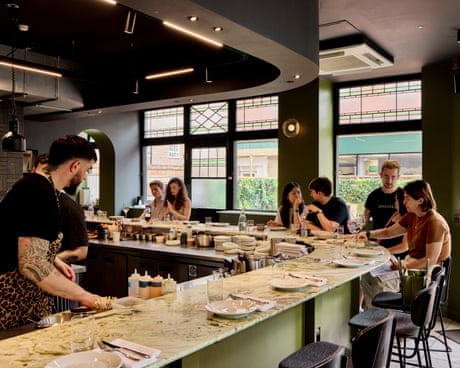
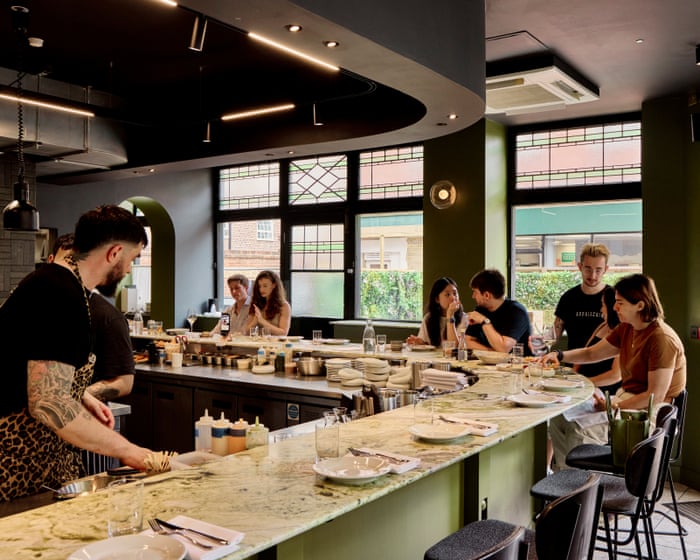
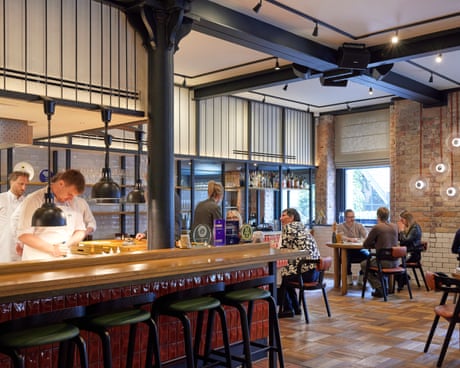
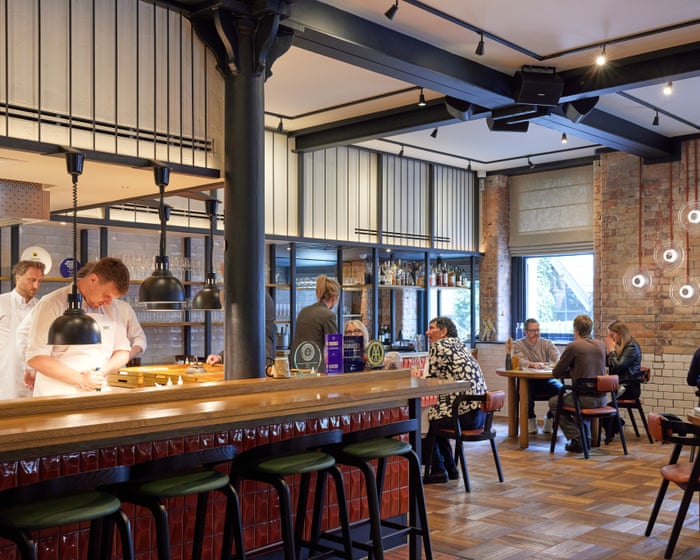
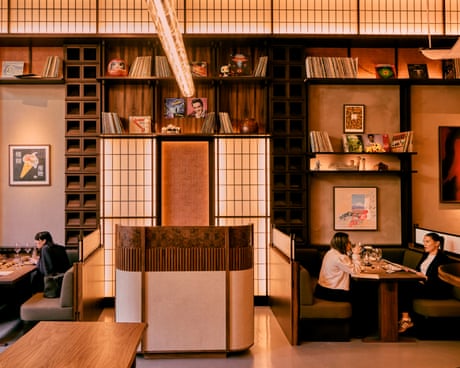
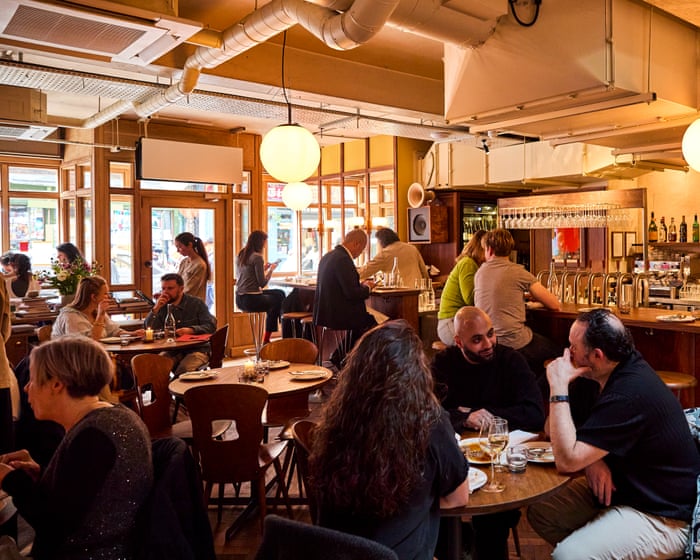
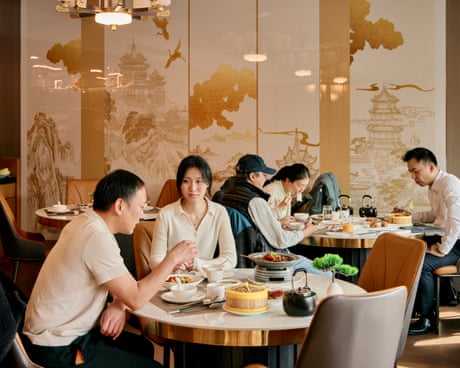
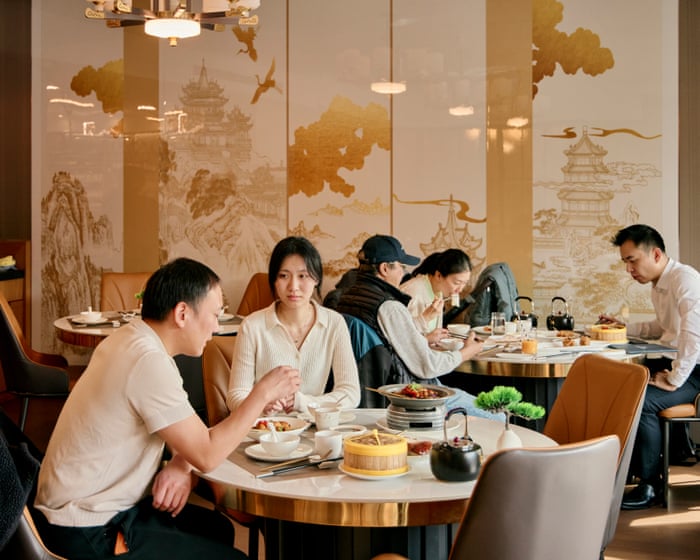
Perched in between a Zizzi, a Côte and a Slug & Lettuce at the far end of St Katharine Docks in Ye Olde Tower of London tourist-land, Banquet 88 feels like something of an enigmatic Asian cousin: it has a sedate frontage, sparse, functional decor with not an ounce of chintz nor an ounce of modernism, or even much of a nod towards comfort. There’s sake cherry foie gras and egg tofu with spicy pork floss and bottles of Fei Tswei Magma chardonnay from Ningxia on the menu, and a distinct dearth of spice bag chips and Mateus rosé, and they’d very much like you to bring a crowd to try the baby cabbage salad with Jinhua ham and century eggs or the Teochew-style poached fish with caviar.

With 140 seats and a second sizeable dining room upstairs, this Chinese mega-restaurant from the Good Fortune Club group is especially suited to parties of six or more who are in the market for black truffle abalone siu mai, Wagyu beef thousand-layer pastry, XO turnip cake and deep-fried taro croquettes with caviar. Then again, Banquet 88 seems very much more like a restaurant that’s waiting for the Chinese embassy to move into the Royal Mint across the road – Beijing bought the site for £255m – should those plans ever survive the courts. Perhaps then they’ll finally get to use the 50-person private dining room.

Continue reading...
© Photograph: Beca B Jones/The Guardian
© Photograph: Beca B Jones/The Guardian
© Photograph: Beca B Jones/The Guardian
  •  

Outlier, Glasgow G1: ‘This kind of carefully orchestrated can’t-be-arsedness is really quite magical’ – restaurant review | Grace Dent on restaurants

You cannot fake fabulous by simply buying in cool crockery and a freezer full of someone else’s pastry

In my misspent youth, I’d head to Glasgow to watch the likes of Fields of the Nephilim and Hawkwind at the Barrowland Ballroom, drink snakebite and buy posters from the touts on Gallowgate to Blu-Tack to my bedroom wall and tear holes in my mother’s woodchip wallpaper. Today, however, I’m here to visit Outlier, a bakery/restaurant/art space that serves warm bread, sticky treats and porchetta with beetroot and plum caponata. It’s on London Road just minutes from the Barrowland, and I’ve wound up here thanks only to a complete stranger on Buchanan Street who wrote down its name on the back of an old receipt and pressed it into my hand. She implored me to try the green jasmine rice pudding, the fresh sourdough and the chocolate and hazelnut babka. We used to do this type of inter-human face-to-face contact thing a lot back in the 1980s, before the internet ruined life.

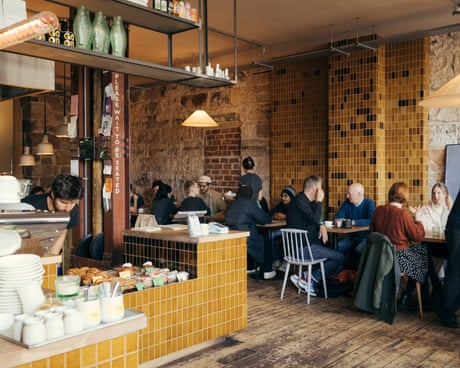
Outlier originally opened back in 2022, after Steven Turner, who had previously run various arts venues, applied to turn the building into a space for artists with a kitchen attached. What we have now is a fairly sparse but charming space, tiled a bit like an old swimming baths in places, in mustards and dark, glossy browns. There are pale, unvarnished wooden tables, speckled stoneware plates, green, pressed-glass tumblers and prices handwritten on scraps of coloured card. When it all comes together, this kind of carefully orchestrated can’t-be-arsedness is really quite magical, and from the outset I found Outlier intensely likable.

We perch in a window seat, perusing an actively dreamy brunch menu: blood peach panzanella with Isle of Wight tomatoes, Toulouse sausage with braised Umbrian lentils, or celery soup with Highland blue cheese. Even so, it is the cake counter that has proper main-character energy here. Just after opening at 11am, it is piled high with those babka buns, apple crumble and custard cakes, and bright, jubilant strawberry pastries. The bakers work behind that counter on long tables, and a queue snakes through the space and back out of the door. Outlier’s playlist is cheery and knowing – classic ska, Squeeze’s back catalogue – and it just can’t fail to keep things buoyant. Thirty-five years may have passed since I last hung out meaningfully in this postcode, but the place still feels vibrantly alive.

Continue reading...

© Photograph: Stephen Lister/The Guardian

© Photograph: Stephen Lister/The Guardian

© Photograph: Stephen Lister/The Guardian

  •  

Buvette, London WC2: ‘It’s actually rather lovely’ – restaurant review | Grace Dent on restaurants

This offshoot of a New York favourite isn’t reinventing the wheel, but it does bring a touch of Gallic glam to the neighbourhood

A faux-French, cult-hit New York brasserie has opened in Neal’s Yard, deep in the hairy armpit of Covent Garden among alleyways where holistic therapy rooms, walk-in back rub spaces, Neal’s Yard Remedies and 26 Grains cafe are its immediate neighbours. The windchimes and the whiff of patchouli part the air round these parts, and the footfall is yoga pant-clad and hungry for hummus. Buvette, meanwhile, has brought a touch of Gallic glam to the neighbourhood, and is clearly aimed at the Emily in Paris generation with its totalement français menu featuring croque monsieur with roast mushrooms and gruyere, rillettes de saumon or salade niçoise with haricots verts and a mollet egg; there’s also a Macvin champagne and muscadet spritz, pastis on the rocks, warm scones with jam, and almond croissants.

This is the London arm of Jody Williams’ West Village gastrothèque, and its menu is a pretty card listing 25 dishes to choose from, none of them above £18. It clearly thinks it’s a hot, fresh, new thing, but I’m not sure it’s anything new at all. We used to call places that looked like this Café Rouge: that is, recognisably French, and by that I mean recognisable if you have a working GCSE knowledge of La Rochelle cafe life. It’s that version of French dining that won’t scare the horses, or at least the horses that the French haven’t minced coarsely and served in their own gastroduodenal canals with an exemplary homemade moutarde.

Continue reading...

© Photograph: Beca B Jones/The Guardian

© Photograph: Beca B Jones/The Guardian

© Photograph: Beca B Jones/The Guardian
  •  

Indian Cafe Racer, Birmingham B5: ‘A good news tale for the local food scene’ – restaurant review

The cooking is sometimes bang on, sometimes a little slapdash, but then piques your interest all over again

Indian Cafe Racer on Bristol Street, Birmingham, spent its fledgling years tucked behind a curtain at the back of the Duke of Wellington pub just a few doors up from its fancy new home. There was a Royal Enfield motorcycle, chequerboard floors and a psychedelic Indian soundtrack, but this small, homespun spot from Azad Kayes quickly became culty, then oversubscribed, then in need of a bigger home. It’s a good news tale for the Brum food scene.

For those who remember it, south Birmingham’s Balti triangle once ran to 30 bustling restaurants along Ladypool Road and Stratford Road. Only two now remain. Something has gone amiss with supply and demand. Indian Cafe Racer, meanwhile, has enough fans for a new, 65-cover, grown-up restaurant, serving an ever-changing menu that, when we visited, featured shaktiman and salad (named after an Indian comic-book superhero), gol gappa (crisp shells filled with chickpeas and potato), chicken pepper fry and grilled aubergine and portobello mushrooms, known as farzi steak.

Continue reading...

© Photograph: Jack Spicer Adams/The Guardian

© Photograph: Jack Spicer Adams/The Guardian

© Photograph: Jack Spicer Adams/The Guardian

  •  

Dante Mayfair, Claridge’s, London W1: ‘Are chips ever worth £11? Probably not’ – restaurant review

The whole point of going to Claridge’s in the first place is to sweep in through the grand main hotel entrance

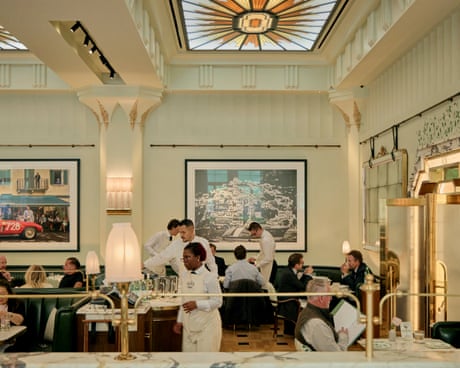
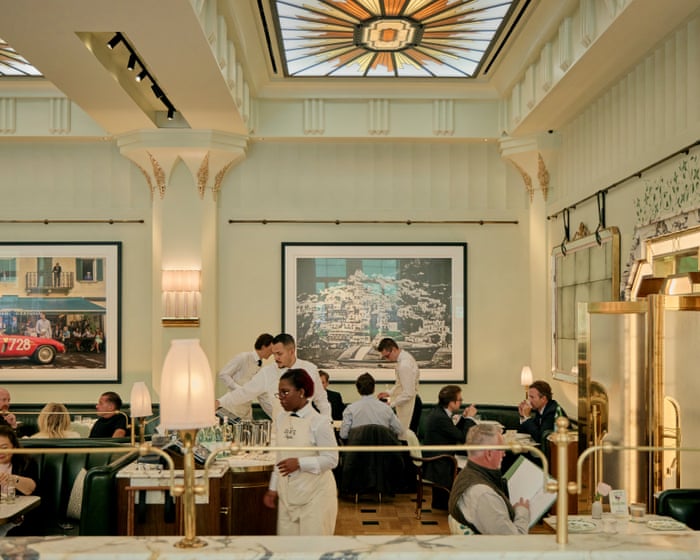
Dante Mayfair, inside Claridge’s on Brook Street in London, has been created, the hotel’s management says, to become “the living room of Mayfair”. It’s a charming idea: pop in, have a cuppa or a bowl of pappardelle bolognese, or lie about on the fancy sofas wearing elasticated tracksuit bottoms and slurping soft-serve with s’mores. No, sorry, I’ve gone too far: it’s nowhere near that informal.

Still, like many well-used living rooms, this one has been rearranged, redecorated and repurposed many times over the years. I’ve eaten fancy-schmancy Simon Rogan dinners here when it was Fera, as well as his table experience at Aulis during which venture capitalist “foodies” bored the pants off me over a 12-course meal in the kitchen itself. I’ve stared unmoved at Daniel Humm’s New York-style pomp at the short-lived Davies and Brook, and have visited several times since Claridge’s took matters in-house in the shape of a rather anonymous ye olde British brasserie.

Continue reading...

© Photograph: Beca Jones/The Guardian

© Photograph: Beca Jones/The Guardian

© Photograph: Beca Jones/The Guardian

  •  

Sebb’s, Glasgow G1: ‘A delicious bombardment of continents, cuisines and cultural trickledowns’ – restaurant review

Little bits of loveliness from Sauchiehall Street to the Silk Road, from a chef who wants to deliver maximum joy

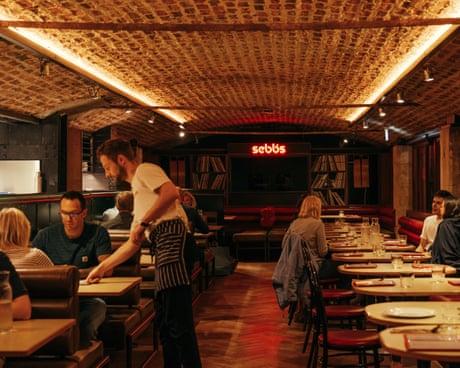
Sebb’s is a basement restaurant on Miller Street in Glasgow with a door that’s perilously easy to miss, even though it’s bright red. The first time I tried to find it, I waltzed past and almost ended up in the pants department of TK Maxx. I was luckier the second time around, and soon found myself descending a set of stairs into a room with the distinct vibe of a beatnik diner inside a bowling alley: there’s no natural light, there are booths that are perfect for conspiring in, a DJ playing psychedelic rock and food served in brown paper bags. The 13th Floor Elevators at noon on a Thursday?! Absolutely – as well as the globally ranging delights of sobrassada and ancho honey pitta, tandoori pork belly with tamarind chutney, barbecued squid with zhoug and preserved lemon aïoli, and trout ceviche with habanero, mango and tequila. It’s as if the Big Lebowski took up cooking.

Sebb’s opened in late 2024, and just over a year later, head chef Danny Carruthers’ food had already snagged the place a Michelin bib gourmand – to my mind by far the most interesting part of the whole tyre company’s advertising hoopla. Bibs are designed to reward places just like Sebb’s: odd, informal, intriguing – the type of place where you can pop out to for lunch without needing four spare hours, a booking months in advance and a decorative Patek Philippe watch on your wrist.

Continue reading...

© Photograph: Stephen Lister/The Guardian

© Photograph: Stephen Lister/The Guardian

© Photograph: Stephen Lister/The Guardian

  •  

Kid, London W1: ‘Fat, richness, sharpness, all in perfect balance’ – restaurant review

Our main course arrived heavy and somewhat intimidating, and left picked completely clean

Earlier this month, a kind-of Turkish ocakbaşı opened on a corner in London’s Soho. The brains behind Kid are chef Sertaç Dirik and restaurateur David Carter, and I say “kind-of” because, yes, while it has a Turkish-influenced menu – sucuk with grilled peach, pide, börek, hummus, içli köfte with aged beef – and the whiff of live fire, nothing either of them does is ever remotely straightforward, hence the buzz around their new place.

Carter founded Smokestak a decade ago in Shoreditch, a wild, Americana-tinged barbecue joint where, somehow, he made brisket in buns and peach cobbler old fashioneds London’s hottest ticket. Five years later, he opened Manteca, also in Shoreditch, a reimagining of the Italian trattoria for the 2020s, followed by Oma, his Greek-influenced Michelin-starred venture in Borough, and its little sister Agora, and all of them remain dependable places where you get serious bang for your buck. All of those influences – American smoke, Italian flair and Greek boldness – are present and correct at Kid. Dirik’s story, meanwhile, has about it elements of TV’s The Bear: a Copenhagen-trained chef cajoled home to bolster the family business and going on to create the hugely loved Mangal 2 in Dalston. What Dirik and Carter have in common, aside from reputation, is a love of setting fire to stuff, in a culinary sense rather than in a Prodigy’s Twisted Firestarter sense. Kid’s Galata mackerel is testament to this: it’s almost completely blackened and has an incredible hit of smoke in its flesh.

Continue reading...

© Photograph: Beca B Jones/The Guardian

© Photograph: Beca B Jones/The Guardian

© Photograph: Beca B Jones/The Guardian
  •  

Kismet, London SE1: ‘The sort of beans that make you want to move to the sun’ – restaurant review

The first genuinely cool thing to have happened in Borough Market for ages

A Turkish-Cypriot meyhane, which translates roughly as “wine house”, has slotted in upstairs at the Globe Tavern in Borough Market, south London. Any cab driver worth his salt will bend your ear over the fact that this is “where Bridget Jones lives”, which might be a bit confusing if you’ve booked in to eat kuzu şiş (lamb neck kebabs) and to knock back a couple of rakis with a fermented turnip juice chaser.

That Bridget Jones trivia, by the way, is completely true: the upstairs space at the Globe was used as the heroine’s gaff in that famous film franchise. Now, however, when you climb the staircase up to Kismet, an old, slightly eerie and flickering TV by the restaurant entrance begins to tell a very different tale. This is chef Keiran Mustafa’s very personal tribute to his family’s homeland and the community they built in London. Mustafa was the opening head chef at BiBi, to my mind one of the best restaurants in London, and before that he worked at industry stalwarts Chez Bruce and the Harwood Arms.

Continue reading...

© Photograph: The Guardian

© Photograph: The Guardian

© Photograph: The Guardian

  •  

Café Clement, London WC2: ‘Turns out it’s really rather good’ – restaurant review

I am forever curious as to how these kind of sizzling places feel on a normal Tuesday two months in, especially when the celebrities are all off sunning their bottoms in Tuscany

Café Clement, the all-day restaurant inside Nick Jones’ new St Clement Hotel at 180 The Thames in central London, opened with a bang in June and immediately rocketed to the top of every “sell your grandmother for a terrace table” list in London. Which isn’t that much of a surprise, seeing as Jones, founder of Soho House, is the master of restaurant rumpus.

Within days, Stanley Tucci, Nick Grimshaw and full-length-trouser-phobic heart-throb Paul Mescal were all there, tucking into oeufs mayonnaise and lobster omelettes while politely ignoring the fact that the place was still, in many ways, a building site. The hotel itself isn’t due to open fully until early autumn, when a rooftop restaurant, Lunette, will also arrive with some of London’s most wondrous views and Florence Knight at the helm. Still, Café Clement opened to frothy praise, and I am forever curious as to how these kind of sizzling places feel on a normal Tuesday two months in, when the celebrities are all off sunning their bottoms in Tuscany and, frankly, lunch is not free.

Continue reading...

© Photograph: Amy Heycock/The Guardian

© Photograph: Amy Heycock/The Guardian

© Photograph: Amy Heycock/The Guardian

  •  

Kinz, London W11: ‘No bells, no whistles, just Lebanese food cooked with immense pride’ – restaurant review

Home cooking, but in the most complimentary sense

Some developers would rip the soul out of a 1930s banking hall, but Kinz, a new all-day Lebanese brasserie housed in a former Lloyds Bank in Notting Hill, instead makes a feature of its chunky vault door. Where W11 residents once kept their cash, diners can now take a seat and sip Lebanese wine from the Bekaa valley. After all, what visit to the bank wouldn’t be improved by a cold glass of Chateau Musar Jeune?

This triple-height room with mezzanine seating is a very different proposition from all those tiny, homespun Lebanese restaurants typically anchored around Edgware Road since the 1970s. Kinz may offer kibbeh nayyeh (finely minced raw lamb and beef with bulgur, spices and pine nuts), shish barak (tiny lamb and herb dumplings in yoghurt sauce) and warak enab (lamb-stuffed vine leaves and baby courgettes), as do many places in pockets across west London, but there is something altogether more cinematic about this elegant setting.

Continue reading...

© Photograph: Amy Heycock/The Guardian

© Photograph: Amy Heycock/The Guardian

© Photograph: Amy Heycock/The Guardian

  •  

Bullgogi, Manchester M1: ‘Highly decent, amenable, human-free dining’ – restaurant review

Bullgogi’s largely automated hospitality will either delight or horrify you, but the food is serious

Bullgogi, a whopping new interactive multiscreen Korean restaurant in Manchester’s Piccadilly Plaza, has arrived, heralding the end of traditional hospitality – again. It’s the UK’s largest Korean barbecue restaurant – 165 covers, traditional tabletop grills at every booth – but has no servers with notepads, just screens. Your gyeran jjim, your dolsot bibimbap, your bulgogi: jab the at-table screen and it will arrive, ferried by human hand. Think McDonald’s, but as a gargantuan restaurant. Jae Cho and his Maguro Group have built an empire of 21 locations across London and Manchester, but this is their biggest venture to date. We arrive without reservation, which is no problem, because Bullgogi is the size of a small planet. We order pots of barley tea and pints of Asahi at £6.90, and sit back to enjoy the Blade Runner vibes.

Bullgogi’s largely human-free hospitality will either delight or horrify you. Personally, I greet our new robot hospitality overlords with calm scepticism. Over the past few decades, I have staggered through the Covid QR menu wilderness, prised my dinner from the temperamental jaws of robot fridges in rural farm shops, and watched with mirth as the robot chef at a recent Soho yakitori joint still required a human to load every skewer into it before performing. For these reasons, I greet Bullgogi with a raised eyebrow. In fact, the moment we flag, via the screen, a food intolerance at our table, a bright, chipper human appears immediately to check through the menu for said offending item.

Continue reading...

© Photograph: Shaw & Shaw/The Guardian

© Photograph: Shaw & Shaw/The Guardian

© Photograph: Shaw & Shaw/The Guardian

  •  

Lennox. Manchester: ‘A boot camp of flavours’ – restaurant review

You’ll leave fed, challenged and gastronomically punch-drunk

Nico Simeone is the Scottish-Italian chef behind the Six by Nico restaurant empire, and Lennox, in Spring Gardens, Manchester, is his new baby. If you are unfamiliar with Six by Nico, it’s a fever-dream version of fine dining: Simeone conjured up themes such as “The Chippie”, “Italian Road Trip” and “Ancient Rome”, then served six courses in homage to them. Tokyo! Mad Hatters! Childhood! At one point, the Six empire was growing like knotweed, and by 2025 there were 17 restaurants. You had more chance of eating at a Six by Nico than finding an NHS dentist.

Suffice to say, many adore the concept – overlooking its middling cooking skills – because it’s pocket-friendly, and the six-course format gives a night out with friends a sense of occasion not available at Pizza Express. Lennox, Simeone says, will be very different: à la carte, focused on dry-aged meat, but with the same playfulness and invention. There would be a fish finger with katsu curry and celeriac remoulade; a tempura oyster shell filled with dry-aged beef tartare and oyster emulsion; and gnocchi with deboned chicken wings and parmesan. Lennox would be personal, bespoke and absolutely unscalable. No rollout planned, no siree. But by August 2026, there will be three of them. Hang on, what? Yes, shortly after Manchester came Glasgow, and then Edinburgh. Simeone sleeps with one eye open; I salute his indefatigability.

Continue reading...

© Photograph: Shaw and Shaw/The Guardian

© Photograph: Shaw and Shaw/The Guardian

© Photograph: Shaw and Shaw/The Guardian

  •  

Vieni, Birmingham – ‘A happy hubbub – you cannot pipe this in’ – restaurant review

Vieni dances a fine line where British Italian restaurants often fail

Vieni, an Italian restaurant in the Jewellery Quarter of Birmingham, is small, Sicilian and scrappy. The Instagram bio of its chef and founder Angelina Adamo reads, “Bite off more than you can chew and learn how to fucking chew”, which feels like a battle cry for almost everyone stepping into hospitality, especially independent places like Vieni, where the waters are choppy and your skillset needs to be varied. Arancini with one hand, signing off payroll and ordering loo paper with the other.

Vieni, which is about a mile or so from the city’s Bull Ring, is a million miles from Albert’s Schloss, Big Mamma’s La Bellezza and the multitude of vast, impersonal pleasure machines that have spread their legs in Brum city centre. Of course, a gigantic Rosa’s serving pad thai and Tattu with a plastic purple flower ceiling all have their place, and make people happy, but I have joy in my heart for places like Vieni.

Continue reading...

© Photograph: Jack Spicer Adams/The Guardian

© Photograph: Jack Spicer Adams/The Guardian

© Photograph: Jack Spicer Adams/The Guardian

  •  

Appalachia, London N1: ‘The chicken is like Sunday dinner on performance steroids’ – restaurant review | Grace Dent on restaurants

This is no theme bar, and not remotely a joke: they really are doing proper Appalachian regional cooking on a side road near Old Street

Appalachia, newly opened near Old Street, London, is unlike anywhere else in town. It serves grits, pork rinds, collard greens, kilt salad, chow-chow relish and pot liquor. Ali Borer, formerly of Smoking Goat and Guy Ritchie’s Lore of the Land pub, and not remotely Appalachian himself, is cooking the food of yesteryear Scots-Irish mountain settlers who made their home in this sparse region of the eastern United States. Appalachians smoked, pickled and preserved just about any edible item they could get their hands on, because, well, needs must. London’s dining scene has ignored all this porky, liquory stuff until now, mainly because, let’s be frank, most British people’s understanding of Appalachia begins with the Burt Reynolds film Deliverance and ends with those guys from O Brother, Where Art Thou? stealing a chicken. Not only that but, just as many people would be unable to locate the Appalachian mountain region on a map, you might find it equally challenging to locate Nile Street, because it’s hidden away on the borders of Shoreditch, just around the back of Hackney.

The room itself is quite patentlya reclaimed old saloon bar, and you sit up at that bar watching Borer make your cornbread madeleines. And, holy heck, they’re good: cheddary, fiery, served hot with a nod to the cast-iron skillets of the mountain kitchen. The space isn’t terribly comfy and, much like Tollington’s Fish Bar and many other similarly hip indie spots, Appalachia feels more like a restaurant that’s simply making the best of its surroundings rather than truly inhabiting them. The downstairs space, meanwhile, has been turned into a whiskey and cocktail bar called Lowcountry, named after South Carolina’s coastal region, and each time you order a banana pudding sazerac made with brown butter-washed rye and absinthe, or a fat fashioned comprising bacon fat-washed bourbon and maple syrup, a server bearing a tray materialises from below, almost as if they’re ascending from a very well-stocked basement cupboard. The entire drinks list, by the way, is heaven for the non-drinker and for those who like to sway and wake with headaches. The former can enjoy Jörg Geiger’s fruit fermentations, Saicho sparkling teas and a really extraordinary olive lemonade; I also highly recommend the alcohol-free paloma, too.

Continue reading...

© Photograph: Beca Jones/The Guardian
© Photograph: Beca Jones/The Guardian
© Photograph: Beca Jones/The Guardian
  •  

Bar Shrimp, Manchester M1: ‘This is meaningful, highly adept cooking’ – restaurant review | Grace Dent on restaurants

One of the best seats in Manchester, if not the entire north

I’m perched on a tall stool at a new Manchester bar, perusing a menu of fishy things and various aquatically adjacent items: Lindisfarne oysters, devilled eggs with brown crab and trout roe, hand-dived razor clams and scallop tartare with elderflower dressing. Bar Shrimp sits on New York Street, which feels weirdly fitting, because this place is much more “quietly sceney” New York than anything remotely “aren’t we edgy?” London. Glass-fronted, with discreet net curtains and a Tracey Emin-esque neon name sign, inside it’s draped, floor-to-ceiling, in red, just like in those red room scenes in Twin Peaks. Expect oversized, monogrammed ice cubes, nine types of mezcal and just as many amaros, as well as a menu featuring the likes of cuttlefish sandwiches and buffalo fried cod with blue cheese dressing.

Bar Shrimp is a dog whistle to 1980s kids such as myself, who grew up seeing New York in the likes of After Hours or Wall Street, or in something with James Spader being up to no good and drinking Japanese whiskey highballs. It’s a bar opened by three friends: chef Joseph Otway, sommelier Daniel Craig Martin and general manager Richard Cossins, who met while they were all working at Dan Barber’s Blue Hill at Stone Barns in Tarrytown, New York State. (Blue Hill, in case you didn’t know, is catnip to the aloof foodie crowd – its customers wouldn’t be seen dead at Noma because it’s far too accessible). But does Bar Shrimp make a terrific fuss about this hallowed connection? Nope. Are there nods to Saint Dan Barber dotted around the place, or even in Higher Ground, the Bar Shrimp team’s acclaimed neo-bistro next door? Nah. Does Bar Shrimp even mention that it and Higher Ground are supplied by Cinderwood Market Garden, their own working farm in Nantwich, Cheshire, and pretty much in the spirit of Barber’s Blue Hill mantra? Barely. The Shrimp boys are far too cool to namedrop.

Continue reading...

© Photograph: Shaw & Shaw/The Guardian

© Photograph: Shaw & Shaw/The Guardian

© Photograph: Shaw & Shaw/The Guardian

  •  

Skof, Manchester M4: ‘Proof that fine dining can be magical’ – restaurant review | Grace Dent on restaurants

Clever, emotional – and well worth the hype

I couldn’t get a table at Skof for ages: it was too full, too booked up and far too busy. It seemed there’d be no lightly set miso custard with hen of the woods mushrooms and dashi for me. Jersey royals cooked in chicken fat with pickled walnuts? I’d only be able to admire those from afar. It was like catnip: in the spirit of Groucho Marx, I want to be inside any restaurant that doesn’t want me as a customer.

Skof opened in Manchester in May 2024 and by February last year already had a Michelin star, so it’s no wonder that, with only 36 seats, spaces evaporate rapidly. This capacious one-time drapery warehouse could easily accommodate two or even three times that number of covers, but Tom Barnes, formerly of L’Enclume in the Lake District, is not that sort of chef. His restaurant’s name comes from his dad, Barney, telling him rather unceremoniously as a child to “scoff” his dinner. What would Barney have made of his boy’s ornate, complex pre-dinner snacks of chalk stream trout and golden beetroot tartlet, or broad bean, pike roe and shiso on a Spenwood cheese biscuit? Both are hugely scoffable, incidentally. Barney, now deceased, is remembered at the end of every meal via his favourite tiramisu, of which more later.

Skof, like L’Enclume, is one of those intensely relaxed yet still ferociously fancy restaurants. Dress code is come as you are. Deodorant is a boon. As we ate, Aussie post-punk band Mental As Anything bled into Arctic Monkeys by way of Sam Fender, but then, bang, the first two courses proper arrived, each of them intricate and intentional: a soft, juicy Orkney scallop with barbecued kohlrabi and preserved tomato water, followed by that lightly set custard with truffle and mushroom dashi. Think of this custard as a quiche filling on steroids, and one that’s well worth garrotting people for in a buffet queue.

Continue reading...

© Photograph: Shaw & Shaw/The Guardian

© Photograph: Shaw & Shaw/The Guardian

© Photograph: Shaw & Shaw/The Guardian

  •  

Auguste, London E8: ‘Some fleeting moments of greatness’ – restaurant review | Grace Dent on restaurants

As is the peril with most small plates restaurants, this meal is more a collection of loose ideas than a coherent dinner

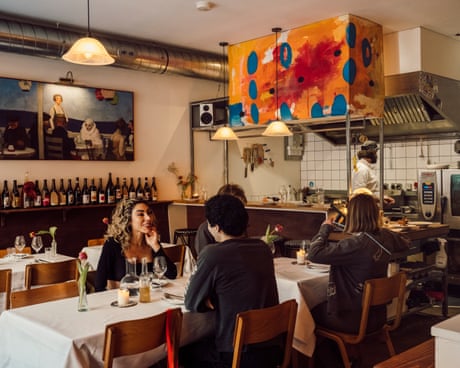
Auguste, a brand spanking new Italian restaurant in Hackney, east London, is named, loosely, after a clown. The Edward Hopper painting Soir Bleu hangs on the wall, depicting a tragic sort in a whiteface mask sitting forlornly in a cafe surrounded by hipsters. The clown’s light veneer of calm, it seems, masks his bare tolerance of both his life and his fellow customers. Hopper painted it in 1914, and now, more than a century later, this same sad clown feels more than a little symbolic of all those who have chosen a life in hospitality at this time. Paint on a smile! Get out there! Make the crowds happy! If only business rates could be paid with a bucketload of glitter …

Auguste’s owners, chef Mike Bagnall and general manager Dylan Walters, have taken over the 32-seater premises formerly known as Papi, which recently upped sticks and moved on to a much larger site at The Golden Tooth in Newington Green. The space has been transformed from its Papi days as an extremely hip, European-influenced, irreverent, small plates, low-intervention wine and hyper-cool spot, to its new incarnation as, well, an extremely hip, Abruzzo-influenced, irreverent, small plates, low-intervention wine and hyper-cool spot. Plus ça change, plus c’est la même chose, you might be thinking, but pas exactement! The room now has white tablecloths and the big draw on Auguste’s menu are its skewers or, to be precise, arrosticini. Think tiny mini kebabs with the meat cut into 1cm cubes, then grilled over something called a furnacella. The live-fire craze among London hospitality’s menfolk shows no signs of abating. Man make fire. Fire good.

Continue reading...

© Photograph: Amy Heycock/The Guardian

© Photograph: Amy Heycock/The Guardian

© Photograph: Amy Heycock/The Guardian

  •  

Mitsu, London EC2: ‘Determinedly fun and delicious’ – restaurant review | Grace Dent on restaurants

It won’t win any plaudits from Japanese purists, but there’s still much to admire here

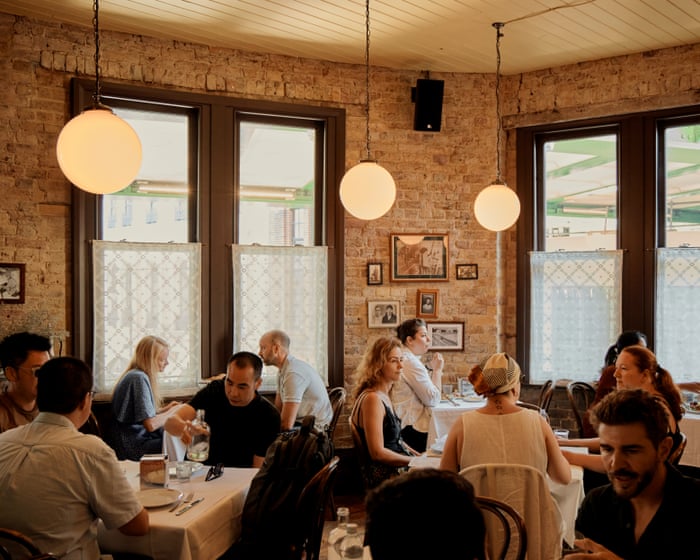
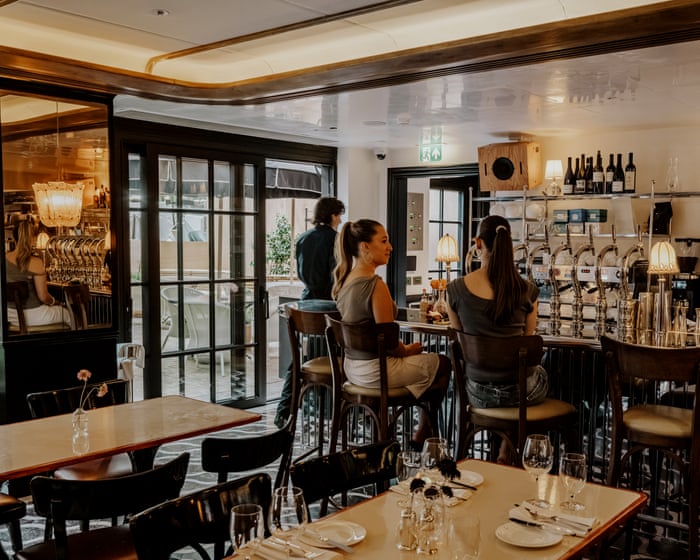
No spoilers, but I knew even before I’d reached for my chopsticks that Mitsu would be a vast improvement on its predecessor, because it has taken the place of Nobu Shoreditch in the under-gusset of the Aethos hotel, a Swiss-owned “lifestyle hospitality brand”, in east London. Nobu was gargantuan, moodily lit (that is, pitch black), woundingly expensive and terrifically hard to book, despite having something like 797 seats; it was also one of the most soulless London restaurants of the past 25 years. Nobu Shoreditch felt symbolic: it was where all the raffish hope of the 1990s YBA crowd and the early noughties electroclash heads went to die.

But that was then, and now, in 2026, the Aethos crew has deftly brightened and lightened the mood of the room, making it actually cosy and adding a twinkly central bar; there’s an open robata kitchen and roomy booths, as well as a pretty Japanese garden. Mitsu calls itself an izakaya, which is what European restaurateurs always say when they mean the Japanese-influenced food isn’t too po-faced and you can get really tipsy on sake.

Continue reading...

© Photograph: Beca Jones/The Guardian
© Photograph: Beca Jones/The Guardian
© Photograph: Beca Jones/The Guardian
  •  

Willy’s, Margate, Kent: ‘It chortles in the face of small plates’ – restaurant review | Grace Dent on restaurants

This cute and jovial eatery is reason enough to make a break for the coast

As summer looms, and with it the urge to stampede towards the edges of Britain in search of paddling opportunities, I proffer another coastal dining idea: Willy’s in Margate – and, yes, that name does have about it something of the naughty seaside postcard. Tucked away in the back of Margate House hotel on Dalby Square, a few minutes’ walk from the seafront, Willy’s is a blur of frilly red-and-pink seaside adorableness. It’s cool, cute and jovial, with pork scratchings and apple chutney on the menu, as well as black pudding scotch eggs, sticky toffee pudding and Sunday lunches of beef rump and baked cauliflower cheese. This menu is short, intentional and hearty, rather than airy-fairy, and it chortles in the face of small plates.

But, for the foodie/sippy crowd, the signifiers are all here: there’s a paper plane and a penicillin on the cocktail menu, throwbacks to New York’s iconic Milk and Honey bar. There are three Olivier Pithon natural wines from Roussillon on the short list, which as a whole leans towards natural and low-intervention bottles from France, Spain and Italy. Most tellingly, the chef is Mark O’Brien, who worked with Robin Gill at the Dairy in London and at Samphire in nearby Whitstable before making this little nook his home, and who earlier this year reached the final three of MasterChef: The Professionals. Willy’s is clearly run by a team that knows about nice things.

Continue reading...

© Photograph: Luke Albert/The Guardian
© Photograph: Luke Albert/The Guardian
© Photograph: Luke Albert/The Guardian
  •  

Impala, London W1: ‘Shamelessly, brilliantly too much’ – restaurant review | Grace Dent on restaurants

Impala is like no restaurant I’ve ever been to, yet it somehow has echoes of almost all of them

Late last month, Impala drove into Soho already flaming hot in the hype stakes: this was a sizzling booking to brag about even before executive chef and co-founder Meedu Saad had turned on the stoves. Impala, after all, is a Super 8 restaurant, the group that has, among others, Tomos Parry’s Brat in Shoreditch, which has been constantly, unfalteringly brilliant since 2018. It also runs Parry’s second baby, Mountain, which is likewise wonderful; sometimes weird, yes, but always wonderful. Long before that, back in 2016, they opened Kiln, the famed live-fire Thai counter hangout that cheffy boys in beanies have tried and failed to emulate all over Britain, while Super 8’s beginnings were with the boundary-pushing and much-loved Smoking Goat. That is nothing less than a litany of solid-gold bangers, and now they’ve unleashed Impala by Saad, the former head chef at Kiln.

In any normal restaurant review, it would have been common to have by now established what type of food Impala actually cooks – north African? Middle Eastern? Mediterranean? British?, etc – but in this odd, dreamy and defiantly dark nook in Soho (every single one of us in the room, even those with perfect vision, had our iPhone torches on just to read the menu), narrowing down its origin story is not quite that simple. “Bird’s tongue pasta braised with spiced oxtail?” someone asked over the loud jazz. “Molokhia, braised jute leaf and shoulder of cull yaw sheep?” queried someone else. It went on: aish baladi? Ftira? “Bird’s tongue pasta is the Egyptian name for orzo,” I ventured, adding that I thought molokhia might be a bit like spinach, but never have I been more ready for a server to turn up and ask: “Guys, may I explain the menu?”

We choose a beef tartare with a smoky, sweet Tunisian harissa and crunchy chunks of deep-fried bread as brittle as pork crackling. We scoop honey bread through an insanely good mush of pounded white beans topped with chunks of pungent bottarga. There are rustic pillows of that aish baladi, an Egyptian wholegrain bread that here comes with a fresh, rich harissa paste, and langoustine kibbeh and sun-dried wheat all wrapped in a neat perilla leaf cone.

Continue reading...

© Photograph: Phoebe Pearson/The Guardian
© Photograph: Phoebe Pearson/The Guardian

© Photograph: Phoebe Pearson/The Guardian
  •  
❌