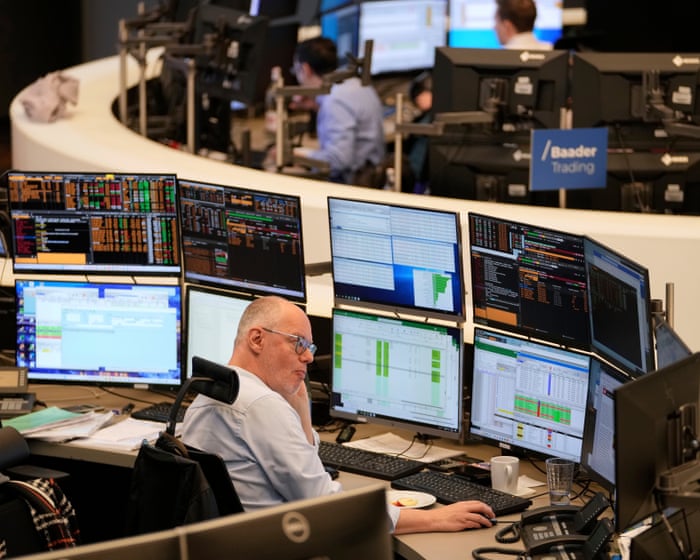
Brent crude drops by more than 6% to $105.55 a barrel, the lowest level in more than two weeks
The oil price has fallen to its lowest level in more two weeks amid new hopes of a breakthrough to end the Iran war.
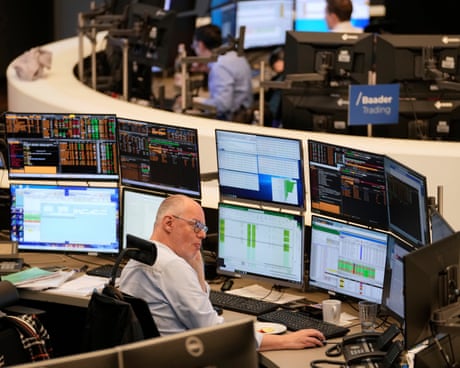
Brent crude, the international benchmark, dropped by more than 6.5% to as low as $105.55 a barrel on Monday, the lowest since 16 October, sending shares in airline companies higher and pushing down government borrowing costs.
Most major cryptocurrencies have fallen in value since news of the Binance theft broke, Coinmarketcap data shows.
That includes:
Bitcoin: -2.35% over the last 24 hours, to $77,940
Ethereum: -3.6%, to $2,227
BNB: -5.6%, to $706
Solana: -2.67%, to $97
Chainlink: -3.1%, to $11.02
Temporarily suspended withdrawals while we complete a security revamp of the withdrawal service and its related addresses
Revoked the affected address authorizations
Engaged law enforcement and blockchain intelligence partners to trace and recover funds
Our team hasn’t stopped. We’re working closely with law enforcement to ensure the matter is handled appropriately - and I’ll share what I can, as soon as I can.
Possible candidate to run World Economic Forum departs ECB nine months early, saying she wants to speak her mind about world affairs
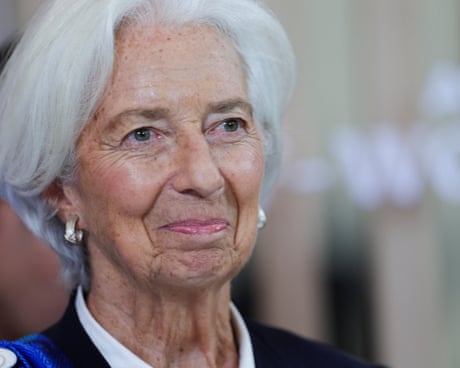
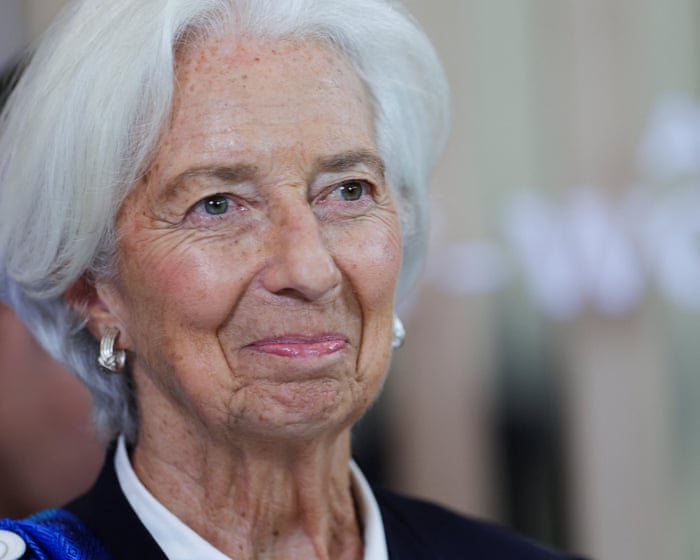
Christine Lagarde, the eurozone’s top central banker, has said she is stepping down nine months early to speak her mind about world affairs and confront the “misrepresentation of the truth”.
Ending months of speculation about her future at the European Central Bank, Lagarde said she would quit her role as president next February rather than October next year because the rules of neutrality that governed her job prevented her from influencing debate about financial and economics affairs.
Martin Lewissaid that, when he met John Healey this morning, the chancellor said that, having removed standing charges from gas bills, he would also like to get rid of them from electricity bills. Lewis said:
The chancellor said he will be talking to Ofgem about how they get rid of the charge on electricity as well, but that is ‘trickier’ apparently and will take longer.
Tech firm announces two-part fundraising after Elon Musk warns hundreds of AI startups face collapse
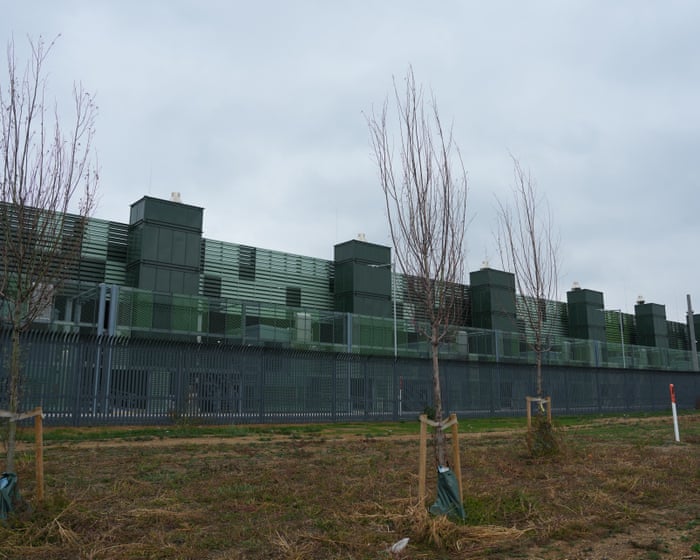
Mark Zuckerberg’s Meta has announced plans for $95bn (£71bn) of fundraising to cover its AI expenditure, even as Elon Musk warned that funding for smaller players in the sector was drying up.
The owner of Facebook, Instagram and WhatsApp is a leading investor in AI and is ploughing multibillion-dollar sums into datacentres, the central nervous systems of the technology.
Rolling coverage of the latest economic and financial news
Bloomberg, intriguingly, are questioning Elon Musk’s claim that SpaceX has closed a $40bn debt deal to fund more chip purchases.
They’ve heard that talks over the pricing of this deal are still ongoing, and report:
As of late Sunday in New York, those conversations remained ongoing and the deal hadn’t priced, people with knowledge of the discussions said. The parties are still working on finalizing the debt package in the coming days, the people said.
As of the past few weeks, debt markets have almost entirely shut off access to money for any company that doesn’t have substantial revenue independent of AI data centers.
SpaceX closed $40B of debt for GPUs, but we’re investment grade and have Starlink & launch revenue.
Chief executive agrees to remain in California for eight years even if state brings in one-off 5% wealth tax
Meta has struck a deal with Mark Zuckerberg to help him foot a possible California wealth tax targeting billionaires.
The social media company behind Facebook, Instagram and WhatsApp revealed on Wednesday night that the arrangement would keep its chief executive living in California, where Meta’s headquarters are located.
Google apologises after power issue causes a major Cloud outage in its London region today that led to problems at banks, Revolut, and court video cameras
The pound has rallied after Britain’s unemployment rate fell unexpectedly this morning to 4.7%.
Sterling has gained half a cent against the US dollar to $1.3352, as the City welcomes the news that employment rose in the last quarter.
“This data has caught the market on the hop, with traders scrambling to respond and boost exposure to the pound. Good news has been a touch more prevalent for the UK of late, which is just the kind of framing the government needs heading into the budget, though signs of more resilience in the labour market do of course mean the BoE has more room to respond to higher inflation.”
“The labour market remains relatively flat overall. This resilience in the face of headwinds driven by global events is welcome. But underlying problems remain, with around one million young people not in education, employment or training and overall employment more than two million short of the Government’s 80% employment rate target.
To fix those challenges we need to change the benefit system so it offers active help to all who need it, but also make it easier for employers to create jobs. “
Sky-high oil prices and geopolitical turmoil have made less of a dent than feared … just don’t bank on it to last
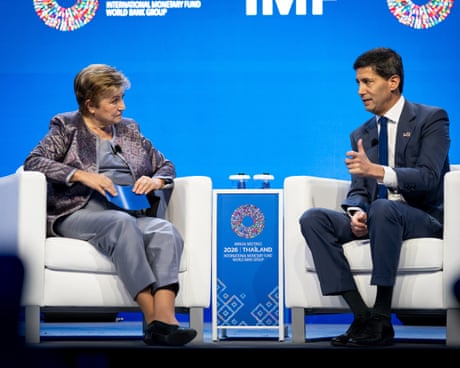
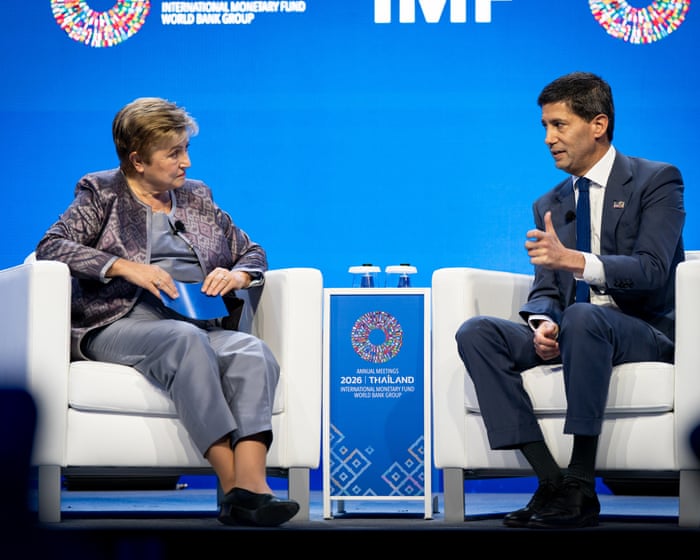
Inside the vast, glass-walled Queen Sirikit conference centre in Bangkok, the air-conditioned atmosphere was calm as policymakers from more than 100 countries gathered this week for the International Monetary Fund’s annual meeting – and contemplated the surprising strength of the global economy.
A small army of smiling, uniformed Thai staff were on hand to explain the baffling geography of the heavily guarded building, where lunch options were as cosmopolitan as the delegates – including, improbably, a Burger King.
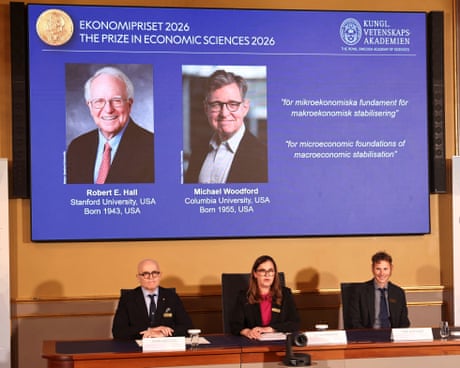
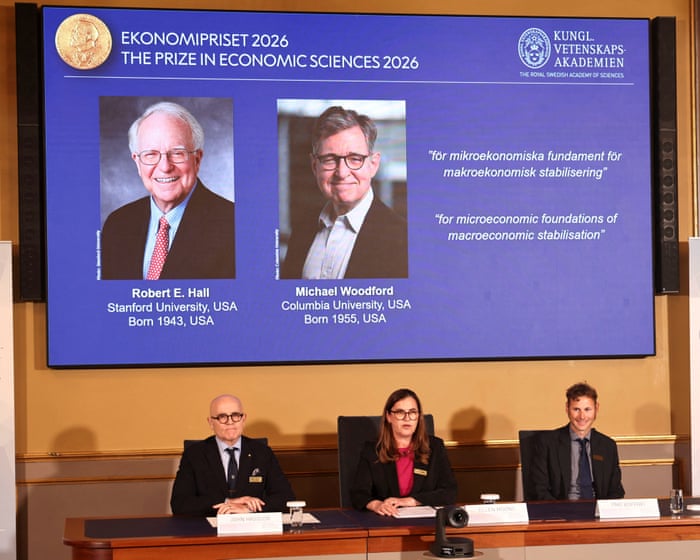
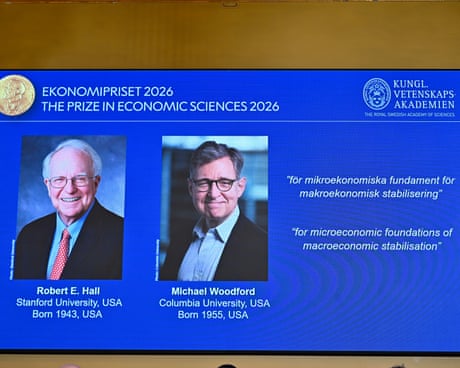
Two US economists have won the 2026 Nobel economics prize for their work developing models that help central bankers and finance ministers to stabilise their countries, avoiding long recessions and runaway inflation.
The Sveriges Riksbank Prize in Economic Sciences has been awarded to Robert Hall and Michael Woodford for developing the “microeconomic foundations of macroeconomic stabilisation”
There’s some movement in the Nobel economics prize betting, with around 45 minutes to go until the announcement.
Sidney Winter, the professor emeritus of management at the WhartonSchool, and Lawrence Katz, the Elisabeth Allison Professor of Economics at Harvard University, have both appeared high on Polymarket’s odds at times this morning (although the market is very volatile).
Rolling coverage of the latest economic and financial news
Newsflash: A Bank of England deputy governor is warning that interest rates will be raised, if necessary, to combat the risk of persistent inflationary pressures from higher oil prices.
ClareLombardelli is telling the Sixth Biennial Conference on Macroeconomic Policy in Warsaw that the energy shock due to the conflict in the Middle East is likely to keep pushing UK inflation higher in the coming months.
Strong demand for AI components is already pushing up global export prices and weather-related shocks add upside risks. On the other hand, trade diversion is reducing inflation.
The longer higher energy prices persist, the greater the risk that indirect effects build and that inflation expectations, wage bargaining and price-setting behaviour begin to adjust in response.
On that basis, policy is increasingly likely to need to tighten if elevated energy prices persist, absent clear evidence of disinflation or weaker activity. But this is by no means suggesting that monetary policy should respond mechanically to movements in energy prices. The key issue is not the spot price of energy itself but the interaction of the underlying economy, higher energy prices, and the nature of their transmission. That, ultimately, is what will determine whether Bank Rate needs to rise.
Economies thrown into renewed turmoil as AI debt, Iran war and soaring government bond yields fuel alarm
At the height of the summer, the mood was optimistic in the world’s financial capitals. Powered by the AI revolution, the US stock market had rallied to a fresh all-time high, as investors bet the multitrillion-dollar investment spree would overshadow the hit from the Iran war.
Now the warning lights are flashing red. As the fighting in the Middle East intensifies without clear sign of a resolution, financial markets have been thrown into renewed turmoil. A slowdown looms in the AI arms race, and tinderbox conditions in the market for government debt are fuelling alarm.
Newsflash: UK government borrowing costs have jumped at the start of trading, as the bond market sell-off continues.
The yield, or interest rate, on UK 10-year bonds jumped by 4 basis points (0.04 of a percentage point) to 5.268%. That’s the highest since June 2008 (Reuters reports).
“The dominant theme as markets open is the renewed escalation between the US and Iran, with attacks on Iranian military and tanker targets raising concerns over further disruption in the Strait of Hormuz.
Oil has extended to a six-week high, amplifying inflation concerns and driving another sharp rise in global bond yields
“The market rout stepped up a year yesterday and shows no sign of stopping.
Governments around the world are feeling the pressure from bond markets, but the situation is particularly acute for the UK, where Andy Burnham’s grand promises about reforming the economy are about to meet the cold reality of high debt levels and rocketing borrowing costs.
Centre for Economics and Business Research calculates effect of inflation and wage stagnation to end of 2027
UK households will have suffered a £2,400 financial hit, on average, from the Iran war by the end of 2027, new analysis shows.
The Centre for Economics and Business Research (CEBR) has calculated that the jump in inflation since the conflict began, and weaker wage growth, will knock £1,100 off the real income of the average UK household in 2026, and by a further £1,300 in 2027.
Trump ally should cut budget deficit rather than try to suppress bond yields, says billionaire Stanley Druckenmiller
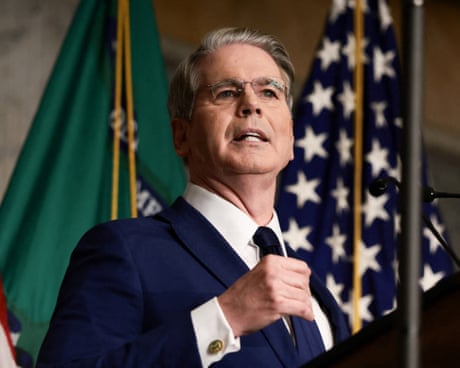
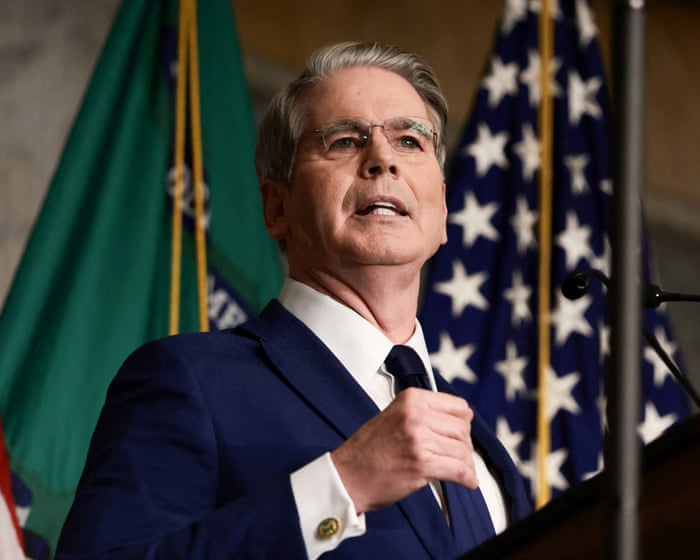
Scott Bessent’s attempt to calm the bond markets and push down America’s cost of borrowing have attracted a rebuke from the US Treasury secretary’s former mentor.
The billionaire investor Stanley Druckenmiller, who worked with Bessent at George Soros’s fund management firm in the 1990s, has warned that his former pupil is courting danger by trying to suppress US bond yields.
Concern over impact of Iran war pushes up government bond yields in US, UK, France, Germany and Japan
Government borrowing costs in several advanced economies hit their highest level since the 2008 financial crisis, or even earlier, on Monday as investors feared the Middle East crisis would keep inflation persistently high.
Concerns over rising prices and government spending pushed up the cost of debt issued by Paris, Berlin, Washington DC, Tokyo and London as investors fretted that rising prices would push up interest rates.

 Anmelden