❌

Lese-Ansicht

Brazil’s HIV advocates say they predicted USAID funding cuts: ‘We would see the trends’

At the Aids 2026 conference, Brazilian advocates said health systems need to be more independent from foreign funding

HIV advocates from Brazil, whose health system operates independently from foreign aid, say they predicted a dramatic reduction in donor funding for HIV and wish other countries had prioritized independence sooner.

While the dissolution of USAID might “feel like a rupture”, it’s something advocates at the Brazilian HIV NGO Gestos have seen coming for a long time, Juliana Cesar, Gestos’s political liaison coordinator, said during a session at the Aids 2026 conference in Rio de Janeiro.

Continue reading...

© Photograph: AFP/Getty Images

© Photograph: AFP/Getty Images

© Photograph: AFP/Getty Images

  •  

HIV prevention drug could reduce cases globally but USAID cuts prevent access, say experts

Injectable PrEP drug holds promise but investment in HIV prevention has declined dramatically worldwide

New innovations in HIV prevention could dramatically reduce the number of new HIV cases around the globe, but US foreign aid cuts will mean that those that most need the new medication will be unable to access it, according to experts at the Aids 2026 Conference in Rio de Janeiro, Brazil.

One year ago, the World Health Organization recommended that governments around the world prioritize expanded access to lenacapavir, an injectable version of the HIV prevention medication PrEP that requires only two injections annually. PrEP, which also comes in the form of daily oral medications and bimonthly injections, is 99% effective in preventing sexually transmitted HIV for people who take it consistently.

Continue reading...

© Photograph: Pablo Porciúncula/AFP/Getty Images
© Photograph: Pablo Porciúncula/AFP/Getty Images

© Photograph: Pablo Porciúncula/AFP/Getty Images

  •  

New study casts doubt on reliability of mental health diagnosis interviews

Diagnostic interviews seen as ‘gold standard’ vary in reliability from condition to condition, study says

Diagnostic interviews – the most common way to diagnose substance use and mental disorders including depression, anxiety, bipolar and personality disorders – vary in reliability from condition to condition, according to a new study in Jama Network Open.

Laura Duncan, a psychiatry professor at McMaster University in Ontario, Canada, and one of the study’s authors, said diagnostic interviews are “often treated as a ‘gold standard’ for assessing mental disorders in both clinical settings and research”, but pointed out that these interviews fall short of providing a “definitive benchmark that demonstrates excellent validity and reliability”.

Continue reading...

© Photograph: Olga Pankova/Getty Images

© Photograph: Olga Pankova/Getty Images

© Photograph: Olga Pankova/Getty Images
  •  

Big tobacco uses cigarette playbook to help sell ultra-processed foods, journal reveals

New issue of the American Journal of Public Health focuses on parallels between marketing for cigarettes and UPFs

The new issue of the American Journal of Public Health focuses on ultra-processed foods, and reveals that big tobacco companies used strategies that helped them sell cigarettes to sell ultra-processed food products, including Lunchables, geared toward children.

The parallels between ultra-processed foods (UPFs) and cigarettes include not only how UPF products were formulated and marketed to drive excess consumption, but also the growing body of evidence linking UPFs to a variety of health risks. For UPFs, these include cardiovascular diseases, certain cancers and cognitive health decline.

Continue reading...

© Photograph: Irina Marwan/Getty Images
© Photograph: Irina Marwan/Getty Images

© Photograph: Irina Marwan/Getty Images

  •  

‘Capitalism has to become more humane’: a Stanford economist on big tech, power hoarding and democracy

Mordecai Kurz argues tech oligarchs erode democracy through monopolies – and predicts how the trend may end

The billionaires of today are unusually aggressive in their hoarding of cultural and technological influence, according to Mordecai Kurz, a Stanford economist whose research connects monopoly power with political and economic inequality. In his new book, Private Power and Democracy’s Decline, publishing 19 May, he argues the US is living through an extreme version of a pattern that has repeated itself since industrialization: technological power concentrating in the hands of a few, which is eroding democracy.

According to Kurz, technological moguls have long seen themselves as superior beings whose natural role is to shape society – so they have no problem disrupting the institution of democracy. During the first Gilded Age, in the late 19th century, as the US was enjoying its first ascent as an industrial powerhouse, wealthy industrialists like Andrew Carnegie and John D Rockefeller “invented all kinds of theories about human evolution”, twisting the logic of social Darwinism to convince themselves that their success was a sign they had been selected by nature to influence society, Kurz explained. Now, the Anthropic CEO, Dario Amodei, has suggested his technology has a mystical potential to become a transcendent good. He has also openly acknowledged it could lead to mass unemployment.

Continue reading...

© Photograph: Getty Images

© Photograph: Getty Images

© Photograph: Getty Images

  •  

How the Trump White House works against itself in its efforts to prevent overdoses

Contradictory policies that gut harm reduction programs while supporting naloxone access are confusing experts

Within just a few weeks, the Trump administration has proposed multiple contradictory policies related to overdose prevention – some that could help save lives and others that experts say could further strain health resources and put people at risk for overdose.

These policies include a new prohibition on funding for fentanyl test strips, which help people avoid overdoses; proposed budget cuts that would gut the country’s overdose prevention efforts; and an ambitious drug control strategy that will be impossible to implement if the aforementioned cuts go through.

Continue reading...

© Photograph: Antonio Perez/Chicago Tribune via Getty Images

© Photograph: Antonio Perez/Chicago Tribune via Getty Images

© Photograph: Antonio Perez/Chicago Tribune via Getty Images
  •  

New study raises concerns about AI chatbots fueling delusional thinking
First major study on ‘AI psychosis’ suggests chatbots can encourage delusions among vulnerable people

A new scientific review raises concerns about how chatbots powered by artificial intelligence may encourage delusional thinking, especially in vulnerable people.

A summary of existing evidence on artificial intelligence-induced psychosis was published last week in the Lancet Psychiatry, highlighting how chatbots can encourage delusional thinking – though possibly only in people who are already vulnerable to psychotic symptoms. The authors advocate for clinical testing of AI chatbots in conjunction with trained mental health professionals.

Continue reading...

© Photograph: Olga Yastremska/Getty Images

© Photograph: Olga Yastremska/Getty Images

© Photograph: Olga Yastremska/Getty Images

  •  

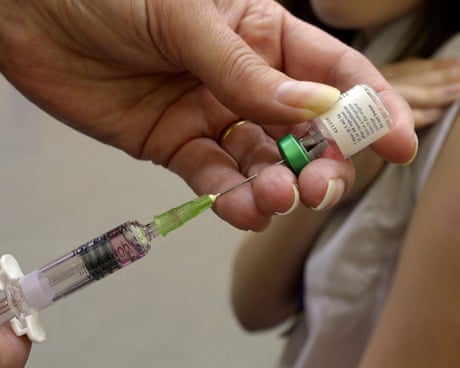
Trump administration is failing to address spread of measles, experts say

As number of cases climbs past 1,000, experts say CDC is not taking obvious steps amid funding cuts

Experts say that the Trump administration has failed to take obvious steps to contain the spread of measles, which is continuing to accelerate in the United States as the number of cases has climbed past 1,000.

The administration has revealed a relaxed attitude toward the highly contagious virus both in terms of messaging and funding allocation, experts said.

Continue reading...

© Photograph: Juan Diego Reyes for The Washington Post via Getty Images

© Photograph: Juan Diego Reyes for The Washington Post via Getty Images

© Photograph: Juan Diego Reyes for The Washington Post via Getty Images

  •  

‘Viruses don’t know borders’: US anti-vaccine rhetoric could impact global measles crisis

Experts say global measles vaccination rates are falling as Trump officials signal a deprioritization of the virus

The US government has amplified anti-vaccine rhetoric and signaled that it does not consider measles to be a priority, which could have global ramifications as countries around the world have lost or are on the brink of losing measles elimination status.

The World Health Organization announced in late January that six European countries: the United Kingdom, Spain, Austria, Armenia, Azerbaijan and Uzbekistan had all officially lost their measles elimination status, which means the virus has been circulating continuously in those countries for more than 12 months. In order to contain measles, at least 95% of children should be fully vaccinated against it, according to health recommendations, but vaccination rates have been falling across Europe.

Continue reading...

© Photograph: Owen Humphreys/PA

© Photograph: Owen Humphreys/PA

© Photograph: Owen Humphreys/PA

  •  

Ayahuasca psychedelic DMT shows promise as depression therapy

Study finds participants saw reduction in depressive symptoms as researchers welcome ‘promising’ results

A phase II clinical trial has found dimethyltryptamine (DMT), one of the psychoactive components traditionally used in the Amazonian psychedelic ritual ayahuasca, might be a promising therapy for depression.

The psychedelic pharmaceutical company Small Pharma (now Cybin UK) sponsored and designed the trial, which was led by Dr David Erritzoe, a psychiatrist and neuroscientist at Imperial College London. The results were published in Nature this month.

Continue reading...

© Photograph: Luis Acosta/AFP/Getty Images

© Photograph: Luis Acosta/AFP/Getty Images

© Photograph: Luis Acosta/AFP/Getty Images

  •  

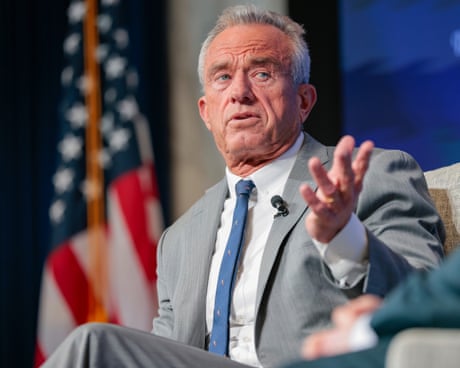
No evidence behind RFK Jr’s claim keto diet can cure schizophrenia, experts say

Health secretary probably referred to Harvard psychiatrist who says he’s ‘never used the word “cure” in my work’

Psychiatric researchers are pushing back against the claims by the health and human services secretary, Robert F Kennedy Jr, that a doctor at Harvard “cured schizophrenia using keto diets”, while also acknowledging that a carefully supervised ketogenic diet shows promise for a variety of mental health conditions.

Kennedy Jr’s statement probably referred to the Harvard psychiatrist Dr Christopher Palmer, who said he has “never once used the word ‘cure’ in my work. I have never claimed to have cured any mental illness, including schizophrenia,” but added: “I have talked about ketogenic diet being a very powerful treatment, even to the point of inducing remission of symptoms of schizophrenia.”

Continue reading...

© Photograph: Heather Diehl/Getty Images

© Photograph: Heather Diehl/Getty Images

© Photograph: Heather Diehl/Getty Images

  •  

Screen time limits for children are no longer enough, new US report finds

Experts say guidance is ‘refreshing’ as it puts more emphasis on responsibility of companies and society

The American Academy of Pediatrics has released new guidance on how to protect children’s mental health in the digital age – emphasizing the need for systemic changes as well as parental engagement that goes beyond limiting screen time.

Jessica Schleider, an adolescent psychologist and professor at Northwestern University whose lab develops digital mental health interventions, said the new policy statement was “really refreshing to see”, because it contrasts with conventional wisdom that places too much of the safety burden on individual parents. Common advice like “limiting individual youth access to screens”, or asking parents to keep tabs on their children’s every digital movement is “not only impossible, but for adolescents in particular, potentially invasive”, Schleider said.

Continue reading...

© Photograph: Posed by model; Elva Etienne/Getty Images

© Photograph: Posed by model; Elva Etienne/Getty Images

© Photograph: Posed by model; Elva Etienne/Getty Images

  •  

High on ... mustard? Cannabis industry teams up with chefs in push to stand out

US legal cannabis industry seeks new ways to incorporate weed into meals after a tough year for business in 2025

Food and stoner culture have always gone together, but these days chefs and cannabis professionals are working together to find thoughtful, new ways to incorporate weed into meals.

For National Hot Pastrami Day on 14 January, a celebrated Jewish deli in Chicago teamed up with a local Illinois dispensary to give customers free pastrami sandwiches garnished with cannabis-infused mustard.

Continue reading...

© Photograph: Ivy Hall

© Photograph: Ivy Hall

© Photograph: Ivy Hall

  •  

RFK Jr’s new diet guidelines pose risks for health and the environment, experts say

US health department’s new food pyramid places red meat and cheese high in saturated fats over plant-based proteins

The new food pyramid rolled out in US health secretary Robert F Kennedy Jr’s Dietary Guidelines for Americans (DGA) places animal-based proteins, including cheese and red meats high in saturated fats, above plant-based proteins, which has raised alarm bells among health and environmental experts.

This rejiggered food pyramid is in line with Kennedy’s previous signals that he will recommend increasing saturated fat in US diets as part of the “Make America healthy again” movement.

Continue reading...

© Composite: Bloomberg via Getty Images, Reuters

© Composite: Bloomberg via Getty Images, Reuters

© Composite: Bloomberg via Getty Images, Reuters

  •  

Psychedelic treatments show promise for OCD while cannabis doesn’t, review finds

Psychiatry professor theorizes that the difference is related to how the substances interact with areas of the brain

A recent review of alternative treatments for obsessive compulsive disorder (OCD) indicates that psychedelic treatments show promise for the disorder while cannabis does not.

Dr Michael Van Ameringen, a psychiatry professor at McMaster University in Ontario, Canada and lead author of the review published in the Journal of Psychiatric Research, said that 40-60 % of OCD patients get either partial or no relief with available treatments, including SSRIs and exposure and response prevention therapy.

Continue reading...

© Photograph: John Moore/Getty Images

© Photograph: John Moore/Getty Images

© Photograph: John Moore/Getty Images

  •  

Has OpenAI really made ChatGPT better for users with mental health problems?

Prompts indicating suicidal ideation got alarming replies, which experts say shows ‘how easy it is to break the model’

An OpenAI statement released this week claimed the company had made its popular service ChatGPT better at supporting users experiencing mental health problems like suicidal ideation or delusions, but experts tell the Guardian they need to do more to truly ensure users are protected.

The Guardian tested several prompts indicating suicidal ideation with the ChatGPT GPT-5 updated model, which is now the default, and got alarming responses from the large language model (LLM) chatbot.

Continue reading...

© Photograph: NurPhoto/Getty Images

© Photograph: NurPhoto/Getty Images

© Photograph: NurPhoto/Getty Images

  •  
❌