❌

Lese-Ansicht

How the deadly Nepal and Tibet flash flood unfolded – a visual guide

US Geological Survey says massive glacial collapse caused catastrophic flash floods in the Himalayan border region of Nepal ⁠and Tibet

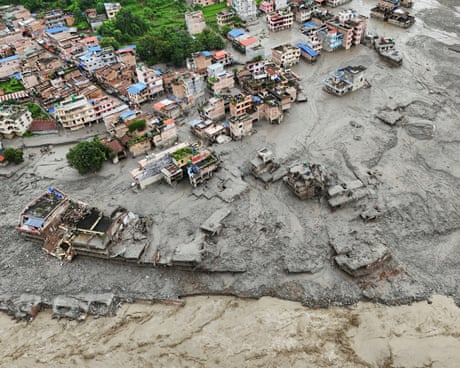
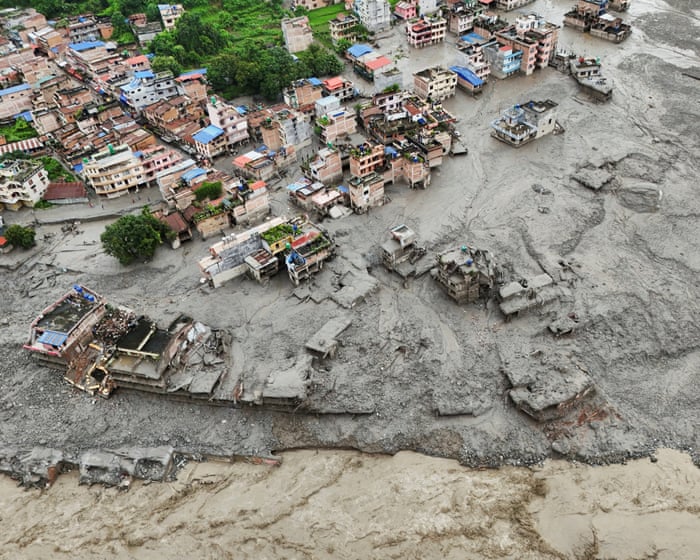
At 8.37am on Wednesday, an enormous section ⁠of a glacier in the Himalayas sheared free and crashed on to the valley floor in Nepal’s Langtang national park, about 35 miles (60km) north of the capital, Kathmandu, near the mountainous Nepal-Tibet border.

Such was the force of the event, it was initially reported as an earthquake of magnitude 4.4. The US Geological Survey later determined the tremor was caused ​by glacial rock and ice collapsing, registering a magnitude of 5.2.

Continue reading...
© Photograph: Navesh Chitrakar/Reuters
© Photograph: Navesh Chitrakar/Reuters
© Photograph: Navesh Chitrakar/Reuters
  •  

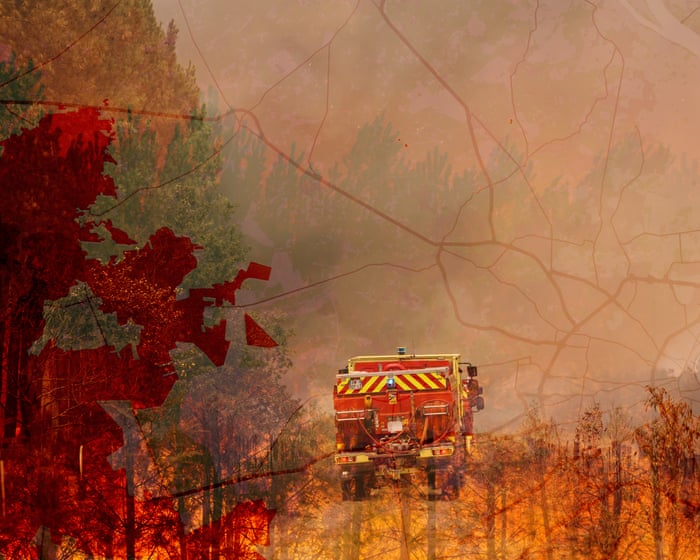
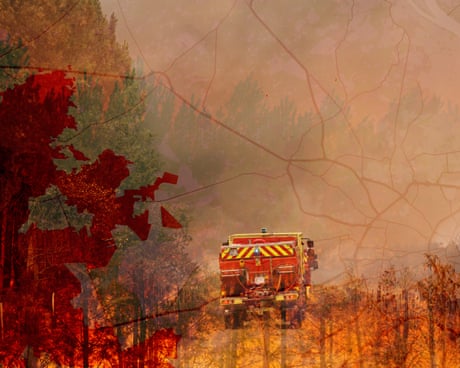
Pine-cone grenades and planet-baking carbon: the French fires 170 years in the making – a visual guide

An 1857 decree to drain swamps and plant a monoculture, detritus from the trees and global heating combined to produce the conditions for the Gironde inferno

The ruinous fires that overran parts of France this summer have burned more land than ever recorded, forced more people from their homes than at any point since the second world war and caused what scientists suspect is the country’s first firestorm thundercloud. The smoke from France’s biggest inferno in nearly 80 years choked Limoges, a city 125 miles (200km) from the flames, with more toxic dust than Delhi residents inhaled on the city’s worst day of smog last year.

The blaze that tore through forests outside Bordeaux in late July took just a few weeks to reforge France’s relationship with fire, but the conditions behind it were centuries in the making.

Continue reading...

© Composite: Prina Shah for the Guardian / EPA / Getty Images

© Composite: Prina Shah for the Guardian / EPA / Getty Images

© Composite: Prina Shah for the Guardian / EPA / Getty Images

  •  

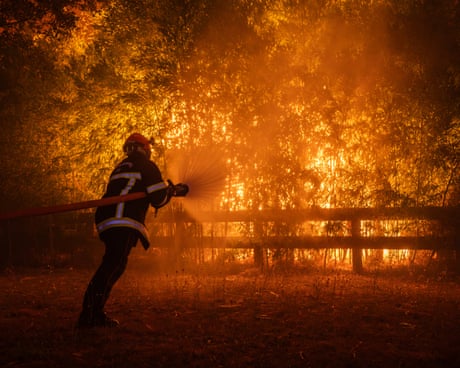
Europe burns: a visual guide to the wildfires

Ferocious flames continue to rage in parts of France and Spain, with no sign of abating. We chart the destruction in graphics and pictures

The hellish infernos that have torn through parts of France and Spain have caused deaths, the evacuation of 330,000 people from their homes, widespread destruction and clouds of toxic smoke. Records have already been smashed and with the fourth heatwave of the European summer setting in, there are few signs of the waves of wildfires ending.

France has already surpassed the worst previous year for the size of the area burned, with August, usually the hottest month, yet to come.

Continue reading...

© Photograph: Damien Rembert/EPA

© Photograph: Damien Rembert/EPA

© Photograph: Damien Rembert/EPA

  •  

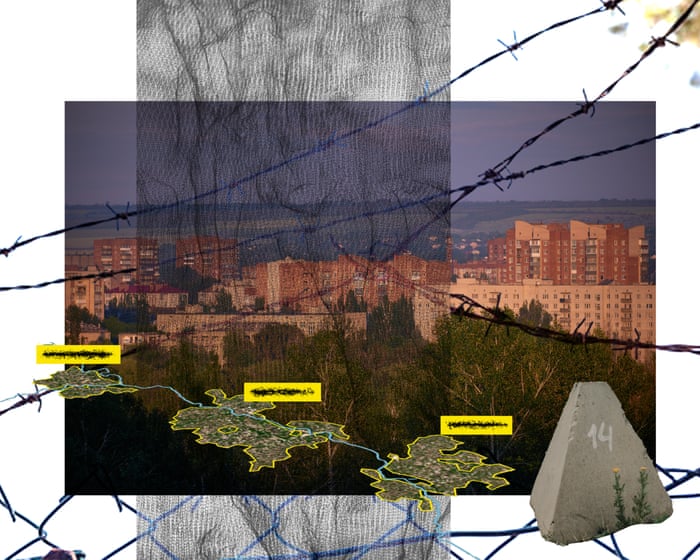
Kill zones and drone nets: a journey through Ukraine’s fortress belt

A strategic line of towns and cities is crucial to Ukraine’s defence – and where the war is at its most brutal

A vast cobweb of spent fibre-optic cable is draped over the buildings in the small Ukrainian city of Lyman. Used to control the deadly drones deployed by both Russia and Ukraine, it has accumulated so densely after the years of fighting here that fresh drones struggle to fly through it, rotors tangling in the mass. Birds pluck it out to make their nests.

Beneath the glistening strands, residential blocks are shattered from shellfire as Moscow’s forces still push daily to take a city they briefly occupied until the Ukrainian counteroffensive of 2022, when they were driven out.

Continue reading...

© Composite: Prina Shah for the Guardian / Getty Images

© Composite: Prina Shah for the Guardian / Getty Images

© Composite: Prina Shah for the Guardian / Getty Images

  •  

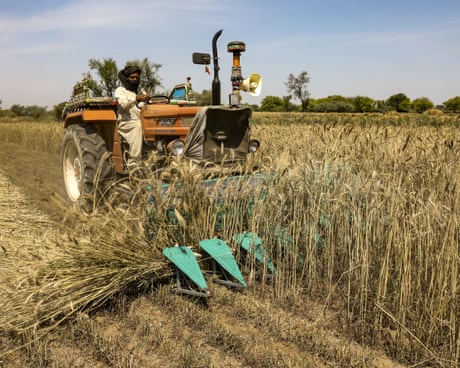
‘Food security timebomb’: a visual guide to the Gulf fertiliser blockade

UN says record numbers of people could face acute hunger if conflict continues

The world has become well versed in the importance of the strait of Hormuz to the world’s energy flows, but attention is increasingly turning to its vital role in another market – the fertiliser on which harvests depend.

A third of the global trade in raw materials for fertiliser passes through the maritime choke point, which is also the route for 20% of shipments of natural gas, which is required to make it.

Continue reading...

© Photograph: Bloomberg/Getty Images

© Photograph: Bloomberg/Getty Images

© Photograph: Bloomberg/Getty Images

  •  

Lunar prospectors: the businesses looking to mine the moon

Within the lunar dirt is a type of helium so rare on Earth that a palm-sized container is estimated to be worth millions

In the silent vacuum of space, five autonomous robots churn through the lunar surface, digging up a loose layer of rock and dust and leaving rows of uniform tracks in their wake.

Stopping only to recharge at a central solar power station, the car-sized machines process the lunar dirt internally to extract a type of helium so rare on Earth that a palm-sized container is estimated to be worth millions. Once processed, the precious resource is loaded into a launcher and ejected back to Earth.

Continue reading...

© Photograph: Oliver Holmes/Perch Partners

© Photograph: Oliver Holmes/Perch Partners

© Photograph: Oliver Holmes/Perch Partners

  •  

How Iran has used the strait of Hormuz to throttle oil and gas – a visual guide

The Tehran regime has weaponised geography in retaliation for the attacks by the US and Israel

Global oil markets have recorded some of the biggest price swings in history this week after the US-Israeli war with Iran throttled the flow of Middle Eastern crude through the strait of Hormuz.

The narrow waterway south of Iran is one of the world’s most important trade arteries, through which a fifth of global oil and seaborne gas is shipped from production facilities and refineries in the Gulf to buyers around the world.

Continue reading...

© Photograph: Anadolu/Getty Images

© Photograph: Anadolu/Getty Images

© Photograph: Anadolu/Getty Images

  •  

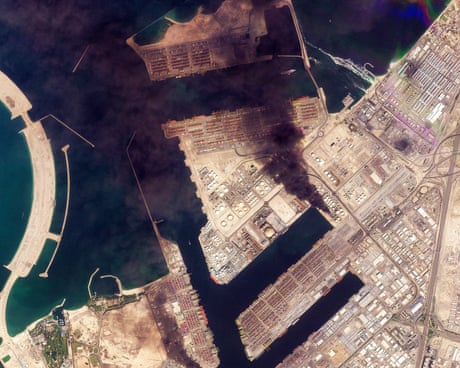
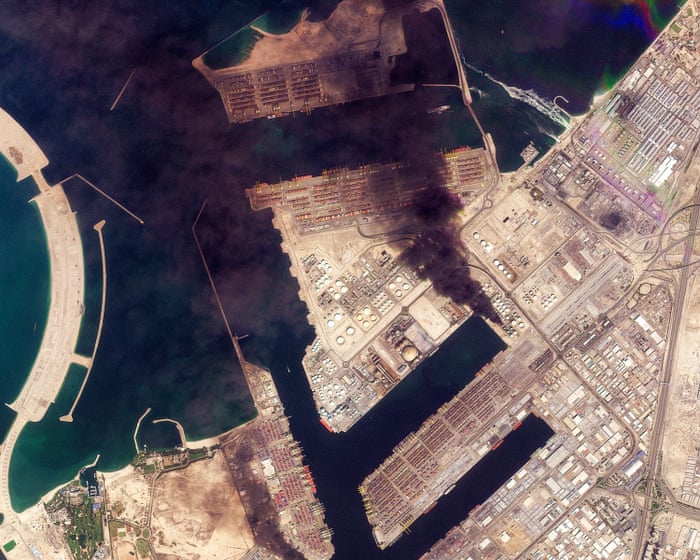
How escalating Iran conflict is driving up oil and gas prices – a visual guide

A halt to shipping in strait of Hormuz and attacks on Middle East refineries are threatening supplies and stoking inflation

Iran has responded to US and Israeli attacks by launching a series of counterstrikes against states across the Middle East, with serious consequences for the oil and gas industry and the global economy.

Tehran has attacked oil facilities in neighbouring countries, while shipping traffic through the strait of Hormuz – the crucial bottleneck at the mouth of the Gulf – has all but ground to a halt.

Continue reading...

© Photograph: 2026 Planet Labs PBC/AFP/Getty Images

© Photograph: 2026 Planet Labs PBC/AFP/Getty Images

© Photograph: 2026 Planet Labs PBC/AFP/Getty Images

  •  

Violence in Mexico after military kills notorious drug cartel boss – a visual guide

Streets empty as residents shield from chaos of retaliatory attacks after death of ‘El Mencho’ in federal raid

Mexico is on alert after cartel gunmen went on a violent rampage of revenge in response to federal forces killing their leader, a notorious mob boss known as “El Mencho”.

Authorities had attempted to capture Nemesio Rubén Oseguera Cervantes in the western state of Jalisco on Sunday but the raid led to a firefight that fatally wounded the infamous leader and killed six of his accomplices, according to officials.

Continue reading...

© Photograph: Ulises Ruiz/AFP/Getty Images

© Photograph: Ulises Ruiz/AFP/Getty Images

© Photograph: Ulises Ruiz/AFP/Getty Images

  •  

How a Soviet-era heating system exposes Ukraine to Russian attack – a visual guide

Communal central heating means Moscow can plunge entire neighbourhoods into cold with a single strike

Many Ukrainians are without heating in sub-zero temperatures as a result of relentless Russian strikes on energy infrastructure, while the country suffers through its coldest winter of the war so far.

Ukraine is especially vulnerable to such attacks, as Moscow can exploit a widespread Soviet-era heat system in which multiple apartment blocks rely on communal central heating.

Continue reading...

© Photograph: Sergei Grits/AP

© Photograph: Sergei Grits/AP

© Photograph: Sergei Grits/AP

  •  

Visual investigation: How Rio’s deadliest police raid unfolded

Warning: this video contains footage that may be distressing to some viewers.

In October 2025, 122 people were killed in what would become Rio’s deadliest police operation. ‘Operation Containment’ was designed to arrest members of one of Brazil's most powerful organised crime groups, the Red Command.

Three months after the police raid many questions still remain, but the Guardian's investigation found that at least one person killed was not a gang member. Police chiefs and conservative politicians have hailed it as a historic blow to organised crime but activists, security experts, the families of the dead, and even Brazil’s president, Luiz Inácio Lula da Silva, have called a disastrous and futile massacre.

A team of journalists across the Guardian has pieced together police body-camera footage, satellite imagery and pictures and video posted to social media to get the clearest picture to date of what happened that day.

Continue reading...

© Photograph: Composit

© Photograph: Composit

© Photograph: Composit

  •  

Rio’s bloodiest day: the untold story of Brazil’s most deadly police raid

In interviews with community leaders, lawyers, security specialists and bereaved relatives, the Guardian pieces together how an operation targeting a criminal gang left 122 people dead last October

Juliana Conceição startled awake as the first shots of an infamous day were fired in the Complexo da Penha, the labyrinthine Rio favela where she was born and raised.

It was 4.30am on 28 October. Thousands of police had surrounded the community’s barricaded entrances and were preparing to swarm up its streets on foot and in black armoured personnel carriers with firing ports and bullet-cracked ballistic windows.

Continue reading...

© Photograph: Alan Lima/The Guardian

© Photograph: Alan Lima/The Guardian

© Photograph: Alan Lima/The Guardian

  •  

‘I saw kids being shot, women, old people’: how a massacre unfolded in one Iranian city

The Guardian has constructed a timeline for the terrible events of one night of protests in Rasht, based on first-hand accounts, video and photographs

On Thursday 8 January, Iran went dark. In the midst of massive national protests, the government shut down the internet, phone calls, and almost all communication out of the country. That evening a violent crackdown began. In some cities, government forces opened fire on crowds, killing thousands – according to some estimates, possibly tens of thousands – in two days of bloodshed. The internet blackout has meant that a clearer picture of what happened – drawn from witness reports, videos, photographs and testimony from hospitals – has taken time to assemble.

When the violence began, there were demonstrations taking place in more than 200 cities, according to human rights groups. This is the story of what unfolded in one of them.

Continue reading...

© Photograph: Courtesy of Tavaana

© Photograph: Courtesy of Tavaana

© Photograph: Courtesy of Tavaana

  •  

Greenland: new shipping routes, hidden minerals – and a frontline between the US and Russia?

Key maps show the growing strategic importance of Greenland as Arctic ice melts under global heating

Lying between the US and Russia, Greenland has become a critical frontline as the Arctic opens up because of global heating.

Its importance has been underscored by Donald Trump openly considering the US taking the island from its Nato partner Denmark, either by buying it, or by force.

Continue reading...

© Composite: AP / The Guardian / Guardian design

© Composite: AP / The Guardian / Guardian design

© Composite: AP / The Guardian / Guardian design

  •  

Reflagged by Russia, spied on by UK, seized by US: why so much interest in a rusty tanker in the Atlantic?

The ship is alleged to be part of a shadow fleet dodging western sanctions. It had no oil onboard – but was it carrying Russian weapons?

A massive, rusty crude oil tanker floating north through the Atlantic has become the centre of global interest after it was followed for days and eventually seized by US forces while Russia’s military rushed towards it.

Despite not carrying any oil, the 300-metre-long ship is clearly of value. Theories for why range from speculation that high-value Russian weapons are hidden in the hull, to the ship’s potential to become a symbolic trophy in a transatlantic power struggle between Washington and Moscow.

Continue reading...

© Photograph: US European Command/AFP/Getty Images

© Photograph: US European Command/AFP/Getty Images

© Photograph: US European Command/AFP/Getty Images

  •  

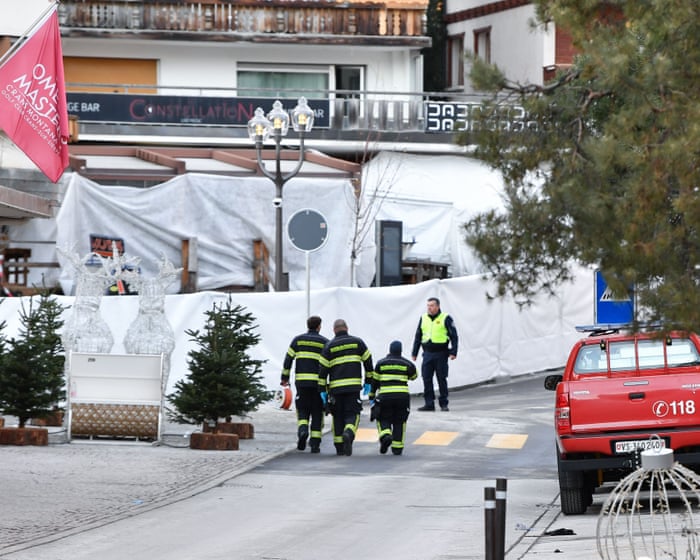
What happened in the Crans-Montana bar fire in Switzerland – visual guide

While the cause of the disaster is still under investigation, videos and photos suggest the blaze spread quickly

Switzerland is reeling from one of its worst tragedies after a fire ripped through an Alpine bar during a New Year’s Eve celebration, leaving more than 40 people dead and dozens of others with serious burn injuries.

The prosecutor in charge of the case said on Friday that initial investigations suggested the most likely cause of the fire was sparkling flares being carried too close to the ceiling.

Continue reading...

© Photograph: Xinhua/Shutterstock

© Photograph: Xinhua/Shutterstock

© Photograph: Xinhua/Shutterstock

  •  
❌