❌

Lese-Ansicht

Lourdes gets a Vegas glow-up at Dublin theatre festival, where canvases are slashed

A musical about a drama group’s pilgrimage and reflections on activist art join an intriguing show about lost languages

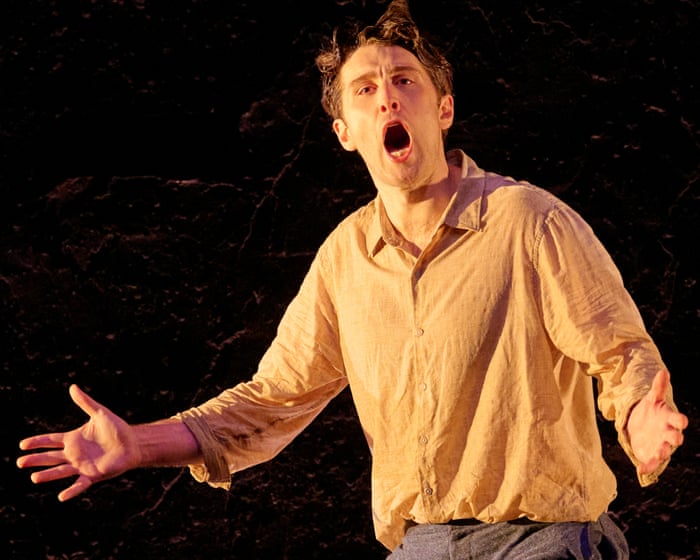
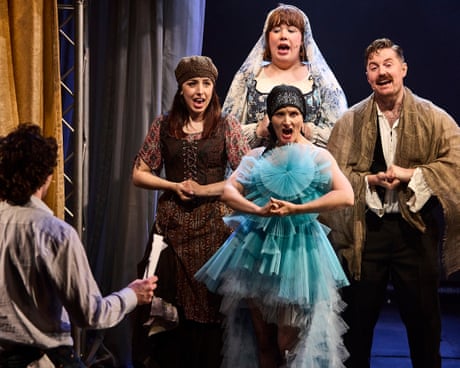
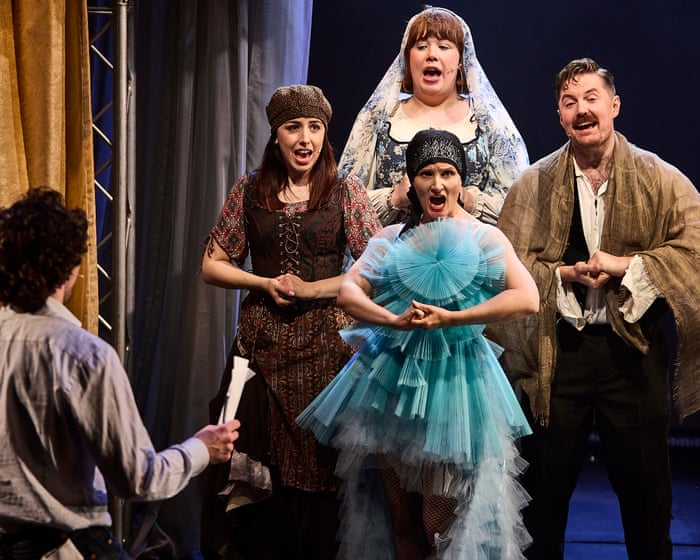
In a Dublin theatre festival programme tackling heavy themes of racism, conflict and prejudice, Lourdes! The Musical (★★★★☆) promises something effervescent. Xnthony Ltd, the creators of Oliver Cromwell Is Really Very Sorry, have turned their lightly quizzical gaze to the French pilgrimage town – “a holy Blackpool, a divine Las Vegas” and a site of hope or desperation for five unlikely travelling companions.

Back in his home village in “Countryland”, in 2008, following a diagnosis of HIV that punctures his dreams of Los Angeles, singer-songwriter Matthew (Riain Cash) lends his star power to a parish drama group taking a musical about Saint Bernadette to Lourdes. Interweaving this show-within-a-show and the pilgrimage strands, Xnthony’s lyrics and Matthew Floyd Jones’s score blend pop, club beats and soulful ballads. Directed by Sarah Meadows, the supercharged ensemble joining Cash as, variously, a droll priest (Iestyn Arwel), a terminally ill mother and her transgender daughter (Nichola MacEvilly and Danielle James) and an eager tour manager (Molly Lynch) carry the music’s tonal shifts effortlessly.

Continue reading...
© Photograph: Patricio Cassinoni
© Photograph: Patricio Cassinoni
© Photograph: Patricio Cassinoni

  •  

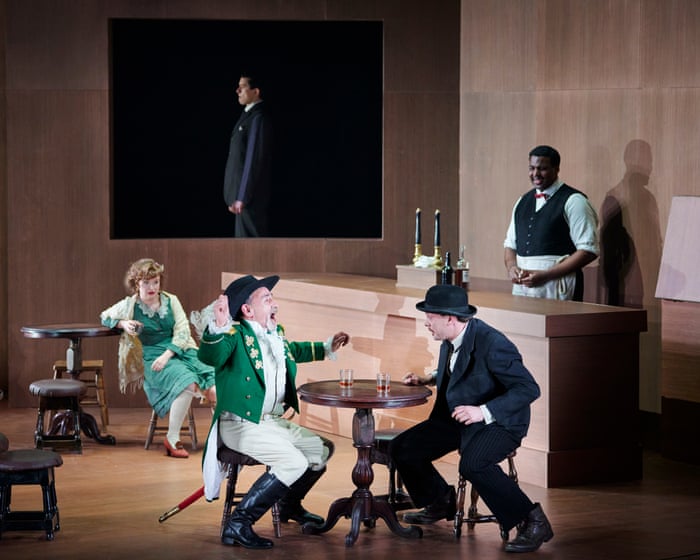
The Shaughraun review – comic antics and roguish charm in a divided Ireland

Town Hall theatre, Galway
A beautifully knit ensemble bring infectious, giddy fun to Dion Boucicault’s 1874 caper, finding a delicious balance between whimsy and sincerity

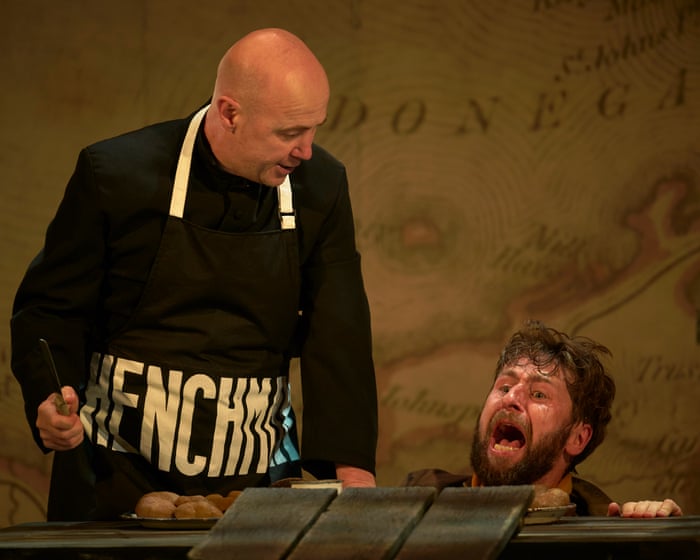
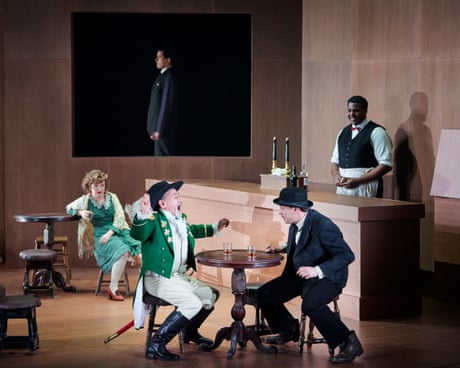
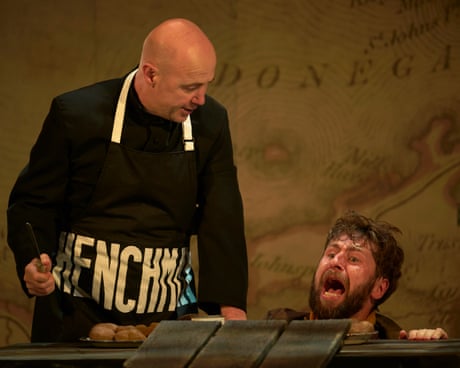
Dion Boucicault’s comic melodrama from 1874 holds a place in theatre history for its playful upending of national stereotypes and expectations. Finding a delicious balance between whimsy and sincerity, Garry Hynes’s inventive production for Druid theatre company celebrates Boucicault’s gifts as a playwright and master of stage spectacle, whose creations dazzled 19th-century audiences in New York and London.

This staging takes a miniaturist approach, with Sligo landscapes, cliff tops and gothic towers depicted as picture-book illustrations glimpsed from a distance. Ladders and furniture descend and glide, with assistance from the nimble cast of 10, most dextrously by Conn “the Shaughraun” (Aaron Monaghan), poacher and trickster. Here, Conn also acts as master of ceremonies cum stage manager, as if standing in for Boucicault himself.

Continue reading...

© Photograph: Ros Kavanagh

© Photograph: Ros Kavanagh

© Photograph: Ros Kavanagh

  •  

Distillation review – a paean to peat that’s a feast for the senses

The Crypt at St Luke’s, Cork
Luke Casserly’s playful, participatory exploration of Ireland’s 10,000-year-old bogs involves touch, sound, taste – and an earthy perfume

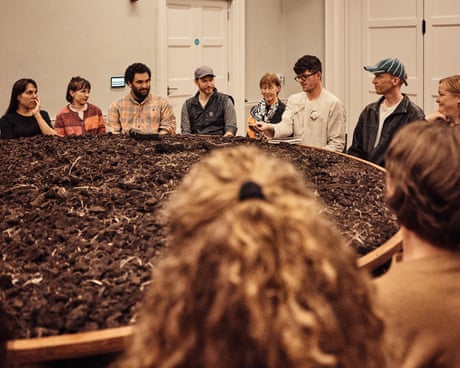
Seated at a circular table covered in a mound of dried peat, writer and performer Luke Casserly might be presiding over an arcane ritual. When he holds a handful of peat in his hand and passes it to the small audience around the table, the initial air of solemnity dissolves into quizzical laughter.

A soundscape of birdsong and wind evokes the ancient landscape of bogs in the Irish midlands, where Casserly grew up. Part essay, part dialogue, this playful, participatory performance involves touch, sound, taste – and especially the smells of soil, moss and peat smoke, later presented as a perfume created by olfactory artist Joan Woods; a message in a bottle.

Continue reading...

© Photograph: PR

© Photograph: PR

© Photograph: PR

  •  

A peace process thriller, the DUP opera and countless cuppas: Belfast’s Lyric theatre at 75

What began as a tiny space above the founder’s stables became the beating heart of the city’s performing arts. Its leader Jimmy Fay reflects on recent hits and reveals what audiences can expect from the theatre’s anniversary year

‘The Lyric gives voice to everyone in Northern Ireland,” says the theatre’s boss, Jimmy Fay. “It’s a beacon.” Fay views the 2026 programme, celebrating 75 years of the Lyric, as an opportunity to showcase current creative talent, as well as honouring the theatre’s past.

One of the plays from the repertoire that Fay was keen to revive is Christina Reid’s Tea in a China Cup, from 1983. With a cast including Marie Jones, the new production – which runs in May – is directed by Dan Gordon, who performed in the original. Reid’s play traces the daily lives of Protestant working-class women in Belfast across three decades, from the second world war to the Troubles, with humour and poignancy.

Continue reading...

© Photograph: Melissa Gordon Gorgeous Photography

© Photograph: Melissa Gordon Gorgeous Photography

© Photograph: Melissa Gordon Gorgeous Photography

  •  

Do You Come from Gomorrah? review – Frank McGuinness’s blistering portrait of abuse and prejudice

Abbey, Dublin
An unnamed narrator recollects a 1970s childhood of institutional brutality and sectarianism in this allusive memory play

Language is twisted and slippery in Frank McGuinness disturbing new memory play for the Abbey theatre. As an unnamed narrator, Man (Ryan Donaldson) looks back on his 1970s youth during the Troubles in Northern Ireland, he says that the past “does not belong to me”.

The Man’s recollections come in snatches: sometimes hazily with humorous shrugs, then sharply focused. First, his early years with his violent mother, who struggles with alcohol addiction; later his time in a residential care home for teenage boys run by a luridly sadistic sexual abuser known as Beastie Billy. There the boys are subjected to Billy’s Old Testament-infused sectarian and misogynist rhetoric, while being pimped at night to members of the British security forces. “We serve the forces,” the narrator’s teenage self says ironically, as ideas of loyalty and service become increasingly distorted.

Continue reading...

© Photograph: Ros Kavanagh

© Photograph: Ros Kavanagh

© Photograph: Ros Kavanagh

  •  

The Plough and the Stars review – Seán O’Casey’s Dublin drama hits 100 with haunting staging

Abbey theatre, Dublin
Director Tom Creed brings this 1926 political classic into the present, with a tremendous cast navigating the tonal switch from comedy into tragedy

Marking the centenary of the premiere of Seán O’Casey’s potent political drama, the Abbey’s latest production opens a door to looser, more experimental ways of staging it. Frequently produced in recent years, the tragi-comic work that caused a riot in 1926 is now embedded in the Irish theatre canon.

It is set among Dublin tenement dwellers in the run-up to the Easter Rising of 1916, and O’Casey’s characters are caught up in events beyond their control. Try as she might, the newly married Nora Clitheroe (Kate Gilmore) can’t persuade her husband Jack (Eimhin Fitzgerald Doherty) to stay home rather than joining an Irish Citizen Army rally. Nor can she keep the outside world at bay, with her neighbours, the absurdly morbid Mrs Gogan (Kate Stanley Brennan) and hard-drinking Unionist Bessie Burgess (Mary Murray) bursting in constantly, with no privacy possible.

At Abbey theatre, Dublin, until 30 April

Continue reading...

© Photograph: Ros Kavanagh

© Photograph: Ros Kavanagh

© Photograph: Ros Kavanagh

  •  

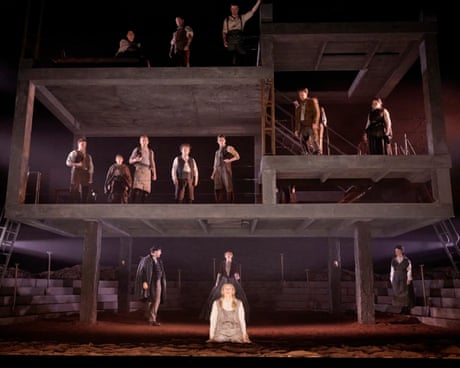
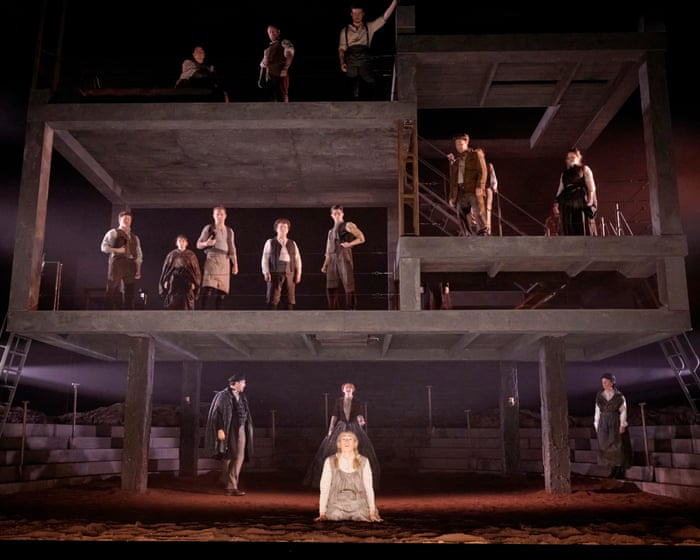
Dublin Gothic review – epic ‘losers’ history’ of the city traces 100 years of family life

Abbey theatre, Dublin
Barbara Bergin’s tale follows four families through strikes in the slums, the Easter Rising, the early years of independence and the HIV-Aids crisis of the 1980s

In Barbara Bergin’s epic “losers’ history” of Dublin, street names tell their own story. Tosser’s Pot leads to Cutpurse, then from Pokes Alley to Kiphouse Row. For the residents of the inner-city tenement building where the action opens in 1880, choices are starkly circumscribed and lives are cut short by poverty, disease or violence.

Covering 100 years of life in this house, the narrative traces four families, their lives intertwined through generations, with trauma recurring – to women in particular – echoing the spirit of Seán O’Casey. The historical backdrop is outlined in broad brush: from strikes in the slums to revolution and war, through the early years of the independent state, to the heroin and HIV-Aids crises of the 1980s.

At Abbey theatre, Dublin, until 31 January

Continue reading...

© Photograph: Ros Kavanagh

© Photograph: Ros Kavanagh

© Photograph: Ros Kavanagh

  •  
❌