❌

Lese-Ansicht

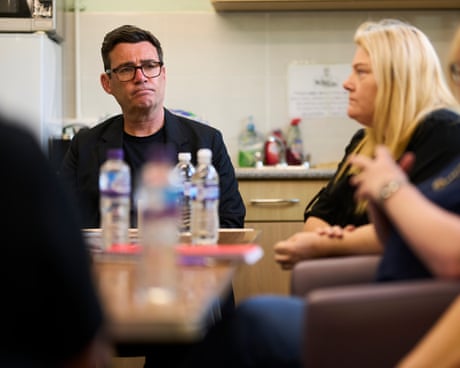
From the US midterms to the hard right in Britain, empathy has become a dirty word in politics | John Harris

Around the world, virtues such as compassion and kindness are gathering dust, like old hymn books in a long-deserted church

Towards the end of the summer, the Tory-Reform defector Robert Jenrick authored an op-ed piece for the Daily Telegraph about the seemingly impossible economics of rising benefits bills because of mental ill-health. In his capacity as Reform’s Treasury spokesman, his task was to big up its plans to cut 25% of so-called welfare spending by 2030, and thereby tackle what he called the state’s “suicidal empathy”.

Straight away, I wondered where this most opportunistic politician had borrowed that phrase from, and instantly found out: a book with the same title, published this year by the Canadian academic Gad Saad, whom the dust jacket describes as having particular expertise in “the use of evolutionary psychology in marketing and consumer behaviour”. It comes with an endorsement from Elon Musk. “Western civilisation is doomed unless the core weakness of suicidal empathy is recognised and actions are taken that are hard but necessary for survival,” says the world’s richest man. “All of Gad’s books, including this one, are great.”

Continue reading...

© Photograph: Saul Loeb/AFP/Getty Images

© Photograph: Saul Loeb/AFP/Getty Images

© Photograph: Saul Loeb/AFP/Getty Images

  •  

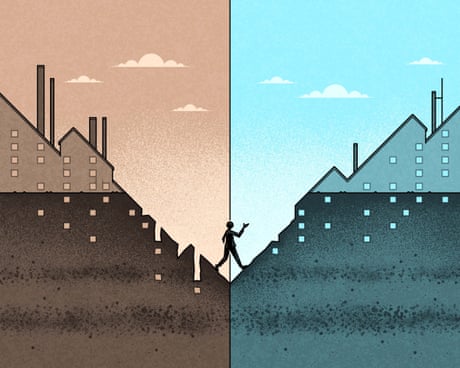
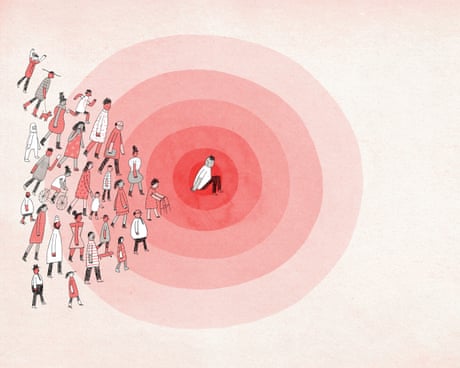
‘The term is becoming unrecognisable’: have the experts who believed in a single autism spectrum changed their minds?

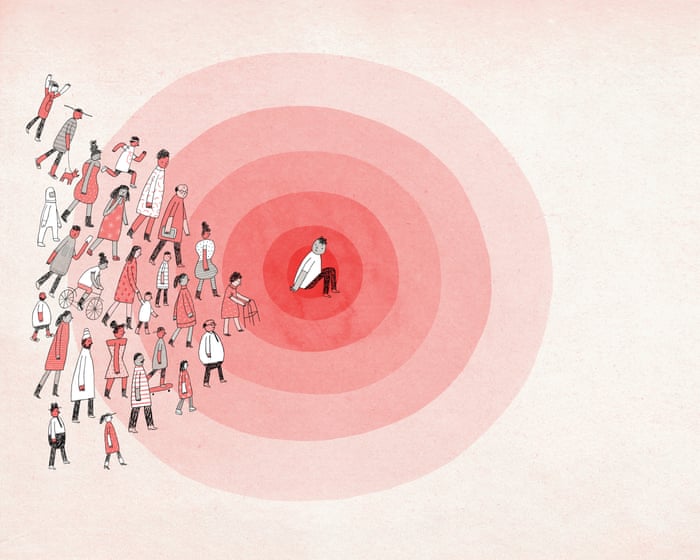
There has been a steep rise in the number of people labelled autistic over the last 20 years. Is that down to greater understanding – or overdiagnosis?

The home of 85-year-old Uta Frith does not exactly look like the latest front in the culture wars. Located in a serenely quiet corner of north-west London, it suggests a life still well lived, a set of deep interests and an idyllic kind of retirement. There are so many books that some are reachable only using a very tall ladder. The four hours I spend talking to her – and her husband Chris, an expert in schizophrenia – are an absolute pleasure. There is no sense of outrage or upset: even when I ask her about the stream of hostile and abusive emails she has recently received, she is relaxed and phlegmatic. “I tend to cope by just deleting them,” she says. “I don’t dwell on it.”

“It” is a reference to the controversy kicked up by her recently expressed views on a subject that sits at the heart of Frith’s academic career: what it is to be autistic, and who should or shouldn’t qualify for a diagnosis. Back in March, Dame Uta Frith – she was honoured with the title seven years ago – gave an interview to TES magazine (formerly the Times Educational Supplement) scattered with stark pronouncements. Among them was a claim that the so-called autistic spectrum has “gone on being more and more accommodating”, to the point that it “has come to its collapse”. Then, in August, she published a piece in the academic journal Psychological Medicine claiming autism was in dire danger of being turned from a “precise, clinical” term into a “vague, culturally amplified identity category”.

Continue reading...

© Illustration: Brian Rea/The Guardian

© Illustration: Brian Rea/The Guardian

© Illustration: Brian Rea/The Guardian

  •  

As a young man, magazines were my window to the world. That wonder will be lost when all the shops have gone | John Harris

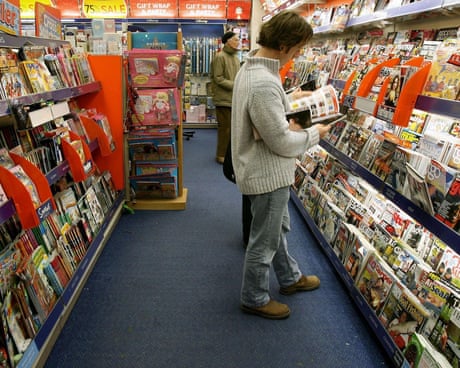
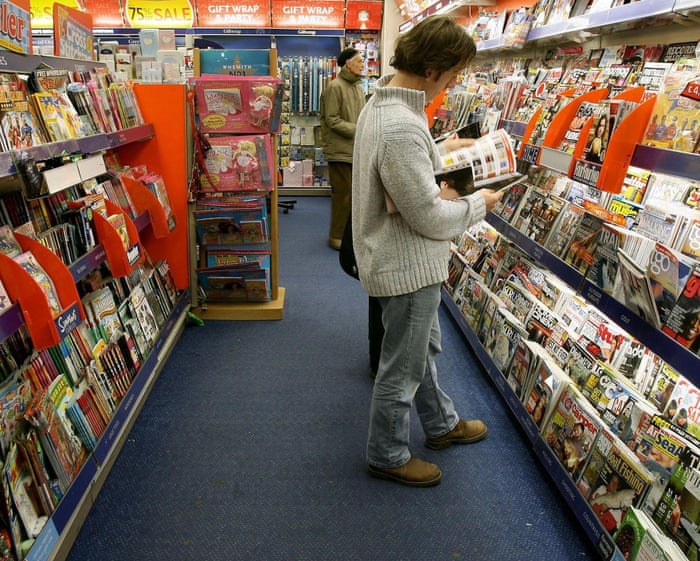
The closure of former WH Smith stores around the UK is sobering on many levels. The publications they sold were there to be perused, to broaden horizons

Towards the end of the 1970s, the brief but spectacular career of those punk rockers and folk devils the Sex Pistols was followed by The Great Rock’n’Roll Swindle, a rather tawdry drama-documentary. It recast their rise and fall as a huge scam, summed up by a slogan on a T-shirt worn by their former manager Malcolm McLaren: “Cash from Chaos”.

Back then, that motto was a neat representation of his personal brand of cultural mischief. But the culture always takes unexpected twists and turns – and 50 years on, an almost-identical maxim seems to be defining the fate of an increasing chunk of the British retail economy. While Andy Burnham pledges to restore life to town centres, a private equity outfit is busy buying up national retail chains and then shutting down scores of their outlets, while seemingly operating in line with its boss’s most celebrated quotation: “Where there’s chaos, there’s opportunity.”

John Harris is a Guardian columnist

Continue reading...

© Photograph: PA Images/Alamy

© Photograph: PA Images/Alamy

© Photograph: PA Images/Alamy

  •  

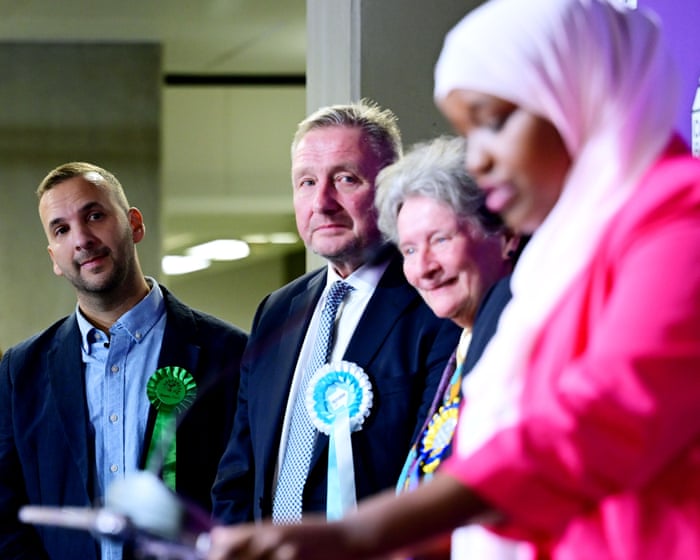
A promising future now looks perilous for election loser Zack Polanski. He sowed, now he reaps | John Harris

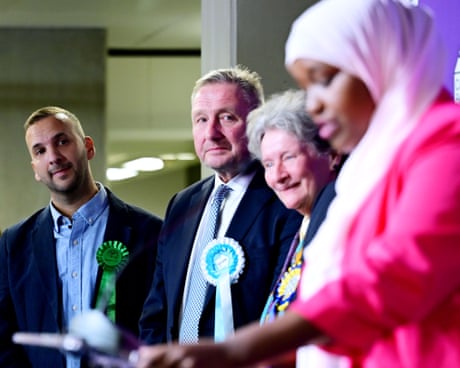
There was a real chance of a Green byelection win in Holborn and St Pancras. He made bad decisions and cost his party dear

As ever, among all the noise triggered by Labour holding the seat of Holborn and St Pancras, the most plain-spoken and undeniable analysis was provided by that sage and national treasure John Curtice, of Strathclyde University. The result, he said, echoed national opinion polls and reflected two undeniable facts: that the Greens are in need of a period of contrition and reflection, and Labour ought to be slightly less than ecstatic.

Andy Burnham’s party, with a majority of 3,364, he said, showed they “are in a much better position than they were six months ago, but still not as popular as they were in 2025”. The Greens, meanwhile, remain “a more significant player than historically they have ever been”, but have lost much of the ground they gained during Zack Polanski’s first year as leader, when the serial failures of the local MP – one Keir Starmer – provided him and his party with such a glorious succession of political opportunities.

John Harris is a Guardian columnist

Continue reading...

© Photograph: James Veysey/Shutterstock

© Photograph: James Veysey/Shutterstock

© Photograph: James Veysey/Shutterstock

  •  

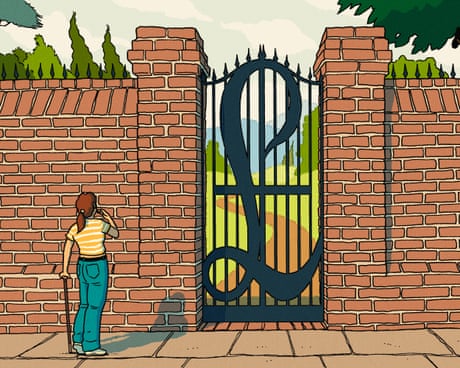
Social care for disabled adults is in as much crisis as support for elderly people – so why is the government silent about it? | John Harris

Working-age adults such as my son, who is autistic, face a fragmented and unreliable system, yet ministers talk only of a national care service for older people

Seemingly brilliant conference speeches are often followed by a hangover, and so it has arguably proved with Andy Burnham’s. It was, it has to be said, something of a triumph, but there is now a familiar sense of nagging angst over how his big idea of a national care service is actually going to work. But equally, it doesn’t seem unreasonable to be more generous and patient. The policy issues are vast. The new PM’s commitment to serious change is clear. And having been urgently needed for years, the basics of what he wants – personal, home-based care delivered free at the proverbial point of need – will be on their way if Labour wins the next election.

Here, though, is a question that is much less finely balanced. Neither Burnham’s speech nor the much shorter address given by Yvette Cooper, the new health and social care secretary, contained a single mention of what roughly half of England’s social care budgets are spent on: provision for working-age disabled adults. Why not? I get the politics: fixating on older people’s care and the pensions triple lock makes everything clear and relatable. But England’s fragmented, unreliable system for younger disabled adults is in need of the same radical level of reform, and it’s the source of just as much fear and worry for the people who either depend on it, or eventually will do.

John Harris is a Guardian columnist

Continue reading...

© Illustration: Ruby Fresson/The Guardian

© Illustration: Ruby Fresson/The Guardian

© Illustration: Ruby Fresson/The Guardian

  •  

Don’t discount Reform because it's had a bad year. In our angry, fragile democracy, anything can happen | John Harris

Nigel Farage’s tactics are to play up the anxiety and resentment that people feel. Labour’s job is simple: to offer hope and change

Despite the energised start Andy Burnham has made as prime minister, plenty of his party’s MPs and hardcore activists are still haunted by a familiar sense of insecurity. Underpinned by a political version of impostor syndrome, it runs deep – and, bar the odd spell of Labour optimism, it always has. So it is with the battle between Labour and Reform UK that will define an election that could arrive much sooner than some people think, and a widely held ambivalence on the left about the possibility of Nigel Farage’s party taking power. Reform is apparently in deep trouble, yet also still in with a serious chance. How come?

Investigations into the party and its leadership’s finances by both the Metropolitan police and parliament’s standards commissioner may worsen Reform’s woes. Those investigations predate the two recently announced £36m donations from the crypto tycoons Christopher Harborne and Ben Delo, which themselves risk being backdatedly ruled illegal and are reportedly already being spent on 400 “field agents”. The two mega-donations symbolise two connected stories. One is about the possible buyout of our fragile democracy. The other centres on how, from much of the public’s perspective, all the allegations about Farage and his party might have already turned into an indecipherable blizzard. So, although Reform is down, it is still far from out.

John Harris is a Guardian columnist

Continue reading...

© Illustration: Nathalie Lees/The Guardian

© Illustration: Nathalie Lees/The Guardian

© Illustration: Nathalie Lees/The Guardian

  •  

Deep cuts: how one Londoner’s fake vinyl empire sheds light on ‘industrial scale’ fraud

Thousands of knock-off records worth a fortune are being seized in the UK by anti-counterfeit police stings

From 2017 onwards, Rehan Ahmed styled himself as a savvy business owner. But behind the facade of a successful entrepreneur lurked one stark fact: his empire was built on fakery.

On Friday, the man behind the biggest-ever UK case of producing fraudulent vinyl, who sold counterfeit copies of records by some of the world’s biggest artists including Taylor Swift, Coldplay and Kendrick Lamar, was jailed.

Continue reading...

© Photograph: MarekUsz/Getty Images/iStockphoto

© Photograph: MarekUsz/Getty Images/iStockphoto

© Photograph: MarekUsz/Getty Images/iStockphoto

  •  

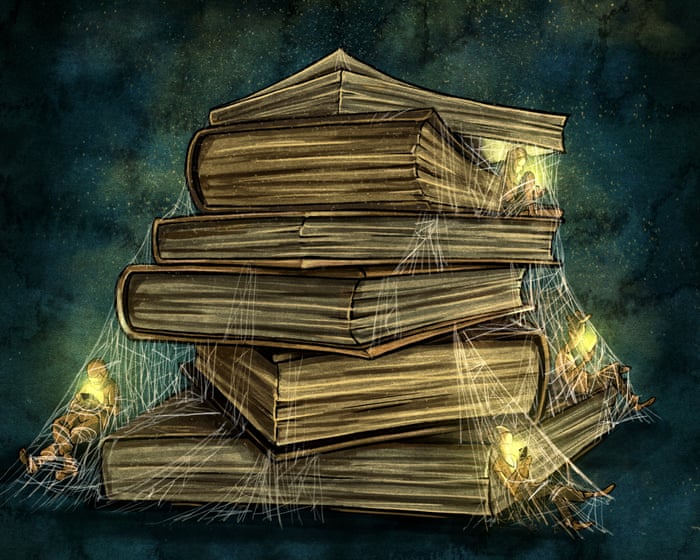
Warning: our democracy won’t survive the death of reading. Read on if you still can | John Harris

While fascists protest in UK ports and purvey nonsense and poison online, ever fewer people have the perspective or analytical tools to challenge them

Imagine this. Quite by chance, your TikTok feed presents you with footage of the fascists who recently took part in highly organised shows of strength in Dover and Portsmouth (and, on Wednesday, outside the London offices of the Daily Mail, demanding a new house for the mother of their leader, Daniel “Tommo” Thomas). For as long as the images hold your attention, you see and hear flashes of explanation, but then, as usual, you scroll away to someone leaping off a tall building, a fight on the London Underground, or a trick-performing dog.

Hypothetically, TikTok users are able to skip through 260 videos in under 35 minutes. And it’s this distracted, quick-fire way that so many people receive information that may be responsible for a worrying statistic from YouGov last week. Its poll on the Dover and Portsmouth events showed that 53% of people aged 18-24 years old simply didn’t have a point of view on whether the masked demonstrations were “a legitimate way of protesting”. Further, 43% of those of all ages were either unaware of the story, or not following it at all.

Continue reading...

© Illustration: Ben Jennings/The Guardian

© Illustration: Ben Jennings/The Guardian

© Illustration: Ben Jennings/The Guardian

  •  

Mayors are the big winners in Burnham’s devolution drive. So what happens to areas without mayors? | John Harris

Labour has promised a ‘fundamental rewiring’ of power. But some areas are years into their devolution journey while others scramble to get started

Apart from the joyous hyperactivity that comes with suddenly making it to No 10, there are good reasons why Andy Burnham seems to be a prime minister in a hurry. If he decides that his first term is going to run to its maximum length, he has three years, which is a maddening time-frame: too long for him to just tinker here and there, set out his long-term vision and then ask the electorate for permission to do more, but probably too short to start and finish many of his key projects. His chosen solution, it seems, is a mixture of the strategies he would use for each approach, which includes running at some issues at breakneck pace.

So it is with his specialist subject: devolution for England. The huge changes now afoot actually began under Keir Starmer, with the English Devolution and Community Empowerment Act passed earlier this year. Areas that previously had two tiers of local government will see them replaced with new unitary councils. But the most historic move centres on regional mayors – what the government calls “strategic authorities” – and a shift that the Whitehall PR machine is hyping up as a “fundamental rewiring of the way our country works, surrendering power that for too long has been held in Westminster and Whitehall”. In principle, this is unquestionably worth celebrating. But it also gives rise to a whole range of increasingly urgent and awkward questions.

John Harris is a Guardian columnist

Continue reading...

© Illustration: Matt Kenyon/The Guardian

© Illustration: Matt Kenyon/The Guardian

© Illustration: Matt Kenyon/The Guardian

  •  

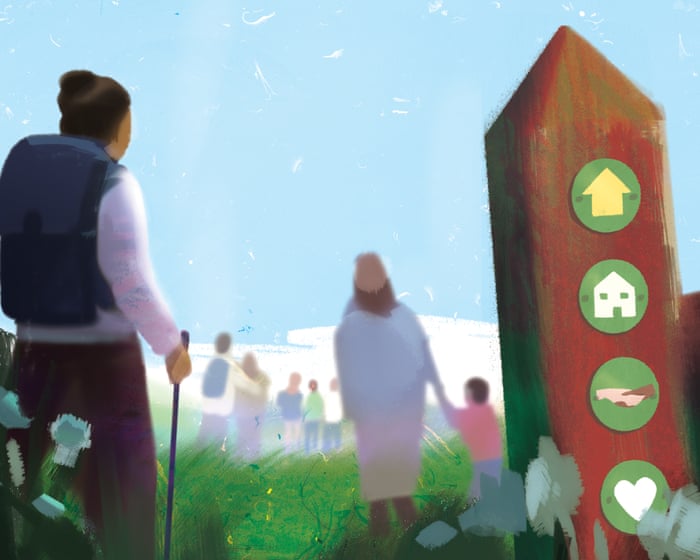
Walking the Peak District, I discovered a wonderful rejection of the right’s monotone vision of England | John Harris

The landscape was striking, but so was the diversity of the hikers. We can make this the new normal – and we should

A fortnight or so ago, my two teenage kids and I set out on a three-night visit to the Peak District where temperatures were hovering at a comparatively tepid 28C. We stayed at a youth hostel – more of which in a moment – and began the trip with the 20-minute ascent of Mam Tor, a modest peak that pulls in both dedicated ramblers who then yomp along the ridge beyond, and newbies who mostly want to get to the top and immerse themselves in the jaw-dropping view.

The next bit might sound self-parodically Guardian-esque, but what the hell: in its own way, the most striking sight was the diversity of the scores of people rambling up, down and along. Women in their 20s wearing hijabs picnicked on giant rocks, while multiracial gaggles of young men attempted to race to the top; solo and shirtless white fitness freaks and retirement-age dog walkers took their places alongside them. With plenty of justification, country walking has long been typified as one of the most monoculturally white pursuits there is. But here – presumably because of the relatively close proximity of Manchester and Sheffield – things looked different.

John Harris is a Guardian columnist

Continue reading...

© Illustration: Thomas Pullin/The Guardian

© Illustration: Thomas Pullin/The Guardian

© Illustration: Thomas Pullin/The Guardian

  •  

As AI guzzles water and energy, we are already facing a choice: datacentres or homes? | John Harris

Whitehall wants to triple their number in the UK. Yet in Slough, I saw the impact they’re having on communities

Amid headlines about the UK’s drought, Europe’s wildfires and impossible global temperatures, it was 28C when I arrived in Slough last Monday. I was there to look around Slough Trading Estate, a place that might once have conjured up images of the TV comedy The Office, many of whose laughs came at the expense of this overgrown patch of suburbia, 20-odd miles west of London.

But these days, this area of town – an incongruous mixture of old-school businesses such as Mr Clutch and Angling Direct, and vast, metal-clad leviathans that look like something pulled from JG Ballard – has become a byword for the constant expansion of datacentres, those hulking symbols of the vast computing power that big tech now requires, not least because of the ever-more complex workings of artificial intelligence.

Continue reading...

© Illustration: R Fresson/The Guardian

© Illustration: R Fresson/The Guardian

© Illustration: R Fresson/The Guardian

  •  

The Andy Burnham I’ve met over the past 20 years gives me hope for British politics | John Harris

You hear the word ‘empathy’ a lot when people talk about our next prime minister. I can see why

My contribution to this summer’s modest avalanche of Andy Burnham stories extends to only two. One is about Glastonbury, and the time that he and his wife, Marie-France, came for a three-day stay at the festival, which included his appearance on the Left Field stage, organised by the songwriter and activist Billy Bragg. I help with the bookings and chair some of the debate sessions: Burnham’s was titled State of the Nation: Politics in Crisis.

It was the summer of 2022 – the prologue to Liz Truss’s five minutes in power and (somewhat amazingly) Burnham’s first visit to Glasto. As well as seeing bands – the Irish funsters Fontaines DC were among his favourites – and wandering around the perfumed fields, he had come to make the case for a lot of the stuff he has been talking about in the buildup to him entering Downing Street on Monday: “rewiring” the UK by changing our systems of politics and authority, collaborating on that task with other parties, and taking away as much power as possible from Westminster. Open, self-questioning and a talker rather than a shouter, in front of 1,000 mostly hungover people in a giant tent, he passed with honours; he was even nice to the obligatory disruptive Trotskyists.

John Harris is a Guardian columnist

Continue reading...

© Photograph: Antonio Olmos/The Observer

© Photograph: Antonio Olmos/The Observer

© Photograph: Antonio Olmos/The Observer

  •  

Nigel Farage is just one strand in the tangle of rightwing politicians and crypto investors | John Harris

These financiers want to remodel the UK into a form that suits them – one that could threaten to erode the barriers between crime and business

This coming Tuesday, the government’s representation of the people bill comes back to the House of Commons for its third reading. It bundles up a multitude of measures, including an extension of the franchise to 16- and 17-year-olds and welcome changes to voter registration. But thanks to the continuing furore around Nigel Farage and his extremely wealthy friends – such as the Thailand-based crypto-investor Christopher Harborne, who gave Farage a £5m “lottery win” personal gift and has donated in excess of £22m to Reform UK – the aspects of the legislation that have suddenly become its headline measures are focused on big-money donations.

The government has already implemented a moratorium – but only a moratorium – on political donations in cryptocurrencies, the encrypted digital assets that, to quote the Electoral Commission, “present particular challenges and risks in meeting electoral law requirements in identifying donors and ensuring they are permissible”. There is a new annual £100,000 limit on donations from British citizens living abroad. Other legislative moves will now take the form of amendments to the bill: they include new checks on whether companies making donations are above board by measuring their profit as well as their revenues, and a requirement for parliamentary candidates to declare any donation above £2,230 (although “personal gifts” will continue to be exempt).

John Harris is a Guardian columnist

Continue reading...

© Illustration: Sebastien Thibault/The Guardian

© Illustration: Sebastien Thibault/The Guardian

© Illustration: Sebastien Thibault/The Guardian

  •  

I’m rich – defend me, be happy for me, says Farage to poor voters in Clacton. They are just his collateral damage | John Harris

The Reform UK leader’s ruse to head off scrutiny by forcing a byelection may work, but it’s all about him: no one else gains anything from it

Most people who closely follow British politics probably know the basics about Jaywick, an enclave of Clacton, on the Essex coast. A sprawling tangle of tracks, paths and old holiday shacks repurposed as permanent homes, it has been ranked as England’s poorest area several times since 2011, most recently in October last year.

I first visited in 2014, during the byelection campaign that would see the former Tory Douglas Carswell – remember him? – chosen as the UK Independence party’s first MP. “Look at us,” one man told me. “We’re a backwater no one gives a shit about.” He was one of many Nigel Farage fans I spoke to; in 2024, when local people elected the Reform leader as Clacton’s new MP, many presumably did so with hopes of Jaywick’s neglect coming to an end. I suspect, unfortunately, that Farage’s extra-parliamentary earnings and international gallivanting have rather been giving them the impression that Jaywick remains a backwater no one gives a shit about.

Continue reading...

© Photograph: Dan Kitwood/Getty Images
© Photograph: Dan Kitwood/Getty Images

© Photograph: Dan Kitwood/Getty Images
  •  

I’ve seen what the death of major industry did to Britain. Without a good revival plan, Burnham cannot succeed | John Harris

Collieries turned into retail parks, manufacturing in the doldrums. The problem is vast, but at least the PM-in-waiting sees it: and in that there is hope

In the autumn of 2005, Tony Blair gave one of his most unhinged and fascinating speeches as prime minister. “I hear people say we have to stop and debate globalisation,” he said. “You might as well debate whether autumn should follow summer.” He went on: “The character of this changing world is indifferent to tradition. Unforgiving of frailty … It has no custom and practice. It is replete with opportunities, but they only go to those swift to adapt, slow to complain, open, willing and able to change.”

In the hall, his characteristically messianic delivery ensured this argument landed, but anyone listening from one of the UK’s deindustrialised areas must have received it as yet another punch in the face. For decades, change and adaptation were what they had been living through and reeling from – but where were the rewards? Where, indeed, was any real sign of even the beginnings of the 21st-century prosperity Blair seemed to be offering?

John Harris is a Guardian columnist

Continue reading...

© Illustration: Matt Kenyon/The Guardian

© Illustration: Matt Kenyon/The Guardian

© Illustration: Matt Kenyon/The Guardian

  •  

Awake Awake by Fiona Mozley review – in pursuit of false memories

From the Booker-shortlisted author, a tantalisingly unreliable account of childhood, history and mental uncertainty

The historian and novelist Fiona Mozley acknowledged in a 2018 piece for the Guardian that the city of York had a major influence on both her careers. Childhood and adolescence in a place such as York, full of time and times, can generate conflict between “the desire to live in the past and the need to extract oneself from it”. Awake Awake, a follow-up to her previous novels, 2017’s Booker-shortlisted Elmet and 2021’s Hot Stew, engages with two types of memory: the personal and the historical. They’re not exactly at odds, but as far as living in the past is concerned they feed on one another in a complex, entangled relationship.

Narrator Mary Mooney – also a novelist, also from York, and whose first book is also shortlisted for a major prize – tells the story of her mental illness. Or she seems to. She begins in childhood. We’re introduced to her parents and her parents’ friends, religious academics in York; to her home in Cathedral Close; to school and her school friends, with whom she will stay in contact as she grows up. Life is a round of family occasions, church events and church politics, spiced with adventure and wild excitement in the countryside, mischief in the classroom. Detail is piled on detail and presented with photographic clarity, from her father, with his “large, pointed nose and grey eyes that looked greener than usual when he was outside in the vegetable patch”, to the fall of the Twin Towers, which she recalls seeing “on a television in the school staff room … looking through the door from the outside and glimpsing it on the tiny screen”.

Continue reading...

© Photograph: Aleksandra Maciejewska

© Photograph: Aleksandra Maciejewska

© Photograph: Aleksandra Maciejewska

  •  

Keir Starmer’s fatal flaw? The blankness on to which voters projected their years of frustration | John Harris

His government was directionless and confused, and from that murk emerged the Peter Mandelson scandal

On a bone-chillingly cold morning in January, it felt as if I had suddenly found at least part of the reason for Keir Starmer’s chronic unpopularity. I was in the Mancunian constituency of Gorton and Denton, where the prime minister and his people’s decision to block Andy Burnham from standing was about to hand victory to the Green party. More specifically, I was in a forlorn covered market about to be regenerated into a “food and drink cluster”, talking to a sixtysomething man nursing a mug of tea.

What, I wondered, did he think of the man at the top? He gave me roughly the same answer that I’d heard from a lot of my other interviewees: “I really don’t like him at all.” But like most other people I met that day, he couldn’t quite explain what fired his antipathy, which seemed to make it worse. His face scrunched into a mixture of scepticism and exasperation. “I don’t know why – I just don’t,” he said. The most specific answer I got from anyone else was: “He hasn’t done what he said he’d do.” So there it was: as well as a modern tendency to loathe politicians that regularly seems arbitrary, whipped-up and way over the top, a sense that Starmer’s sheer blankness – his painful lack of clarity and the absence of a halfway coherent story about his own government – was making a lot of people dislike and mistrust him all the more.

John Harris is a Guardian columnist

Continue reading...

© Photograph: Toby Shepheard/Reuters

© Photograph: Toby Shepheard/Reuters

© Photograph: Toby Shepheard/Reuters

  •  

I saw all Reform’s weaknesses on display in Makerfield – Farage should be worried | John Harris

From a hopeless candidate to botched strategy, this latest byelection defeat is telling. But for Labour, there is still a long and arduous journey ahead

The day before the voters of Makerfield chose their new MP, I stood with my camera-wielding colleague John Domokos on the main road through the post-industrial town of Hindley. Every two or three minutes, a van or small truck drew level with us, and there it was again: a honked horn, and a full-throated shout of “Reform!”

But on our side of the street was an augury of the news to come: the house of a man called Les, who had views most Guardian readers would find deeply problematic, and no less than seven placards adorned with the logo of Rupert Lowe MP’s new mega-right outfit, Restore Britain. “Farage has lost it,” Les told us. In at least one sense, the result – Labour’s Andy Burnham triumphing with 55% of the vote, Reform on 35%, and Restore managing 7% – proved he was spot on.

Continue reading...

© Photograph: Ryan Jenkinson/Getty Images
© Photograph: Ryan Jenkinson/Getty Images

© Photograph: Ryan Jenkinson/Getty Images
  •  

‘Labour had their chance – they flopped.’ Two days in Makerfield show me the scale of Burnham’s task | John Harris

Touring this bitterly divided constituency, what strikes you most is people want something better. But what exactly?

Keir Starmer teeters. The defence secretary exits, and thereby seems to confirm the prime minister’s demise. Andy Burnham scents a final, belated breakthrough, while most of the national talk is of violence, a country in crisis and malaise. And in Platt Bridge, a neighbourhood at the heart of the constituency where the fates of the Labour party, the current government and the country are all about to be decided, life still seems to be locked into an endlessly familiar pattern.

Amid all the redbrick terrace houses, too many shops are shuttered and empty. The latest casualty was a proudly independent baker who had traded for 40 years, apparently to be replaced by another tanning lounge. The main roads are clogged with traffic, while other streets tend to be eerily quiet. People speak of closed-down pubs, impossible private rents, and that ubiquitous British complaint: “There’s nothing for the kids to do.”

Continue reading...

© Photograph: Christopher Thomond/The Guardian

© Photograph: Christopher Thomond/The Guardian

© Photograph: Christopher Thomond/The Guardian

  •  

The right is desperate for a solution to falling birthrates. Who’s going to tell them that the answer is immigration? | John Harris

Reform and Maga are correct that ageing populations are storing up huge social problems, but our prosperity still rests on the hard work of migrants

A growing mountain of reports highlights one of the US’s most fascinating features: the fact that people in red states seem to breed far more than those in the blue ones, and are being newly encouraged to do so by high-profile figures who are desperate for a Maga baby boom. The vice-president, JD Vance, and his wife are expecting their fourth child, and Vance says he wants “more babies in America” – and, presumably, fewer of the people he derided as “childless cat ladies”. Elon Musk is reckoned to be a father of 14, and his views on reproduction reflect his contribution to the Trumpist procreation drive: “If people don’t have more children, civilisation is going to crumble,” he said in 2021. “Mark my words.”

In Europe, Italy’s far-right prime minister, Giorgia Meloni, says she will somehow tackle a mixture of unprecedentedly low birthrates and ageing population known as the “demographic winter”. Before he was sent packing by voters, the infamous Viktor Orbán was on much the same page: “We need Hungarian children,” he said in 2019, announcing a lifelong exemption from income tax for women with four or more of them.

John Harris is a Guardian columnist

Do you have an opinion on the issues raised in this article? If you would like to submit a response of up to 300 words by email to be considered for publication in our letters section, please click here.

Continue reading...

© Photograph: Martin Pope/Getty Images

© Photograph: Martin Pope/Getty Images

© Photograph: Martin Pope/Getty Images

  •  
❌