❌

Lese-Ansicht

The best recent translated fiction – review roundup

Minihorror by Barbi Marković; Paradise Burns by Pol Guasch; Hafni Says by Helle Helle; Googling for Soul by Hamid Ismailov

Minihorror by Barbi Marković, translated by Jen Calleja (Faber, £14.99)
This eccentric and fantastical collection of very short stories is bursting with weird life. Mini and Miki (the Disney mouse names in Serbian) are a sometime boyfriend and girlfriend living in Austria. They visit Mini’s family, who gather round a pit and make her climb down into it (when she told Miki “they’re dragging me down”, he thought it was a metaphor). They visit Miki’s family, where a dog Mini draws on a card comes alive and attacks her. Things swing from hopeful – “they’re having fun like a couple in an advert” – to dismal: a hair dye goes wrong and “Mini looks like a 13-year-old dog”. Minihorror combines a Bernhardian comic gloom (“in summary, everything’s tainted, and existence is a particular hardship”) with antic energy. “Miki isn’t sure what to think about life. Is it good? Is it bad?” It’s everything, just like this book.

Paradise Burns by Pol Guasch, translated by Mara Faye Lethem (Peninsula, £12.99)
“Stories, if you give them an order, aren’t stories but lies.” Catalan author Guasch makes the point vividly in this novel which flits briskly from present to past and from narrator to narrator. It’s set in a changed climate – “One only knows it’s winter now by the shrunken days and long nights” – where young men join a firefighting service and fight “wildfire simulations of blazes that could not be put out”. The central characters are friends Rita and Líton, but Líton is dead when the book begins – “twenty-four short years, a life as fleeting as a shooting comet” – so the story goes backward, to find out why. The jumpy narrative ranges from Rita’s childhood diary, to three “crafty old biddies” in the neighbourhood, to Líton and his lover René. But inside the hectic structure is a tribute to the value of friendship, and how a friend “has to be the net beneath the tightrope that is life”.

Continue reading...

© Photograph: /Apollonia T. Bitzan

© Photograph: /Apollonia T. Bitzan

© Photograph: /Apollonia T. Bitzan


  •  

Celebrity, sex and motherhood misery: the 10 best books by Rachel Cusk … ranked!

From an abstract portrait of an actor who might be Natalie Portman to a groundbreaking work of autofiction, we rate the best from the coolly controversial author
In Cusk’s headline-grabbing latest, a writer invents the biography of a film star who sounds very like Natalie Portman. Set in the now standard late-Cusk sans serif typeface (no frivolous flourishes!), Life of M serves up observations on fame in a light fictional coating. “To always be playing a part is to have no home.” Having made her name as a devilishly good creator of brainy social comedies, Cusk’s pivot to wintry autofiction since the Outline trilogy appears to have reached its logical conclusion in this flat, abstracted portrait of empty celebrity. The New York Times called it “rarefied, cosmopolitan, self-serious”.
Sample line: “Everything I did or said in her company was false. It was as if I was acting, while M came across as authentic and real.”

Continue reading...

© Photograph: Enric Fontcuberta/EPA-EFE/Shutterstock

© Photograph: Enric Fontcuberta/EPA-EFE/Shutterstock

© Photograph: Enric Fontcuberta/EPA-EFE/Shutterstock

  •  

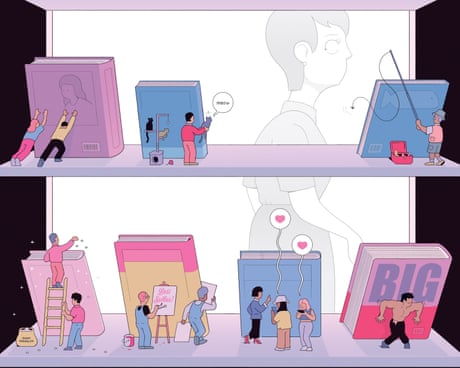
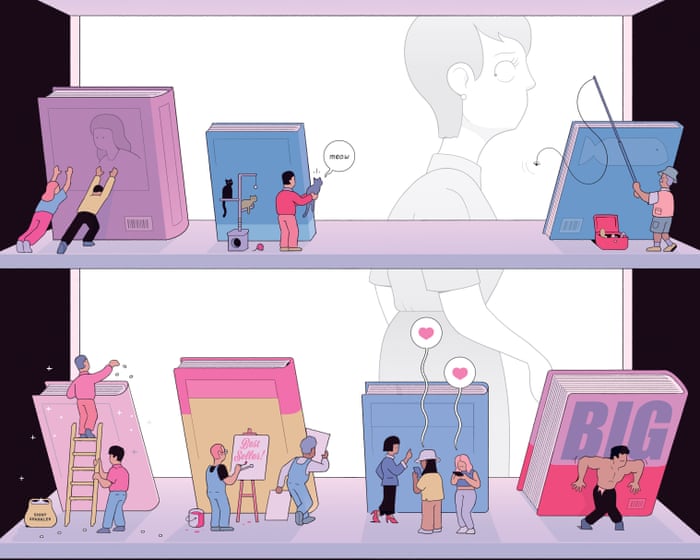
How to make a bestseller: insiders reveal the tricks of the book trade

From cover design to shelf placement and influencer partnerships … how publishers will persuade you to buy their books this autumn

Think about the last book you bought. How did you choose it? Was it from a recommendation, a review, a TikTok video? Did the cover grab you, were you swayed by the quotes on the front, or did you just happen to spot it on an appealing table as you walked into the shop? Did you think about all the nudges that led you to that decision – by the publisher, the bookseller or that person you follow on Insta?

The reality is that our reading choices are directed and massaged at every turn. “It’s all about the art of persuasion,” says Philip Gwyn Jones, who was a publisher for more than 30 years and is now a literary agent. And who are the persuaders? They’re the booksellers, the supermarket stock buyers, the publishing houses and their ranks of marketers and publicists. And, more recently, persuasion often comes from BookTokers and online influencers, social media videos, podcasts and Instagram posts. How is all this changing publishing?

Continue reading...

© Illustration: Giacomo Gambineri/The Guardian

© Illustration: Giacomo Gambineri/The Guardian

© Illustration: Giacomo Gambineri/The Guardian

  •  

The best recent translated fiction – review roundup

The Red Book of Farewells by Pirkko Saisio; Short Circuit by Wolf Haas; Cosmos by Lucia Odoom; The Fallen Trees Are Also the Forest by Alejandra Kamiya

The Red Book of Farewells by Pirkko Saisio, translated by Mia Spangenberg, Penguin Classics (£14.99)
Following Lowest Common Denominator and Backlight, this book completes Finnish author Saisio’s autofictional trilogy. It covers her young adulthood in the 1970s, where she comes out as lesbian (“The electricity doesn’t go out. The Richter scale remains still”) and falls in love. One of her lovers, Havva, is a communist who’s engaged to a man; she relies on his rich parents for funding, but pees in their private pool as a protest. Later, Saisio is voted vice-president of a political drama company, as “she has the skills to bring about the revolution, specifically via theatre” – despite half-baked productions such as the “napalm opera” Vietnam-a-Go-Go. As that suggests, this is a story with a sense of both the ridiculous and the serious. Told in clear prose, it playfully shifts between third and first person as Saisio recounts her memories then analyses them. This enchanting series deserves to become a modern classic.

Short Circuit by Wolf Haas, translated by Jamie Bulloch (HarperVia, £20)
“We think [time] goes in one direction. But really you need to think of it as a loop”. This, well, loopy novel opens with jigsaw aficionado and “merciless hair-splitter” Franz Escher getting an electrician in to fix his power – then accidentally killing him. As Franz waits for the ambulance, he reads a novel about Elio, a man who helped put his own mafia family behind bars. Elio, who’s now on witness protection, kills time by reading a novel about … Franz Escher. The two stories pursue one another, accelerating until they collide, incorporating courtship by car alarm, rival funeral orators and multiple identities for many characters. Oh, and what if the electrician Franz killed turns out to be Elio? Short Circuit, recalling the slipstream fiction of Christopher Priest and the light-touch experimentations of David Mitchell, is an entertaining literary hall-of-mirrors.

Continue reading...

© Photograph: Pirjo Honkasalo

© Photograph: Pirjo Honkasalo

© Photograph: Pirjo Honkasalo

  •  

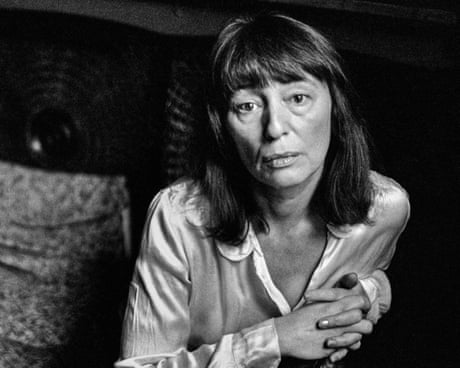
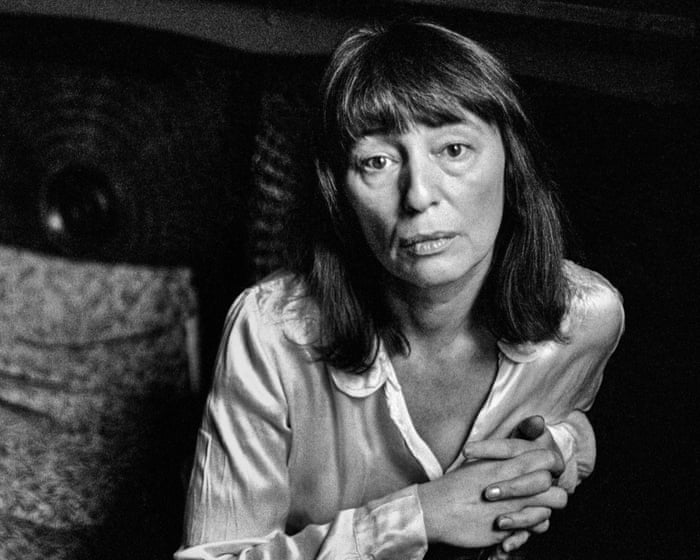
Sinking ships, dark humour and really good bad guys: Beryl Bainbridge – ranked!

From the last days of the Titanic to desperate romantics, we rate the work of a British master of black comedy

Bainbridge’s novel of the last days on RMS Titanic was acclaimed and popular (“They probably thought it was the book of the film,” she said), and the scenes of the sinking are brilliantly delivered. “There is about me an element of showmanship,” says one character, but Bainbridge’s own showmanship is muffled here by her need to stick with facts, meaning the novel lacks the humour, fluidity and eccentricity of her others. And unlike her earlier books, the final tragedy never feels personal to the characters.

Continue reading...

© Photograph: Jane Bown/The Observer

© Photograph: Jane Bown/The Observer

© Photograph: Jane Bown/The Observer

  •  

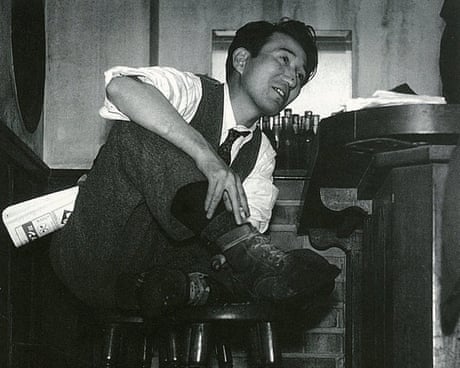
From author to anime hero: the unlikely revival of a Japanese literary star

More than seven decades after they were first released, the dark novels of Osamu Dazai have become a publishing sensation, as a new generation of readers engage with his bleakness, humour and brilliance

There’s no question that Japanese literature has been one of the outstanding successes for British bookshops in recent years: in 2024 close to half of the bestselling translated fiction titles were from Japan. Much of the Japanese fiction translated into English fits into broad categories – cats, crime, coffee shops – but one surprise bestseller stands alone.

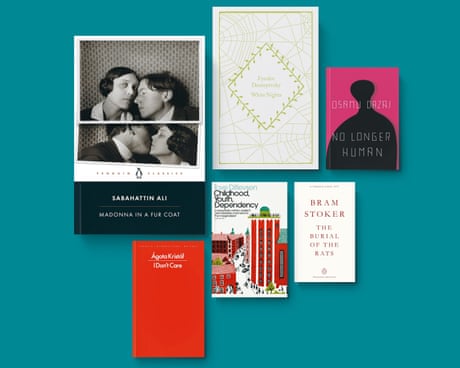
Sales of books by Osamu Dazai, who killed himself in 1948 aged 38, have rocketed in the last few years. His best-known novel, No Longer Human (1948), has sold more than 75,000 copies in the UK alone. An intense semi-autobiographical account of one man’s alienation, it was the last work of fiction completed before Dazai’s death.

Continue reading...

© Photograph: Tadahiko Hayashi

© Photograph: Tadahiko Hayashi

© Photograph: Tadahiko Hayashi

  •  

The best recent translated fiction – review roundup

Sisters in Yellow by Mieko Kawakami; All Flesh by Ananda Devi; The White Desert by Luis López Carrasco; The Home of the Drowned by Elin Anna Labba

Sisters in Yellow by Mieko Kawakami, translated by Laurel Taylor and Hitomi Yoshio (Picador, £16.99)
Kawakami’s latest opens with a bang, as narrator Hana learns that her old friend Kimiko has been charged with abduction. This MacGuffin takes us to their friendship in late-1990s Tokyo, when teen Hana and the older woman open a bar called Lemon: “Yellow attracts money.” But it’s a turbulent ride and soon Hana is in a world of organised crime. “The world is crazy. I feel like I’m living in a manga.” She’s not the only one, and you need an appetite for Kawakami’s style, which prefers to explore rather than explain – people come and go, buildings burn down, cancer is diagnosed, almost at random – but the relentless rush means there’s no time to get bored. At its best – as in a scene where Hana’s unreliable mother wants to borrow 2m yen for investment in lingerie that helps “your spine and organs move back to where they’re supposed to be” – this is a story both absurd and horrifying.

All Flesh by Ananda Devi, translated by Jeffrey Zuckerman (Pushkin, £12.99)
“Forgive me for starting this story with bodily, unpalatable origins.” You may as well – it’s all like that. In an unnamed European country, a schoolgirl “born with no urge but to consume” is getting bigger and bigger. “My gut, my ass, my thighs – they were all set on reaching the farthest corners of the world.” She blames her gluttony on the need to silence the voice of her dead twin sister, who was “absorbed into my tissues” in the womb. She hates school, where other kids mock her, as though her own self-disgust weren’t enough. After a blackly comic scene where she gets stuck in her bedroom doorframe like “an uncooperative cork”, she falls in love with the lonely carpenter who arrives to widen the door – but there are more twists to come. This powerful story is deeply physical, but driven by a compelling voice describing the torment of a girl who is “the psychical mirror of our time … immoderation made manifest”.

Continue reading...

© Photograph: Ulf Andersen/Getty Images

© Photograph: Ulf Andersen/Getty Images

© Photograph: Ulf Andersen/Getty Images

  •  

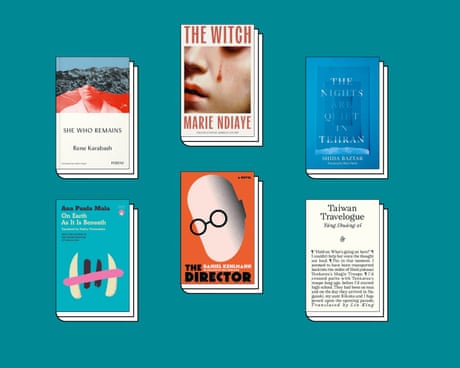
What should win this year’s International Booker?

Political oppression in Tehran, a witch’s tale from France, a film-maker in Nazi Germany … we weigh up the contenders for the International Booker prize 2026

This year’s International Booker prize shortlisted titles are a diverse bunch, both geographically – from Brazil to Taiwan – and in style, from mainstream blockbuster to experimental jeu d’esprit. As in recent years, independent presses are rewarded for their efforts in promoting translated fiction, providing four of the six titles. And the campaign for proper recognition of translators is finally paying off: for the first time in the prize’s 10-year history, all six books name the translator on the front cover. Here’s our guide to the prospects for each, ahead of the winner announcement on 19 May.

German-Iranian novelist Shida Bazyar reminds us in her novel The Nights Are Quiet in Tehran (Scribe), translated by Ruth Martin, that the people of Iran are the victims of history many times over. The story comes from four members of an Iranian family over 30 years. In 1979, young Behzad greets the Islamic revolution that deposes the Shah, but his hopes for a communist utopia (“a new Cuba”) are thwarted. Instead, he’s surrounded by people who have been waiting for the chance to become bullies all their lives. He and his wife, Nahid, flee to Germany: she takes over the story in 1989, followed by their daughter, Laleh, in 1999.

Continue reading...

© Composite: PR

© Composite: PR

© Composite: PR

  •  

The rise of the literary nepo baby? The children of famous novelists on following in their parents’ footsteps

From Naomi Ishiguro to Jess Atwood Gibson, more children of high profile writers are becoming authors themselves. Parents and their literary offspring discuss the pressures of measuring up

Martin Amis liked to observe that the unusual position he and Kingsley Amis held – father-and-son novelists – was a historical anomaly, a “literary curiosity”. But it was not unique: Alexandre Dumas père and fils, Fanny and Anthony Trollope, and Arthur and Evelyn Waugh had all come before them.

And if Amis’s assertion wasn’t true then, it’s even less true now. In recent years, increasing numbers of children of novelists have become writers themselves, and this year sees a particularly rich batch. Kazuo Ishiguro’s daughter, Naomi, publishes the first in her new fantasy series this month. Margaret Atwood’s daughter Jess Gibson published her fiction debut this spring, and earlier this year Patrick Charnley, son of the poet and novelist Helen Dunmore, published his first novel to wide acclaim.

Continue reading...

© Illustration: Paul Blow/The Guardian

© Illustration: Paul Blow/The Guardian

© Illustration: Paul Blow/The Guardian

  •  

From Manifesto to Mr Loverman: Bernardine Evaristo’s best books – ranked!

From the secret gay life of a British-Caribbean man to that controversial shared Booker win, the author has blazed a trail across the literary landscape. Here are seven of her top titles

Even by Evaristo’s experimental standards, this book is a highly ambitious mash-up of forms and stories. It takes a mismatched couple, strait-laced Stanley and ebullient Jessie, on a road trip across Europe where they meet the ghosts of black historical figures, from Alexander Pushkin to Mary Seacole. We learn a lot along the way, but the real engine of the story is Stanley and Jessie’s combative relationship. Told in a blend of prose, poetry, scripts, memos, legal documents, budget spreadsheets … and road signs, Soul Tourists ultimately wobbles under the weight of both its own good intentions and its skittish variety, but it has charm and energy to burn.

Continue reading...

© Photograph: David Levene/The Guardian

© Photograph: David Levene/The Guardian

© Photograph: David Levene/The Guardian

  •  

Light and Thread by Han Kang review – a tantalising book of reflections

These essays from the Nobel literature winner open up her novels and offer beautiful imagery

When Korean novelist Han Kang won the Nobel prize in literature in 2024, the committee praised her “intense poetic prose that confronts historical traumas and exposes the fragility of human life”. In other words, Han’s work looks both out at the world – towards the 1980 Gwangju massacre fictionalised in her novel Human Acts –  and inward to the human experience, as with The Vegetarian’s portrait of one woman’s claustrophobic struggle.

Much of the appeal of Han’s work is in its mystery, the gaps she leaves for the reader to close. So it is tantalising to have this collection of prose, “a book of reflections” that might illuminate the darker corners of her work.

Continue reading...

© Photograph: Park Dahuim

© Photograph: Park Dahuim

© Photograph: Park Dahuim

  •  

The best recent translated fiction – review roundup

White Moss by Anna Nerkagi; The Old Fire by Elisa Shua Dusapin; The Roof Beneath Their Feet by Geetanjali Shree; Berlin Shuffle by Ulrich Alexander Boschwitz

White Moss by Anna Nerkagi, translated by Irina Sadovina (Pushkin, £12.99)
“You, too, need a woman!” Alyoshka’s mother tells him. “Even a plain one, as long as her hands and legs aren’t crooked.” And Alyoshka, part of the nomadic Nenets people in the Russian Arctic, does find a wife, but can’t consummate their marriage: he’s still in love with a girl who left for the city years ago. This novel takes us around the camp, from Alyoshka’s family to Petko and his friend Vanu discussing old age to a new arrival who shares his tragic story of alcohol addiction: “The devil had entered my soul, and it was fun to be with him.” Meanwhile, Soviet representatives, intended to support the Nenets people, come and go: “They didn’t stick, because strictly speaking there was nothing to stick to.” This story of a solid community where people stick instead with one another is a perfect warming tale for winter.

The Old Fire by Elisa Shua Dusapin, translated by Aneesa Abbas Higgins (Daunt, £14.99)
Agathe, a 30-year-old French woman living in New York, is so estranged from her sister Véra that when she receives a text message saying “Papa’s dead”, she replies: “Who is this?” Now she returns to the family home in the Dordogne to help clear out his things. “If we set fire to the books, there’d be nothing left.” Relations remain difficult: Véra communicates only by text message; she hasn’t spoken since the age of six. This is a book of absence and silence – village shops are closed, streets deserted, Agathe’s husband in the US doesn’t reply to her – and written with apt spareness. “I’m following the advice of decluttering influencers,” Agathe tells us, but it’s her past that she needs to offload, and slowly we learn the history of the family breakup. The balance between revelation and continued mystery makes this book both tantalising and satisfying.

Continue reading...

© Photograph: Imago/Alamy

© Photograph: Imago/Alamy

© Photograph: Imago/Alamy

  •  

Sex, death and parrots: Julian Barnes’s best fiction – ranked!

As the Booker prize-winning author prepares to publish his final novel at 80, we assess his finest work

Duffy is the first in a series of crime novels about a bisexual private eye that Barnes published under the pseudonym Dan Kavanagh. It came out the same year as Barnes’s debut novel proper, Metroland, but where that took seven years to write, this took 10 days. Not that it shows: this “refreshingly nasty” (as Barnes’s friend Martin Amis put it) crime caper is beguilingly well written, with passages that display all of Barnes’s perception and wit. The plot of reverse blackmail and the shocking climax only add to the fun.
Sample line “Two in the morning is when sounds travel for ever, when a sticky window makes a soft squeak and three Panda cars hear it from miles away.”

Continue reading...

© Photograph: Linda Nylind/The Guardian

© Photograph: Linda Nylind/The Guardian

© Photograph: Linda Nylind/The Guardian

  •  

Five of the best translated fiction of 2025

The return of Nobel laureate Han Kang; film-making under the Nazis; stuck in a time loop; Scandinavian thrills; and essential stories from postwar Iraq

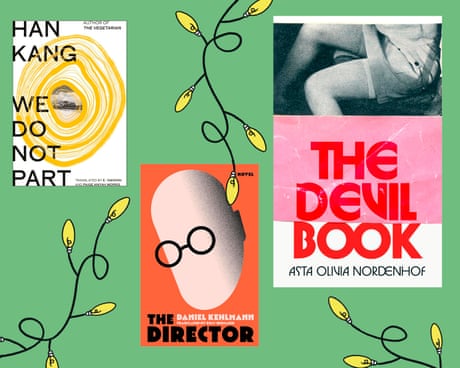
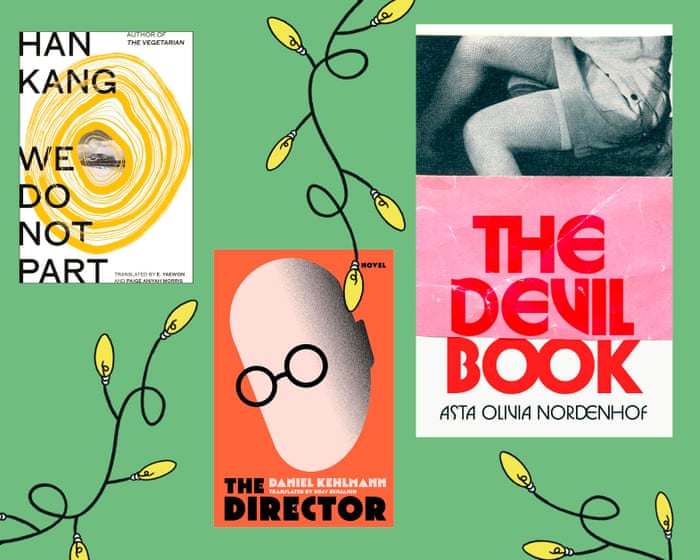
We Do Not Part
Han Kang, translated by e yaewon and Paige Aniyah Morris (Hamish Hamilton)
The Korean 2024 Nobel laureate combines the strangeness of The Vegetarian and the political history in Human Acts to extraordinary effect in her latest novel. Kyungha, a writer experiencing a health crisis (“I can sense a migraine coming on like ice cracking in the distance”), agrees to look after a hospitalised friend’s pet bird. The friend, Inseon, makes films that expose historical massacres in Korea. At the centre of the book is a mesmerising sequence “between dream and reality” where Kyungha stumbles toward Inseon’s rural home, blinded by snow, then finds herself in ghostly company. As the pace slows, and physical and psychic pain meet, the story only becomes more involving. This might be Han’s best novel yet.

On the Calculation of Volume I and II
Solvej Balle, translated by Barbara J Haveland (Faber)
“It is the eighteenth of November. I have got used to that thought.” Book dealer Tara Selter is stuck in time, each day a repeat of yesterday. Groundhog Day it ain’t; this is more philosophical than comic – why, she doesn’t even bet on the horses – but it’s equally arresting. Tara slowly begins to understand how she occupies space in the world, and the ways in which we allow our lives to drift. At first she tries to live normally, recreating the sense of seasons passing by travelling to warm and cold cities. By the end of volume two, with five more books to come, we get hints of cracks appearing in the hermetic world – is Balle breaking her own rules? – but it just makes us want to read on further.

Continue reading...

© Composite: Debora Szpilman

© Composite: Debora Szpilman

© Composite: Debora Szpilman

  •  

The best recent translated fiction – review roundup

The Ferryman and His Wife by Frode Grytten; Woman in the Pillory by Brigitte Reimann; Iran+100, edited by various; Sea Now by Eva Meijer

The Ferryman and His Wife by Frode Grytten, translated by Alison McCullough (Serpent’s Tail, £12.99)
On the last day of his life – how does he know? He just does – Norwegian ferryman Nils Vik takes a final boat trip, alone after a lifetime helping others. He remembers those he has ferried, including actor Edward G Robinson; Miss Norway 1966, who was “declared the most beautiful woman in the nation and won a Fiat 850”; and young gay man Jon, who was bullied by his father, then drowned in a car, channelling the Smiths: “What a heavenly way to die … to die by his lover’s side.” That blend of light and dark runs through the novel, but the person Nils really misses is his late wife Marta. He masks his turmoil (“After the storm … there’s no evidence. Only the calm blue surface”), and tries to remember the happy times. He recalls his daughter taking him to see a play. “What did you like about it?” “Everything.” The reader understands.

Continue reading...

© Photograph: Anatoly Gordienko/Getty Images

© Photograph: Anatoly Gordienko/Getty Images

© Photograph: Anatoly Gordienko/Getty Images

  •  

‘It’s not just a book, it’s a window to my soul’: why we’re in love with literary angst

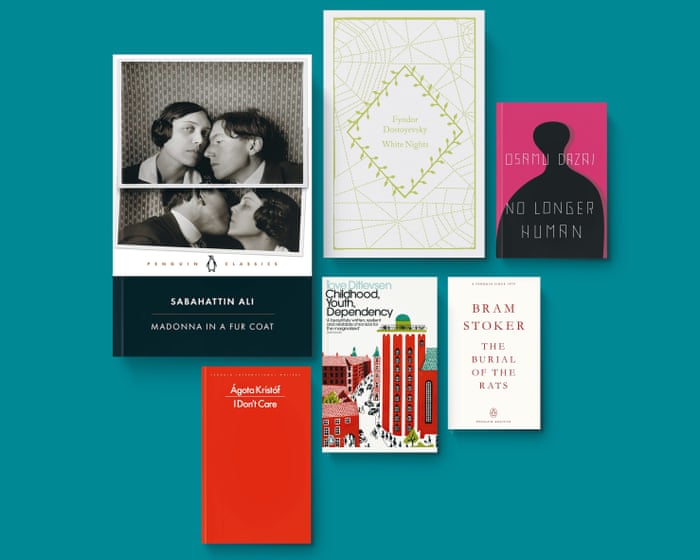
Why did an obscure Dostoevsky novella sell 100,000 copies in the UK last year? And why are TikTokers raving about a 1943 Turkish novel? The way young people are discovering books is changing – and their literary tastes reflect our times

The sales patterns for classic novels are normally a fairly predictable business. “Every year it’s the same authors,” says Jessica Harrison, publishing director for Penguin Classics UK. “Austen is always at the very top, and then all the school ones: Orwell, An Inspector Calls, Of Mice and Men, Jane Eyre.”

But last year it was different. Penguin’s bestselling classic by far was a little-known novella by Fyodor Dostoevsky. White Nights sold more than 100,000 copies in the UK in 2024. It is an angsty story of impossible love, run through with characteristic Dostoevskian gloom. A young man and woman meet on a bridge in St Petersburg on consecutive nights: his love for her is unrequited; she is despairing because the man she really loves has ghosted her. The pleasure the young man takes in her company is shadowed by the knowledge that it can never be permanent.

Continue reading...

© Composite: PR

© Composite: PR

© Composite: PR

  •  
❌