❌

Lese-Ansicht

Constantinople to Istanbul review – you won’t want to leave this lavish celebration of double imperial splendour

V&A, London
Treasures from the two world-defining cultures that somehow coexisted in one mighty city keep on dazzling in this gorgeous, unmissable show

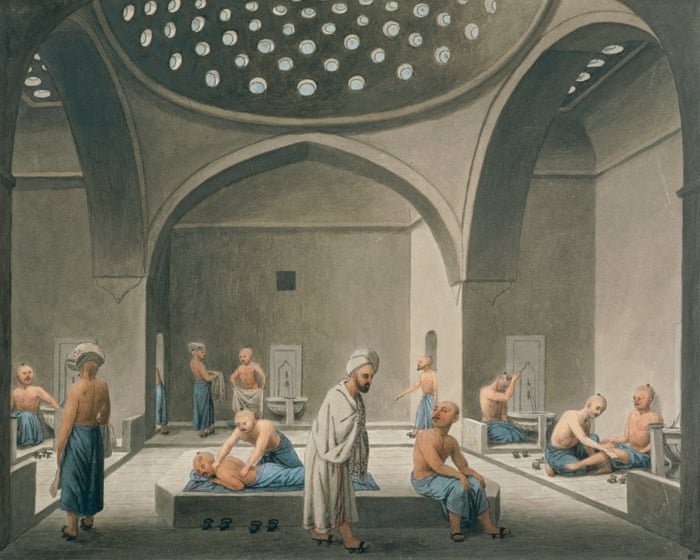
Two empires compete to bewitch you in this exhibition that offers a double bubble of beauty. It collides the Byzantine empire, whose capital Constantinople was officially inaugurated on 11 May AD330, with the Ottoman Turks who conquered this great city in 1453 and turned it into Istanbul. The combined glories of two lost worlds – the Ottoman empire was dissolved in 1922 – beget an utterly enrapturing blockbuster. I lost all track of time in this dream city of gold and ivory.

Even the human form is magically transfigured here into mineral and metal. The martyred abbess St Eudokia becomes a Byzantine icon of marble inlaid with coloured glass, wearing a crown of precious stones and an exquisite dress patterned with diamonds and decorated with pearls and emeralds. It is a masterpiece of abstract splendour that looks like a Klimt painting, but this icon can’t have influenced him because it wasn’t excavated until 1929.

Continue reading...
© Photograph: © Victoria and Albert Museum, London
© Photograph: © Victoria and Albert Museum, London
© Photograph: © Victoria and Albert Museum, London
  •  

Frieze review – you’ll see more avant garde wonders in the Bake Off tent

Regents Park, London
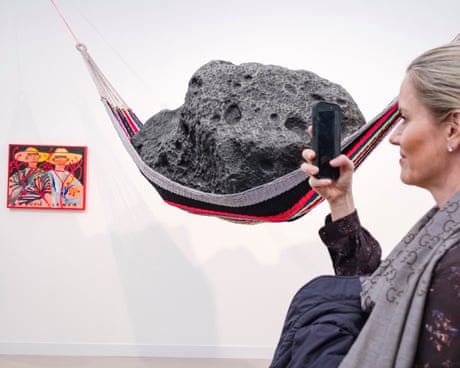
This year’s art fair is a jumble sale of mediocre paintings for the super-rich, while its Masters sibling hawks dinosaur skulls and sleazy 19th-century nudes. Welcome to the art market as its most grotesque

Naked people climb out of the earth and run around waving their arms and screaming, while someone with a bird’s head and wings plays the bagpipes. It’s my favourite artwork at this year’s Frieze but don’t go looking for this wildly imaginative outrage among the heaps of contemporary art at Frieze London. It’s a painting by a 16th-century follower of Hieronymus Bosch and is on view at Frieze Masters, the posher tent on the other side of Regent’s Park.

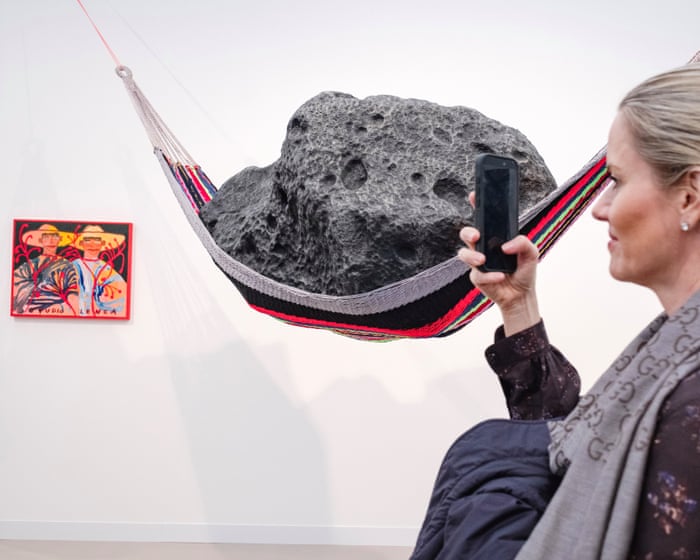
I’m sorry to say I was bored rigid in Frieze London. Many people attend, I imagine, hoping to be informed and excited by the newest, coolest art, but you’ll see more genuinely avant garde wonders in the Bake Off tent. There are endless paintings, none of which are much good, interspersed with photographs which tend to be a little better. The first thing here that held me at all was a two-metre-tall, inkjet print by Wolfgang Tillmans called Paul, nude, golf ball in which the naked Paul has his elbows on the floor and his close-cropped head bowed between them in apparent despair, while the white ball beside him eerily mirrors the pale flesh of his bony back. But it’s not new – it dates from 1994.

Continue reading...

© Photograph: Linda Nylind/Linda Nylind. Courtesy Frieze

© Photograph: Linda Nylind/Linda Nylind. Courtesy Frieze

© Photograph: Linda Nylind/Linda Nylind. Courtesy Frieze

  •  

The 90s: Art and Fashion review – this isn’t an exhibition, it’s a magazine spread

Tate Britain, London
The Young British Art of the 1990s was brash and macabre but also intelligent and emotional. This breathlessly superficial show reduces it to a stylish pose

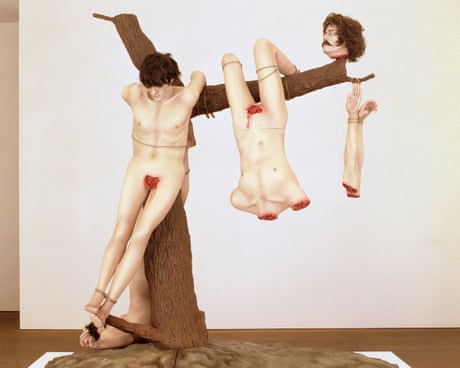
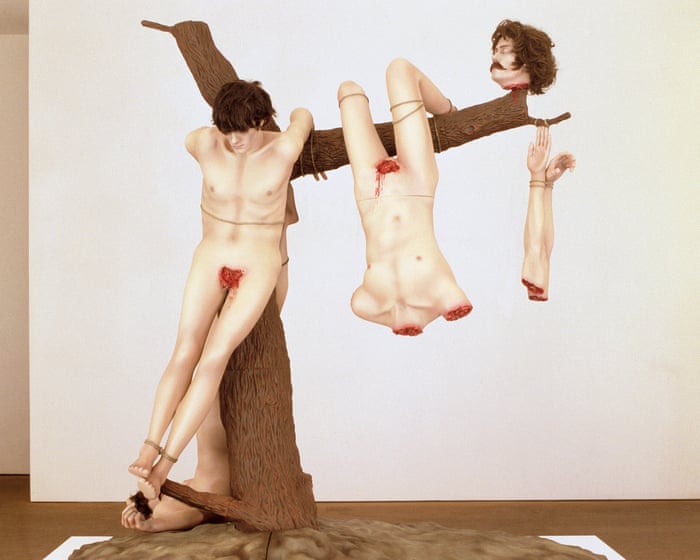
Jake and Dinos Chapman were dismissed by some even in the 1990s as overgrown adolescents selling shock for its own sake, and yet it is their work that brings this dismally shallow show closest to a moment of depth. Their sculpture Great Deeds Against the Dead, based on a print of Napoleonic war atrocities by Goya, is a display of dismembered, bleeding nude corpses hung on a tree. It asks questions about war and art, the representation of pain, whether art can have a moral purpose. The best British art of the 1990s was like that, coming on as brash, vulgar, macabre, yet also unexpectedly intelligent and emotional. Unfortunately this show is neither.

You’d think Tate Britain would want to do justice to a decade in which these Millbank premises played a starring role, staging the Turner prize in the years when bisected cows, concrete houses and elephant dung got the nation arguing. At the start of the 1990s no one thought Britain was a leader in contemporary art. By the millennium, we were better known for new art than new novels.

Continue reading...

© Photograph: Jake and Dinos Chapman/Jake and Dinos Chapman. All Rights Reserved, DACS Images

© Photograph: Jake and Dinos Chapman/Jake and Dinos Chapman. All Rights Reserved, DACS Images

© Photograph: Jake and Dinos Chapman/Jake and Dinos Chapman. All Rights Reserved, DACS Images

  •  

Korea review – a nirvana of wild beauty shattered by the 20th century

British Museum, London

The staggering resourcefulness and fantastic originality of bygone artisans is showcased in earthenware so exquisite it will soothe your soul. But a lurch into the modern breaks the spell

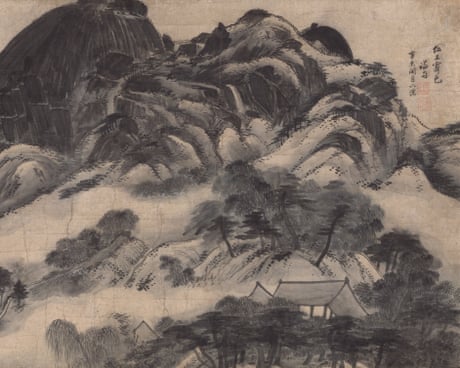
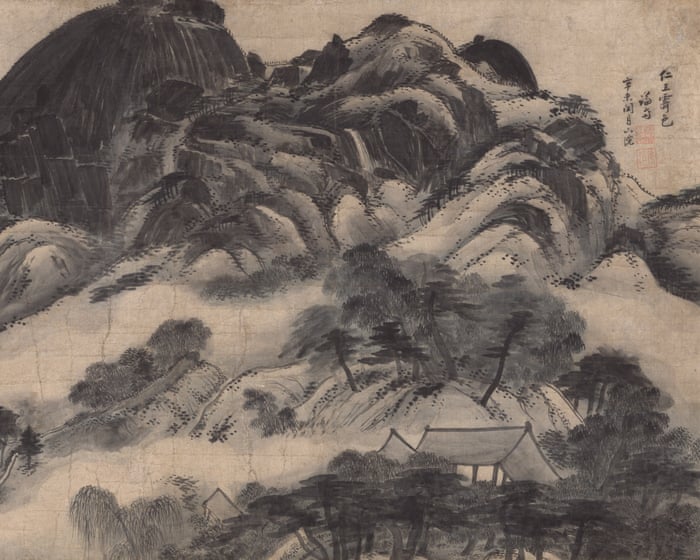
Can they do it again? The runaway success of the Bayeux tapestry has put the British Museum in a league of its own, perhaps making it, at this moment, the leading museum on earth – and it’s rapidly following up with Korea, a survey of “2,000 years of creativity” in a land that, before its sufferings in the 20th century, enjoyed millennia of calm, at least to judge from its art. But it’s a blockbuster with a tragic flaw, a lovely broken vase badly stuck together.

You are lured at first into a nirvana of beauty. A giant bronze bell from a Buddhist monastery, cast in the eighth century AD and bulging with dragons, flames and flowery embossments, strikes the tone. It calls you to meditation. A gong adds to the harmony (and if you need that underlining, there are bells and gongs on the now obligatory exhibition soundtrack). I was held rapt by this Buddhist period in Korea’s history, when the contemplative religion from India interacted with the artistic influence of China to inspire ecstatic hand-copied sutras (spiritual scriptures) and slender little statuettes of bodhisattvas (Buddhist saints who have achieved enlightened holiness).

Continue reading...

© Photograph: National Museum of Korea

© Photograph: National Museum of Korea

© Photograph: National Museum of Korea

  •  

Turner prize review – soulful cyborgs go into battle with a stack of massive Hobnobs

Mima, Middlesbrough
In a truly competitive year, Kira Freije’s apocalyptic humanoids trounce everything in their path, even the sculpture that looks like a pile of biscuits

The Turner prize is most exciting when you passionately support one of the artists and want to convince everyone she’s a genius. In this year’s show at Middlesbrough Institute of Modern Art, I felt that thrill so strongly, I want to get a T-shirt made to support my artist like the Boro scarves and banners you see around here.

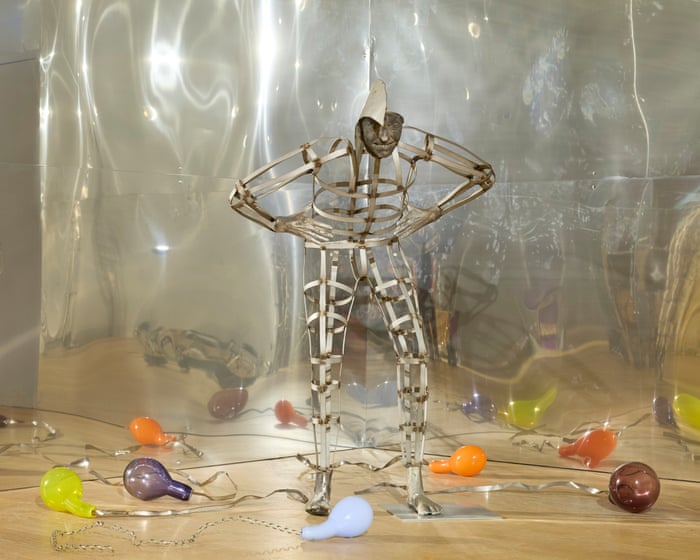
Kira Freije has her own floor, separated by a tall flight of stairs from the three other shortlisted artists, because apparently the fine watery mist in her installation could damage their fragile materials. Yet setting her apart seems like a statement and it’s justified. She shows 33 lifesize statues of tragicomic steampunk cyborgs, individual works but gathered in a vaporous apocalyptic wasteland, with an impact and resonance that’s on a level of its own.

Continue reading...

© Photograph: David Levene/The Guardian

© Photograph: David Levene/The Guardian

© Photograph: David Levene/The Guardian

  •  

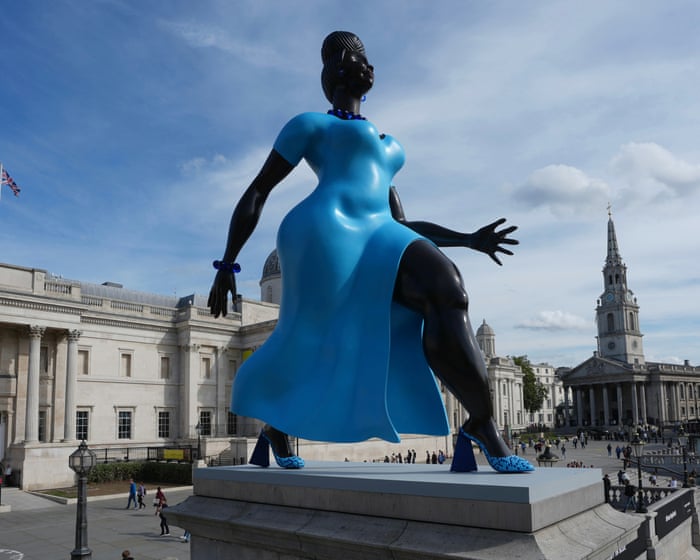
Tschabalala Self’s Lady in Blue review – this striding scupture fills the fourth plinth with humour and life

Trafalgar Square, London
The swaggering statue’s luscious collision of brown and blue could stop traffic – and serves as a reminder of the big, beautiful, multicultural world we enjoy

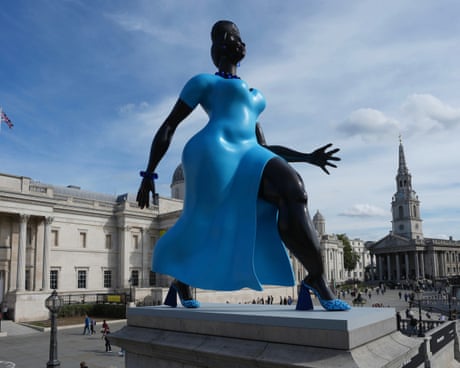
It hit me like a thunder clap. One moment I was bored and irritated by the official speeches before the unveiling of Tschabalala Self’s sculpture on the fourth plinth, which so insisted on its sociopolitical worth it sounded like Soviet propaganda. Then the covering slid off and I was in love with the Lady in Blue.

Self has created one of the most beautiful sculptures put on Trafalgar Square’s empty plinth – and I don’t mean that in a cool, formalist way. There is a serious danger of traffic accidents as drivers passing the square stare a little too long at the Lady’s generous proportions, her long stride in platform shoes, her intensely physical, confident being.

Continue reading...

© Photograph: Kin Cheung/AP

© Photograph: Kin Cheung/AP

© Photograph: Kin Cheung/AP

  •  

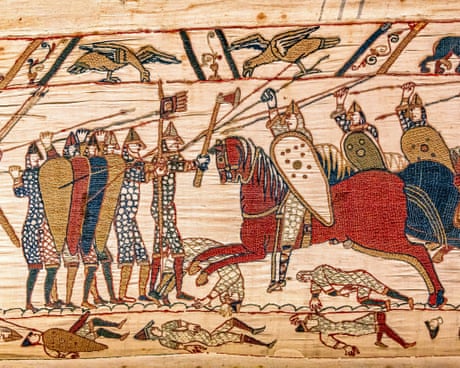
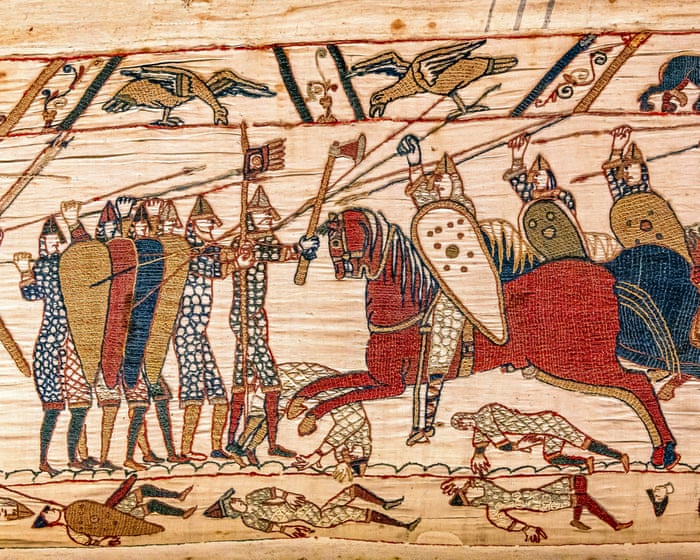
The Bayeux tapestry: a stupefying, thrilling, horrifying masterpiece that shakes the earth

British Museum, London

The greatest battle ever depicted in art is here at last – and it hurtles along, making your heart pound with its sense of doom and destiny, culminating in fires and corpses on a battlefield full of pathos

It should not work. It should not even exist. Nothing about the Bayeux tapestry makes sense according to any norms of art: its creators couldn’t do proper portraits or pictorial depth or landscapes or any of the sophisticated things we associate with timeless masterpieces. When they depict a church, they have to write what it is: Ecclesia. But these artists – or who knows, perhaps she was a single artist – created something so stupefying and delightful, so abundant in visual thrills, horrors and humour, it beats almost everything else ever painted or carved – let alone embroidered on a strip of linen.

And now here it is, in front of my eyes, close enough to touch if it wasn’t behind a glass screen of such high quality you never catch a reflection. The British Museum’s display of this wonder is perfect. It’s laid out in its case, the length of a gallery, which you reach after some archaeological foreplay involving armour, quotes from chronicles and info screens. Then you see the colours of the tapestry below you from a parapet – russets, greens, yellows – after which you simply start at the beginning and follow the story rightwards. Surrounded by darkness and picked out by finely adjusted lighting, the Bayeux tapestry shines. My only quibble is the ethereal soundtrack – shouldn’t there be drums, oliphants, troubadours?

Continue reading...

© Photograph: Isogood_patrick/Shutterstock

© Photograph: Isogood_patrick/Shutterstock

© Photograph: Isogood_patrick/Shutterstock

  •  

The best art and architecture of autumn 2026

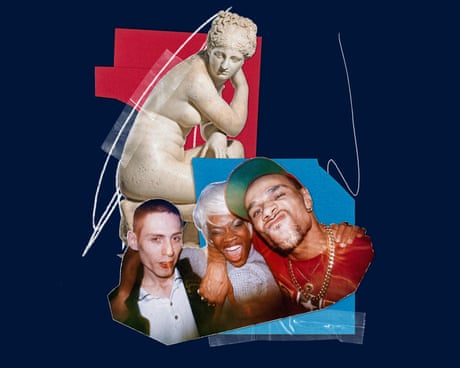
A self-confident woman strides on to the Fourth Plinth, Nan Goldin captures sex, cats and death and even the Turner Prize shows promise this year

• See all of our unmissable autumn arts recommendations here

The most anticipated exhibition of the year centres on an embroidered epic of war and conquest that miraculously preserves an intimate window on the Norman invasion of Britain in 1066. Yet, you may find yourself simply fascinated by the artistry of the Anglo-Saxon women who used coloured wool to depict billowing sails, charging horses and King Harold’s spectacular moustache. Jonathan Jones
• British Museum, London, 10 September to 11 July

Continue reading...

© Composite: Guardian Design/Eddie Otchere/ The Royal Collection/ HM King Charles III

© Composite: Guardian Design/Eddie Otchere/ The Royal Collection/ HM King Charles III

© Composite: Guardian Design/Eddie Otchere/ The Royal Collection/ HM King Charles III

  •  

Four blokes and a zebra crossing: the banality and beauty of the Beatles’ Abbey Road cover

Much-copied and parodied picture captures dynamic between the individuals and the band with eerie perfection

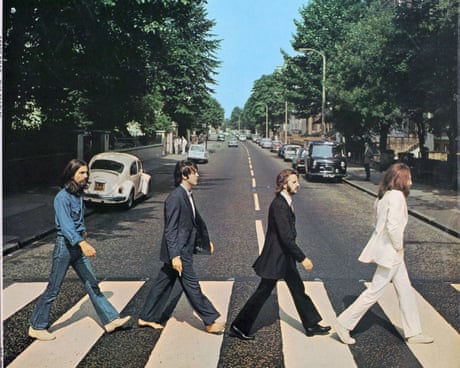
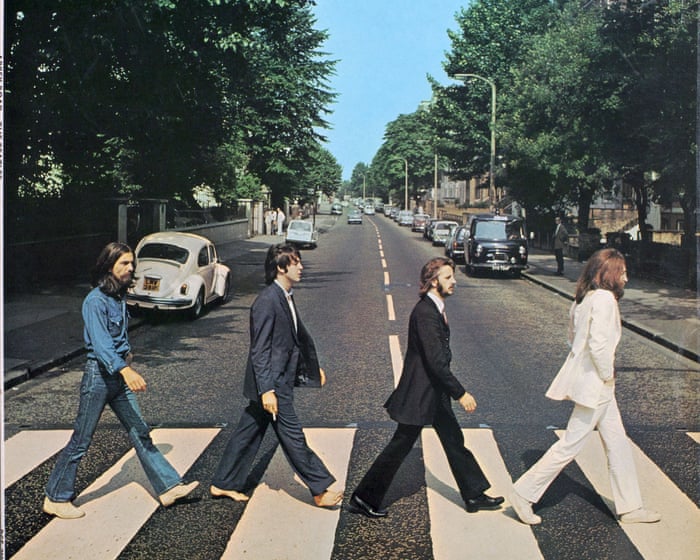
It’s not really the four blokes on the zebra crossing who make the cover of the Beatles’ Abbey Road memorable, but the street behind them. Vanishing towards a perfect blue sky, with summer trees veiling in bright green what might otherwise be dour brick houses, it could be a hyperreal vista painted by David Hockney. The black and white stripes of the crossing and the white line down the middle of the receding north London road are fresh and crisp, enhancing the clarity of this psychedelic daydream.

Of course the four blokes do play a part. The Beatles were so transcendently famous by the time Iain Macmillan took this picture on 8 August 1969 that seeing them do something as ordinary as cross the road becomes a magical mystery.

Continue reading...

© Photograph: Apple Records

© Photograph: Apple Records

© Photograph: Apple Records

  •  

‘He made Damien Hirst look like a sideshow’: the bloodsplash horrors of Gunther von Hagens

The German scientist showman turned corpses into gruesome entertainment and scored a global hit – but he sidestepped the moral questions truly great art asks

Gunther von Hagens, the inventor of “plastination”, will be remembered as the man who killed off 1990s shock art. He certainly plastinated any reputation Damien Hirst had as a disturbing artist of mortality.

When this German scientist turned showman made a popular bloodsplash around the world in the latter half of the 90s, Hirst was still pickling sheep, sharks and pigs and displaying them as philosophical specimens. Other artists, too, played with carnality and horror, from endoscopy videos to model landscapes filled with Nazi atrocities. But it was just art. Then along came Von Hagens with his Body Worlds exhibitions, using plastination to perfectly preserve dissected bodies. He did what Hirst and co never dared: he displayed actual human corpses as a kind of grisly but purportedly educational art object.

Continue reading...

© Photograph: Jockel Finck/AP

© Photograph: Jockel Finck/AP

© Photograph: Jockel Finck/AP

  •  

Madelon Vriesendorp review – sex-crazed visions of skyscrapers copulating

Sir John Soane’s Museum, London

The Empire State building is caught in bed with the Chrysler Building and a milk bottle turns into a dragon in the raunchy and cheekily provocative work of the Dutch artist and architect

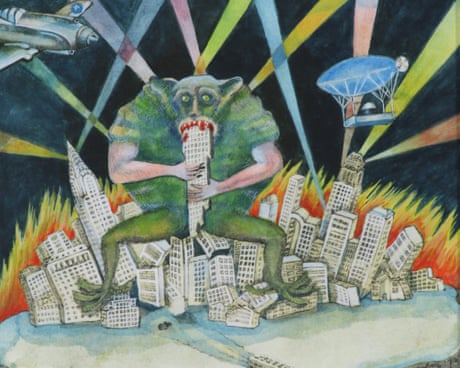
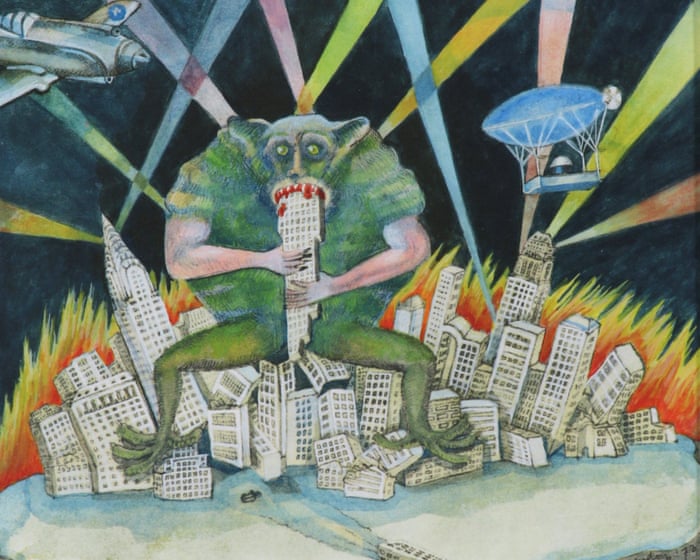
In a high-rise New York apartment with a wide window that surveys the Manhattan grid below, the Empire State and Chrysler Buildings are in bed together. The Chrysler melts in a silvery swoon, shagged out, while the beacon atop the Empire State Building still glows fiery red and on the bedside table the Statue of Liberty’s arm holds up a torch suggesting more passion to come. But oh no! The lovers have been caught at it. At the door is the forbidding RCA Building, which has left its usual station at 30 Rockefeller Plaza to see this!

Madelon Vriesendorp’s 1975 skyscraper sex romp drawing Flagrant Délit – “caught in the act” – can be seen twice in her exhibition Mind Games: as a standalone print and as the cover of Delirious New York, the 1978 book by her ex-husband Rem Koolhaas that is both a surreal history of the city and a subversive manifesto for a new kind of modern architecture. Vriesendorp is what exactly? An architectural cartoonist? A cartoonist architect? She is certainly more than just a graphic prankster, and won the 2025 Soane Medal given to visionaries who have “furthered and enriched the public understanding of architecture”. Hence this show. And it all started with skyscrapers copulating.

Continue reading...

© Photograph: courtesy of the artist

© Photograph: courtesy of the artist

© Photograph: courtesy of the artist

  •  

Ana Mendieta review – were she still alive she’d be at the forefront of art in this century

Tate Modern, London
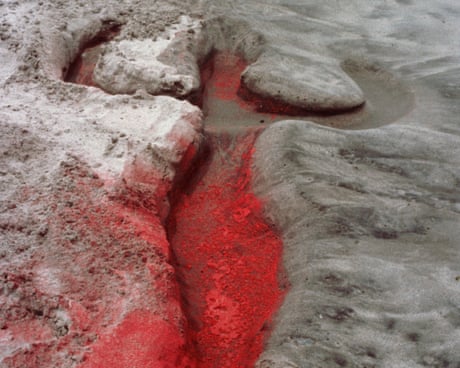
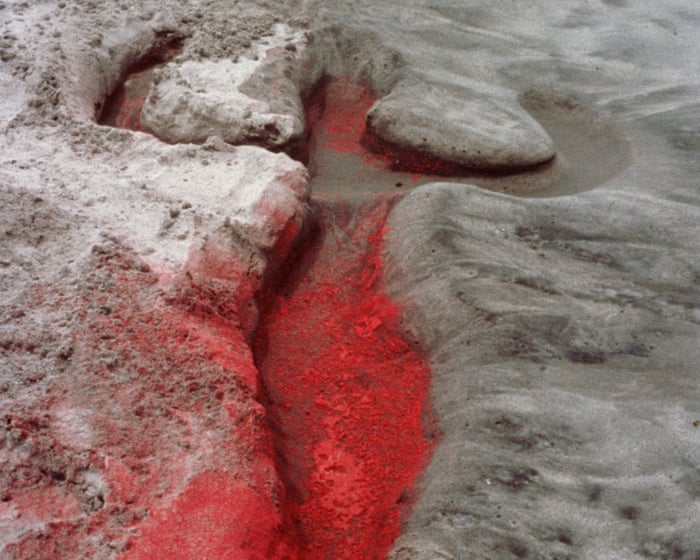
This exhibition makes nothing of the Cuban-American artist’s controversial death – instead it focuses on the astounding way she left an imprint of herself on the earth using blood, feathers and gunpowder

A huge colour photo of a ruined ancient site greets you outside Ana Mendieta’s engrossing exhibition and it immediately tells you this is going to be different. It’s the kind of thing that seems to belong more to a British Museum show about a lost pre-Columbian civilisation than in the concrete citadel of Tate Modern’s Blavatnik wing. Yet in her imagination, that’s where Mendieta belonged, too. Born in Havana, Cuba in 1948, she was sent to the US when she was 12 to flee the revolution. She felt like an outsider among white Americans. Home, for her, was the past, and she would excavate the very origins of art and mythology.

Mendieta made art from blood, feathers, flowers and sand and in such fresh ways you’d think these primeval substances were new inventions. She literally played with fire, drawing a human figure with gunpowder on the ground or on the trunk of a tree, then setting it alight. The flames leave behind a scorched shadow of a person, like the victims of a nuclear bomb or the dead of Pompeii entombed in ash. Confronted by a row of these burnt ghosts emerging from real tree trunks you almost expect them to speak to you like the shades of the dead.

Continue reading...

© Photograph: Courtesy Marian Goodman Gallery and Alison Jacques, London DACS 2026
© Photograph: Courtesy Marian Goodman Gallery and Alison Jacques, London DACS 2026

© Photograph: Courtesy Marian Goodman Gallery and Alison Jacques, London DACS 2026
  •  

The Hay Wain: Walking Constable’s Landscape review – a masterpiece for the climate crisis age

Christchurch Mansion, Ipswich
While Britain boils in a heatwave, a new exhibition built around the much-reproduced canvas reminds us of the beauty of the natural world – and what we could lose

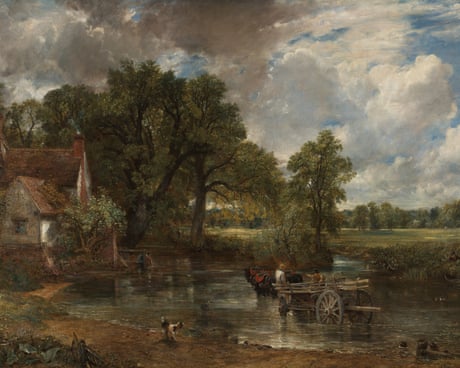
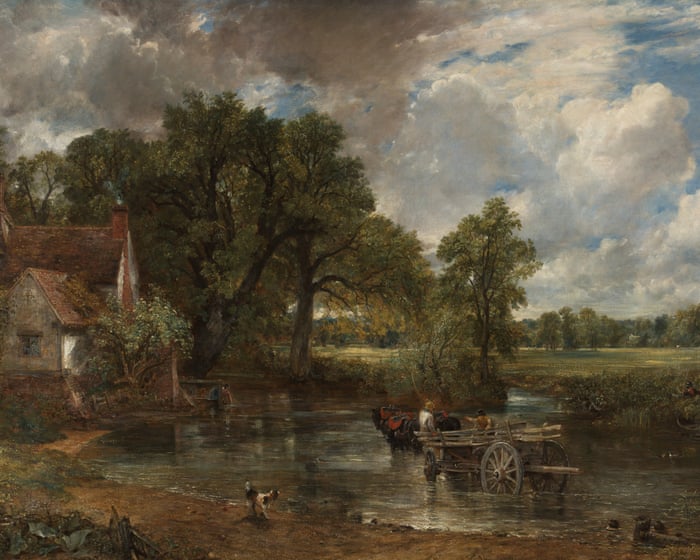
I first saw John Constable’s 1821 painting The Hay Wain as a postcard with cruise missiles brutally stacked in the wooden cart and pointing at the sky. Peter Kennard’s anti-nuke photomontage is just one of the many parodies and travesties this image of a seemingly eternal rustic Britain keeps provoking. A few months ago, a newspaper cartoon depicted a ballistic missile from Iran speeding through Constable’s painting. But when I visited Ipswich to see its Hay Wain exhibition at the start of the latest heatwave it was the climate making a scorching, ironic comment on this temperate scene.

Inside this Tudor house, grey, blue and brown masses of rain-promising cloud hung above Constable’s painted Suffolk fields, dappling them with shade. But outside the grass was straw yellow and the landscape around Dedham Vale and the River Stour, where Constable was born and in which The Hay Wain and many more of his works lovingly linger, appeared to have been blowtorched into oblivion.

Continue reading...

© Photograph: The National Gallery Photographic Department/© The National Gallery, London
© Photograph: The National Gallery Photographic Department/© The National Gallery, London
© Photograph: The National Gallery Photographic Department/© The National Gallery, London
  •  

Never mind the Bayeux! Here’s some other great medieval art – and it’s free

Want to see some old wonders but don’t fancy forking out £33 for 40 minutes with a tapestry? Our critic celebrates the British treasures you can see all year round – from monstrous crypt carvings to the vaulting glory of our cathedrals

There’s a carved stone character grimacing furiously in the crypt of Canterbury Cathedral and you can see why – a man is sitting on his head, legs apart, holding a fish and bowl in outstretched arms. Other figures perched atop slender stone columns include a creature with a serpent’s tail wrestling a dog-like monstrosity, a gryphon eating a siren, and a (now-detached) carving of a horned devil. All this nefariousness in the depths of England’s holiest shrine.

But then medieval British art is full of wonder, mystery and humour. It is also so abundant that it gets taken for granted. But now, after almost 1,000 years, it is about to have a moment. This week, the rush will begin to get £33 tickets to spend 40 minutes in the company of a medieval British artwork. The Bayeux Tapestry, a 70-metre embroidery depicting the Norman conquest of England in 1066, was almost certainly embroidered by Kent women to a commission by Bishop Odo of Bayeux in the 1070s.

Continue reading...

© Photograph: Lee Thomas/Alamy

© Photograph: Lee Thomas/Alamy

© Photograph: Lee Thomas/Alamy

  •  

Anish Kapoor review – this gutsy, gore-splattered show is a divine bloodbath

Hayward Gallery, London
Butcher bags, human sacrifice and cavernous black holes … in a world of dry art this stunning exhibition forces us to confront religion and mortality

It’s the clinging, transparent PVC that does it, a horribly surgical-looking, synthetic skin covering each of Anish Kapoor’s three paintings – can we call them that? – entitled Plastic Sacrifice I, II, III. They resemble a serial killer’s trophy art. Through the wrapping you gawp at three-dimensional purple and crimson entrails that slop off the wall, forming valleys and protuberances that, it seems, would collapse all over the floor if the carnage wasn’t contained by these butcher bags.

Sensationalist and macabre? Rembrandt’s painting Slaughtered Ox is just as visceral as it contemplates the flayed, hollowed body of a huge ox hanging upside down, its yellow fat and blood-dark meat a mirror of our own doomed flesh, not to mention the crucifixion. In the age of smartphones and minuscule attention spans, Kapoor gives artistic depth a go, addressing God and mortality, those themes of the old masters, in a metaphysical rollercoaster ride of a show, a divine bloodbath.

Continue reading...

© Photograph: Neil Hall/EPA

© Photograph: Neil Hall/EPA

© Photograph: Neil Hall/EPA

  •  

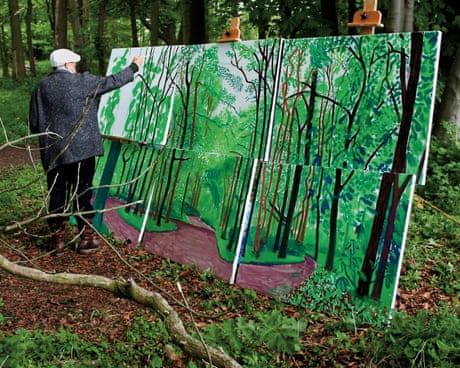
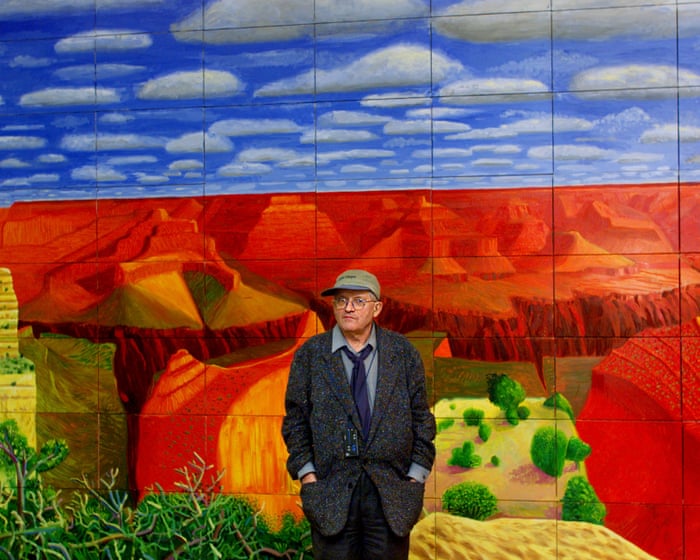
‘His last kiss to the world’: David Hockney’s return to Yorkshire triggered a glorious reawakening

When the artist came home from LA, it seemed like a retirement. But it heralded an astonishing new chapter. Our critic remembers their thrilling dinners together – and the dazzling new works that arrived in his inbox every morning

It was springtime in Paris and I was floating among young green leaves and white blossom – but I was not in a park. I was on an upper floor of the Fondation Louis Vuitton delighting, wallowing in several of David Hockney’s iPad paintings of his garden in Normandy. In one room, this green oasis was shown by the light of the silvery moon: the darkened chamber was alive with shining white lunar discs, blue clouds and the shadowy fingers of tree branches.

It was early April last year and this was the opening of David Hockney 25, a blockbuster show, curated with his close involvement, covering his entire career – but with an emphasis on his work this century. What a bold and bloody-minded spectacle it was, insisting that Hockney’s later pictures of straw bales and ponds are just as good if not better than his famous early swimming pools and sexy portraits. And what a triumph! With extraordinary aplomb, Hockney made his point. You went from gazing in awe at some of his greatest early paintings, basking in their Californian and swinging London light, to suddenly standing in Yorkshire fields in the early 21st century, taking in views of emerald hedgerows and purple trees. And it all suddenly made sense.

Continue reading...

© Photograph: Jean-Pierre Goncalves de Lima

© Photograph: Jean-Pierre Goncalves de Lima

© Photograph: Jean-Pierre Goncalves de Lima

  •  

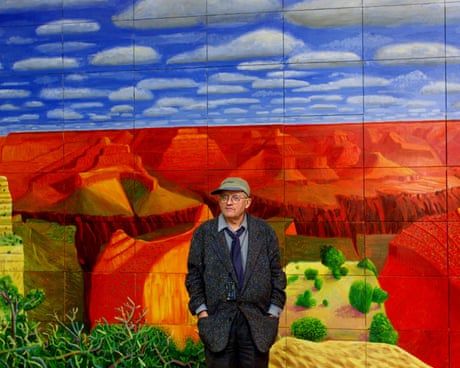
‘David Hockney changed the world just by looking at it’: a tribute to the artist whose work was a feast of visual pleasures

He was subversive and bold, yet also playful and accepting – putting the fun into pop art and finding freedom and fulfilment amid the blue skies and pools of California. David Hockney, who has died aged 88, lived and painted the truth
• David Hockney – a life in pictures
• David Hockney, revolutionary British artist, dies aged 88

David Hockney’s art was a feast of unabashed visual pleasure, one long orgy of the gaze, the delighted lifelong epiphany of someone who cherished flowers in a vase and freeways in the sun and thought endlessly about new ways of making pictures of such passing treasures. He changed the world just by looking at it. It didn’t seem to occur to him that the way he saw was revolutionary – all he cared about was truth. But no one had ever captured the look and feel of the contemporary world with such acceptance before. He has the same simple perfection as the Beatles – just as they caught the sound of the modern world, he caught its look.

The most revealing fact about Hockney is that he loved LA. Where some might see a moronic inferno, he saw freedom and possibility under an unjudging blue sky. Low-lying houses with patio doors glinting vacantly, tall thin palm trees with tiny heads, the white spume of a diver’s splash – Hockney’s California is a vision of paradise. He is the Matisse of pop art, A Bigger Splash the 1960s answer to Matisse’s 1904 manifesto for hedonism, Luxe, Calme et Volupté.

Continue reading...

© Photograph: Philippe Wojazer/Reuters

© Photograph: Philippe Wojazer/Reuters

© Photograph: Philippe Wojazer/Reuters

  •  

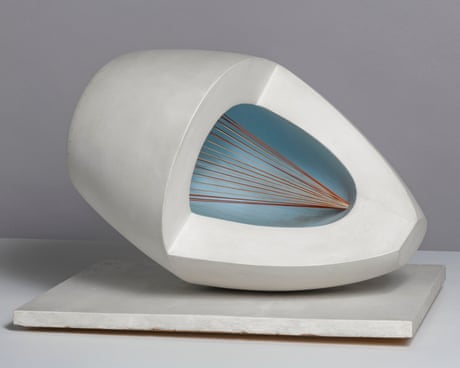
Hepworth in Colour review – salty Cornish seascapes compressed into immaculate sculptures

Courtauld, London
Barbara Hepworth’s elegant works, with their harp-like strings and splashes of blue, evoke the foamy breakers of St Ives. But should we really be surprised she used colour?

They say in St Ives that if you put your ear to a Barbara Hepworth sculpture, you can hear the waves breaking on Porthmeor beach. Well, maybe they do say that and maybe they don’t. But the sea definitely roars in the ravishing sculptures at the heart of this small survey of just one aspect of her work: her use of colour.

Hepworth’s favourite colours turn out to be – wait for it – blue and white, the colours of the sea: the white foamy breakers and the rippling waters that swaddle the Cornish fishing town where her home and studio are proudly preserved.

Continue reading...

© Photograph: Mark Heathcote/The Hepworth Wakefield

© Photograph: Mark Heathcote/The Hepworth Wakefield

© Photograph: Mark Heathcote/The Hepworth Wakefield

  •  

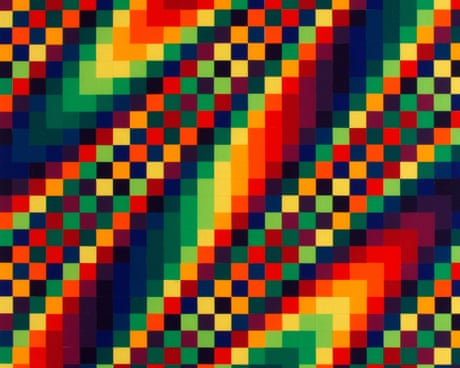
Julio Le Parc review – as if Bridget Riley had opened a riotous funfair

Tate Modern, London
The late artist found his calling in febrile 1960s Paris and this exhibition is imbued with an anarchist spirit – you can even spin the paintings!

In a great scene in Jean-Luc Godard’s 1964 film Bande à Part, the young protagonists run through the Louvre, leaving puzzled art lovers and angry guards in their wake. It seems impromptu and genuinely disruptive yet Godard’s camera finds time to pause in front of Jacques-Louis David’s Oath of the Horatii, an icon of the French Revolution. This is 1960s Paris, a place where young radicals mock high culture in a carnival that starts with running in the museum and will end in 68 on the streets.

Julio Le Parc’s retrospective at Tate Modern plunges you into that 1960s Paris and it’s riotous good fun. It takes a lot to get me off my contemplative pillar and physically “interact” with art but I was soon pushing buttons and spinning paintings. Marcel Duchamp called one of his late works Prière de Toucher (Please Touch), which would have made a good title for this show. Please touch these artworks, make them do things, let them do things to you. One of the simplest, Pattern to Manipulate, is a disc painted with a black and white abstraction: a red arrow on the wall tells you which way to spin it and when you do it fast, the black and white becomes pure white.

Continue reading...

© Photograph: Lent by the Atelier Le Parc 2026. © ADAGP, Paris and DACS, London 2025.

© Photograph: Lent by the Atelier Le Parc 2026. © ADAGP, Paris and DACS, London 2025.

© Photograph: Lent by the Atelier Le Parc 2026. © ADAGP, Paris and DACS, London 2025.

  •  

MC Escher review – hallucinatory insights from the master of the mind-bending staircase

Somerset House, London
Escher’s paradoxical geometries and impossible gravities may baffle the mind – yet even his wildest works were never just fanciful, as this fun and gripping show makes clear

We think we know the world of Maurits Cornelis Escher with its mind-bending staircases and buildings that impossibly twist upon themselves. Yet a shocking glimpse of reality intrudes in Somerset House’s gripping journey through his metaverse. In 1945, Escher designed a diploma for students at a temporary academy in Eindhoven, recently liberated from Nazi rule. Behind a wise old owl in the foreground, twisting columns of black smoke rise from a riverside town, their evil sinuousness reflected in the water. The message of this depiction of war is not only that Escher was a civilised individual surviving a brutal age but also that his visual delights were never just fanciful. Even his wildest speculations reveal the workings of the world itself, grounded as they are in what Galileo called “the language of mathematics” in which “the book of nature is written”.

You don’t have to be fluent in that language to lose yourself in Escher’s art. You just need to look, and this exhibition lets you look so much more closely and deeply than you can in books and reproductions and imitations of his work. At times you feel you are actually inside his paradoxical places. I chuckled for ages in front of his 1958 lithograph Belvedere in which a king and queen survey a mountainous landscape in different directions from two storeys of a Renaissance building, but wait, they don’t just face different ways, their separate floors are totally at odds, the king’s pointing sideways while the queen faces out of the picture in a 90-degree shift: the columns on the front of the king’s balustrade support the back of the queen’s floor and the whole building turns in two different dimensions inhabiting two truths at once. No wonder the builders are dressed as jesters while an architect sits studying geometry.

Continue reading...

© Photograph: © 2026 The M.C. Escher Heritage, Baarn, The Netherlands All rights reserved www.mcescher.com

© Photograph: © 2026 The M.C. Escher Heritage, Baarn, The Netherlands All rights reserved www.mcescher.com

© Photograph: © 2026 The M.C. Escher Heritage, Baarn, The Netherlands All rights reserved www.mcescher.com

  •  
❌