❌

Lese-Ansicht

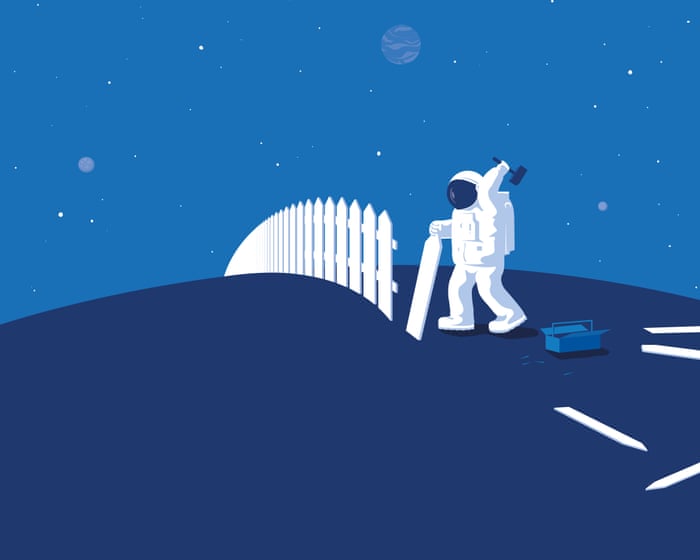
Dyslexic thinking made me the scientist I am today. If we could harness its power, imagine what could be possible | Maggie Aderin

Progress has always been made by people who think differently. Neurodiversity helps us think outside the box – and when we do, the sky’s the limit

One of my favourite pieces of scientific equipment is something called a retrospectroscope. I admit that it only exists in my imagination, but it has turned out to be a very useful bit of kit. It allows me to look back through the years of my life and analyse the journey so far. And what a journey it has been.

When I started looking back in earnest as I wrote my memoir, there were many discoveries. Some made me laugh. Some made me wince. Some made me want to give my younger self a hug and a cup of hot, sweet tea. But one of the biggest standouts has been the path my dyslexia has taken me on.

Continue reading...
© Illustration: Matt Kenyon/The Guardian
© Illustration: Matt Kenyon/The Guardian

© Illustration: Matt Kenyon/The Guardian


  •  

‘I’d introduce aliens to shito sauce.’ Items our panel would take into space

Artemis II’s astronauts packed their wedding rings, notebooks and a supply of maple syrup. Here’s what our writers would fly to the moon

Continue reading...

© Composite: Guardian Design/Getty Images/Alamy

© Composite: Guardian Design/Getty Images/Alamy

© Composite: Guardian Design/Getty Images/Alamy

  •  

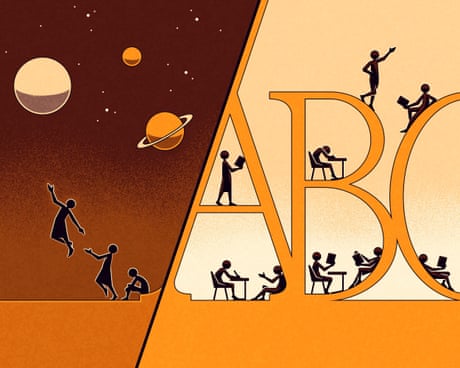
There’s a new space race – will the billionaires win?

The commercialisation of the cosmos is already underway, and our current laws aren’t fit for purpose

If there is one thing we can rely on in this world, it is human hubris, and space and astronomy are no exception.

The ancients believed that everything revolved around Earth. In the 16th century, Copernicus and his peers overturned that view with the heliocentric model. Since then, telescopes and spacecraft have revealed just how insignificant we are. There are hundreds of billions of stars in our galaxy, the Milky Way, each star a sun like ours, many with planets orbiting them. In 1995, the Hubble space telescope captured its first deep-field image: this showed us that there are hundreds of billions of galaxies in our known universe, huge wheeling collections of stars dispersed through space.

Continue reading...

© Illustration: Elia Barbieri/The Guardian

© Illustration: Elia Barbieri/The Guardian

© Illustration: Elia Barbieri/The Guardian

  •  
❌