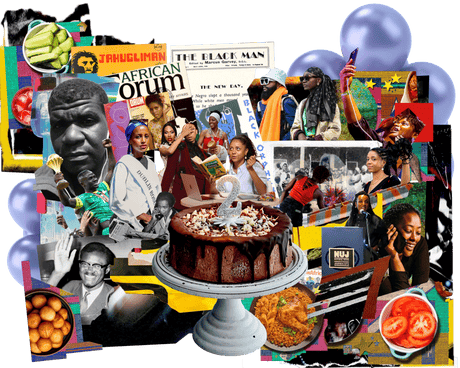
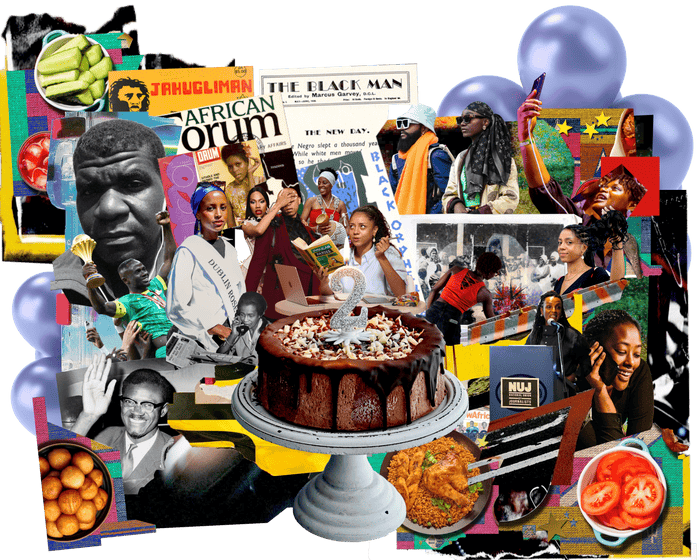
The Long Wave is two! And over the past year, once again, it has surprised us with the breadth of stories and events in the diaspora.
The Long Wave has also evolved into a large community, with many readers getting in touch and sharing their thoughts, tips and sometimes their polite disagreements. We welcome and relish all of it. Here is the team’s selection of our favourite editions.
Lana Nusseibeh has been the face of a disastrous Emirates policy that has prolonged war and death. It is a scandal that she is even being considered
Over the past few years, you can plot the plunge into global instability not only through the unchecked assaults on international law and civilian life, but through the decline and undermining of the authority and credibility of international institutions. The latest level in this spiral is the proposed appointment of Lana Nusseibeh of the United Arab Emirates (UAE) as the UN secretary general. Her bid has been rapidly gaining momentum and endorsements. And it has been met with outrage among the Sudanese.
Nusseibeh is the minister of state at the UAE and a former UAE ambassador to the UN. For the past three years, the country has been connected to – bear with me, this will be a long sentence – supporting the Rapid Support Forces (RSF) militia in Sudan, facilitating mercenaries to fight alongside the militia (which is accused of ethnic cleansing, crimes against humanity and sexual violence), and appropriating international aid infrastructure to smuggle weapons into the country.
This week, I had the great honour of delivering the Claudia Jones memorial lecture, hosted by the UK National Union of Journalists. It is partly inspired by the Long Wave and the extraordinary response it continues to receive from readers. As the newsletter turns two, I reflect, in the abridged version of the lecture below, on the importance of making space in an embattled political climate.
It feels like a particularly difficult time to say anything with much certainty. We stand today in the shadow of the Black Lives Matter Movement – as well as the wreckage brought about by neoliberalism, the rise of the far right, and ongoing culture wars. In the last decade, several moments have swelled with possibility and then melted away – not quite into nothing, but certainly, less than we would like. Where do we go from here?
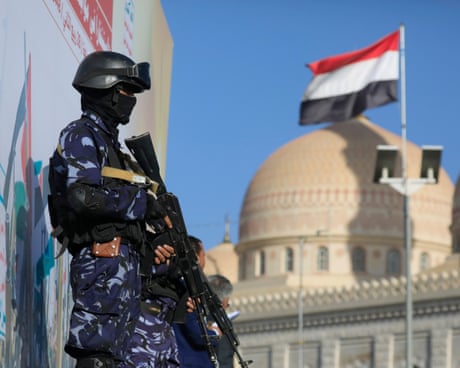
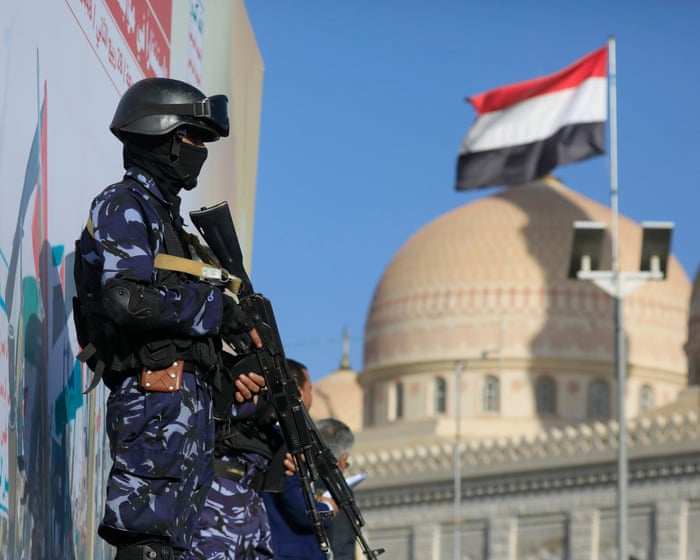
The latest attack by Houthi rebels on Saudi Arabia may prove to be more calamitous for the region than the world imagines
On Saturday, Houthi rebels launched a shocking and deadly attack on Saudi Arabia’s capital city, Riyadh. At the time of writing, the missile strike on King Khalid international airport has killed at least 13 people and left 300 injured, marking a significant turn in a regional conflagration that is only getting more intense. It was the single most deadly attack on any Gulf country since the US and Israel launched their war on Iran in February. In Saudi Arabia, a country that is unaccustomed to such fatalities, the death toll is bewilderingly high and likely to prompt a bloody response.
Over the past year, the Gulf has entered a new era of instability that is not temporary and cannot be reversed. This may feel like an overstatement – casualties have been relatively low, after all, compared with Gaza and Iran – but the gradual erosion of peace and security in places such as Saudi Arabia, Qatar and the UAE has changed the region more dramatically than its leaders would like to acknowledge.
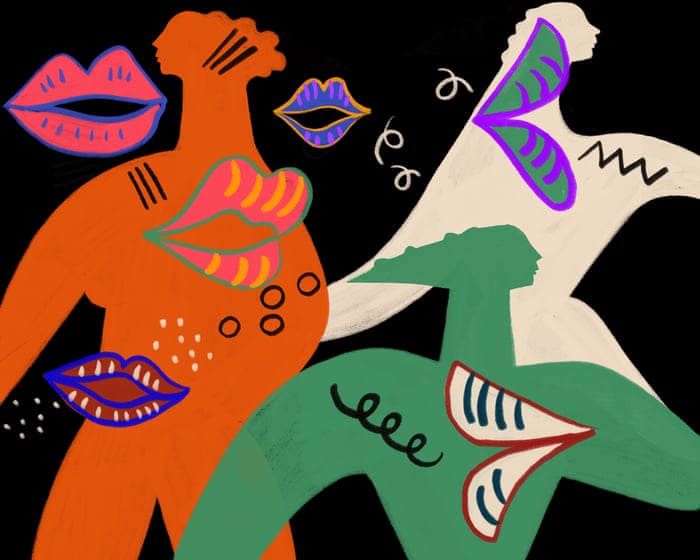
One thing you might not know about this newsletter is how much it is shaped by behind-the-scenes chat. The Long Wave team, and its broader family at the Guardian, is a mini-diaspora in and of itself – one that is constantly in conversation. Often, during our meetings, someone will mention what was assumed to be a quirk of their specific background, only to discover that it is replicated almost entirely across the board. This week, we spoke about the fact that in many of our cultures, there is not just one word for “Black”.
“Green”, “red”, “yellow”, “blue”, “wheat”. These are some of the words many tribes in parts of Sudan use to describe complexion. There is no “Black”. I tripped over my words trying to explain to colleagues what these colours denoted – each category is infused with so much cultural depth. In fact, in some cases, they are not even descriptions of complexion, but of features, of broad ethnic background, and even of attractiveness. “Green” means dark, but also implies a sort of uniformity of colour, an even hue, and therefore almost a comeliness. Yellow is lighter, and comes with an unstated connotation of beauty. Blue is the darkest, and is sometimes pejorative, but other times just a description. “Wheat” is the one most likely to be a compliment, a shade that does not diverge too sharply into light or dark.
Ukraine, Iran, Palestine and Sudan: it has so many problems to confront and fails to do so. Seen up close, it is a study in stasis and decline
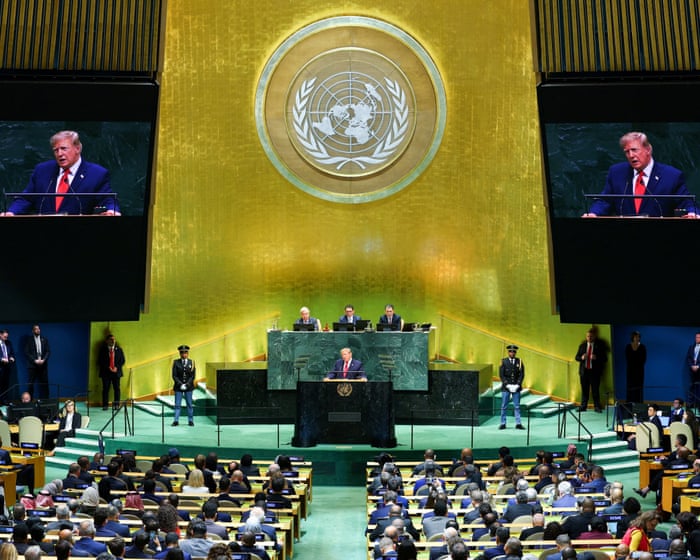
UN general assembly meetings are not usually riveting occasions. But this year’s encapsulated a world in flux and crisis, an international law and organisation structure that is falling apart, and a humanitarian order machine running hot. What unfolded was less a gathering for resolution and resolve than a display of showboating, frustration and fractiousness.
It was a snapshot for the history books of four huge destabilising conflicts for which there seems to be no means of, or interest in, resolution – Ukraine, Iran, Palestine and Sudan. Volodymyr Zelenskyy delivered an account of five years of Russian aggression: the staggering loss of life – hundreds of thousands killed on both sides – the porousness of the sanctions on Russia, the “madness” of it all. Donald Trump once again threatened to “annihilate” Iran if it did not make a deal, a promise that has now been made so many times its restating only reveals its hollowness. Iran’s president, Masoud Pezeshkian, responded in his own speech by saying that Iran has been the victim of US terrorism and aggression, and would defend itself with the “utmost strength”. The sole US delegation representative in the room walked out.
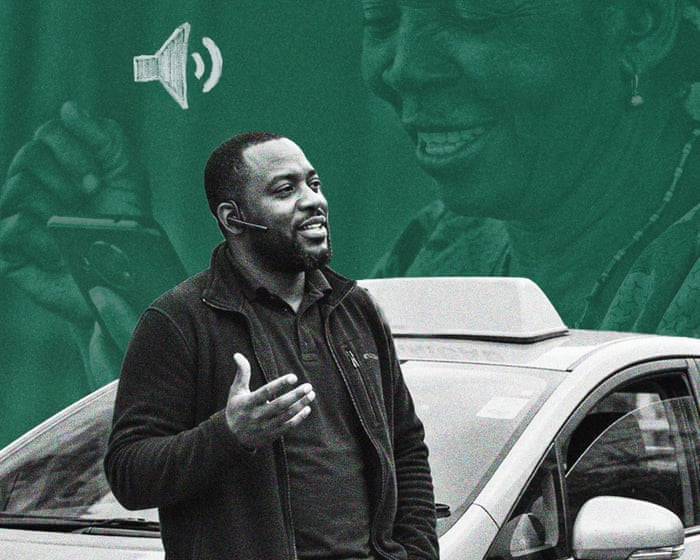
For those employed in arduous solitary work such as cab driving, a marathon phone call is the perfect place to navigate the dislocations of immigrant life
The question of the week is: “who are Uber drivers always talking to on the phone?” It’s one that regularly surfaces on Reddit threads and social media and even, on a couple of occasions, in the office. It’s not my question (I know who they are talking to), but I think the fact that many people are so baffled by it tells us a lot about the separate worlds we occupy.
When you get a cab on a ride-hailing app, the chances that your driver will be on the phone is high. The conversation is almost always quiet, containing pauses so long that it often seems they are actually no longer on a call. But then comes a rejoinder, a laugh, an interjection, and the marathon continues.
The problem is not famous people speaking out, as they always have. It is the feeling that leaders have failed, obliging celebrities to fill the vacuum
Every time a public figure in entertainment speaks up about politics in a way deemed “controversial”, it is as if it’s the first time that has ever happened. The outrage is fresh; critics rediscover and announce, as if they have just captured an elusive, profound notion, that art should be separate from politics. A form of disciplining is dispensed. Please, Mr or Miss Moneybags, with your preening notions that you have anything intelligent or informed to say about immigration policy or Palestine. Stick to football. Stick to pop music. Stick to acting. Stick to children’s shows.
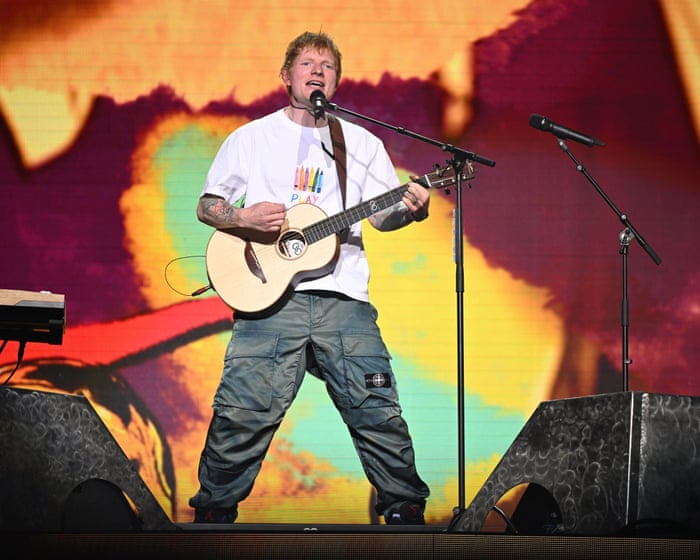
Even at a time when a political moment has engulfed everything, this response continues to be born again, without regard for history or ability to confront rupture. The horror of Gaza has broken the art world, roiled Hollywood, fractured literary institutions. And still, as Ed Sheeran stands alone on stage following the withdrawal of all his support acts (in solidarity with Macklemore, who was removed from the tour due to a pro-Palestinian speech), he told his audience that he wants his music to be “about unity, not division”. The speed at which his tour unravelled is not evidence of the incompatibility of music and politics, necessitating that they remain separate to avoid that “division”. It is a study in how it is becoming increasingly unnatural to separate them.
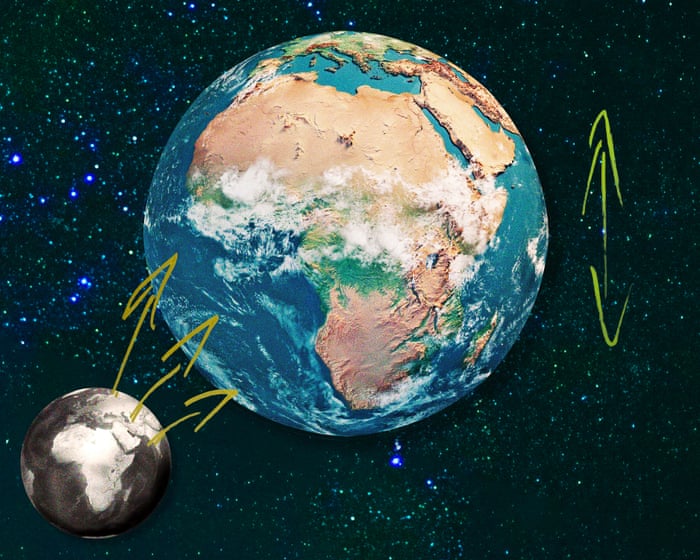
A new map of the world rescales the size of Africa and calls into question our perception of land, power and influence
This month, the UN passed a resolution, brought to the assembly by Togo, to phase out the traditional Mercator map of the globe and replace it with another that shows the real scale of territories. That’s right – when it comes to size, the map of the world we have all grown up with is not accurate. The main loser of land on the Mercator map is Africa, and the new “Equal Earth” map reflects its true proportions. I spoke to our west Africa correspondent Eromo Egbejule about his extensive reporting on the map changes, and why people feel so strongly about it.
Seeing the new map transposed over the old might make you feel oddly disoriented. Logically, there is absolutely no immediate tangible impact on one’s life that comes out of knowing that the entire top part of the northern hemisphere is so much smaller than you were led to believe. And yet, there is still something agitating about it, like you’ve been the subject of a lifelong trick, or at least a breach of trust.
Progressive politicians such as Zohran Mamdani offer answers to the bitter post-9/11 legacy of failures at home and abroad
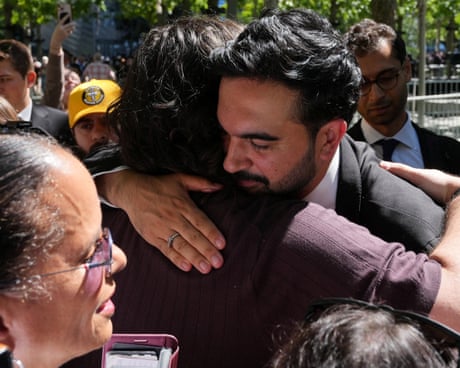
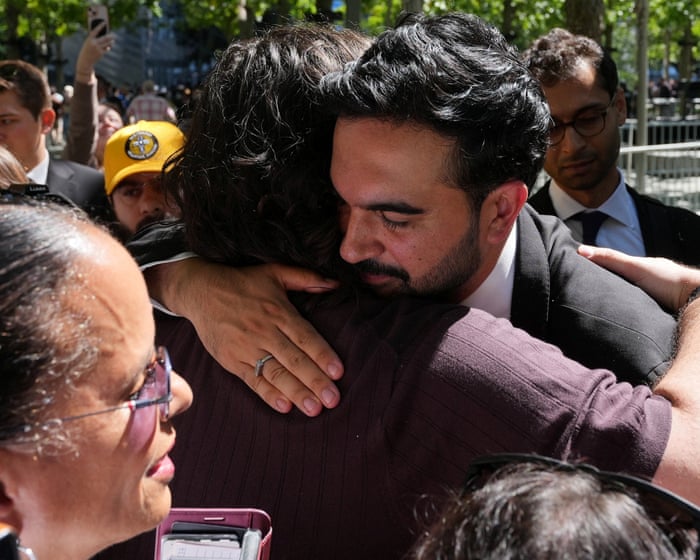
Twenty-five years after 9/11, two pieces of journalism, describing two different phenomena in contemporary New York, tell us a great deal about a city, and indeed a world, caught between two eras. In one, New York Magazine dives into “Habibi City”, a New York where a “cultural shift is underway, led by a generation of New Yorkers coming into its own”. This new generation is labelled as originating in “SWANA” – south-west Asia and north Africa, a region that “includes countries from Palestine to Iran to Sudan”. In the other, Vanity Fair describes calls for Zohran Mamdani to not attend the 9/11 memorial ceremony as partly founded in “inchoate, emotional” impulses, that see “the city’s first Muslim mayor as a stand-in for the 19 Muslims who hijacked four planes and turned them into deadly weapons, part of the ‘them’ who attacked ‘us’.”
Together they capture what has changed over a generation, and what remains stubbornly the same. Members of a diaspora of Muslim background are indeed breaking through and accumulating, as New York Magazine says, “clout”. They are no longer simply a fixture of bodegas and halal carts, but of Saturday Night Live, upmarket dining, entertainment and politics too. Mamdani is both the expression of that cohort and the catalyst of its recognition as an emerging force. They care deeply for their local communities but also for those in Gaza and beyond.
Schemes to forcibly remove Palestinians from Gaza are not being promoted by fringe voices. But the international community continues to avert its eyes
The gap between what is being inflicted on Palestinians and the appropriate reaction on the part of the international community has always been vast. But now it yawns so wide that it swallows reality itself. As arms export licences for Israel from states such as Germany surge, talk of harsher measures and sanctions on the part of other European countries remains talk. People continue to be killed in Gaza, Palestinian families remain besieged in the West Bank, and the Israeli political right has been removing all doubt that these violations are intentional, by telling the world of its hopes and plans.
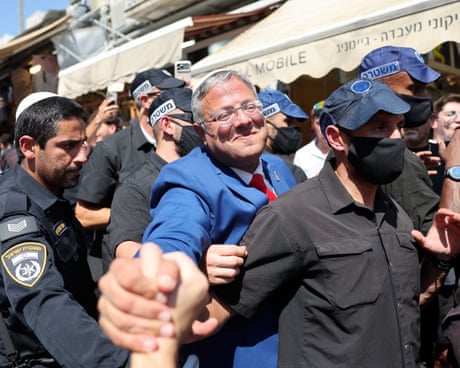
A sample from only the past few days. On Thursday, Israel’s far-right national security minister, Itamar Ben-Gvir, detailed a scheme for the illegal ethnic cleansing of all Palestinians from the Gaza Strip. He also posted an AI-generated video, now deleted, of Palestinian men entering a conveyor belt into detention, emerging emaciated and tearful. Also a few days ago, the defence minister, Israel Katz, stated that the country was “organised and prepared” to expel Palestinians from Gaza “by every way possible”.
Nesrine Malik is a Guardian columnist
Do you have an opinion on the issues raised in this article? If you would like to submit a response of up to 300 words by email to be considered for publication in our letters section, please click here.
Last week, I finally managed to snatch one read out of the jaws of a hectic summer. On a series of very long-haul flights (highly recommended as a way to break reading droughts), I fell into the world of Simukai Chigudu’s Chasing Freedom: Coming of Age at the End of Empire. I finished the book just as I was landing in Nairobi, Kenya. In a daze, I stepped on to the tarmac in the chill of equatorial winter.
The book was about growing up in post-colonial Zimbabwe and navigating life between the ex-colonised and the ex-colonial power. But the account of Chigudu’s life also captured, in ways that sometimes left me breathless with the shock of recognition, what felt like a broader shared experience for those of us born to parents whose traumas we never understood. This week, I reflected on how Chigudu’s experience connects to that of a wider post-colonial African generation.
Richer countries might have more resources to deal with catastrophe, but this problem grips the entire planet, however much leaders may want to deny it
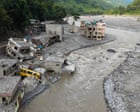
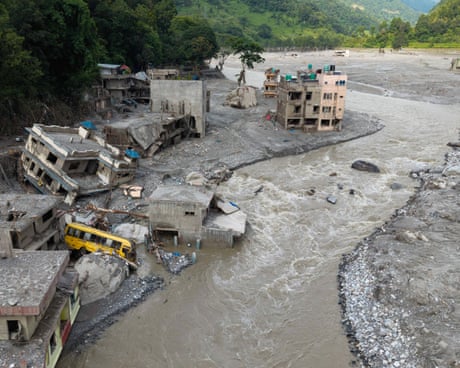
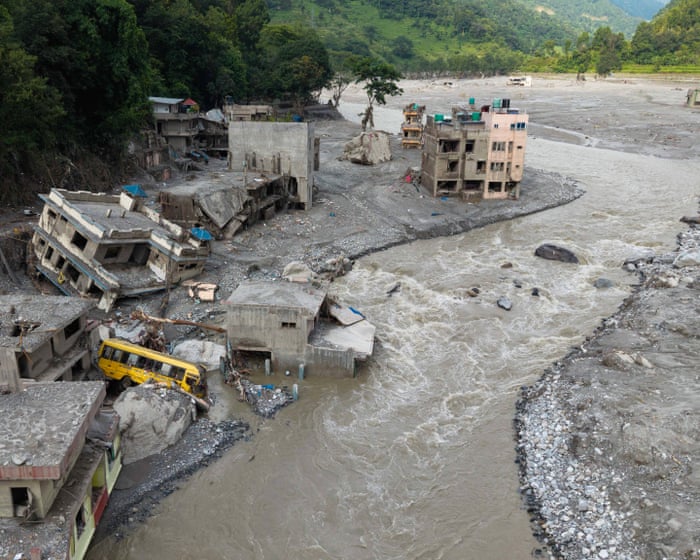
Climate breakdown is happening on one Earth, but two different worlds. In one, its impacts increasingly encroach on everyday life; longer periods of discomfort and shorter periods of sharp pain. Endless, hotter summers, and within them sudden wildfires, evacuations, homes burned to cinders in a matter of hours. In another, catastrophe. This summer has been a snapshot of that split-screen. The hottest day on record in parts of Europe, and a wave of water, mud and ice in Nepal that so far has claimed more than 750 lives. Thousands of people are still missing.
The difference is also one of resources. The climate crisis has an economic cost, but some places can absorb it better than others. Responses to this summer of wildfires in Europe included a rapid scrambling by the French government to provide everything from tax breaks for businesses affected by the fires to relocation costs and aid to rebuild homes. The UK government had deployed almost £100m before the summer to strengthen wildfire resilience.
Last week marked the climax of Ireland’s Rose of Tralee festival, an annual celebration of Irish women, culture and the Irish diaspora. When Suad Mooge was chosen as Dublin’s participant in the festival earlier this year, she quickly became a symbol of Ireland’s fraught conversation around immigration and what constitutes Irish identity.
I caught up with Suad on a video call a week after the festival’s culmination, and found someone reflective and determined in the face of criticism.
A movement with safety, dignity and equality at its heart may now be blamed for the rightwing backlash. But within it were principles worth carrying forwards
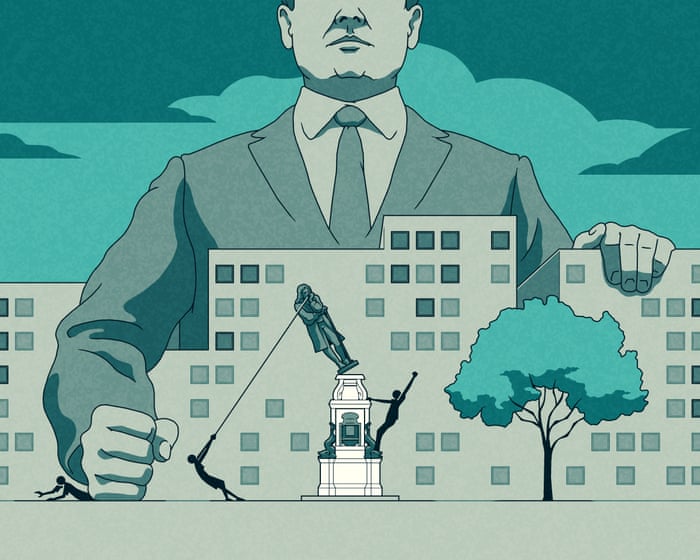
Every once in a while, the discourse gods send a tablet down to the people, announcing that a previous era is dead and a new age is upon us. Recently, it was the “vibe shift” – a post-pandemic change in culture that encompassed everything from fashion to politics. The vibe shift consolidated with Donald Trump’s second election, a harbinger of the end of fragility and of movements for racial and gender equality – a rejection of the long 2010s with their hashtags and pink pussy hats and women’s marches and protests. The vibe shift has recently been followed by a calling of time on what has come to be known as “Woke 1.0” – a term that represents what is now seen as a culture of hysterical overreach triggered by the momentary breakthrough of movements such as #MeToo and Black Lives Matter. “Woke 1 was crazy,” said Alexandria Ocasio-Cortez this month, quoting a New York City councilman. And there we have it, time to walk back some things said and done in the giddy heat of those moments. It was crazy!
This rush to the future away from what some perceive to be an embarrassing past groups together various disparate phenomena. But I’m afraid it’s not that simple. Woke 1.0 (or “peak wokeness” – I wish the gods would use less trivialising ways to refer to roiling social tides, but there we are) was about politics and culture and also about the behaviours and trends it triggered. It was about concrete problems: policing of minority communities, the right of women not to be sexually harassed or violated, the systemic racism and sexism that damaged both. And it was about reforming the cultural structures that created and perpetuated those systems; asking university curricula to expand and diversify intellectual sources, recognising the long shadow of glorified imperial histories, and updating institutions – from the media to the academy – in order to enfranchise change. None of this is “crazy”.
Nesrine Malik is a Guardian columnist
Do you have an opinion on the issues raised in this article? If you would like to submit a response of up to 300 words by email to be considered for publication in our letters section, please click here.
Americans want someone on their side in the fight against vested interests – that means politicians like the Michigan primary winner and Zohran Mamdani
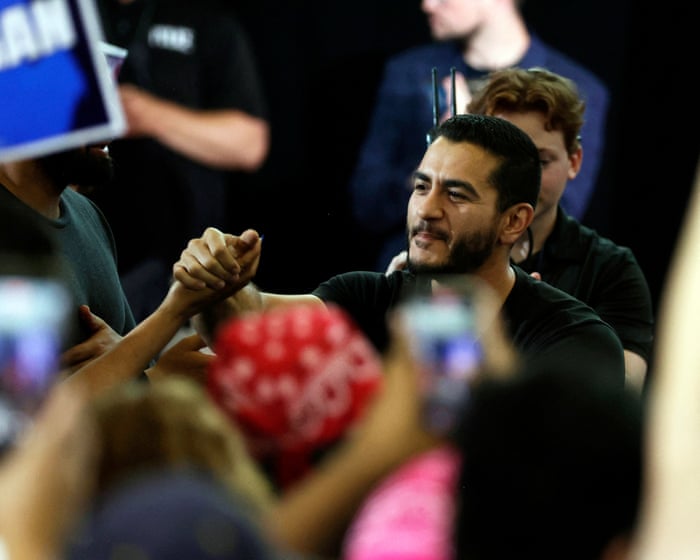
Abdul El-Sayed’s win in the Michigan Senate primary was a historic breakthrough. Not only because he is a Muslim son of immigrants who broke with almost every single tenet of establishment Democratic party politics. But because he has wiped that complacent sneer at progressive wins off the faces of centrist gatekeepers. Zohran Mamdani? Relax, he’s just a mayor. And it’s New York City. Outside urban and liberal corridors, there is nothing to worry about. Now El-Sayed has won the Democratic party’s nomination in a swing state that is also on the list of presidential nomination states.
There is a lot to be excited about. Not only within the US, but for observers abroad hopeful for the emergence of a truly revolutionary left that is able to weather powerful and well-funded adversaries and prevail. The money raised to defeat El-Sayed was staggering. He was outspent by more than nine to one. It was the most expensive Democratic congressional primary ever. A roll call of cartoon bad guys, such as Chevron and Philip Morris, funded his opponent, Haley Stevens, to the tune of over $60m. Of that funding, nearly half came from a Super Pac backed by the American Israel Public Affairs Committee (Aipac).
Connection with voters on screen only pays off when it’s matched with bold policies in the real world – as it has for Zohran Mamdani in New York
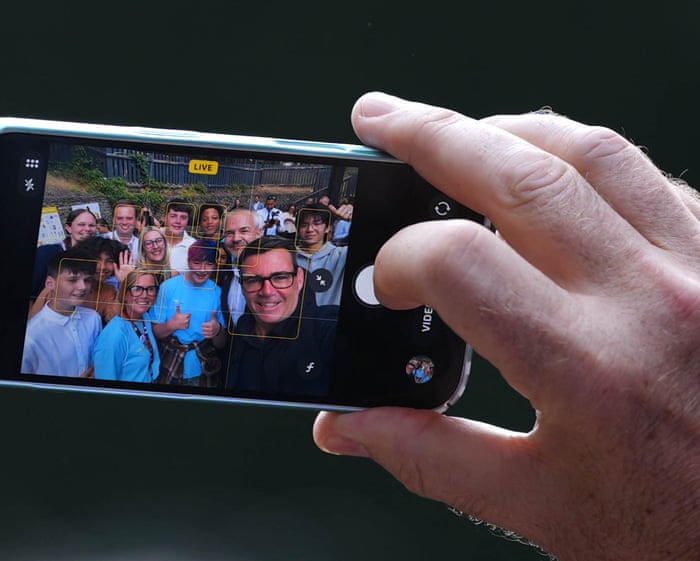
Andy Burnham is having a good time. I can’t remember the last time a prime minister (or indeed any high-profile British politician) actually looked as though they were enjoying what they were doing. I saw a clip the other day in which Burnham remembered arguing with his dad about the point of an English degree, quoted poetry and discussed the importance of mastering words. It was almost enough to make you feel sorry for Keir Starmer. In his entire time as leader of the Labour party and then the head of the government, Starmer delivered not a single unprocessed moment. No natural sentiment escaped the carapace. And here is his successor, practically oozing it.
It matters. It’s good and healthy to have a leader who looks as though they want to be where they are. Whose approach isn’t that of a scold or a receiver who has taken control of the premises, or someone whose sole aim is to tenaciously clamber up to the top job and hold on for dear life.
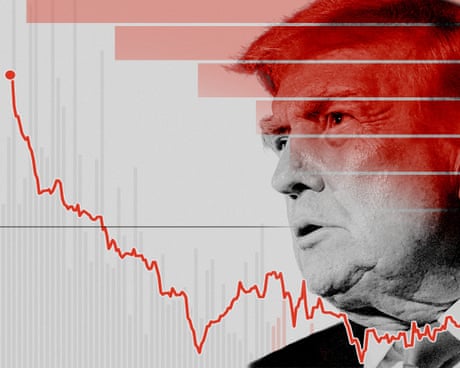
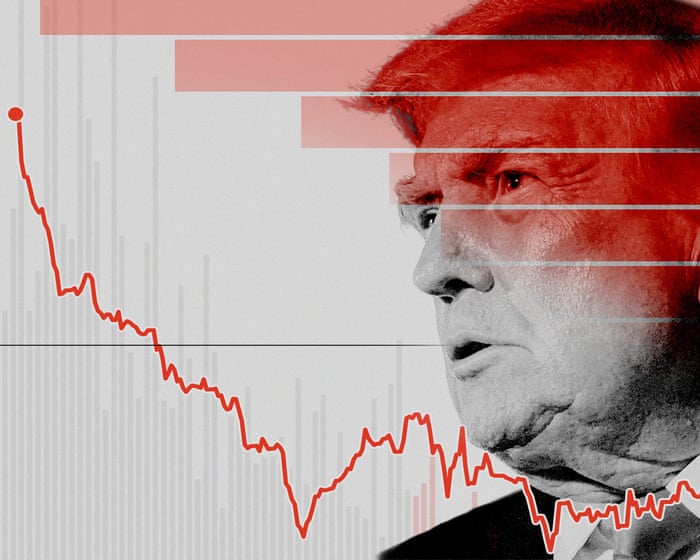
New tariffs, gas price rises, the deaths of thousands, insecurity … We’re living at the whim of one capricious, vain, easily bored man and his gang of stooges
You would be forgiven, as the US and Iran traded strikes over the past few days, for thinking that it was only last month that the two signed the Islamabad Memorandum, which formalised the process of ending the war and established a 60-day period to negotiate the final terms of a deal. That’s because it was only last month. But there has been so much talk and bluster and strike and turn tail that the conflict feels like it has started and ended several times already. The whole war is only five months old but is already settling into a sort of permanent feature of life, one that is all repetitive theatre now, each act indistinguishable from the one before it to all but the most plugged-in observers. The war is over. The war is at its peak. The Iranians are brave people. The Iranians are scum, not least their leaders. The Iranians don’t want a ceasefire. The Iranians are begging for one. The strait of Hormuz is open, it is shut, it is partly open.
To recap, where we are now in the war that was only supposed to last a few weeks but is now entering its sixth month is that the US has expanded airstrikes on Iran in a “major military punishment”. Iran has once again struck US base targets located across the region. The Houthis have claimed their own blockade over a second shipping chokepoint – the war now extends from the Gulf to the Red Sea. Trump can’t get out. Iran now understands the powerful leverage of the strait and its geographical, and therefore military, advantage in controlling it. Trump cannot end the war with that bargaining chip in its hands and the Iranians will not end the war without it. He can’t withdraw on terms that merely restore the prewar status quo. And Trump can’t go all in. Boots on the ground would be an extended bloody campaign that would claim many lives. In the US, the deaths of 18 troops so far and how the Pentagon appears to be trying to undercount that number has triggered outrage.
Over the past few weeks, I have been gripped by The Polygamist, a new, record-breaking South African Netflix drama, which racked up more than 23 million views in its first month. I’ve been zealously talking about how special it is to anyone who will listen. And now it’s your turn, dear reader.
The Polygamist is by all accounts the first African smash hit of the streaming age. Released in mid June, the show has topped streaming charts in Africa, and broken into the global top five non-English series globally. It has also broken through all sorts of cultural and language barriers. African and western stars have raved about it. Its protagonists have become overnight celebrities. And its twists, turns and surrounding discourse so saturate social media that I have had to forgo Instagram and TikTok to avoid spoilers.
A report on the Spectator’s coverage of Muslims makes for grim reading. Conservatism is now focused on this minority to the exclusion of everything else
I start this column already resigned to the tune out, to the glaze over, the click away. This is not to say that I do not have faith in you, dear reader, to keep reading and caring. But I am aware, and this is central to the problem, that it is now normal, when it comes to a certain minority in this country, to speak of them as if they were some sort of plague. Islamophobia has become so common as to be mundane in large parts of the British media. Foremost among the offenders is Britain’s oldest political magazine: the Spectator.
A large and comprehensive report from the Centre for Media Monitoring reviewed 3,733 articles published in the Spectator relating to Islam or Muslims. Released last week, it criticised the publication for “a sustained and systemic pattern of biased coverage of Muslims and Islam”, according to the CMM, “with more than half of all relevant articles rated as biased over an eight-year period”. It is grim, grim reading.
Nesrine Malik is a Guardian columnist
Do you have an opinion on the issues raised in this article? If you would like to submit a response of up to 300 words by email to be considered for publication in our letters section, please click here.

 Anmelden