❌

Lese-Ansicht

Devil in the detail: 100 years on, FW Murnau’s Faust scrapbook reveals the secrets of his silent masterpiece

A rediscovered collection of drawings and on-set photos finally reveals the intricate on-set mysteries of one of early cinema’s most gifted pioneers

FW Murnau was one of the greatest of all silent film-makers, with a rare genius for making beautiful images on screen. His peers liked to say he “had a camera instead of a head”. The director of such stunning films as vampire tale Nosferatu (1922) and marital romance Sunrise: A Song of Two Humans (1927) died at the age of 42 in 1931, meaning that his career barely scraped into the talkie era. Still, Murnau’s tremendous run of silent pictures included some beautiful, often disturbing classics, in which he sent his camera roaming through changing vistas of shadows and light, and plumbed the depths of the human soul. Nowhere more so than in his tour-de-force Faust, released 100 years ago this month, based on Goethe’s play about a deal with the devil. And the making of Faust is depicted in a stunning new book, which is both a document of, and in a sense an artefact from, the production of this classic film.

Murnau was also one of the most mysterious of directors: secretive about his methods, with an intense devotion to his work. Early collaborator Edgar G Ulmer called him “a great purist who worked under a sort of hypnosis”. Murnau banned producers from his sets, and executives from watching his rushes. Bar a few exceptions, he did not allow on-set photography to reveal the secrets of his camerawork and special effects. This mystique created room for speculation as to whether Murnau, or his talented crew, were responsible for the success of his films. The Faust Bible: The Making of FW Murnau’s Masterpiece publishes unseen images from the shoot of one of his best films, and gives a rare insight into the collaborative way it was made.

Continue reading...
© Photograph: © La Cinémathèque française, Paris
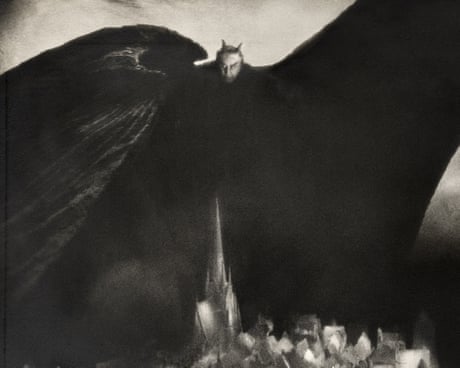
© Photograph: © La Cinémathèque française, Paris
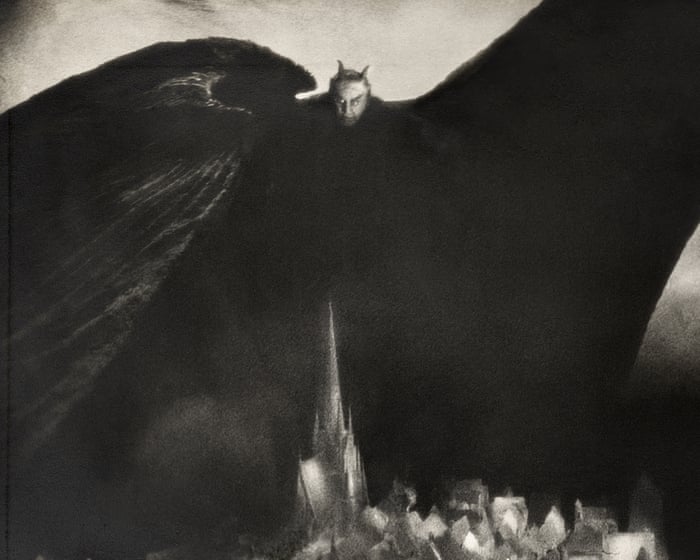
© Photograph: © La Cinémathèque française, Paris

  •  

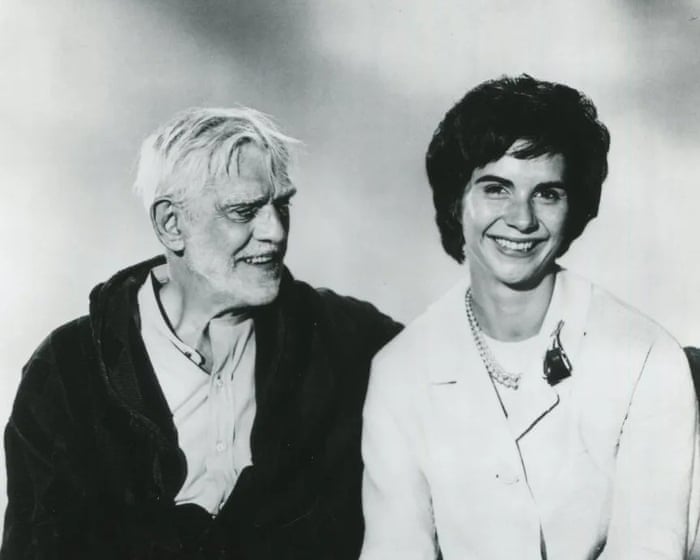
My dad was a monster! Sara Karloff on reviving Frankenstein, 95 years on

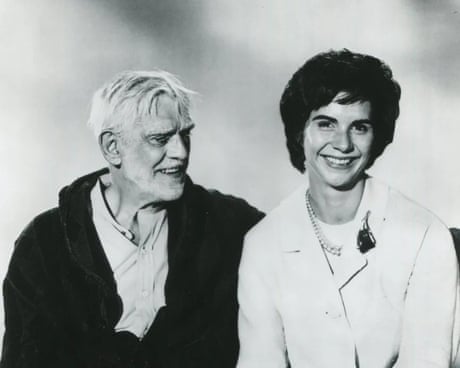
Boris Karloff’s daughter and composer Michael Shapiro, whose musical score for the 1931 film is finally coming to London, talk about how it became a much-loved classic

Once seen, never forgotten – the 1931 Frankenstein is 95 years old, but still one of the most instantly recognisable of classic horrors. Whether it’s the sight of lanky Boris Karloff lumbering into the frame with his squared-off head, neck bolts and oversized leaden shoes, or the sound of a thunderclap and Colin Clive exclaiming “It’s alive!” as the monster comes to life one stormy night in the laboratory – the film still raises hairs on the back of the neck.

However, this classic has arguably long been missing one element: a continuous musical soundtrack – the original movie had dialogue but no music. In 2001, the American composer Michael Shapiro wrote a full-length score, which he will be conducting alongside the film for the first time in London next month, at Cadogan Hall with the Royal Philharmonic Orchestra. “It becomes one artistic expression, one artistic experience,” he says. “The film and the music, together, and the audience forgets that I am there.” Shapiro says his music emphasises what is already up on the screen. “Suddenly the film jumps out in a way it never did before.”

Continue reading...

© Photograph: HANDOUT

© Photograph: HANDOUT

© Photograph: HANDOUT

  •  

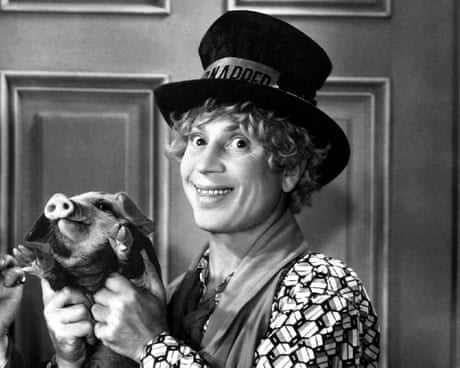
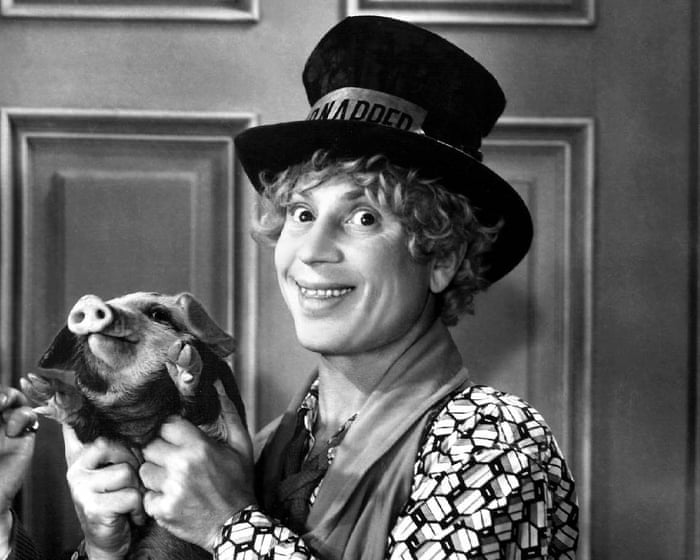
Harpo speaks! New recordings reveal mute Marx brother chatting with audience

The comedy legend, who adopted his silent persona because of stage nerves, did occasionally address his audience, as revealed by a new archive release

Groucho was the cigar-chomping wit with the improbable moustache, Chico was the piano-playing rustic grifter and Zeppo played the straight man and the lover. But as any Marx Brothers fan knows, Harpo was the pantomime, who cracked up the audience without saying a word, dressed in his tattered raincoat and curly wig. His persona was childlike and mischievous but also musical – he let his harp and his taxi horn do the talking. But now we get to see, or rather hear, a new side to Harpo Marx. A very special recording has been unearthed of Harpo in 1964 speaking to an audience, in character.

Arthur “Harpo” Marx was born Adolph Marx in New York in 1888. He started performing with his brothers in 1910, and his nickname probably came about because of his instrument of choice – he was an entirely self-taught musician. By 1915, due to his nerves around speaking on stage, Harpo reinvented himself as a mute clown, and stayed that way, even when he was offered $50,000 to speak a single word (“Murder!”) in the Marx Brothers film A Night in Casablanca (1946).

Continue reading...

© Photograph: Cine Text/Sportsphoto/Allstar

© Photograph: Cine Text/Sportsphoto/Allstar

© Photograph: Cine Text/Sportsphoto/Allstar

  •  

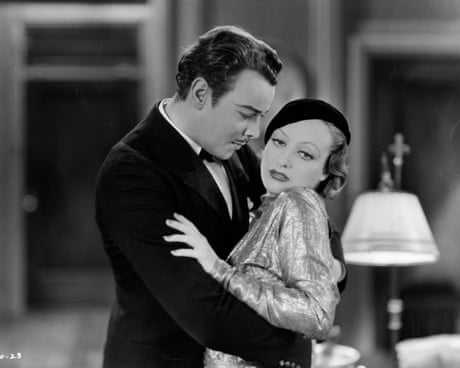
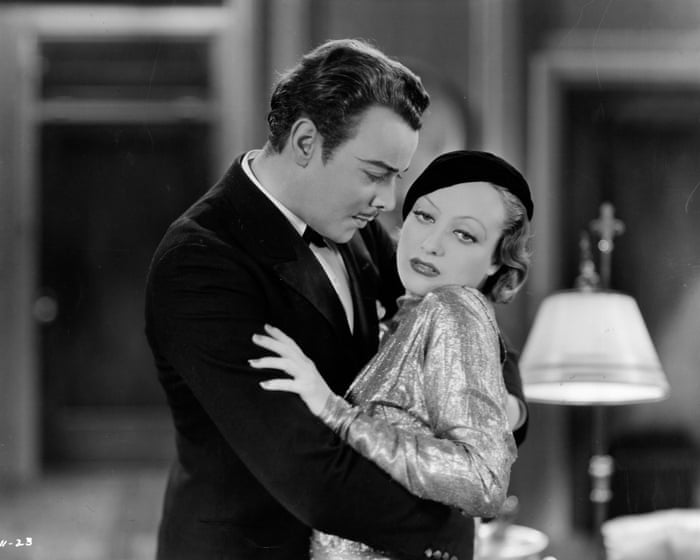
Sex and drugs and poisoned champagne: 90 years on, we can finally see Joan Crawford’s wildest film

A legal dispute led to Letty Lynton, the golden age superstar’s controversial drama, being sealed away. Only now can audiences see what all the fuss was about

Joan Crawford was one of the biggest stars of Hollywood’s golden age, but one of her most famous, and controversial, films has not been screened legally since January 1936. Ninety years later, thanks to her grandson, that is all about to change. The 1932 MGM film Letty Lynton tells the lethal tale of a Manhattan socialite, her fiance and her vindictive ex-lover. It was a hit at the box office – although something of a conundrum for the critics. They just couldn’t understand how MGM had managed to sneak such a risque story past the censors. That was only the start of the trouble.

MGM had wanted to buy the rights to a play called Dishonored Lady, written by Edward Sheldon and Margaret Ayer Barnes. This was a hit on Broadway in 1930, but its booze, drugs and sex content meant it had already been designated by the Hays office as “unfit for motion picture adaptation”. MGM only backed out when the authors demanded $30,000 – and the Hays office made it clear they wouldn’t give an inch, not on a story about a woman they considered a “nymphomaniac”. Instead, for just $3,500, MGM bought the rights to Marie Belloc Lowndes’ novel Letty Lynton, which, just like Dishonored Lady, was inspired by the real-life case of Madeleine Smith. In 1857, Smith, a Scottish socialite, was tried for murder, accused of poisoning her lover with arsenic after he threatened to use her love letters to expose their affair and jeopardise her engagement.

Continue reading...

© Photograph: Hulton Archive/Getty Images

© Photograph: Hulton Archive/Getty Images

© Photograph: Hulton Archive/Getty Images

  •  

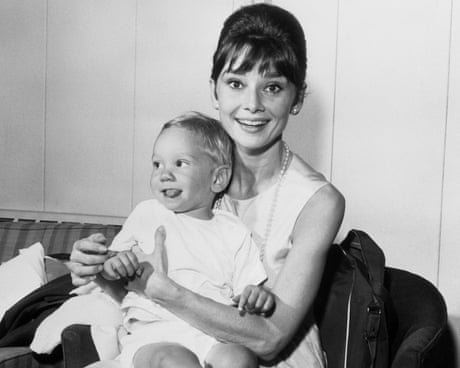
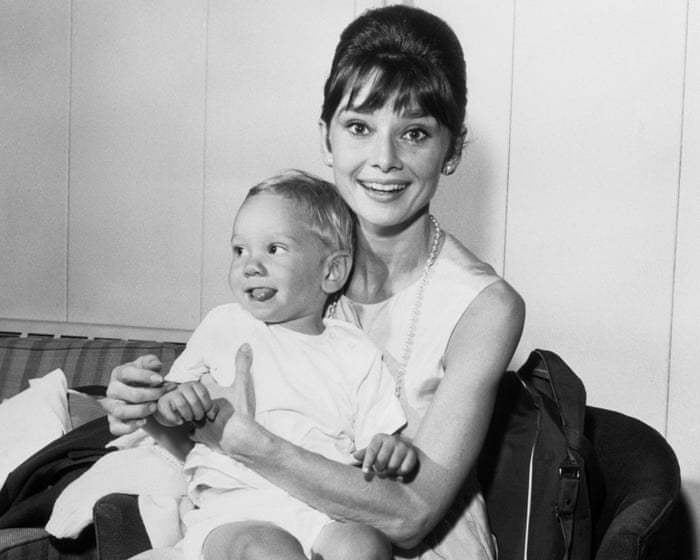
My mother, Audrey Hepburn: the star’s son Sean on her movies, marriages, good works and fascist parents

The heroine of Roman Holiday and Breakfast at Tiffany’s knew war and poverty, riches and fame, love and betrayal – yet claimed to have lived a ‘terribly boring’ life. Sean Hepburn Ferrer paints a very different picture in his new biography

Growing up, Sean Hepburn Ferrer says he never felt like the son of a movie star – but he very much is. His mother was Audrey Hepburn, one of the biggest names in the golden age of Hollywood, an Oscar-winner, a screen star and a fashion icon. Hundreds of millions of people all over the world recognise her from classics such as Roman Holiday, Funny Face and My Fair Lady – besotted with the way she laughs, dances, or poses tastefully in Givenchy couture.

Audrey’s image is so ubiquitous in posters, art prints, magazines, on handbags, keyrings or T-shirts, that the family has made hunting for her likeness into a game. “I must have made this crack to my kids,” Sean says. “We were probably waiting for a train or a plane that had been delayed: ‘Three minutes to find Grandma.’ And it became a thing. Now the kids are grown-up, but they do it on their own. I do it by myself and send a snapshot to my wife and we giggle privately.”

Continue reading...

© Photograph: Bettmann/Bettmann Archive

© Photograph: Bettmann/Bettmann Archive

© Photograph: Bettmann/Bettmann Archive

  •  

‘Full of emotional wisdom’: Guardian writers on the best movie romances you might not have seen

For Valentine’s Day, writers picked their favourite lesser-known film love stories – from a dom-sub chamberpiece to a magical teen comedy

It’s the first rule of romcoms that opposites attract, and you can’t imagine two more different lovers than Poinsettia (Lynn Redgrave), a spark plug of a dame convinced that she is in a relationship with the 19th-century composer Giacomo Puccini, and Fish (James Earl Jones), a gentle giant who spends his spare time wrestling a demon that only he can see. That makes for some of the film’s funniest moments, like when Poinsettia ruins a Madama Butterfly opera performance by loudly singing along to the aria. Charles Burnett’s touching film is about how Fish and Poinsettia find refuge with each other that lets them emerge from the fantasies protecting them from the real world’s cruelty, and they find a kind of late-in-life puppy love over dinner dates, cozy sleepovers and card games at their Barbary Lane-like boarding house. When I saw the restoration last 14 February, the theater was filled with couples who, like my boyfriend and I, seemed cozied up just a little closer than usual. Owen Myers

The Annihilation of Fish is available on the Criterion Channel in the US

Continue reading...

© Photograph: SNAP/Rex Features

© Photograph: SNAP/Rex Features

© Photograph: SNAP/Rex Features

  •  

Hitchcock’s The Lodger has been turned into a vertical microdrama. What’s next – Psycho on Snapchat?

A silent-era classic has been reframed for the vertical scroll of phone screens. Is this innovation, sacrilege, or just another way to repackage cinema history?

‘Some films are slices of life, mine are slices of cake,” said Alfred Hitchcock. Who knew that anyone would take the knife to one of his most beloved silent films, The Lodger: A Story of the London Fog (1927), and turn it into a vertical microdrama?

The Tattle TV app has announced that it will be streaming serial killer drama The Lodger on its phone-friendly vertical platform, telling Deadline that it is “one of the first known instances of a classic feature film being fully reframed for vertical, mobile-first consumption”. So will it set a trend? And if so, how can we stop it?

I’m only joking, of course. There will always be those who see archive cinema as just so much more content to be re-appropriated in new formats. And there will always be old-guard purists – who, me? – who wince at the thought. Still, Tattle TV, you have my attention, so let’s talk about it.

We won’t be getting this mini-Hitch in the UK, or the EU for that matter, due to rights, but lucky US viewers will be able to watch the film that Hitchcock considered “the first time I exercised my style” in a format that largely disregards that style. The Lodger will be presented with its squarish 4:3 image either extended or cut down to fill a vertical phone screen. So there will often be parts of the image missing, which is a problem.

The opening shot of The Lodger is a chilling closeup of a woman screaming, her head tilted so that her entire face fills the frame, lit from behind to emphasise her blond hair. Hitchcock told Truffaut that in The Lodger, he presented “ideas in purely visual terms”. This closeup represents the terror spreading across London as a ripper targets young, golden-haired women. Is the idea intact, even if the image isn’t? Hitchcock, a well-known stickler for carefully composed frames, may well disagree. I would.

Continue reading...

© Photograph: Everett Collection Inc/Alamy

© Photograph: Everett Collection Inc/Alamy

© Photograph: Everett Collection Inc/Alamy

  •  

Dancing! Fighting! Impregnating! The best movie moments of 2025

From Sinners to F1 to Highest 2 Lowest, Guardian writers pick the scenes that stuck with them the most this year

Spoilers ahead

Disclosure: I covered auto racing for years and still follow Formula One skeptically. I definitely went into F1: The Movie knowing what I was in for, an answer to the hypothetical: what if the bougiest sport on God’s green earth was turned into a western? But you can’t help going along for the ride once Brad Pitt starts filling the frame with his blue-eyed winks, wry smiles and Butch Cassidy swagger. I should’ve been more indignant about this martinet sport making a literal hero out of the biggest rogue on the grid. But I left disbelief in parc fermé as Pitt’s Sonny Hayes bumped and nicked his way to the season finale at Abu Dhabi to much consternation before his wingman (Damson Idris) takes up the ticky tactics at Yas Marina circuit and winds up sacrificing himself and producer Lewis Hamilton (not again!) to help Sonny win his first race and thwart a hostile takeover of their fragile team. And when the lights went up at my desolate midday screening, it was just me still on the edge of my seat and my disbelief still firmly off track. Andrew Lawrence

Continue reading...

© Photograph: Courtesy of Warner Bros. Pictures/AP

© Photograph: Courtesy of Warner Bros. Pictures/AP

© Photograph: Courtesy of Warner Bros. Pictures/AP

  •  

‘A festive tour de force’: Guardian writers on their favorite underrated Christmas movies

From a John Cusack 80s teen comedy to the other Frank Capra Christmas crowd-pleaser, here are some seasonal picks you might not have seen

Something that bugs me about a lot of contemporary Christmas movies is how insistently self-conscious they are about the whole production – the ostentatious decorations, checklist of soundtrack chestnuts, the dialogue about the true meaning of the holidays that sounds canned even when the movie is trying to acknowledge its various stressors. Maybe because the idea of a holiday movie hadn’t yet ossified into routine, I’ve found that the versions of these films that came out in the 1940s tend to approach Christmas from more inventive, less neurotically obsessive angles. One of my favorite discoveries in sifting through 1940s Christmas comedies is It Happened on Fifth Avenue, a 1947 semi-romantic farce with a great starting hook: a cheerful vagrant Aloysius T McKeever (Victor Moore) winters in New York every year, because he knows a way into a particular Fifth Avenue mansion seasonally vacated by its enormously wealthy owner. One winter, Aloysius invites some new acquaintances to stay with him: veteran Jim Bullock (Don DeFore) and his military buddies, plus runaway Trudy O’Connor (Gale Storm) – who is secretly the daughter of the mansion’s owner. Eventually, the owner himself is forced to disguise himself as another vagrant and stay in the house, too, so Trudy can make sure Jim loves her on her own merits. This all takes place during the run-up to Christmas and into New Year’s, and director Roy Del Ruth gives the movie a found-family warmth that newer holiday movies have to labor two or three times as hard for, assembling a funny and lovable surrogate family in one of the city’s well-appointed empty spaces. Speaking of labor: It Happened on Fifth Avenue lands perfectly between class-conscious social picture about the importance of affordable housing and romantic urban fairytale. Jesse Hassenger

It Happened on Fifth Avenue is available on Plex and to rent digitally in the US, UK and Australia

Continue reading...

© Photograph: PictureLux/The Hollywood Archive/Alamy

© Photograph: PictureLux/The Hollywood Archive/Alamy

© Photograph: PictureLux/The Hollywood Archive/Alamy

  •  

Monkey soulmates and extraordinary talent: the man Charlie Chaplin called ‘the greatest actor in the world’

Michel Simon, who steals the show in Jean Vigo’s 1934 masterpiece L’Atalante, was a soft-faced, gravelly voiced clown capable of tremendous pathos – and total chaos

Jean Vigo’s L’Atalante, his poetic and surreal 1934 romance about a young couple living on a canal barge, is one of the most beautiful, sensual films of all time. Dita Parlo and Jean Dasté play the newlyweds getting awkwardly accustomed to married life in close quarters, and their love story shapes the film. But it’s their bargemate, the uncouth Père Jules, played by Michel Simon, who steals the show: a well-travelled sailor speckled with tattoos, standing guard over a cabinet of risque and macabre curiosities, whose cabin teems with cats every bit as unruly as he is.

The Swiss actor Michel Simon was one of the most distinctive presences in 20th-century French cinema: a soft-faced, gravelly voiced clown capable of tremendous pathos, and true chaos. Charlie Chaplin called him “the greatest actor in the world”. He worked with the best European directors on some timeless films. As well as acting for Vigo, he played the timid man transformed by his affair with a sex worker in La Chienne (1931) and the incorrigible tramp in Boudu Saved from Drowning (1932) for Jean Renoir. He worked with Marcel Carné in films such as Le Quai des Brumes (1938), with Carl Theodor Dreyer in The Passion of Joan of Arc (1928), with René Clair, Marcel L’Herbier, Julien Duvivier, GW Pabst … even John Frankenheimer in The Train (1964). “When Michel Simon plays a part,” said Truffaut, “we penetrate the core of the human heart.” He spent five decades working in the cinema, starting out in the silents, and received his highest accolade, the Berlinale’s Best Actor award in 1967, for his role as an antisemitic peasant befriending a young Jewish boy during the war in The Two of Us (Claude Berri). Reviewing that movie, Renata Adler called Simon “an enormous old genius … the general impression is that of an immense, thoughtful, warm-hearted and aquatic geological formation”.

Continue reading...

© Photograph: Photo 12/Alamy

© Photograph: Photo 12/Alamy

© Photograph: Photo 12/Alamy

  •  
❌