❌

Lese-Ansicht

‘You have 10 minutes to decide’: answering the life-changing call to become a kinship carer

Those who have stepped in to keep young family members from going into care in England and Wales say the decision has brought them joy and hardship

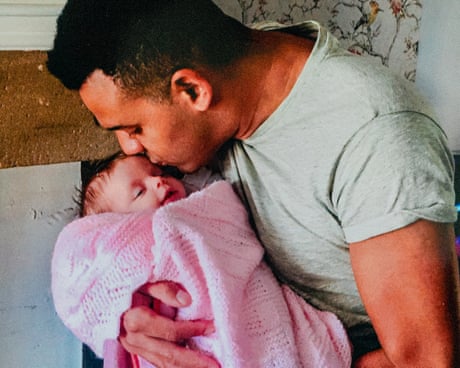
Clive vividly remembers the day when, without warning or time to work out what he was really letting himself in for, he became a kinship carer.

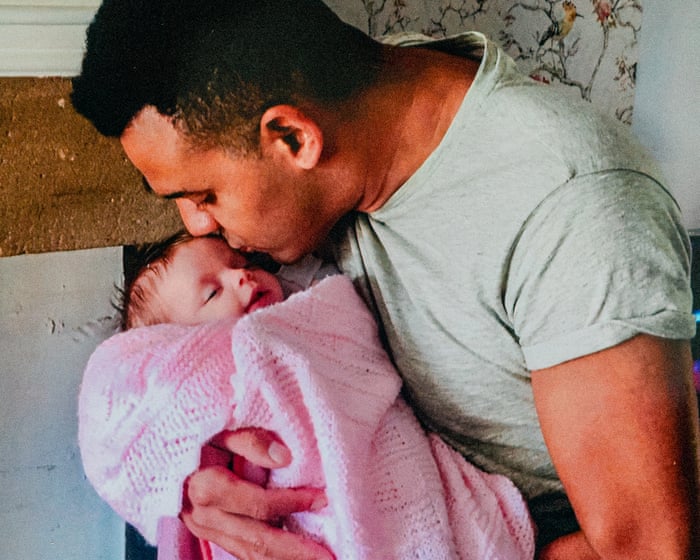
“The social worker left, the door closed and Savannah was lying there in a carry cot, wrapped up in a pink blanket. She looked so calm and so comfy, absolutely oblivious about what’s just happened.

Continue reading...

© Photograph: Saskia Albers/Saskia Albers @ Portray Your Story
© Photograph: Saskia Albers/Saskia Albers @ Portray Your Story
© Photograph: Saskia Albers/Saskia Albers @ Portray Your Story


  •  

Two-year waiting times highlight NHS struggle with rise in ADHD and autism awareness

Assessment bottlenecks have knock-on effects, with delays in medical help and access to specialist support

• NHS bodies in England impose two-year minimum wait for ADHD and autism assessments

That NHS boards have imposed minimum two-year waiting times for attention deficit hyperactivity disorder and autism assessments shows a health service struggling to deal with the consequences of huge changes in understanding of and social attitudes to these conditions.

Sharp rises in referrals for clinical assessments over the past six years mean nearly 1 million people in England are on ADHD waiting lists, with the average wait already over a year (64 weeks). About 295,000 await an autism assessment.

Continue reading...

© Photograph: Vetre Antanaviciute-Meskauskiene/Alamy

© Photograph: Vetre Antanaviciute-Meskauskiene/Alamy

© Photograph: Vetre Antanaviciute-Meskauskiene/Alamy

  •  

About 1,500 Britons a day quitting their jobs to become unpaid carers

More than a million people have left work to look after loved ones in the past two years, Carers UK says

About 1,500 Britons a day are quitting their jobs to become unpaid carers, as they try to balance their vulnerable relatives’ growing care needs with declining access to state-funded social care services.

Research estimates that more than a million people have left the workplace to look after ageing, ill and disabled loved ones in the past two years, highlighting the social challenges caused by UK’s rapidly changing demographic profile.

Continue reading...

© Photograph: Graeme Robertson/The Guardian

© Photograph: Graeme Robertson/The Guardian

© Photograph: Graeme Robertson/The Guardian

  •  

UK disabled people could swap Pip cash for ‘in kind’ support in benefit overhaul

Exclusive: Claimants could trade part of payment for specialist equipment, services or training under proposal

Some disabled people could receive “in kind” support rather than just cash payments under a radical overhaul of the personal independence payment (Pip) proposed by official government advisers, the Guardian can reveal.

The proposal, from an expert committee largely made up of disabled people, is one of a number of striking “emerging recommendations” likely to form the basis of the government’s Timms review of Pip, expected to be published in the next two months.

Continue reading...

© Photograph: Michael Spring/Alamy

© Photograph: Michael Spring/Alamy

© Photograph: Michael Spring/Alamy

  •  

Naomi Campbell called unfit to run a charity in her appeal against ban

Supermodel ‘completely abdicated’ her trustee responsibilities at Fashion for Relief, Charity Commission tells hearing

Naomi Campbell showed herself to be unfit to run a charity after the supermodel “completely abdicated” her responsibilities as a trustee of her now defunct Fashion for Relief project, according to the charity watchdog.

The Charity Commission told a tribunal that Campbell, who is trying to overturn a five-year ban on running a charity, was “highly culpable” for mismanagement and misuse of funds at Fashion for Relief, the former charity she founded in 2015.

Continue reading...

© Photograph: Stanley Murphy-Johns/PA

© Photograph: Stanley Murphy-Johns/PA

© Photograph: Stanley Murphy-Johns/PA

  •  

Ruling removes ‘vital’ UK safeguards for severely disabled people, charities warn

Campaigners say supreme court judgment on deprivation of liberty safeguards introduces ‘regressive legal standard’

Severely disabled people will be at heightened risk of abuse in care homes and hospitals after the biggest upheaval in disability law in a generation overturned “vital” legal safeguards, campaigners have warned.

They said a supreme court judgment that potentially strips the right of hundreds of thousands of vulnerable people to independent checks on the safety and appropriateness of their care “devalues the dignity of disabled people”.

Continue reading...

© Photograph: Sébastien Bozon/AFP/Getty Images

© Photograph: Sébastien Bozon/AFP/Getty Images

© Photograph: Sébastien Bozon/AFP/Getty Images

  •  

Families secure future of UK care home after uncovering management failures

Charity Commission inquiry into William Blake House in Northamptonshire resulted in rescue plan

A group of “accidental activist” families have succeeded in their efforts to secure the future of their adult children’s care home after uncovering serious alleged management failures that took the charity to the brink of bankruptcy.

The families launched a campaign after discovering that William Blake House, a residential learning disability care home charity in Northamptonshire, owed £1.5m in unpaid taxes, had paid its former chair £1m in fees, and was close to bankruptcy.

Continue reading...

© Photograph: Google

© Photograph: Google

© Photograph: Google

  •  

‘Absolutely beautiful’ but no shops for miles: the Cotswolds’ rural food deserts

Deep-rooted problems of food inequality are hidden behind area’s affluence and beauty

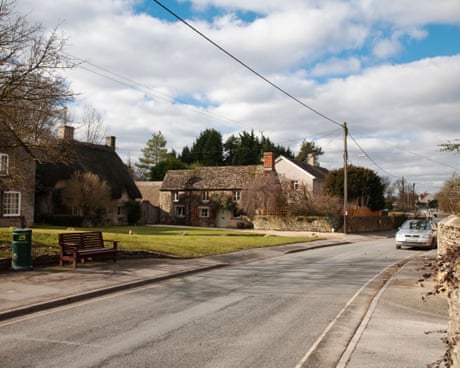
What does a “food desert” look like? In the case of the modestly affluent Cotswolds village of Kempsford, very pretty. When I visit the sun is shining from cloudless blue skies on to lovely honey-coloured stone houses, some draped in purple wisteria.

Aside from the loud hum of US air force planes revving up at the nearby Fairford airbase it’s a picture of rural calm. There’s a primary school and a pub. A house on the main street is called “The Old Bakery”. But there is no shop selling food for miles.

Continue reading...

© Photograph: Rob Read/Alamy

© Photograph: Rob Read/Alamy

© Photograph: Rob Read/Alamy

  •  

‘Apprenticeship penalty’ on benefits forces young people from poorer UK families to quit

Government advisers call for review of rules that cause loss of household income when a child takes up job training

Young people from disadvantaged backgrounds are abandoning valuable job training opportunities because of a little-known welfare “apprenticeship penalty” that can leave their families out of pocket by as much as £340 a week.

The problem is caused by benefit rules that classify a 16-year-old apprentice as an “independent worker” who no longer requires parental support. As a result, the parents’ child benefit and child and disability elements of universal credit are withdrawn.

Continue reading...

© Photograph: Andrew Sparkes/Alamy

© Photograph: Andrew Sparkes/Alamy

© Photograph: Andrew Sparkes/Alamy

  •  

More than a fifth of UK’s ‘austerity children’ scarred by poverty, study says

Researchers say hardship is a direct legacy of welfare benefit cuts imposed by Tory governments in recent years

More than a fifth of all “austerity generation” British children have been scarred by poverty for at least half their childhood, a direct legacy of the welfare benefit cuts imposed by Conservative governments in recent years, research reveals.

The proportion of children born after 2013 who spent at least six of their first 11 years of life in hardship surged after ministers froze working age benefits levels and imposed policies such as the two-child limit, it found.

Continue reading...

© Photograph: Linda Nylind/The Guardian

© Photograph: Linda Nylind/The Guardian

© Photograph: Linda Nylind/The Guardian

  •  

Fewer Britons giving to charity, study says, with donations down by £1.4bn

Charities Aid Foundation says giving no longer a ‘deeply embedded cultural norm’ amid rising cost of living

Britain is rapidly losing the charity habit, with public donations to good causes plummeting by more than £1.4bn last year and millions of people saying they can no longer afford – or do not want – to give, according to an analysis.

The Charities Aid Foundation (Caf) said in its annual report that, while the British remained generous at heart, society was witnessing a big transformation in attitudes towards charitable giving. Just half of people gave to charity in 2025, down from 61% a decade earlier.

Continue reading...

© Photograph: Image Source Pink/Getty Images/Image Source

© Photograph: Image Source Pink/Getty Images/Image Source

© Photograph: Image Source Pink/Getty Images/Image Source

  •  

Unpaid carers ordered to repay benefits despite DWP knowing rules were unlawful

Officials sent out repayment letters to about 1,400 people relying on discredited guidance that had been scrapped

Unpaid carers have been issued with demands to repay thousands of pounds for allegedly breaking benefit rules even though officials knew the decisions were based on unlawful and discredited policy guidance.

About 1,400 carers are understood to have been sent letters by the Department for Work and Pensions (DWP) in January asking them to repay sums relating to breaches of carer’s allowance earnings rules that had been scrapped four months previously.
Continue reading...

© Photograph: Maskot/Getty Images

© Photograph: Maskot/Getty Images

© Photograph: Maskot/Getty Images

  •  

Louise Casey: England’s social care system faces ‘moment of reckoning’

Head of government-commissioned review says adult social care is held together by ‘sticking plasters and glue’

England’s “creaking” adult social care system is confusing and impenetrable to the people that rely on it and held together with “sticking plasters and glue”, the head of a government-commissioned review has said in a withering critique.

Louise Casey said the country faced a “moment of reckoning” over its failure to effectively and fairly meet the needs of Britain’s ageing population and rising numbers of people with chronic conditions such as dementia and Alzheimer’s.

Continue reading...

© Photograph: James Manning/PA

© Photograph: James Manning/PA

© Photograph: James Manning/PA

  •  

DWP chief accused of overseeing ‘culture of complacency’ that led to carer’s allowance scandal

Commons committee chair says DWP repeatedly failed to prioritise the vulnerable and was slow to fix errors

The government’s most senior welfare official has been accused of presiding over a “culture of complacency” that led to thousands of unpaid carers inadvertently running up huge benefit debts.

Debbie Abrahams, the chair of the work and pensions select committee, said the Department for Work and Pensions had repeatedly failed to prioritise vulnerable people, was unwilling to learn from its mistakes, and was slow to fix errors.

Continue reading...

© Photograph: HighwayStarz/Getty Images

© Photograph: HighwayStarz/Getty Images

© Photograph: HighwayStarz/Getty Images

  •  

Families call for inquiry into residential care charity that ran up £1.6m debt

William Blake House in Northants accused of mismanagement after revelation it paid one of its own trustees £1m

A group of families have called for an urgent inquiry into a charity caring for their highly vulnerable disabled relatives which is under threat of closure after running up debts of £1.6m in unpaid taxes and paying £1m to one of its own trustees.

Earlier this month, a judge gave the charity, William Blake House, just weeks to pay off its debts to HMRC or face a winding up order. The charity’s accounts show auditors have routinely questioned whether it is a viable business.

Continue reading...

© Photograph: William Blake House

© Photograph: William Blake House

© Photograph: William Blake House

  •  

Record number of people in UK live in ‘very deep poverty’, analysis shows

Joseph Rowntree Foundation finds problem is ‘deeper and more damaging than at any point in the last 30 years’

The UK’s poorest families are getting poorer, with record numbers of people classed as in “very deep poverty” – meaning their annual household incomes fail to cover the cost of food, energy bills and clothing, according to analysis.

Although overall relative poverty levels have flatlined in recent years at about 21% of the population, life for those below the breadline has got materially worse as they try to subsist on incomes many thousands of pounds beneath the poverty threshold.

Continue reading...

© Photograph: Maureen McLean/REX/Shutterstock

© Photograph: Maureen McLean/REX/Shutterstock

© Photograph: Maureen McLean/REX/Shutterstock

  •  

Guardian’s Hope appeal raises more than £1m for charities opposing hatred

Five organisations whose work fosters community, tolerance and empathy will share proceeds of readers’ generosity

The Guardian has raised more than £1m in its Hope appeal to support grassroots charities whose work offers a positive antidote to social division, racism and hatred.

The appeal, which closed on Thursday, had five partner charities that will share the donations: Citizens UK, the Linking Network, Locality, Hope Unlimited Charitable Trust and Who Is Your Neighbour?

Continue reading...

© Photograph: Christopher Thomond/The Guardian

© Photograph: Christopher Thomond/The Guardian

© Photograph: Christopher Thomond/The Guardian

  •  

‘It restored my hope’: the five charities at the heart of the Guardian’s 2025 appeal

More than £900,000 has been raised for local groups bringing people together, with the appeal closing this week

The Guardian’s 2025 charity appeal theme has been about hope: practical and inspiring grassroots voluntary projects that encourage community pride, tolerance and unity as a positive and joyful antidote to polarisation, racism and hatred.

We aim to raise £1m for our five partner charities. Donations are now just over £900,000. The appeal closes at midnight on Wednesday evening.

Continue reading...

© Photograph: Christopher Thomond/The Guardian

© Photograph: Christopher Thomond/The Guardian

© Photograph: Christopher Thomond/The Guardian

  •  
❌