❌

Lese-Ansicht

The humble one-celled alga that helped scientists win the Nobel prize

Chlamydomonas and its light-sensing protein help show how memories, feelings and behaviour form in our brains

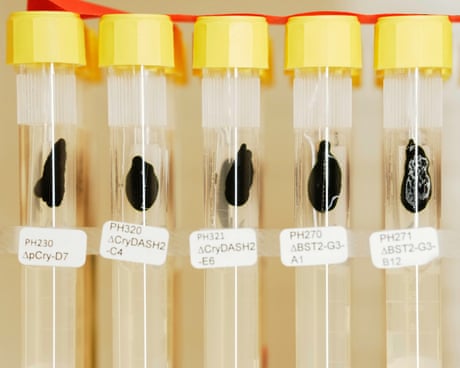
A tiny alga has helped show how memories, feelings and behaviour form in our brains, in research by three scientists awarded the Nobel prize for physiology or medicine this month.

Chlamydomonas is a one-celled alga that swims towards light using a light-sensing protein called channelrhodopsin, remarkably similar to the rhodopsin in our eyes. When the channelrhodopsin detects light, electrically charged ions rush into the cell from outside, triggering an electrical signal incredibly fast that tells the alga to move with its hair-like motor.

Continue reading...
© Photograph: Markus Schreiber/AP
© Photograph: Markus Schreiber/AP
© Photograph: Markus Schreiber/AP
  •  

Plantwatch: Russian dandelion offers solution to global rubber shortage

Scientists are returning to a wartime solution that may be more sustainable than the traditional rubber tree

There is a global shortage of natural rubber and dandelions may be coming to the rescue. In the second world war there was such a severe shortage of rubber that the Allies used the Russian dandelion, Taraxacum koksaghyz, from Kazakhstan. Soviet scientists found the dandelion roots produced enough white milky latex to make natural rubber, but when the war ended producers returned to the traditional rubber tree, Hevea brasiliensis.

But the demand for rubber is now increasing, with rubber trees suffering from a fungal disease and the impacts of extreme weather caused by the climate crisis. So, scientists are looking again at using dandelions, with the added benefit that they grow in temperate climates, are a sustainable crop that do not need pesticides and lots of water, and don’t lead to the deforestation common in tropical rubber tree plantations.

Continue reading...

© Photograph: Arterra/Universal Images Group/Getty Images

© Photograph: Arterra/Universal Images Group/Getty Images

© Photograph: Arterra/Universal Images Group/Getty Images

  •  

Plantwatch: the Natal crocus co-opts fire, bees and ants to reproduce

Perhaps the biggest surprise is that it tricks ants into moving its seeds with a scent that mimics their larvae

Plants are superb at enticing animals to pollinate their flowers or carry off their seeds. But one plant co-opts an astonishing combination of fire, bees and ants to mastermind its reproduction.

The South African Natal crocus, Apodolirion buchananii, has a gloriously bright white flower that emerges from the ground before its leaves appear in early spring. But the flower only blooms shortly after fire breaks out naturally in its native grasslands, leaving it standing like a beacon among the blackened grass to help lure bee pollinators, with an irresistible sweet scent that wafts through the air.

Continue reading...

© Photograph: piemags/nature/Alamy

© Photograph: piemags/nature/Alamy

© Photograph: piemags/nature/Alamy

  •  
❌