❌

Lese-Ansicht

Revealed: the ‘black box’ wastewater trade that rakes in millions for UK utility companies

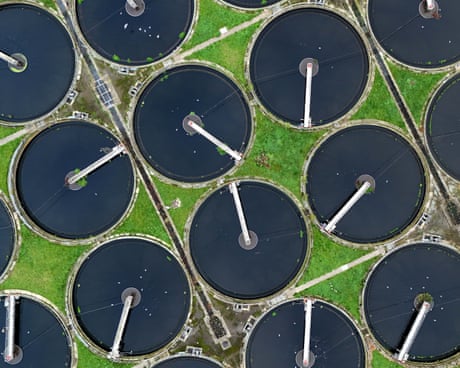
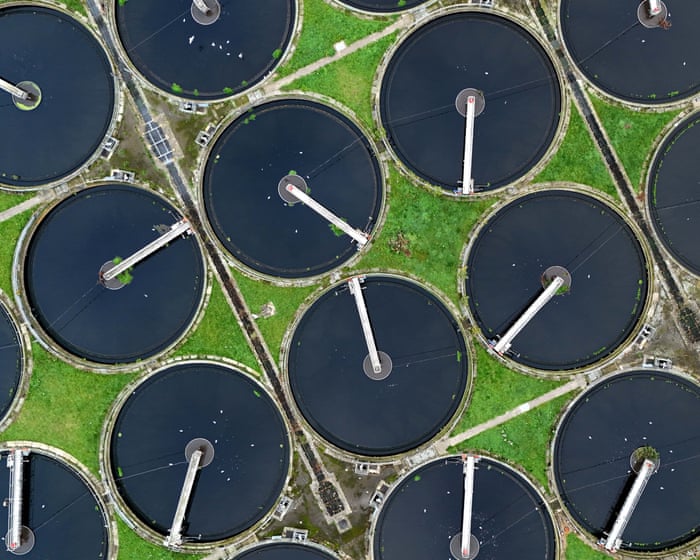
Exclusive: Firms made more than £340m last year from processing industrial and commercial wastewater at sewage works that are unable to remove many chemical pollutants

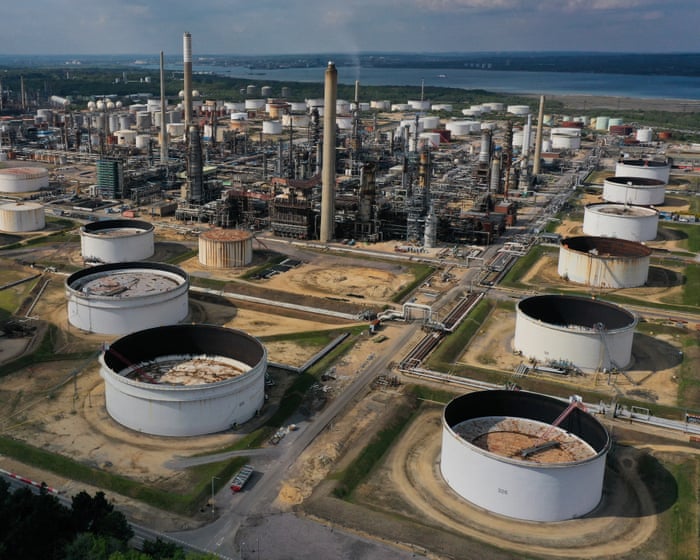
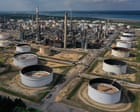
Water companies in the UK made more than £340m in revenue last year by pouring billions of litres of industrial and commercial wastewater into sewage treatment works that experts say are not designed to remove most chemicals, leaving pollutants to pass into rivers, seas and farmland.

Water companies in England are required by law to take industrial wastewater and issue permits called “trade-effluent consents” that allow businesses to send it to sewage works, though water companies can refuse applications.

Continue reading...
© Photograph: Neil Hall/EPA
© Photograph: Neil Hall/EPA
© Photograph: Neil Hall/EPA
  •  

Revealed: how companies ‘secretly’ use billions of litres of public water in drought-hit England

Exclusive: As millions of people face hosepipe bans, many companies are not required to report, let alone cut, use of public supply

Less than 1% of businesses in England use more water than the daily needs of 10 million people, as millions of households face hosepipe bans and three-quarters of the country is in drought.

Businesses across England use 2.6bn litres a day from the public water supply, which includes potable and non-potable water provided by water companies. In total, businesses account for about 30% of public supply use, with two-thirds of their consumption in water-stressed areas, according to Mosl, the organisation that operates England’s business water market.

Continue reading...

© Photograph: Daniel Leal/AFP/Getty Images

© Photograph: Daniel Leal/AFP/Getty Images

© Photograph: Daniel Leal/AFP/Getty Images

  •  

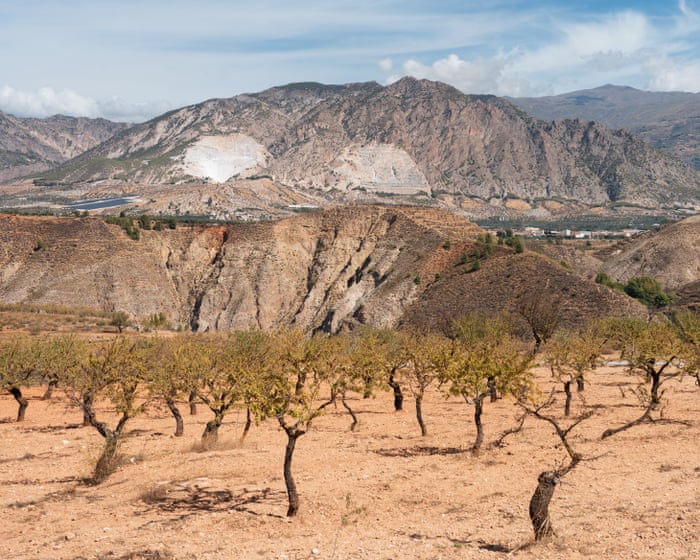
‘It’s Russian roulette’: alarm as Europe backs critical minerals mines in water-stressed regions

Exclusive: European Commission planning to rewrite key law to allow water-intensive mines in regions suffering from drought

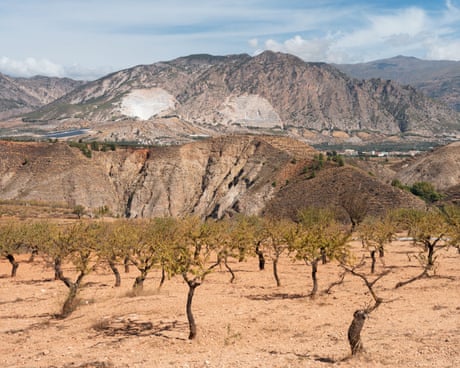
The European Commission plans to rewrite the EU’s flagship water protection law to speed up the development of critical minerals mines, despite many being located in drying and water-stressed regions, analysis has found.

Mining is a water-intensive industry, requiring large volumes of water for ore processing, dust suppression, waste management and mine dewatering. While modern projects recycle water, they still require significant amounts, and in water-stressed regions those demands can add to pressure on already stretched rivers, aquifers and water supplies.

Continue reading...

© Photograph: Paola de Grenet

© Photograph: Paola de Grenet

© Photograph: Paola de Grenet

  •  

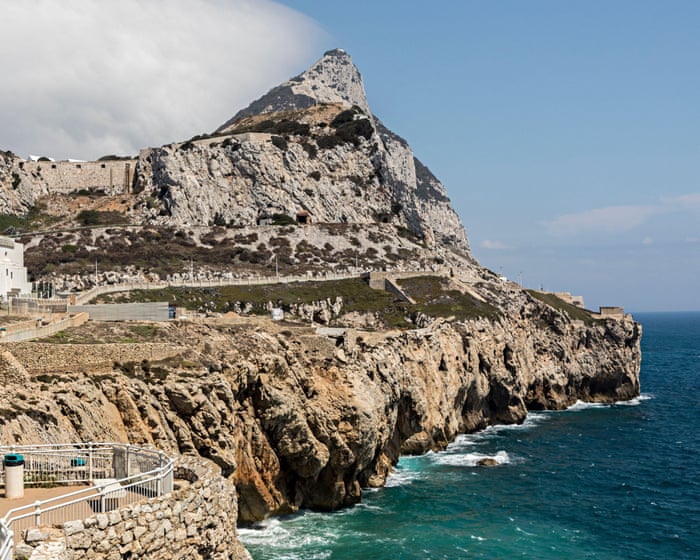
Gibraltar dumping all of its raw sewage into Mediterranean

Wastewater from nearly 40,000 people and businesses pumped straight into sea as territory still has no treatment plant

Raw sewage from nearly 40,000 people and businesses is being pumped straight into the sea because the British overseas territory of Gibraltar does not have, and has never had, a wastewater treatment plant.

For decades, untreated sewage has poured into the Mediterranean from the southern tip of the peninsula at Europa Point, where the government of Gibraltar says there are “high levels of natural dispersion”.

Continue reading...

© Photograph: Chris Howes/Wild Places Photography/Alamy

© Photograph: Chris Howes/Wild Places Photography/Alamy

© Photograph: Chris Howes/Wild Places Photography/Alamy

  •  

‘They called me a water terrorist’: exiled Iranian scientist wins global prize

Prof Kaveh Madani, winner of the Stockholm water prize, was accused of sabotage with his environmental work

Eight years before he got the call telling him he had won the Stockholm water prize, Prof Kaveh Madani was being interrogated by Iran’s Revolutionary Guards, accused of being a spy for the CIA, MI6 or the Mossad.

Today he is in exile and on Wednesday won the world’s most prestigious water prize for combining “groundbreaking research on water management with policy, diplomacy and global outreach, often under personal risk and political complexity”.

Continue reading...

© Photograph: Kv Dhunna/UNU-INWEH

© Photograph: Kv Dhunna/UNU-INWEH

© Photograph: Kv Dhunna/UNU-INWEH

  •  

‘Drinking from a fetid pond’: superbug-creating genes found in UK’s largest lake

Exclusive: Lough Neagh, which supplies drinking water for 40% of NI, contains genes resistant to last-resort antibiotics

Genes capable of creating antibiotic-resistant superbugs have been detected in the UK’s largest lake, which supplies drinking water to about 40% of Northern Ireland.

Testing of water from Lough Neagh, which has a surface area 26 times bigger than Windermere, found genes resistant to a wide range of antibiotics, including carbapenems – drugs reserved for life-threatening infections when all other treatments have failed.

Continue reading...

© Photograph: Niall Carson/PA

© Photograph: Niall Carson/PA

© Photograph: Niall Carson/PA

  •  

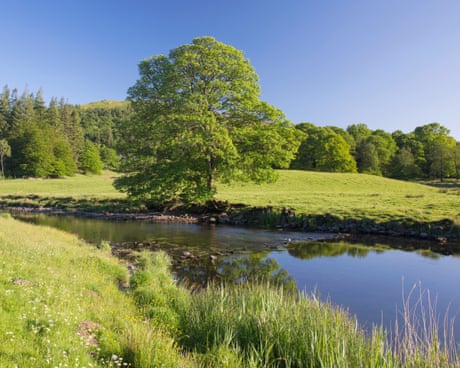
Race to find source of carcinogenic Pfas in Cumbria and Lancashire waters

Exclusive: High levels of banned ‘forever chemical’ have been detected in rivers and groundwater at 25 sites

A string of toxic pollution hotspots has been uncovered across Cumbria and Lancashire, with high levels of the banned cancer-causing “forever chemical” Pfos detected in rivers and groundwater at 25 sites.

The contamination, spread across a large area, was uncovered by Watershed Investigations and the Guardian after a freedom of information request revealed high concentrations of Pfos in Environment Agency samples taken in January 2025.

Continue reading...

© Photograph: David C Tomlinson/Getty Images

© Photograph: David C Tomlinson/Getty Images

© Photograph: David C Tomlinson/Getty Images

  •  

Dramatic rise in water-related violence recorded since 2022

Experts say climate crisis, corruption and lack or misuse of infrastructure among factors driving water conflicts

Water-related violence has almost doubled since 2022 and little is being done to understand and address the trend and prevent new and escalating risks, experts have said.

There were 419 incidents of water-related violence recorded in 2024, up from 235 in 2022, according to the Pacific Institute, a US-based thinktank.

Continue reading...

© Photograph: AP

© Photograph: AP

© Photograph: AP

  •  

Half the world’s 100 largest cities are in high water stress areas, analysis finds

Exclusive: Beijing, Delhi, Los Angeles and Rio de Janeiro among worst affected, with demand close to exceeding supply

Half the world’s 100 largest cities are experiencing high levels of water stress, with 38 of these sitting in regions of “extremely high water stress”, new analysis and mapping has shown.

Water stress means that water withdrawals for public water supply and industry are close to exceeding available supplies, often caused by poor management of water resources exacerbated by climate breakdown.

Continue reading...

© Photograph: Kirby Lee/Getty Images

© Photograph: Kirby Lee/Getty Images

© Photograph: Kirby Lee/Getty Images

  •  

Revealed: Europe’s water reserves drying up due to climate breakdown

Exclusive: UCL scientists find large swathes of southern Europe are drying up, with ‘far-reaching’ implications

Vast swathes of Europe’s water reserves are drying up, a new analysis using two decades of satellite data reveals, with freshwater storage shrinking across southern and central Europe, from Spain and Italy to Poland and parts of the UK.

Scientists at University College London (UCL), working with Watershed Investigations and the Guardian, analysed 2002–24 data from satellites, which track changes in Earth’s gravitational field.

Continue reading...

© Photograph: Borja Suárez/Reuters

© Photograph: Borja Suárez/Reuters

© Photograph: Borja Suárez/Reuters

  •  
❌