❌

Lese-Ansicht

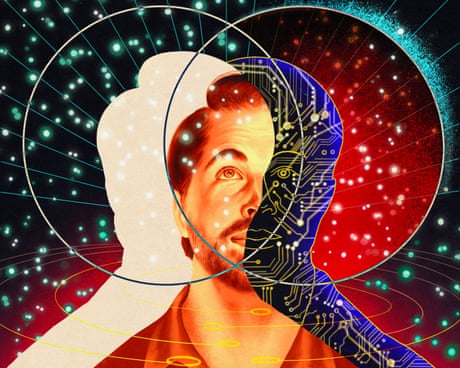
‘There’s this deep mystery of what, actually, is this thing?’: the philosopher inside Google DeepMind AI

Since 2017, Iason Gabriel has worked at the tech giant, trying to anticipate – and think through – the impact of AI. But as commercial and geopolitical pressures escalate, can ethicists make any difference?

In 2017, a 33-year-old political philosopher named Iason Gabriel was told by a friend that he ought to apply for a job at DeepMind, the London-based subsidiary of Google where much of its AI research was concentrated. The suggestion was not an obvious one.

Gabriel was a cheerful but intense junior academic with a passion for Vipassana meditation and what his brother calls “enthusiastic” rock climbing. The eldest son of a Greek management professor and a British documentary maker, Gabriel split his time between teaching and international development work. At the University of Oxford, where he was a fellow at St John’s College, Gabriel taught courses on political theory and wrote papers on the moral contortions of “yuppie ethics” and the ethical blind spots of effective altruism. When he wasn’t there, he did crisis work for the United Nations Development Programme in Sudan and Lebanon.

Continue reading...
© Illustration: The Guardian
© Illustration: The Guardian

© Illustration: The Guardian

  •  

The crisis whisperer: how Adam Tooze makes sense of our bewildering age

Whether it’s the financial crash, the climate emergency or the breakdown of the international order, historian Adam Tooze has become the go-to guide to the radical new world we’ve entered

In late January 2025, 10 days after Donald Trump was sworn in for a second time as president of the United States, an economic conference in Brussels brought together several officials from the recently deposed Biden administration for a discussion about the global economy. In Washington, Trump and his wrecking crew were already busy razing every last brick of Joe Biden’s legacy, but in Brussels, the Democratic exiles put on a brave face. They summoned the comforting ghosts of white papers past, intoning old spells like “worker-centered trade policy” and “middle-out bottom-up economics”. They touted their late-term achievements. They even quoted poetry: “We did not go gently into that good night,” Katherine Tai, who served as Biden’s US trade representative, said from the stage. Tai proudly told the audience that before leaving office she and her team had worked hard to complete “a set of supply-chain-resiliency papers, a set of model negotiating texts, and a shipbuilding investigation”.

It was not until 70 minutes into the conversation that a discordant note was sounded, when Adam Tooze joined the panel remotely. Born in London, raised in West Germany, and living now in New York, where he teaches at Columbia, Tooze was for many years a successful but largely unknown academic. A decade ago he was recognised, when he was recognised at all, as an economic historian of Europe. Since 2018, however, when he published Crashed, his “contemporary history” of the 2008 financial crisis and its aftermath, Tooze has become, in the words of Jonathan Derbyshire, his editor at the Financial Times, “a sort of platonic ideal of the universal intellectual”.

Continue reading...

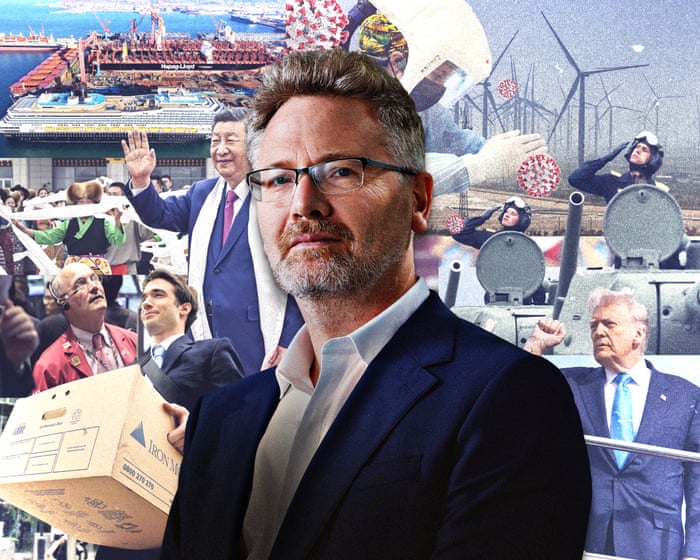
© Composite: Artwork by Guardian Design. Source Photographs by AFP/Getty Images/AP/Reuters/EPA/NurPhoto/Shutterstock

© Composite: Artwork by Guardian Design. Source Photographs by AFP/Getty Images/AP/Reuters/EPA/NurPhoto/Shutterstock

© Composite: Artwork by Guardian Design. Source Photographs by AFP/Getty Images/AP/Reuters/EPA/NurPhoto/Shutterstock

  •  
❌