❌

Lese-Ansicht

Feminism for a World on Fire by Natasha Walter review – hope amid the hopelessness

A writer and activist links the climate crisis to battles for justice around the world in this vital book

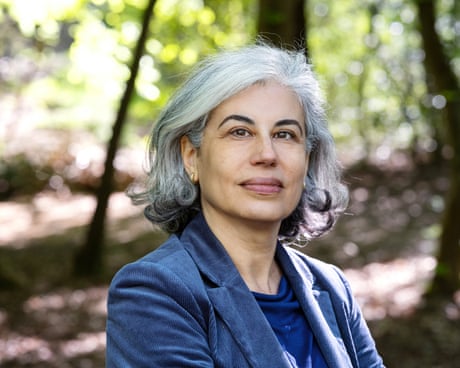
It has become increasingly difficult to change our minds, to question our own views or to find common ground with people we disagree with, all of which makes Natasha Walter’s new book both refreshing and exhilarating.

In her ebullient 1998 debut The New Feminism, Walter hailed Margaret Thatcher as a trailblazer. In this fiercer, bleaker work, she rips into the “glossy language of aspiration feminism”, “the message that the individual woman can do anything she wants if she only has the necessary courage”. That kind of feminism inspired an “explosion of books and films about pioneers and heroines, about bossy women and gutsy girls” which retold the feminist story as “a succession of isolated campaigns, led by outsize individuals”.

Continue reading...

© Photograph: Linda Nylind/The Guardian
© Photograph: Linda Nylind/The Guardian

© Photograph: Linda Nylind/The Guardian
  •  

This Dark Night by Deborah Lutz review – Emily Brontë’s world

Tactile details and a no-nonsense approach make this biography a refreshing change from more lurid fare

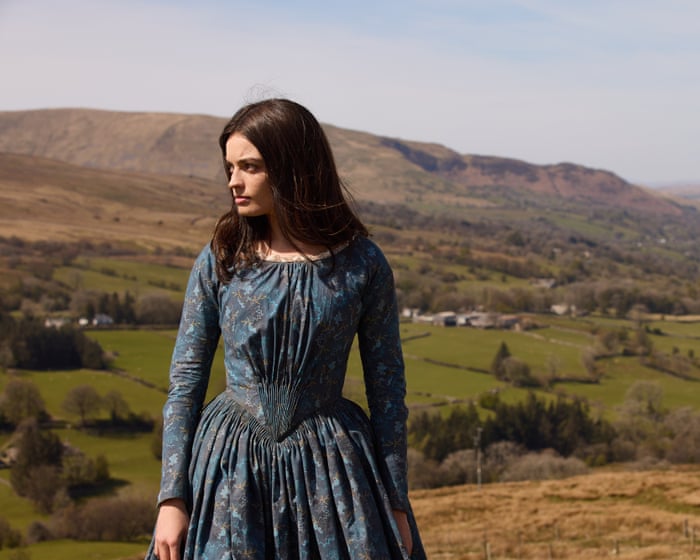
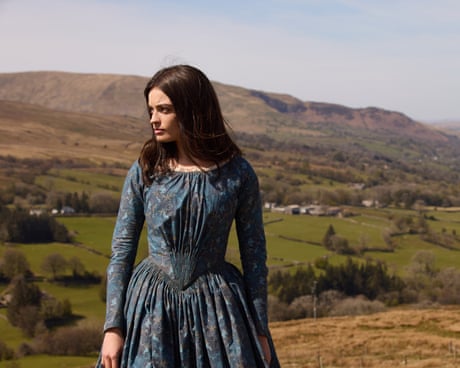
Both Emily Brontë and her only novel Wuthering Heights have been called “deranged”, “crazed” or (especially online, in the wake of the recent film) “unhinged”. So it’s a relief to read a biography where she comes across, instead, as more grounded, steady, sane. Deborah Lutz, whose 2015 book The Brontë Cabinet: Three Lives in Nine Objects made such an impression, anchors her narrative in solid things: the too-short bed Emily squeezed herself into; the pockets she stuffed with paper, pencils and moorland treasures; the laundry she looked after, including stockings with “AB5” sewn into them to indicate they were her sister Anne’s fifth pair. Lutz’s Emily is an eminently practical woman who wrote “while baking, in front of a peat fire perched on a little stool, or while walking” and who “used the tactile keeping of order as a prop and prompt to lose herself in the sublimity of art-making and moor-haunting”.

For Lutz, Emily’s writing is also “tactile”. She counts the sampler Emily made at 10 as one of her “earliest extant writings”, and while other scholars have dismissed it as a collection of copied platitudes, Lutz notices that one line Emily stitched, from Proverbs – “Who hath gathered the wind in his fists?” – suggests that maybe she was already thinking about wuthering. She lovingly describes the little books the Brontë children made as “delightful, tiny objects to match their toys and still-small selves, texts holding secretive and insular qualities”. She calls the one-page diaries Emily made with Anne “a new writing practice, one that feels distinctly modern, even avant garde”, as they crammed in descriptions of their cooking, their chatter, their animals, their made-up heroines; stream of consciousness nearly a century before Virginia Woolf.

Continue reading...

© Photograph: Michael Wharley

© Photograph: Michael Wharley

© Photograph: Michael Wharley

  •  

‘It’s no romcom’: why the real Wuthering Heights is too extreme for the screen

The new film adaptation by Saltburn director Emerald Fennell looks set to be provocative – but nowhere near as shocking as Emily Brontë’s original

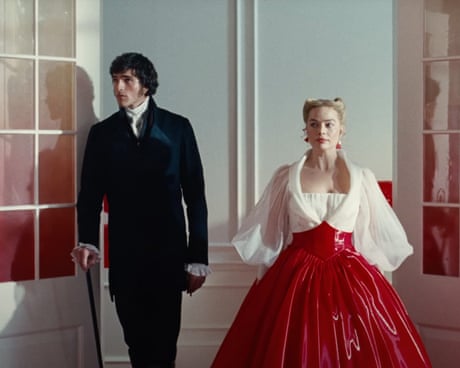
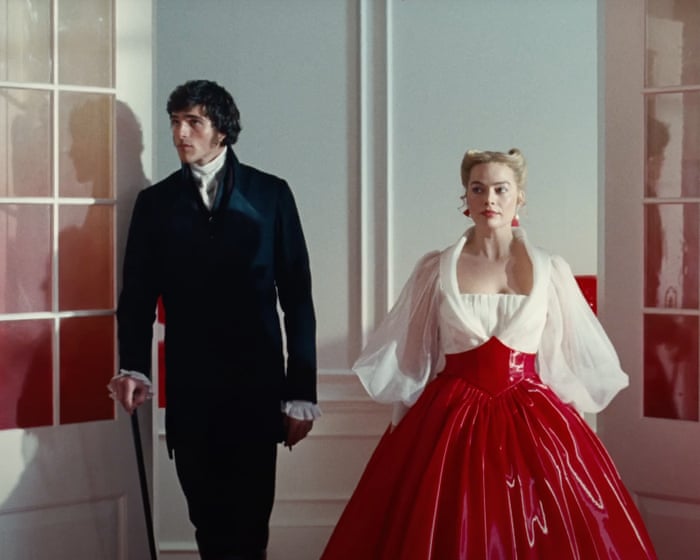
The most astonishing thing about the first trailer for Emerald Fennell’s Wuthering Heights is not the extreme closeup of dough being kneaded into submission. It’s not that in the lead roles Margot Robbie is blonde and 35, and Jacob Elordi is white, when Emily Brontë described Cathy as a teen brunette and Heathcliff as “a dark-skinned gypsy”. It’s not the gaudy splendour of the interiors – silver walls, plaster Greek gods spewing strings of pearls, blood-red floors and a flesh-pink wall for clutching and licking. It’s not Robbie’s gobstopper diamonds or her scarlet sunglasses or her stuffing grass into her mouth or the loud snip of her corset laces being slashed with a knife or her elaborately – erotically – bound hair as she contemplates multiple silver cake stands stacked with vertiginous fruit puddings. It’s not any of her dresses – the red latex number or the perfectly 1980s off-the-shoulder wedding dress topped by yards of veil half-wuthered off her head. Nor is it any of the times Elordi takes his top off.

The most astonishing thing is that the trailer says Wuthering Heights is “the greatest love story of all time”. Which is almost exactly how the 1939 Laurence Olivier and Merle Oberon film was trailed – as “the greatest love story of our time … or any time!” Have we learned nothing? I am not talking about the fact that (like Oberon’s!) Robbie’s wedding dress is white, which is not period-correct. This has exercised many people on the internet. I’m more worried about the fact that almost a century since Olivier’s film, we are still calling it a love story – a great one! The greatest! It’s being released the day before Valentine’s Day! – when what actually happens is that Cathy rejects Heathcliff because she’s a snob, and he turns into a psychopath.

Continue reading...

© Photograph: Warner Bros

© Photograph: Warner Bros

© Photograph: Warner Bros

  •  
❌