❌

Lese-Ansicht

‘Vibrant, design-led and surprisingly green’: why the Dutch city of Eindhoven is perfect for a relaxed arty break

After electronics giant Philips left, the city reinvented itself as a multicultural hub for creativity and innovation, and the home of Dutch Design Week

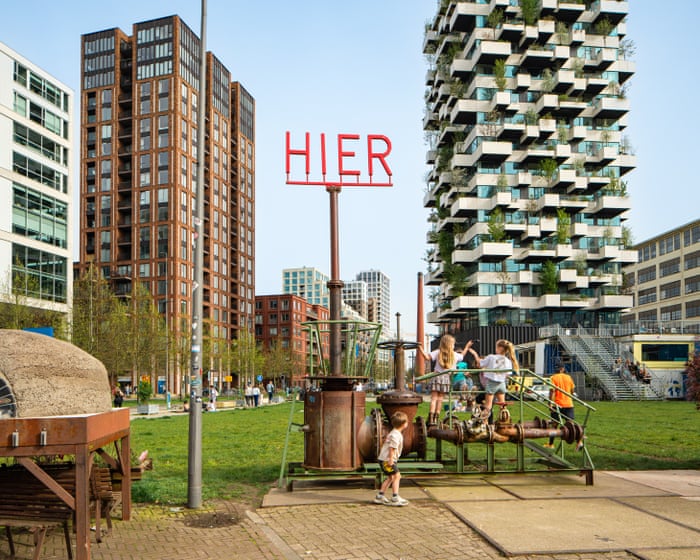
A baggily clad skateboarder’s wheels clatter across concrete floors, the noise bouncing off exposed pipes and iron girders. Vaulted skylights set in high ceilings illuminate the industrial space and its central kitchen, from which my main course – a silky lemon risotto, spiked with samphire, rhubarb, garlic, baby onions and basil – has just been transported.

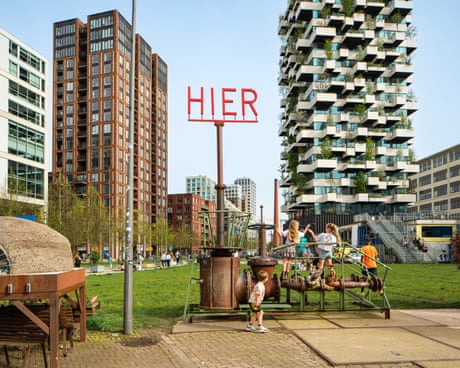
I’m in the Dutch city of Eindhoven, in North Brabant, famous for its historic connection to Philips, the one-time electronics giant. The restaurant, Radio Royaal, is housed in what was once their engine room, in the Strijp-S neighbourhood. Today, Strijp-S buzzes with concept stores, an indoor food market, MU Hybrid Art House and the Area 51 skatepark. The broader area, Strijp, was where the company was largely headquartered: its zones are named S, T and R. In the late 90s, Philips withdrew from the city where it had started in 1891, and the letters I, J and P were never assigned.

Continue reading...
© Photograph: Nick Bookelaar
© Photograph: Nick Bookelaar
© Photograph: Nick Bookelaar
  •  

A slow, boozy bus tour of Hungary’s secret vineyards

The spa town of Balatonfüred is a bucolic gem for sailors, hikers … and wine lovers. A new hop-on, hop-off bus tour offers a chance to get a taste of its little-known wineries

The 90-minute train journey south-west from Budapest to the spa town of Balatonfüred unveils a landscape that segues from gritty industrial compounds to long sweeps of golden sunflowers and fields of pale grain. The carriage is pleasingly retro, with thick velour upholstery; windows that open, awkwardly, with a stiff metal lever; and a bushy eyebrowed conductor replete with ticket machine slung over his shoulder.

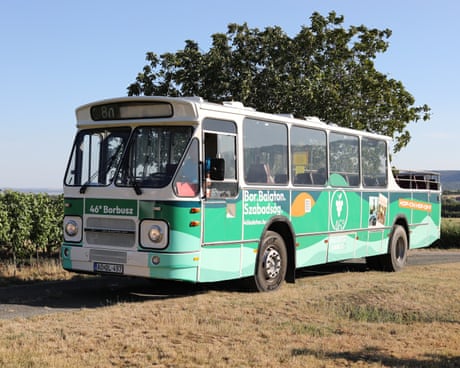
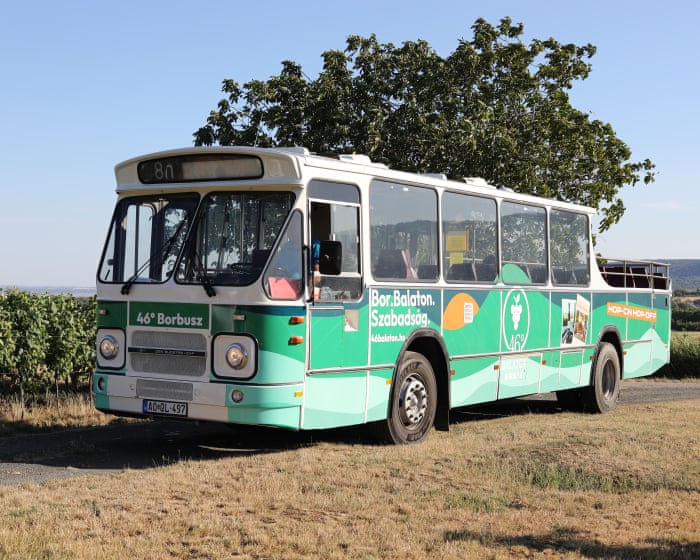
But the real retromania is yet to come. Arriving at Balatonfüred station, I board a 1984 DAF bus, painted an almost audacious shade of green. From the open-air rear, I take in the view over Lake Balaton, central Europe’s largest freshwater lake, often referred to as the “Hungarian Sea”.

Continue reading...

© Photograph: Buruzs Petra

© Photograph: Buruzs Petra

© Photograph: Buruzs Petra

  •  

Summer on the Baltic: a laidback coastal adventure in Lithuania

With great beaches, culture and nature, the resort town of Palanga and the wild Curonian Spit offer an affordable – and cooler – alternative to the Med

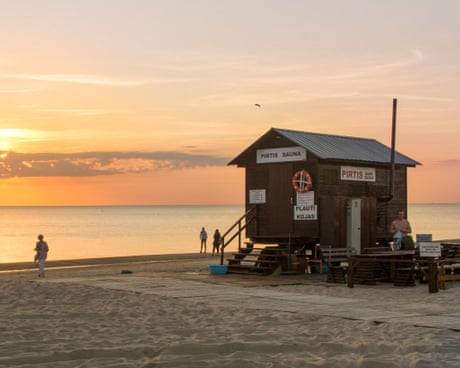
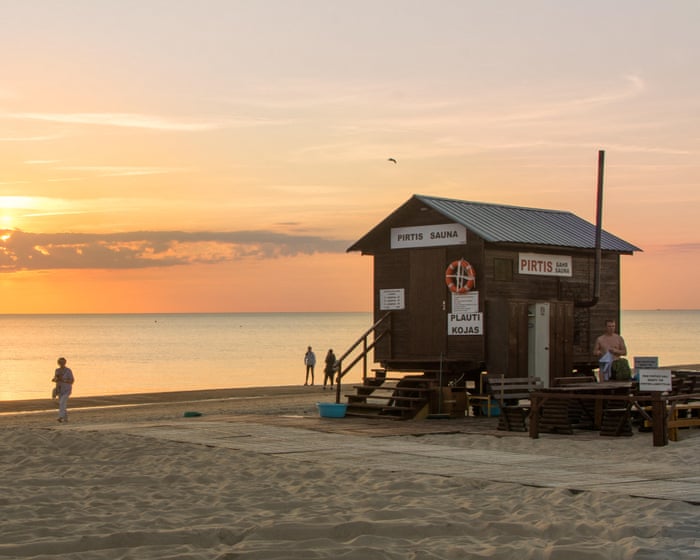
The water off Palanga’s sandy white beach is tinged pale green – the colour of the feathery clouds of Furcellaria lumbricalis that occasionally brush against my calves. Underfoot, the Baltic seabed is ridged, the sea so clear and shallow that every ripple is visible. The water deepens very gradually – making it ideal for families. I’m quite far from the coast, but still only thigh deep, the sea still cool as I duck beneath the surface.

Elsewhere in Europe, another heatwave has prompted health warnings and school closures. But here in Lithuania, children scamper on the sand and splash in the shallows as temperatures remain, if not cool, bearable. I’ve come to explore some of the Baltic beaches – here and on the Curonian Spit – which are fast gaining popularity as the Med heats up and prices in southern Europe remain stubbornly high.

Continue reading...

© Photograph: Aleksandar Tomic/Alamy

© Photograph: Aleksandar Tomic/Alamy

© Photograph: Aleksandar Tomic/Alamy

  •  

The sunny Danish island that’s a poster child for the good life – and perfect for a spring break

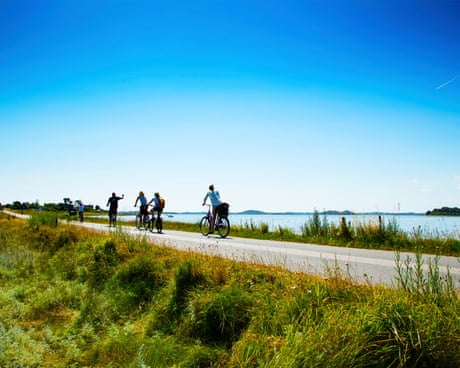
The island of Samsø offers tranquil walks, biking, birding, distillery and pottery tours, and locally sourced fare – including citrusy ants

‘We have lammerullepøllse – lamb rolled sausage – today,” says Daniel Hesseldal-Haines, chef at Det Lille Sommerhotel on the Danish island of Samsø. “It tastes better than the translation sounds. And,” he gestures towards a woman sitting by the window, “the lamb is from Camilla’s farm.”

Camilla gives us a friendly wave, and my eyes fix upon her sweater, featuring row upon row of colourful motifs. Think Fair Isle but less orderly: each stripe holds a different design. “Oh, I made this,” she says. “It’s hønsestrik – chicken knitting. You can use it to tell your story – so this one is about hiking,” she adds, pointing to each section: “These are my footprints, this is my tent, my coffee flask …”

Continue reading...

© Photograph: Jeanette Philipsen

© Photograph: Jeanette Philipsen

© Photograph: Jeanette Philipsen

  •  

‘We’re used to crowds’: latest Wuthering Heights hype doesn’t faze Yorkshire residents

As Emerald Fennell’s adaptation hits cinemas, a slew of visitors are expected at the sites that inspired Emily Brontë’s novel. People living close by, however, are taking it in their stride

The four-mile trail from the village of Haworth to Top Withens in West Yorkshire is well trodden; numerous footprints squelched into the boggy ground by those seeking the view said to have inspired the setting for Emily Brontë’s 1847 novel Wuthering Heights. The landscape rolls in desolate waves of brown bracken. A lone tree punctuates the scene. It’s bleakly, hauntingly beautiful.

With the release of Emerald Fennell’s new film of the Gothic masterpiece starring Margot Robbie and Jacob Elordi next week, Haworth and many of the filming locations in the Yorkshire Dales national park, where the book is set, are braced for a slew of visitors.

Continue reading...

© Photograph: Landmark Media/Alamy

© Photograph: Landmark Media/Alamy

© Photograph: Landmark Media/Alamy

  •  

Authentic Algarve: exploring Portugal beyond the beach

A series of walking festivals and cultural programmes aim to lure visitors to the Algarve’s woodland interiors and pretty villages to help boost tourism year round

‘I never mind doing the same walk over and over again,” said our guide, Joana Almeida, crouching beside a cluster of flowers. “Each time, there are new things – these weren’t here yesterday.” Standing on stems at least two centimetres tall and starring the dirt with white petals, the fact these star of Bethlehem flowers sprung up overnight was a beautiful testament to how quickly things can grow and regenerate in this hilly, inland section of the Algarve, the national forest of Barão de São João. It was also reassuring to learn that in an area swept by forest fires in September, species such as strawberry trees (which are fire-resistant thanks to their low resin content) were beginning to bounce back – alongside highly flammable eucalyptus, which hinders other fire-retardant trees such as oak. Volunteers were being recruited to help with rewilding.

Visitor numbers to the Algarve are growing, with 2024 showing an increase of 2.6% on the previous year – but most arrivals head straight for the beach, despite there being so much more to explore. The shoreline is certainly wild and dramatic but the region is also keen to highlight the appeal of its inland areas. With the development of year-round hiking and cycling trails, plus the introduction of nature festivals, attention is being drawn to these equally compelling landscapes, featuring mountains and dense woodlands. The Algarve Walking Season (AWS) runs a series of five walking festivals with loose themes such as “water” and “archaeology” between November and April. It’s hoped they will inspire visitors year round, boosting the local economy and helping stem the tide of younger generations leaving in search of work.

Continue reading...

© Photograph: Jacek Sopotnicki/Alamy

© Photograph: Jacek Sopotnicki/Alamy

© Photograph: Jacek Sopotnicki/Alamy

  •  

‘There is bounty almost everywhere’: why you’ll always find me in the flea market on my travels

Forget sightseeing, secondhand shopping is now a major draw for tourists. A seasoned bargain-hunter shares her tips on picking up the best vintage finds when travelling abroad

Marburg, Germany. It’s a fairytale city, not only because of the hilltop castle that overlooks its cobbled streets and half-timbered houses, but also because this is where the Grimm brothers once lived and studied, starting the collection of folklore stories that would eventually become their famous anthology of fairytales. Throughout the city, sculptures – some perched in improbable places – pay homage to this past, forming a mile-long route known as the Grimm Path. It’s very much like a treasure hunt.

But on my visit to Marburg, I had a different type of treasure hunt in mind and, once done with enchanted mirrors and kissy-lipped frogs, headed straight for the SecondHand by DRK (Deutsches Rotes Kreuz – the German Red Cross) to scout for pre-owned items.

Continue reading...

© Photograph: MarioGuti/Getty Images/iStockphoto

© Photograph: MarioGuti/Getty Images/iStockphoto

© Photograph: MarioGuti/Getty Images/iStockphoto

  •  
❌