❌

Lese-Ansicht

‘It’s OK to love somebody when they’re not perfect’: how John Cena conquered Hollywood – and why he refuses to abandon Vince McMahon

By embracing the role of amiable lunk, the wrestler turned actor has become an unlikely, and very modern, leading man. But does his relationship with the WWE, and its controversial former owner, risk tarnishing his brand?

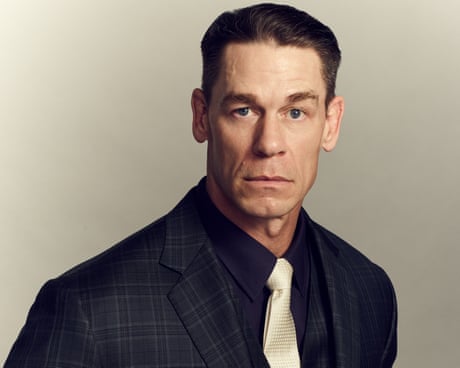
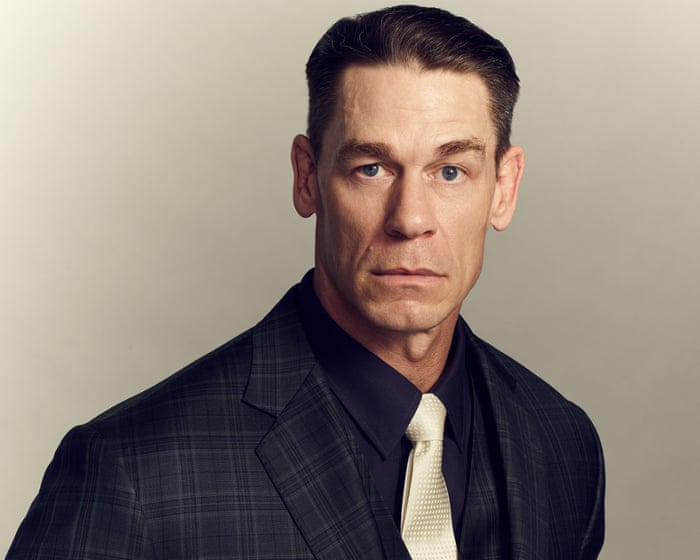
I must admit, I was apprehensive about meeting John Cena. The WWE wrestler turned actor has built an enviable Hollywood career playing idiots – capable idiots with real heart, but dimwits nevertheless. Still, Cena is obviously nobody’s fool; fools don’t rise from humble beginnings to become their generation’s answer to Hulk Hogan or The Rock. Would the Cena who appears on my computer screen be the real one? Or something closer to the comic-book characters he embodies so well: guileless, silly and fond of a deliberate misunderstanding?

It is immediately clear that this is no manchild. Perfectly punctual, he greets me with a lavish formality befitting a man who made his film debut as the title character in The Marine. Within a minute he has volunteered, unprompted, that “a core value of mine is respect”. Cena, 49, is speaking to me on behalf of Matchbox: The Movie, a film extension of the Mattel toy car brand for Apple TV, and for 45 minutes he is generous, funny, complimentary and elusive without ever being evasive. It’s a genuinely radical thing for a man built like a chest freezer – having only recently retired from wrestling after 26 years – to be so relaxed about being ridiculous, and in an age of such joyless online strongmen as Trump, Musk and Andrew Tate, his buff charm is welcome.

Continue reading...

© Photograph: Joe Pugliese
© Photograph: Joe Pugliese
© Photograph: Joe Pugliese
  •  

The hill I will die on: Going to a gig is an endurance test | Sasha Mistlin

Muddy sound systems, pricey tickets and a strong chance of getting showered with someone’s stale beer – give me a nice sit-down in a cinema any time

A few years back I went to see one of my favourite rappers, Earl Sweatshirt, at a venue in north London. The sound was so muddy I couldn’t tell which song he was playing. The setlist lurched between his old and new stuff in a way that did justice to neither. The bloke in front of me filmed the entire thing on a phone he was holding above his head for an Instagram story that will be watched by no one. With 45 minutes remaining, I wished I could leave. With 15 minutes left, I decided that making it to the nearest kebab shop before the rush meant more to me than seeing the end of the set.

As a culture journalist, I’ve been to a lot of gigs. Most of them were endured rather than enjoyed, and I secretly think it’s only the most extroverted (or simply least self-conscious) among us who actually feel otherwise. This is the dirty secret of the music industry, which has tackled economic headwinds mainly by transitioning out of actually selling music and into live events. This feeling has occasionally caused professional embarrassment for me, since I am forever inventing reasons to turn down what is supposedly one of the main perks of the job: free tickets.

Sasha Mistlin is a commissioning editor on the Guardian’s Saturday magazine

Continue reading...

© Illustration: Guardian Design/Getty

© Illustration: Guardian Design/Getty

© Illustration: Guardian Design/Getty

  •  

The best Steven Spielberg films, chosen by directors, critics and super-fans: ‘pure popcorn perfection’

From franchise hits to historical epics, joyous musicals to autobiographical family sagas: Steven Spielberg has done it all. As his latest sci-fi film Disclosure Day is released, film-makers, authors and Guardian critics reveal which of his movies means the most to them

Steven Spielberg is often described as the inventor of the “event movie” – or as the creator of our new age of IP supremacy, in which the genre property is more important than any above-the-title film star. But that isn’t quite it. He came of age in the American new wave era but in spirit belonged neither to that nor fully to Hollywood’s golden age studio system that preceded it.

In fact, he synthesised both into a directing style that was audacious and fluent. He availed himself of the subversiveness of the new wave, and yet was classically oriented, drawing upon his love of – and alienation from – the all-American suburb, making him the Edward Hopper or the Andrew Wyeth of the movies. Tellingly, it was François Truffaut, the most emollient and Hollywood-friendly of France’s Nouvelle Vague masters, whom Spielberg cast in a cameo in Close Encounters of the Third Kind.

Continue reading...

© Illustration: The Red Dress/The Guardian

© Illustration: The Red Dress/The Guardian

© Illustration: The Red Dress/The Guardian

  •  

When a ​football manager’s ​wardrobe ​says ​more ​than ​his​ tactics

From flannel shirts to herringbone tailoring, Pep Guardiola’s stylistic pivot hint​s at a man renegotiating his identity ​in the twilight of ​his footballing era

• Don’t get Fashion Statement delivered to your inbox? Sign up here

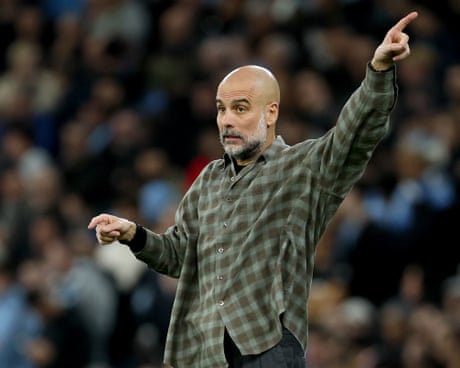
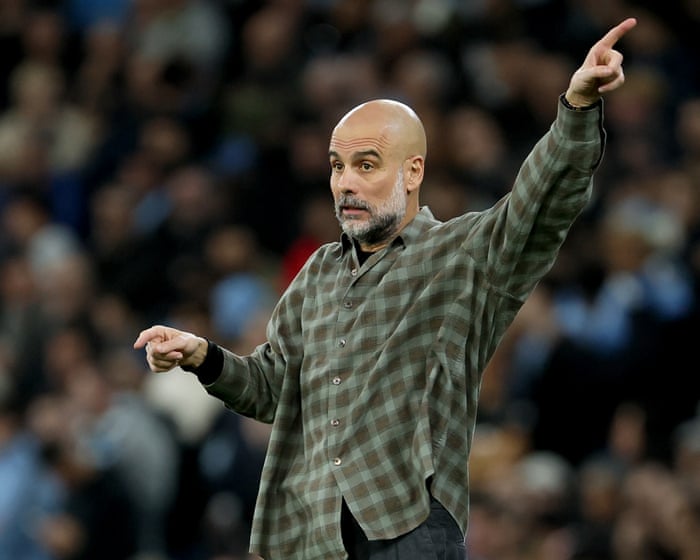
Last Tuesday, Manchester City manager Pep Guardiola lost to Real Madrid in a £270 shirt.

The grungy flannel number from the cult Swedish menswear brand Our Legacy was so noteworthy it consumed more post-match oxygen than the news that Manchester City had been dumped out of the Champions League before the quarter-finals. Never mind that Guardiola is beginning to look bereft of ideas for the first time in his career. All anyone cared about was whether he’d hired a stylist.

Continue reading...

© Photograph: Allstar/Richard Sellersl/Sportsphoto

© Photograph: Allstar/Richard Sellersl/Sportsphoto

© Photograph: Allstar/Richard Sellersl/Sportsphoto

  •  

‘Every role I do, I’m going to be a Black man first’: David Jonsson on winning Baftas, rebooting Alien and leaving TV’s hottest show

He went from being the east London boy who was expelled from school to becoming the Bafta award‑winning star of Alien: Romulus. Ahead of his prison drama Wasteman, David Jonsson discusses the pressures of being a leading Black British actor

David Jonsson is the kind of actor who disappears so completely into his roles that it’s easy to forget you’re watching the same person each time. In Rye Lane, he’s a lovestruck south Londoner; in Industry, an Etonian banker with ice in his veins; in Alien: Romulus, a paranoid android. He’s now starring as heroin addict Taylor in the ultraviolent British prison drama Wasteman and, for the first time, the 32-year-old actor claims he is playing something close to himself. “This is the most personal role I’ve done,” he says. “It’s so messed up because it’s a dark story about rehabilitation and addiction, but I know these men really well. Especially when you’re growing up somewhere like where I did.”

We meet on a Friday afternoon at a photo studio in Islington, closer to where Jonsson lives now in north London than to Custom House in the East End, where he grew up. He arrives wearing a beanie pulled tight over his cornrows and a windbreaker. He looks stylish but carries a delicate shyness that mirrors his character’s air of desperation. Wasteman, which opens this month after a critically acclaimed festival run that netted five British Independent Film awards (Bifa) nominations including best lead performance for Jonsson, tells the story of Taylor, a young father who has spent 13 years in prison for a crime he committed as a teenager. In the film’s unflinching depiction of the British prison system, he’s referred to as a “nitty” – UK slang for a desperate, pathetic drug addict. Jonsson lost 1.8 stone to embody Taylor’s “wasted” physique. “I was mawga, properly skinny,” he says, slipping into patois.

Continue reading...

© Photograph: Suki Dhanda/The Guardian

© Photograph: Suki Dhanda/The Guardian

© Photograph: Suki Dhanda/The Guardian

  •  

‘It launched a million fantasies’: the greatest ever TV romances

From sparks flying during The OC’s Spider-Man snog to love stories so powerful they make you weep, Guardian writers pick the television couples whose tales never fail to make hearts pound

As TV romances go, it’s not the most original. Nerdy teen boy finally gets the queen bee he’s loved since they still had baby teeth – and off we pop on a four-season cycle of dramatic breakups and grand-gesture-fuelled reunions. Yet through all of the faintly ridiculous plotlines, their romance is anchored by that most elusive of on-screen tricks: actual, palpable chemistry. There is the sarcastic sparring, the physical spark (who could ever forget that Spiderman snog?) but also a feeling of deep care and genuine friendship – one that helps both characters grow into promising mini-grownups by the end. Watching the pair navigate insecurities, battle identity crises and generally make some spectacularly poor choices, lets us all feel better about the emotional dumpster fires of our own adolescence. And the fact that they keep on choosing each other speaks to that part of our teen selves that longed to find someone who might jump on to a coffee cart and declare their love for us – or at least wait around all summer while we campaigned to save sea otters. Lucinda Everett

Continue reading...

© Photograph: Everett Collection Inc/Alamy

© Photograph: Everett Collection Inc/Alamy

© Photograph: Everett Collection Inc/Alamy

  •  

The tunnel runway at the Super Bowl – and the rise of the ‘unicorn bag’

On game day, where fashion has become a huge part of athlete identity, professionals are reaching for codified displays of their wealth

• Don’t get Fashion Statement delivered to your inbox? Sign up here

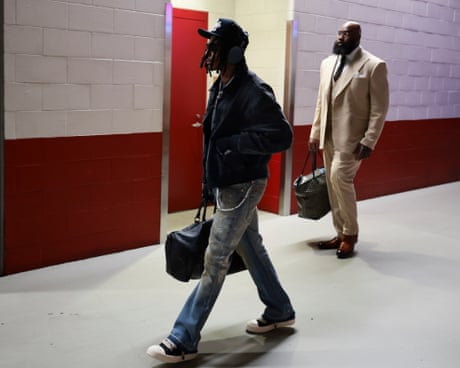
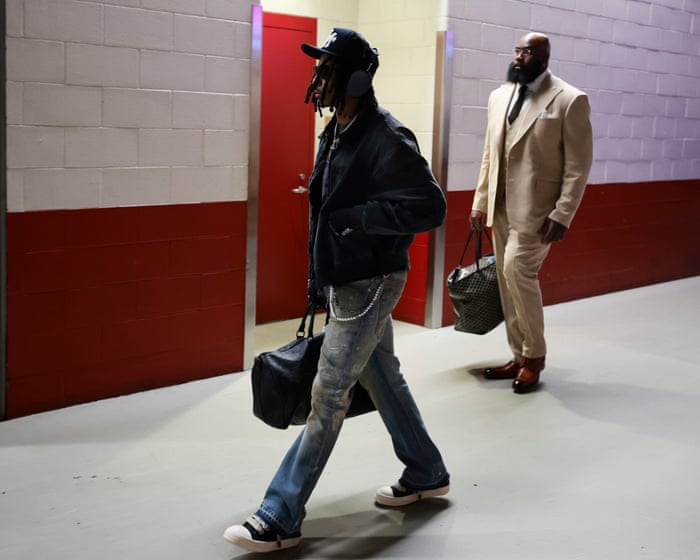
On Sunday night the Seattle Seahawks beat the New England Patriots in Super Bowl LX, Bad Bunny put on a spectacular half-time show, and multiple players all walked down the tunnel from the car park to the dressing rooms carrying the same logo’d bag. The bag in question, by luxury French brand Goyard, isn’t part of any official uniform – and isn’t really known outside of its 0.1% customer base. But it has become as ubiquitous a status symbol among American football players as their AirPods Max headphones and Richard Mille watches – and is part of a brave new world of tunnel fits.

Most primetime NFL games’ coverage start hours before kick-off, as photographers, fans and pundits alike pore over players’ sartorial choices just as they would their missed tackles and spectacular catches.

Continue reading...

© Photograph: Kathryn Riley/Getty Images

© Photograph: Kathryn Riley/Getty Images

© Photograph: Kathryn Riley/Getty Images

  •  

‘What did I just watch?’ The TV shows that utterly baffle us – but we can’t switch off

From David Bowie being reincarnated as a kettle to Reese Witherspoon in space, our writers list the TV head-scratchers they can’t get enough of

With a gun to my head, I couldn’t tell you with any degree of accuracy what Tim Robinson’s The Chair Company is actually about. In terms of straight plot, it’s the story of a man who is drawn into a conspiracy after a chair breaks when he sits on it. But beyond that, it’s honestly anyone’s guess.

Continue reading...

© Photograph: HBO/2025 Home Box Office, Inc. All rights reserved. HBO® and all related programs are the property of Home Box Office, Inc.

© Photograph: HBO/2025 Home Box Office, Inc. All rights reserved. HBO® and all related programs are the property of Home Box Office, Inc.

© Photograph: HBO/2025 Home Box Office, Inc. All rights reserved. HBO® and all related programs are the property of Home Box Office, Inc.

  •  

The Guide #218: For gen Zers like me, YouTube isn’t an app or a website – it’s the backdrop to our waking lives

In this week’s newsletter: When the video-sharing site launched in 2005, there were fears it would replace terrestrial television. It didn’t just replace it – it invented entirely new forms of content. ASMR, anyone?

• Don’t get The Guide delivered to your inbox? Sign up here

Barely a month goes by without more news of streaming sites overtaking traditional, terrestrial TV. Predominant among those sits YouTube, with more than 2.5 billion monthly viewers. For people my age – a sprightly 28 – and younger, YouTube is less of an app or website than our answer to radio: the ever-present background hum of modern life. While my mum might leave Radio 4 wittering or BBC News flickering in the corner as she potters about the house, I’ve got a video essay about Japan’s unique approach to urban planning playing on my phone. That’s not to say I never watch more traditional TV (although 99% of the time I’m accessing it through some other kind of subscription streaming app), but when I get home after a long day and the thought of ploughing through another hour of grim prestige fare feels too demanding, I’m probably watching YouTube. Which means it’s very unlikely that I’m watching the same thing as you.

When Google paid $1.65bn for the platform in 2006, (just 18 months after it launched) the price seemed astronomical. Critics questioned whether that valuation could be justified for any video platform. The logic was simple – unless YouTube could replace television, it would never be worth it. Nearly two decades on, that framing undersells what actually happened. YouTube didn’t just replace television – it invented entirely new forms of content: vodcasts, vlogs, video essays, reaction videos, ASMR and its heinous cousin mukbang. The platform absorbed new trends and formats at lightning speed, building what became an alternative “online mainstream”. Before podcasters, TikTokers, Substackers and even influencers, there were YouTubers.

Continue reading...

© Photograph: Chicken Shop Date

© Photograph: Chicken Shop Date

© Photograph: Chicken Shop Date

  •  
❌