❌

Lese-Ansicht

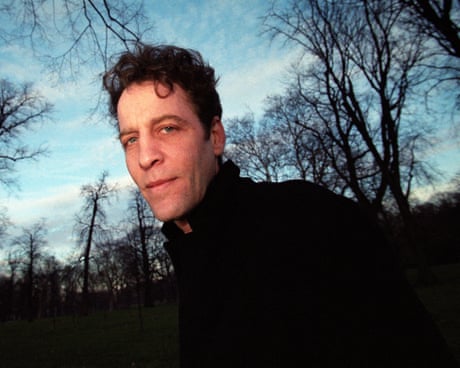
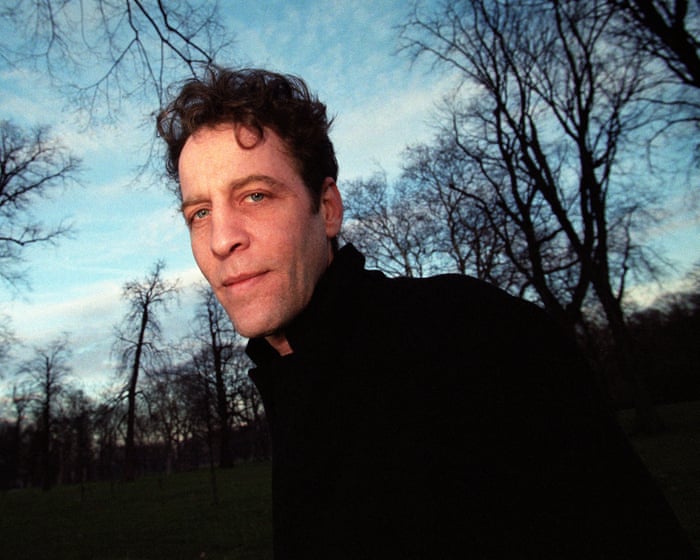
​‘He buckled. I could hear his bass ringing out ...’ The luminous rise and tragic end of US alt heroes Morphine

​Fronted by Mark Sandman​,​ the group brought enigmatic, elegant rock to post-grunge America. As lost demos surface, those closest to Sandman remember a man who grabbed on to life’s joys

It’s early 1998, and at Fort Apache recording studio in Massachusetts, Mark Sandman, the suave frontman of Morphine, is nearing breaking point. Morphine’s four enigmatic and blackly humorous albums have won critical acclaim and, lately, unexpected commercial success considering their uncompromising creative vision. After the excesses of grunge, Sandman considered their idiosyncratic blend of sophisticated storytelling, prowling slide-bass and Dana Colley’s atmospheric saxophone a kind of “palate cleanser”.

In 1997 Morphine had signed to DreamWorks Records, founded by industry bigwigs David Geffen and Mo Ostin. Now, working on Morphine’s first LP for his new paymasters – a batch of songs finally seeing release almost three decades later – Sandman was consumed by doubt over their direction. “For the first time, Morphine were trying to please someone other than just ourselves,” remembers Colley.

Continue reading...

© Photograph: Martin Beddall/Alamy
© Photograph: Martin Beddall/Alamy
© Photograph: Martin Beddall/Alamy

  •  

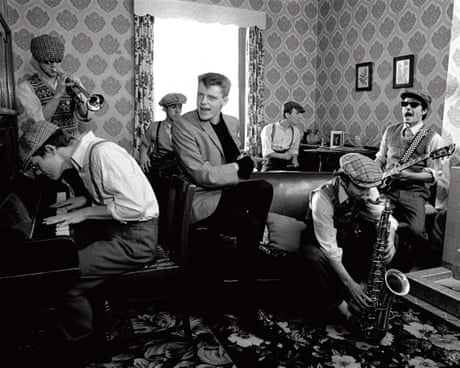
‘Being in Madness kept some of them out of jail’: how the baggy-trousered nutty boys made a guerrilla cinema classic

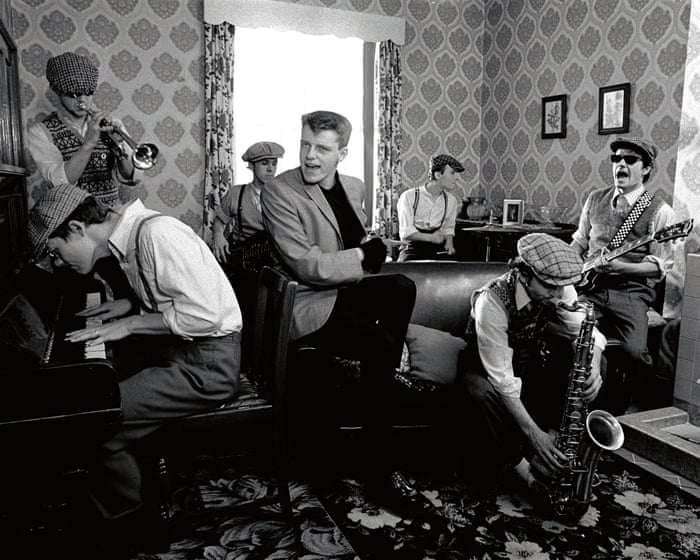
From a jail-inspired light sabre fight to the moment a sax-player flew, Take It or Leave It brilliantly captured the hit-makers’ grimy origins. Will the film’s return see it finally honoured as a music movie landmark?

It’s March 1981 and Madness are revisiting the haunts of their recent youth with a film crew in tow. In the 18 months since releasing their debut single, The Prince, the group have become the UK’s most beloved hit-makers, their ascent abetted by inventive music videos that have left viewers of Top of the Pops and Tiswas believing a man could fly – while blowing a sax.

But this new project is something else. Instead of squandering their newfound wealth on fast cars and country piles, the seven-piece have invested in a semi-fictional big-screen telling of their origin story that tempers their trademark “nuttiness” with a kitchen-sink realism suiting their working-class roots. While Take It or Leave It sank into obscurity soon after release, a new 4K restoration has primed the film for rediscovery as a time-capsule of grimy 70s London, and perhaps cinema’s most honest depiction of the challenges involved in trying to get a band together.

Continue reading...

© Photograph: Clare Muller/Redferns

© Photograph: Clare Muller/Redferns

© Photograph: Clare Muller/Redferns

  •  

Haruomi Hosono: Yours Sincerely review

(Ghostly International)
Unpredictable and utterly beguiling, the septuagenarian beloved by Harry Styles brings a hint of mischief to his innocently charming songs

Haruomi Hosono is one of the most influential figures in Japanese music. In 1969, his psych-folk group Happy End were the first rock group to sing in Japanese; decades later, their song Kaze wo Atsumete was rediscovered for the Lost in Translation soundtrack. He was also an integral member of electronic pioneers Yellow Magic Orchestra, and scored movies and video games, while his solo albums swing from foundational city pop texts to experiments in ambient and arch exotica.

Now 79, with disciples including Van Dyke Parks and Harry Styles (who named 2022’s Harry’s House after 1973 solo album Hosono House), he still makes whatever music he wants. His 23rd solo album is wilful, playful, unpredictable and utterly beguiling. Rooted in the Japanese concept of omoiyari, roughly translated as compassion, these songs are big-hearted, focusing on warmth and positivity: opening reverie Note of Mothership features a chorus of overlapping voices murmur-singing “we are mothers”; the sweet Happy Holiday repeats its title over an enchantingly simple melody; Sincerely is a sleepy, Leon Redbone-esque strum.

Continue reading...

© Photograph: Masahiro Handa

© Photograph: Masahiro Handa

© Photograph: Masahiro Handa

  •  

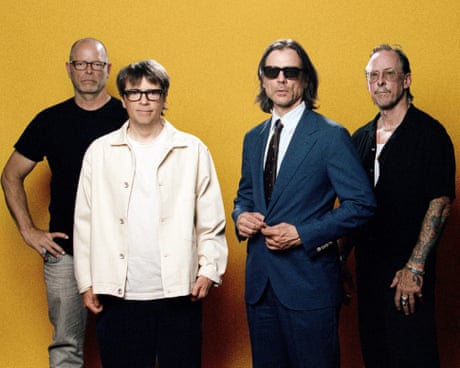
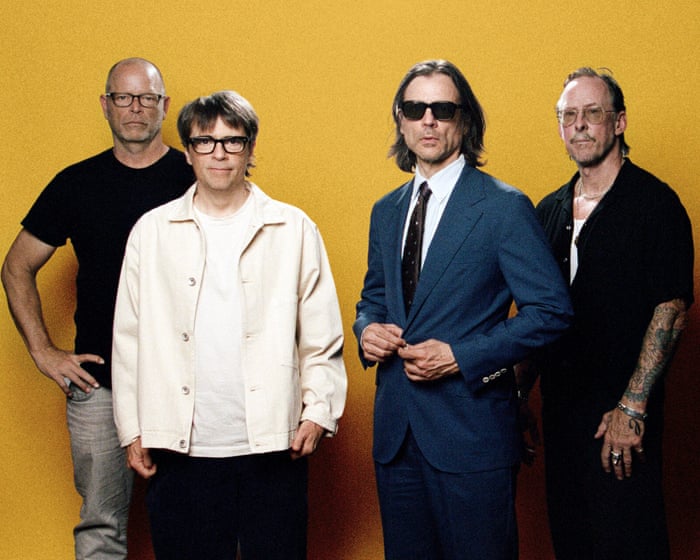
‘I need to think like a CEO’: Weezer on the shifting sands of success, ugly feelings and the joy of spreadsheets

As the self-professed geeky rockers release their conceptual 20th album, Rivers Cuomo and Patrick Wilson discuss dodging failure, being saved by fans and their obsessive creativity

The first song Rivers Cuomo wrote for Weezer’s new album, their 20th, blatantly mimics the US rockers’ 1994 debut single, Undone (The Sweater Song). On the track CEO, the singer-guitarist grumbles over a slow, Velvets-y backing about having to crank out “another 90s jam” and wishing he could do “something new – but nobody wants to hear that”. It’s a deliciously meta moment, but also one that allows Cuomo to gently vent “my frustrations over people wanting me to just write songs about our first two albums”.

Cuomo wrote the song straight after SZNZ, the four-album song-cycle Weezer released throughout 2022, each album named after a season. That project fed his notoriously intense, analytic and occasionally obsessive approach to songwriting. Thanks to the kind of data artists have at their fingertips in the streaming age, though, he realised that, with each subsequent SZNZ, “fewer and fewer people were listening to them”.

Continue reading...

© Photograph: Brendan Walter

© Photograph: Brendan Walter

© Photograph: Brendan Walter

  •  

‘I had to learn how to be a feminist’: Greg Dulli on surviving grunge, shunning misogyny, and Afghan Whigs’ glorious return

With a soulful sound and soul-baring lyrics, the Afghan Whigs rode the post-Nirvana boom to the big leagues. Their frontman explains his exploration of the male ego – and how Usher got the band back together

The Afghan Whigs were always heavier than their grunge-era brethren. Not musically – their turbulent, sophisticated rock was rooted in soul and funk, and frontman Greg Dulli says the group only embraced distortion in order to be heard over the volume of metalhead drummer Steve Earle’s playing. “Any kind of jangle wasn’t gonna work.” But Dulli’s lyrics, inspired by the likes of Motown bards Holland/Dozier/Holland, were pitch-black, depicting lovers in co-dependent cycles of betrayal and recrimination. Afghan Whigs songs take place in a world where sin is irresistible, punishment inevitable and some kind of judgment inescapable.

“My songs acknowledge consequence, more than they deal in judgment,” Dulli says, between sips of water in the bar of a London hotel. Forty years on from their formation, the Whigs are resurgent. Their new album, Soft Control, ably holds its own with earlier dark masterpieces such as their 1993 breakthrough Gentlemen, and its bleakly funky conceptual follow-up, 1996’s Black Love – records that affirmed their frontman as alt-rock’s poet of arch romantic dysfunction. “I understood sorrow and loss and loneliness from an early age,” he says. His dad was the youngest of 14; several of Dulli’s uncles died when he was young. “I had been there, so why wouldn’t I explore it?”

Continue reading...

© Photograph: Orlando Perkins

© Photograph: Orlando Perkins

© Photograph: Orlando Perkins

  •  

System of a Down review – perverted pop and anti-war anger mixed into a metal melee

Tottenham Hotspur Stadium, London
The veteran band may not have much new material to show for the past decade or so but this brutal, melodious mayhem still inspires catharsis

Since re-forming in 2010, System of a Down (SOAD) have existed in some weird limbo, playing numerous big-ticket tours but releasing only two new songs, with mooted further new material conspicuous by its absence amid grumbling of impasses and creative conflicts.

Tonight offers scant clues this deadlock has eased – certainly, there are no new songs – but SOAD don’t play like they’re retreading familiar material simply for filthy lucre. Viscerally heavy, they give everything a metal band should, including a guitar hero, Daron Malakian, who leads chants of: “Pull Oasis out of your ass!” and provokes a circle-pit that stretches from stage to exit; a bassist, Shavo Odadjian, gurning with unparalleled panache; and a frontman, Serj Tankian, who growls, croons, gets operatic and – at least once tonight – meows.

Continue reading...

© Photograph: Clemente Ruiz

© Photograph: Clemente Ruiz

© Photograph: Clemente Ruiz

  •  

‘We were going off the cliff’: Soundgarden’s Kim Thayil on inventing grunge – and losing Chris Cornell and Kurt Cobain

As he publishes a memoir, the pioneering guitarist talks about rejecting spandex and hair metal, his fears for breakthrough hit Black Hole Sun – and completing nine unfinished Soundgarden songs

Kim Thayil has always felt like an outsider. For example: the Soundgarden guitarist has lived in Seattle, a city infamously addicted to coffee, for more than four decades, but only started drinking the stuff himself during lockdown. “I was pretty against-the-grain to my Seattle friends, who always wanted to meet up at coffee shops,” he grins, cradling a freshly brewed cup of java in his kitchen. “My girlfriend in the 80s and 90s even worked at the original branch of Starbucks and made coffee with a French press every morning. But I drank tea, because my parents are Indian.”

Thayil’s Indian heritage also set him apart from his peers. In his new memoir, A Screaming Life, he writes that when he and bassist Hiro Yamamoto formed Soundgarden in 1984, the group was “two-thirds Asian”, and that “as liberal and accepting as the punk scene was, it was still largely white, and I was ever aware of that”. Nevertheless, Soundgarden went on to become pioneers of Seattle’s grunge movement, a multiplatinum-selling, critically acclaimed, Grammy-winning group whose breakthrough hit, Black Hole Sun, transcended their gnarly milieu to become an enduring anthem.

Continue reading...

© Photograph: Dave Simpson/WireImage

© Photograph: Dave Simpson/WireImage

© Photograph: Dave Simpson/WireImage

  •  

‘You escape the slaughter. But there’s a long tail of sadness’: musician Bedouine on the strangeness of Arab life outside the Middle East

With roots in Armenia, Syria and Saudi Arabia, the singer-songwriter now lives in the US. But despite her Carole King-style sound, her homelands are never far from her mind

The title song to Azniv Korkejian’s fourth album as Bedouine, Neon Summer Skin, recreates a perfect day from childhood. “Being taken to the pool, where my only worry is being dragged away when the sun’s setting,” she says, calling from Los Angeles. “Later on, mom and dad wash me in the tub and put me to bed.” Steeped in dreamy 70s soft pop, the track isn’t merely an exercise in nostalgia. “I wanted to paint a picture of what it’s like to feel safe,” she says. “So much of the record is about not having the luxury to not consider your own safety. I think about this a lot when it comes to the children in Palestine and Lebanon, who are not afforded that right.”

The conflicts that have ravaged the Middle East are context for Neon Summer Skin, but the album’s themes of displacement, identity and insecurity – wrapped in the deceptively soft sound of 1970s-style MOR pop – are also personal. Korkejian’s family are Armenian, but she and her parents were born in Syria, while her brothers were born in Saudi Arabia, where the Korkejians lived, “on a US compound that was like a gated community”, until 1995. That year, unnerved by the proximity of the recent Gulf war, the family successfully applied for the green card lottery and relocated to the US. “And thank God, because we would eventually have had to return to Syria,” Korkejian says. “I don’t know what would have happened to us then.”

Continue reading...

© Photograph: Janell Shirtcliff

© Photograph: Janell Shirtcliff

© Photograph: Janell Shirtcliff

  •  

90s rock icon Bob Mould: ‘When Cobain died, I pulled the plug – there was nothing worth saving’

Mould’s fearsomely loud power trio Sugar rode the wave of grunge, but called it quits when the scene lost its innocence. Now the band are reuniting – before it’s too late

The beating heart of Sugar was always the sound of Bob Mould’s guitar: a colossal, metallic, thunderous thing, like a sonic boom you could whistle. “It was incredible, being engulfed by that wall of sound,” remembers bassist David Barbe from his office at the University of Georgia, weeks before the group are due to play their first shows in more than three decades. “Bob was so loud, there were times on stage when I could see Malcolm drumming, but I couldn’t actually hear him.”

“I didn’t wear earplugs when I started playing with Bob,” adds Malcolm Travis, the aforementioned drummer, from his home in Cape Cod, Massachusetts. “But soon afterwards, I did. It was just deafening.” And while everyone involved is 30 years older than the last time they played together, age has not withered them; anyone who’s caught Mould playing solo in recent years will attest that his guitar is still fearsomely loud.

Continue reading...

© Photograph: Ryan Bakerink

© Photograph: Ryan Bakerink

© Photograph: Ryan Bakerink

  •  

‘It was an exorcism’: how heartbreak, queer rebirth and finding love over Only Connect shaped Wendy Eisenberg’s stunning new album

The guitarist made their name on dazzlingly knotty musicianship and collaboration with the likes of Bill Orcutt. So their new album is their most surprising: a startlingly beautiful reflection of love and self-acceptance

It’s 30 December 2023. Wendy Eisenberg is walking and cannot stop. At an all-night rave in Bushwick featuring Detroit house legend Theo Parrish the previous night, they became paralysed by anxiety, returned home, “threw up a lot” and then set off with no destination in mind. “I walked for that entire day,” Eisenberg says by video call from their Brooklyn home. “I couldn’t stop moving my legs. I felt like I needed to reauthor myself, and this was how I was going to do it.”

While out on their fevered walk, Eisenberg ran into an old friend. “She told me: ‘You seem like you’re having a kind of exorcism.’ Then she added: ‘Maybe just play some guitar?’” Thus diagnosed, Eisenberg went home immediately and began writing the music that became their sublime new self-titled album. “I remember reading how Cat Power wrote Moon Pix in 10 hours, in a dream state,” says Eisenberg. Many of these songs were written in a similar state, across three or four months after that “strange, mystical moment”.

Continue reading...

© Photograph: Eleanor Petry

© Photograph: Eleanor Petry

© Photograph: Eleanor Petry

  •  

‘The male ego is even more fragile than it ever was’: Kim Gordon on shyness, AI and Zohran Mamdani’s cool

As she releases her new solo album, Play Me, the former Sonic Youth star answers your questions on acting for Kristen Stewart, doing Basquiat’s photocopying, and who really invented punk rock

Did you plan to change rock music for ever? Were you envisaging a decades-long career, or was it all a bit more haphazard? Nepthsolem
When Sonic Youth first started, there had been such a high bar set for music that achieved something that people hadn’t done before, it was difficult to know how to add to that. There was the Velvet Underground, who cast a huge shadow, and then all the no wave bands, and when you’re faced with all that coolness, and you feel like you don’t belong, how do you make something happen? You have to focus on the thrill of making something that is like nothing that existed before. It sounds pretentious to say, “We wanted to do something new”, but that was it, and then you have to see what happens. And that’s still my approach. Honestly, I had no intention of doing solo records – I’d been playing in an improv-based project with Bill Nace, Body/Head, but that was all. And it was this producer in LA, Justin Raisen, he kept bugging me to make a solo record. There was no plan; in the end, again, I was like, let’s see what happens.

Your memoir, Girl in a Band, is one of my favourites. It reads almost like a novel. Have you ever considered writing a novel? timwthornton
I’ve thought about it. I consider myself more as a visual artist who writes, rather than a writer. I won’t say I won’t ever try to write a novel, but writing is always a challenge, just the getting started part, and I’m such a procrastinator. But once I get into it, I really, really enjoy it. It’s the thinking I love. A lot of times I actually don’t know what I think about something until I start writing about it.

Continue reading...

© Photograph: Moni Haworth

© Photograph: Moni Haworth

© Photograph: Moni Haworth

  •  

The Black Crowes: A Pound of Feathers review | Stevie Chick's album of the week

(Silver Arrow)
​With Keef-style riffs and full-blooded commitment to the bit, resurgent brothers Chris and Rich Robinson​ resurrect​ the rocker lifestyle of eras past

Time is not linear for Chris and Rich Robinson. When their group the Black Crowes first surfaced in the late 80s, music was deep into one of its magical transitional eras, technological advances sling-shotting pop into unexpected futures as techno, hip-hop and acid house left rock’n’roll looking like a period piece. The Robinsons clearly hadn’t received the memo, arriving in a blaze of paisley and patchouli with an inspired Otis Redding cover that dragged its 60s Stax strut all the way into the early 70s, redressing it in bell-bottomed denim and Sticky Fingers swagger.

Almost 40 years later, little has changed within the Crowes’ hermetically sealed hotbox. There have been calamitous splits, amicable hiatuses and radical lineup rejigs, to the point where the brothers are the only founding Crowes left. Yet they remain proud exiles from Main Street, and from the 21st century. It makes their 10th album an irresistible pleasure. In this grimmest of moments, with war and genocide and maniacs at the wheel across the globe, who could blame anyone for escaping into the simpler world conjured here, governed by Keef-worthy riffs, infallible slip-slide grooves and the kind of rock’n’roll misadventure that’s always been rejuvenated in the Crowes’ hands?

Continue reading...

© Photograph: Black Crowes/ROSS HALFIN

© Photograph: Black Crowes/ROSS HALFIN

© Photograph: Black Crowes/ROSS HALFIN

  •  

Brummie rapper Tony Bontana: ‘I have to speak on genocide, the same way I have to speak about my grief’

Fronting punk and ‘grungegaze’ bands while making dozens of rap albums, Bontana is a great British one-off. He explains why he’s working towards a world of peace

In the weeks after his mother died, Tony Bontana sequestered himself in the apartment that doubles as his studio, located in an office block in Selly Oak, Birmingham. There, he worked on his album L’Humanité, often through the night, tussling with his grief over a symphony of manipulated gospel and quiet-storm loops.

“I remember recording Sittin’ on a Star (Freestyle), unable to get through a verse without crying,” he says today, over a cup of tea in a London cafe. “It was literally all I could do. Writing and performing give me that instant outlet, and it really helped. It’s vital to my survival, to be able to work through these emotions, to talk about them.”

Continue reading...

© Photograph: Jago Stock

© Photograph: Jago Stock

© Photograph: Jago Stock

  •  

Musician and film-maker Flying Lotus: ‘The whole lo-fi beats thing has become like Starbucks music’

Ahead of a new EP, the creative polymath answers your questions on Thom Yorke, Kendrick Lamar and how a sci-fi epic ate up his whole life

You have to produce an album for one rapper, no guest spots, just you and them in the studio. Who are you picking? ShermanMLight
Kendrick Lamar. He’s one of the few people I’ve worked with in the hip-hop world who is an actual genius. He doesn’t get enough credit for being a producer as well – because he has such a clear perspective on what he wants in his music, he knows where every sound is supposed to be. Not every artist has that approach – most are more hands off. Working closely with Kendrick would make me a better producer. That would be a great meeting of the minds, as it was when we did our couple of tracks together.

How was the experience of working with the great, late David Lynch [on the track Fire is Coming]? Stephenw1979
A dream come true – someone who inspired my whole artistic path. He was exactly who I hoped he would be. I got to go over to his studio and hang a couple times, and it was really special. And he never seemed to get old. Twin Peaks: The Return was one of his best works, and it was the last thing he did.

Continue reading...

© Photograph: Dave Simpson/Getty Images

© Photograph: Dave Simpson/Getty Images

© Photograph: Dave Simpson/Getty Images

  •  

Truckin’ on: Bob Weir of the Grateful Dead’s 10 best recordings

From 46-minute jams to MTV video hits, here are the freedom-loving Dead guitarist and singer’s finest songs about ‘rainbows of sound’ and ‘enjoying the ride’

• Bob Weir, co-founder of rock group the Grateful Dead, dies at age 78
• Alexis Petridis: ‘Bob Weir was the chief custodian of the Dead’s legacy’
• Aaron Dessner: ‘I’ll never forget playing with him’

The Dead’s love for the road is in evidence on this segment from That’s It for the Other One, the four-part opening track of their second LP, Anthem of the Sun. A rare Bob Weir-penned lyric details the Dead’s youngest member being busted by the cops “for smiling on a cloudy day” – referencing a real-life incident when Weir pelted police with water balloons as they conducted what he took to be illegal searches outside the group’s Haight-Ashbury hangout. It then connects with the band’s spiritual forebears the Merry Pranksters by referencing Neal Cassady, driver of “a bus to never-ever land”. The song later evolved into The Other One, one of the Dead’s most played tunes and a launchpad for their exploratory jams – as in this languid, brilliant version at San Francisco’s Winterland in 1974.

Continue reading...

© Photograph: ExclusiveAccess.Net/Shutterstock

© Photograph: ExclusiveAccess.Net/Shutterstock

© Photograph: ExclusiveAccess.Net/Shutterstock

  •  

‘You can’t drink Fanta. You have to smoke marijuana’: Fela Kuti’s artist recalls their wild collaborations

When the Afrobeat sensation first saw Lemi Ghariokwu’s work, he said, ‘Wow!’ Then he plied him with marijuana and asked him to design his album sleeves. The artist recalls their extraordinary partnership – and the day Kuti’s Lagos HQ burned

‘There were flames everywhere. Soldiers with bayoneted rifles were dragging people out into the streets, staggering, naked and bleeding. Nobody knew if Fela was still inside the burning building.”

Lemi Ghariokwu pauses. For much of our video-call, the 70-year-old artist has joyfully revisited his years as friend and confidant of Fela Aníkúlápó Kuti, the Nigerian Afrobeat pioneer whose legacy has been celebrated recently by both a high-profile podcast produced by the Obamas and a career-spanning box-set, The Best of the Black President, designed by Ghariokwu.

Continue reading...

© Photograph: ITV/REX/Shutterstock

© Photograph: ITV/REX/Shutterstock

© Photograph: ITV/REX/Shutterstock

  •  

‘I was the only out queer guy in rock’: Faith No More’s Roddy Bottum

The keyboard player on his heroin overdose, how Kurt Cobain wanted to be gay and why his memoir will ruin his Christian relatives’ Thanksgiving dinner

When Roddy Bottum began work on his remarkable autobiography The Royal We, the Faith No More keyboard-player knew exactly the book he didn’t want to write. “The kind that has pictures in the middle,” he says, via video-call from Oxnard, California, where he’s completing a new album by his group Imperial Teen. “I’m not a big fan of rock memoirs – they’re the most predictable, name-droppy, sub-literature experiences.”

The Royal We certainly isn’t name-droppy – Bottum doesn’t even use the surnames of his bandmates. And while he outlines the group’s origins and early development, this takes a back seat to his “youth escapades” in San Francisco, “before the internet, before that city got ruined”. Much of the focus is on his sexual awakening, and how the related secrecy and shame have affected his life. “I was having sex with men when I was very young, 13 or 14,” he says. “It was such a taboo, and that set the tone of my life.” In the memoir, episodes involving his cruising public toilets and parks as a teenager are recounted unflinchingly and unapologetically. “I had sex with older men in bushes,” he writes. “Shamefully at first, proudly later. Fuck off.”

Continue reading...

© Photograph: Murdo MacLeod/The Guardian

© Photograph: Murdo MacLeod/The Guardian

© Photograph: Murdo MacLeod/The Guardian

  •  
❌