❌

Lese-Ansicht

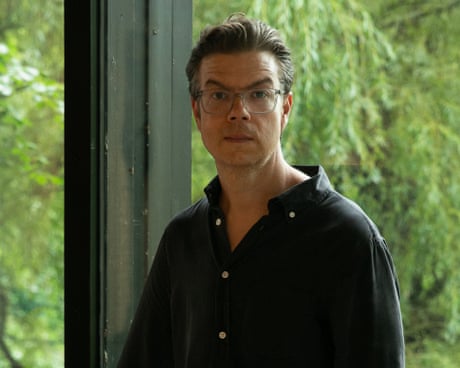
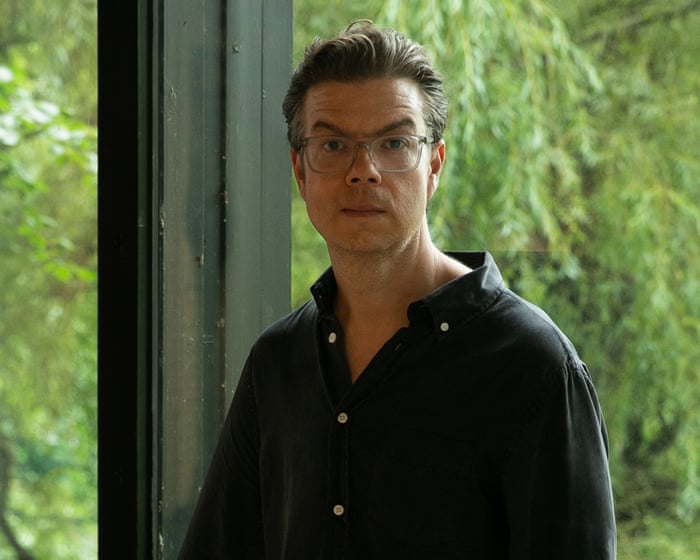
The Mystery of What Befell in the Ditch by Thure Erik Lund review – is this the greatest living Norwegian writer?

Translated into English at last, this portrait of a man appalled by modernity and desperate to get back to nature is brimming with Nordic weltschmerz

T-O-M. The initials of Tomas Olsen Myrbråten, the narrator in Thure Erik Lund’s The Mystery of What Befell in the Ditch, spell out the Norwegian word for “empty”. Approaching 38, he’s already a relic. He spends his days slumped at the kitchen table or staring out of the window, convinced that the ceiling is about to fall and crush him. He sobs about the state he’s in and the state of society around him. Of one thing he’s sure: “It is no longer me who cries, but the world, the world crying, in me.” Nordic weltschmerz: you’d have to be a saint not to giggle.

Lund has been described by Karl Ove Knausgård as the “greatest Norwegian contemporary writer”; this novel, originally published in 1999, is his first to be translated into English. In it, Tomas describes himself, over and over and over again, as a “life-of-the-mind individual”. Cursed as much as blessed, life-of-the mind individuals have a keen and unconsoling sense of how things are (“one is a wretched, contemptible, and unworthy being”) and how things will end for them (“in the sewers of society, at nature’s nadir, incessantly ground down into the mud and the mire so that one day, millions of years from now, they become oil, life-of-the-mind oil, at the very bottom of life itself”). Is he making fun of himself? In 2026, he seems closer to an eco-prophet.

Continue reading...
© Photograph: Niklas Lello
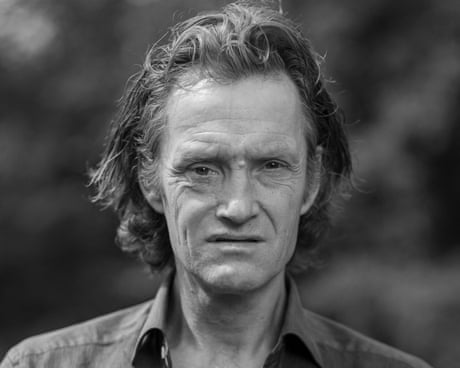
© Photograph: Niklas Lello
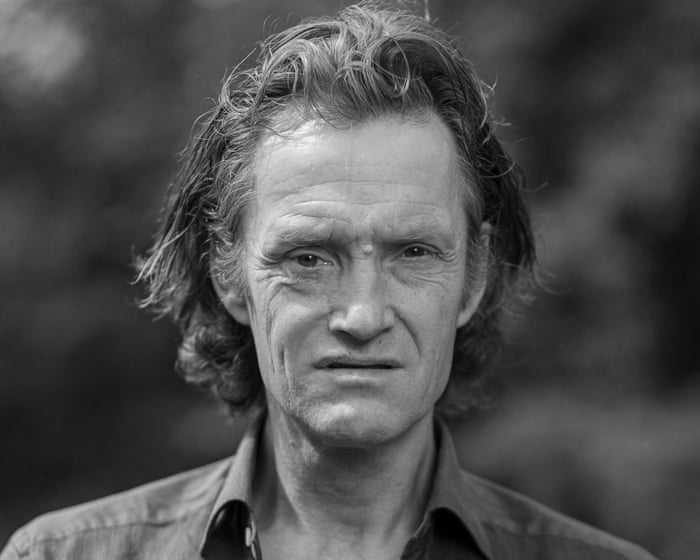
© Photograph: Niklas Lello

  •  

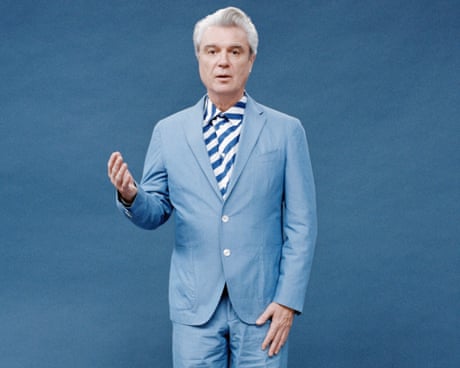
Sleeping Beauties by David Byrne review – a quirky journey through the afterlife of invention

The Talking Heads frontman considers dormant ideas that made a comeback – from Indian irrigation to Kafka

There’s barely been a moment in  the last half-century when David Byrne hasn’t been zinging about, dancing forward, opting odd. The art-school dropout frontman of Talking Heads, he moved sideways into ballet, dance and experimental theatre, collaborated on the proto-ambient LP My Life in the Bush of Ghosts with his fellow polymath Brian Eno, directed films, wrote musicals (on – of course – Imelda Marcos), co-founded a label (Luaka Bop) that introduced the likes of Os Mutantes and William Onyeabor to a new generation, brought out books of tree drawings, and designed bicycle racks.

Byrne’s career – by most measures a remarkably successful one – has been built from code-switching, fidgety intelligence, stylistic infidelity. At first glance then, it’s surprising that Sleeping Beauties is devoted to failure – to artists who were ignored, laughed at, forgotten; to ideas deemed batty or heretical; to ways of thinking about the world – sustaining it, replenishing it – that, often for political reasons, were found wanting, and wiped from our collective memory banks. Sleeping beauties is (of course) a term he first encountered in an academic paper by Leiden University scientometrics professor Ton van Raan. That was in 2004: this book, like a lot of the ideas and energies it animates, needed time to ferment.

Continue reading...

© Photograph: Jody Rogac

© Photograph: Jody Rogac

© Photograph: Jody Rogac

  •  

Dèy by Edwidge Danticat review – motherhood and trauma in Miami

The first novel in over a decade from the acclaimed Haitian-American author lacks the power of earlier works

Dèy, Edwidge Danticat’s first novel in over a decade, begins with a bang. Magnolia, the daughter of Haitian parents now shopping for a birthday present for her own daughter, hears gunfire, maybe bombs, in a Miami mall. A killer is on the loose – a young man high on hate, the author of online screeds about how “our country is under attack”, obsessed by cane toads who’ve been coming in from the Amazon basin. As she scrambles to the floor of a restaurant called Oasis, surrounded by dozens of diners playing dead, a man asks, “Is this a mass grave?”

Things have always been tough for Magnolia. Her mother chases pigeons by day, sleepwalks at night, is on and off lithium. Her father worked for many years as a bus driver in Brooklyn, saving every cent so he could buy a nice retirement home back in Haiti. She was brought up by an “aunt” whose family had been killed by goons employed by Haiti’s dictator-in-chief Papa Doc Duvalier. Later she gets to college, where “school was my refuge”.

Continue reading...

© Photograph: Slaven Vlašić/Getty Images

© Photograph: Slaven Vlašić/Getty Images

© Photograph: Slaven Vlašić/Getty Images

  •  

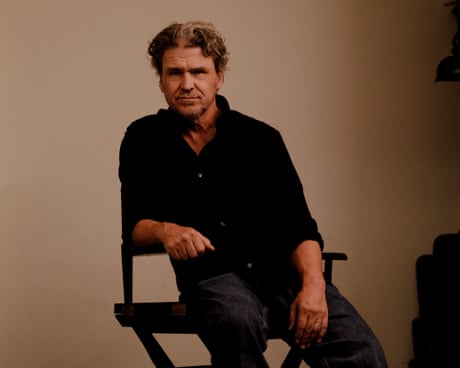
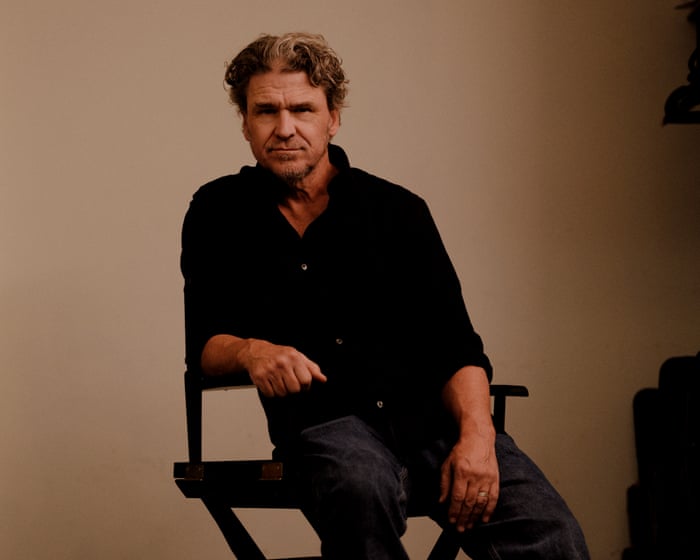
Contrapposto by Dave Eggers review – this portrait of an artist falls flat

The story of a lifelong friendship between two art-world mavericks from the working-class midwest is disappointingly pious

Dave Eggers, the author of more than a dozen novels as well as a steady stream of children’s and nonfiction books, grew up wanting to be an artist.As a child he took lessons with a Japanese watercolourist, studied painting at college, worked as a magazine cartoonist and illustrator, even curated a New York show entitled Lots of Things Like This featuring pieces by Jean-Michel Basquiat and Marcel Duchamp. He is soon to open a project in San Francisco that he has been hatching for a decade – Art + Water, an amalgam of art school, affordable studios, exhibition galleries and local gathering point.

Cricket Dibb, the cloyingly named hero of Contrapposto, would love a place like Art + Water. He’s 10 years old, a working-class midwestern kid who passes raccoons and broken tractors on his way to school. His stepfather, Robert, thinks nothing of beating his mother, calling her “a gimpy whore”, stealing any money she’s saved. Cricket hates him, not least on aesthetic grounds – “his ugly gold watch, his mouth full of black fillings, his bony bald head, his pockmarked face, his tiny black eyes”. Cricket’s life is erratic, his future unpromising. His grandfather, though, spots him drawing: “You can produce beauty there in your notebooks, from scratch. And harmony. Chaos outside, order on your paper.”

Continue reading...

© Photograph: Benedict Evans/The Guardian

© Photograph: Benedict Evans/The Guardian

© Photograph: Benedict Evans/The Guardian

  •  

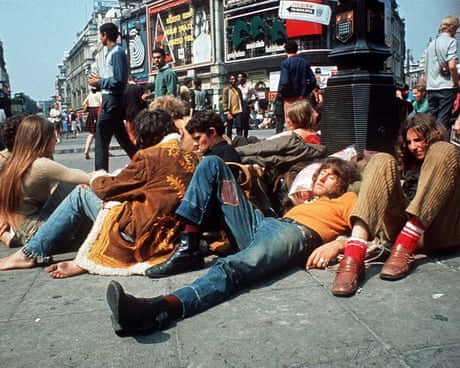
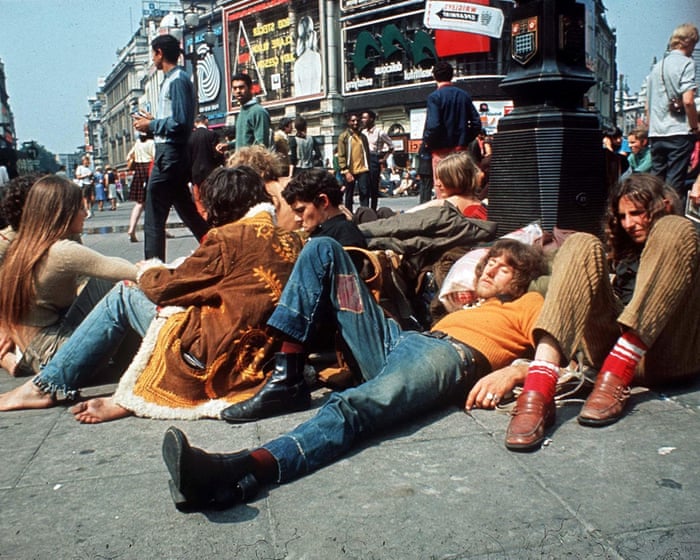
International Freak by M Syd Rosen review – the British Timothy Leary

Robin Farquharson was a prize-winning game theorist, anti-apartheid activist and countercultural chaos merchant

Even as an undergraduate, Robin Farquharson was famous for being erratic. He provoked anxiety and goodwill in equal measure. His aim in life, according to an anonymous writer in an Oxford student newspaper, was “to become a contradiction in terms. Since last October, he has been cutting friends in the street; sleeping alternate nights in mysterious George Street garrets and obscure collegiate crypts.” The profile described his soul as “dogged, indomitable” and “fierce, incompatible”. Maybe. Later to become a prize-winning game theorist often hailed as a genius, he died aged just 42 in a squat fire on April Fools’ Day 1973. The poet Aidan Andrew Dun called him an “outsider among outsiders … a luminous ruin of a man”. For anti-psychiatrist RD Laing, he was “very intelligent and totally out of his fucking mind”.

Farquharson once joked he had been born a member of the master race in South Africa. He wasn’t entirely wrong. His father had founded a distinguished law firm in Pretoria; high-up politicians would regularly come over for dinner. He attended elite private schools – future pupils included the novelist Wilbur Smith and Elon Musk – and got himself a pilot’s licence even before, barely 16, he entered university. Later at Oxford he studied PPE, befriended Bertrand Russell and Rupert Murdoch (a self-declared Marxist at the time), and shared digs with future chancellor of the exchequer Nigel Lawson. Intellectually he was regarded as high-wattage but, about to land a starry All Souls College fellowship, he wrecked his chances by phoning the college warden to tell him he had a message from God he needed to share.

Continue reading...

© Photograph: Shutterstock

© Photograph: Shutterstock

© Photograph: Shutterstock

  •  

Ghost Stories by Siri Hustvedt review – life after Paul Auster

What’s it like to lose your partner of more than 40 years? The novelist and essayist reflects on going from ‘we’ to ‘I’

It wasn’t quite Beatlemania, but, at the height of Paul Auster’s fame in the 1980s and 90s, screaming fans clambered on to the hood of a car after a reading in Buenos Aires. Admirers mobbed him at bookshop events in Paris, the city where he had once eked out a living translating French literature. He was offered big money to make ads promoting American beef to Japan. He was hailed as a rock god, a literary superstar, a postmodernist with leading-man looks.

Little of this is of much consequence or consolation to novelist and essayist Siri Hustvedt who, before he died of cancer in 2024, had been married to Auster for more than 40 years. As she tells it in Ghost Stories, her memoir of their life together, she was a tall blond PhD student in a jumpsuit when she met him – “a beautiful man in a black leather jacket” – at a poetry reading. He was separated from the mother of his child, living alone in a gloomy Brooklyn apartment, yet to publish anything of substance. Literature bound them: he was just 15 when he decided his future was in writing; she had come to the same insight at an even younger age.

Continue reading...

© Photograph: IBL/REX/Shutterstock

© Photograph: IBL/REX/Shutterstock

© Photograph: IBL/REX/Shutterstock

  •  

Transcription by Ben Lerner review – a stunning exploration of technology and storytelling

Ranging from quantum mechanics to eating disorders to the nature of fiction, this is a breathtaking interrogation of family, connection and memory

Transcription ends with an epilogue. It’s a letter, or at least an extract from a letter, written by Leopold Blaschka, a 19th-century Bohemia-born artist who, with his son Rudolf, crafted intricate and breathtakingly realistic models of flowers, plants and sea creatures made out of glass. So astounding was their technique, so uncanny, that sceptics assumed they must be using secret devices. “It is not so,” he insisted. “We have the touch. My son Rudolf has more than I have because he is my son and the touch increases in every generation.” Until this point, Blaschka hasn’t been referenced by name even once. But here, in coda form, is the essence of Transcription, a novel about touch, devices and familial inheritances that is itself intricate, uncanny, sometimes breathtakingly realistic.

It begins with a middle-aged American narrator travelling to Providence, Rhode Island, home to Brown University, where Ben Lerner studied poetry and political theory as an undergraduate. He is there to conduct a magazine interview with a polymathic German intellectual named Thomas. No ordinary assignment: Thomas was his mentor at college, the father of his friend Max, and now, at the age of 90, this conversation is expected to be his last will and testament. At the hotel, bathos strikes – the narrator drops his smartphone in a sink; it’s unusable and he’s too embarrassed to confess. Thomas soon gets into his conversational stride, but his rich sentences go unrecorded.

Continue reading...

© Photograph: Beowulf Sheehan

© Photograph: Beowulf Sheehan

© Photograph: Beowulf Sheehan

  •  

Love Magic Power Danger Bliss by Paul Morley review – Yoko Ono before the Beatles

A vivid celebration of the artist covers her childhood and breakthrough in New York – while sidelining ‘that other business’

John Lennon once described Yoko Ono as “the world’s most famous unknown artist. Everybody knows her name, but nobody knows what she does.” Others were more vicious, portraying her as a family wrecker (the family being the Beatles), a cultural vandal, an Asian virus, a shrieking harridan. As ventriloquised by Paul Morley in his appallingly titled Love Magic Power Danger Bliss, they saw her as someone whose “sole reason to be on the planet was to drive them up the wall with her lack of talent and decency”. Or, only slightly more generously, a “disorganised diva channelling the assumed genius of male creators”.

Morley’s book focuses on Ono’s life and art before she ran into Lennon at London’s Indica Gallery in 1966. The Beatles he refers to as “that other business”. His Ono is headstrong, questing. Born in 1933, into a wealthy banking family (her schoolmates included the sons of Emperor Hirohito), she survived the firebombing of Tokyo and took refuge in the country where she and her mother, now virtual beggars, were mocked by locals. Later, she would become the first woman to be accepted into the prestigious Gakushuin University philosophy department. She left early, just as she would also leave Sarah Lawrence College in upstate New York after two terms.

Continue reading...

© Photograph: Derek Hudson/Getty Images

© Photograph: Derek Hudson/Getty Images

© Photograph: Derek Hudson/Getty Images

  •  

On Censorship by Ai Weiwei review – are we losing the battle for free speech?

China isn’t the only country imposing limits on creative expression, argues the provocative artist

‘Chinese culture is the opposite of provocation,” Ai Weiwei once told an interviewer. “It tries to seek harmony in human nature and society.” Harmony has never been his bag. Provocation though? In spades. As a student at the Beijing Film Academy in the late 1970s, he joined an artist group called Stars that had a slogan: “We Demand Political Democracy and Artistic Freedom”. In the 1990s, returning to Beijing after a decade in downtown New York, he and a couple of friends published and distributed samizdat-style books devoted to off-piste, often-political art of the kind that government censors tend to fear.

Ai’s own work was bolshie and anathema to custodians of good taste. His Study of Perspective series showed him raising a middle finger at global sites – among them Tiananmen Square, the Eiffel Tower, the White House – that are expected to produce awe, delight, reverence. In the self-explanatory photographic sequence Dropping a Han Dynasty Urn (1995), itself the follow-up to Han Jar Overpainted with Coca-Cola Logo (1994), he asked viewers to decide who was the bigger cultural vandal: himself, a mere artist – or a Chinese state for whom iconoclasm was a defining feature of its modernising project. A 2000 exhibition in Shanghai that he helped to stage bore the name Fuck Off. (Its Chinese subtitle was “Ways to Not Cooperate’”.)

Continue reading...

© Photograph: Elliott Franks/eyevine

© Photograph: Elliott Franks/eyevine

© Photograph: Elliott Franks/eyevine

  •  
❌