❌

Lese-Ansicht

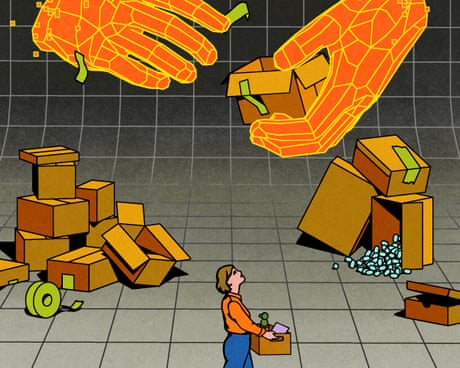
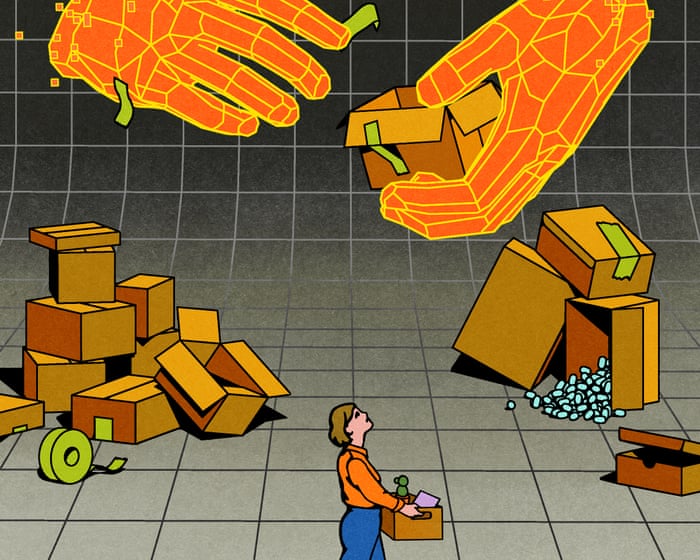
AI was supposed to destroy jobs. Where’s the carnage?

The AI jobs apocalypse never showed up. Still, jobs are changing and economists expect more to come

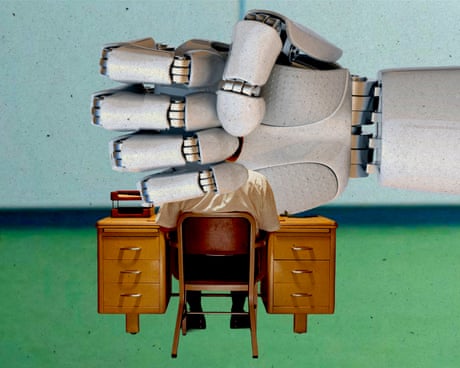
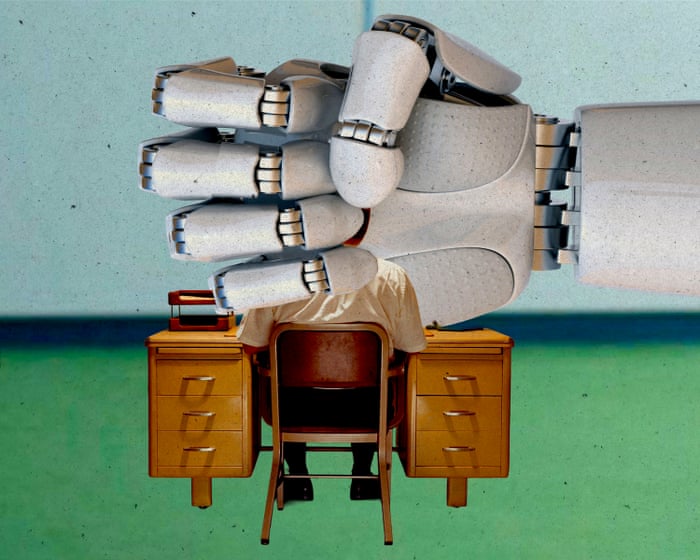
The prediction was stark: artificial intelligence advancements would wipe out jobs en masse. “Half” of all entry-level white collar jobs would vanish, Anthropic’s CEO, Dario Amodei, said in May 2025. A month later, OpenAI’s CEO, Sam Altman, went further, foreseeing the end of “certain job categories”. Companies began citing AI in their layoffs. Workers organized. And students reconsidered their future careers.

But a year later, the mass carnage hasn’t shown up.

Continue reading...

© Composite: Rita Liu/The Guardian/Getty Images
© Composite: Rita Liu/The Guardian/Getty Images
© Composite: Rita Liu/The Guardian/Getty Images


  •  

Chasing new skills, going back to basics and pushing for collective action: how software engineers are adapting to AI

Software engineering was one of the best-paying professions in the US in 2022, but the advent of AI has disrupted it, leading to several layoffs and underemployment

Every weekday, Matt, a software engineer, looks forward to his four-hour train commute to Pawling, New York. It’s time he uses to work on his own project: a browser-based video game for which he writes every line of code himself.

“I am actively trying to keep my axe sharp,” said Matt, who did not want to use his actual name, to protect his employment. In the last six months, Matt’s job has increasingly shifted away from coding, problem solving and software architecture towards reviewing code generated by artificial intelligence. Convinced that the shift will weaken his skills, he’s doing what he can to keep them intact. “I am trying not to leverage AI where I can.”

Continue reading...

© Photograph: Leah Nash/The Guardian

© Photograph: Leah Nash/The Guardian

© Photograph: Leah Nash/The Guardian

  •  

Amazon is determined to use AI for everything – even when it slows down work

Corporate employees said Amazon’s race to roll out AI is leading to surveillance, slop and ‘more work for everyone’.

When Dina, a software developer based in New York, joined Amazon two years ago, her job was to write code. Now, it’s mostly fixing what artificial intelligence breaks.

The internal AI tool she’s expected to use, called Kiro, frequently hallucinates and generates flawed code, she says. Then she has to dig through and correct the sloppy code it creates, or just revert all changes and start again. She says it feels like “trying to AI my way out of a problem that AI caused”.

Continue reading...

© Illustration: Félix Decombat/The Guardian

© Illustration: Félix Decombat/The Guardian

© Illustration: Félix Decombat/The Guardian

  •  

Her husband wanted to use ChatGPT to create sustainable housing. Then it took over his life.

Kate Fox says Joe Ceccanti was the ‘most hopeful person’ before he started spending 12 hours a day with a chatbot

On 7 August, Kate Fox received a phone call that upended her life. A medical examiner said that her husband, Joe Ceccanti – who had been missing for several hours – had jumped from a railway overpass and died. He was 48.

Fox couldn’t believe it. Ceccanti had no history of depression, she said, nor was he suicidal – he was the “most hopeful person” she had ever known. In fact, according to the witness accounts shared with Fox later, just before Ceccanti jumped, he smiled and yelled: “I’m great!” to the rail yard attendants below when they asked him if he was OK.

Continue reading...

© Photograph: Clayton Cotterell/The Guardian

© Photograph: Clayton Cotterell/The Guardian

© Photograph: Clayton Cotterell/The Guardian

  •  

Meet the AI workers who tell their friends and family to stay away from AI

When the people making AI seem trustworthy are the ones who trust it the least, it shows that incentives for speed are overtaking safety, experts say

Krista Pawloski remembers the single defining moment that shaped her opinion on the ethics of artificial intelligence. As an AI worker on Amazon Mechanical Turk – a marketplace that allows companies to hire workers to perform tasks like entering data or matching an AI prompt with its output – Pawloski spends her time moderating and assessing the quality of AI-generated text, images and videos, as well as some factchecking.

Roughly two years ago, while working from home at her dining room table, she took up a job designating tweets as racist or not. When she was presented with a tweet that read “Listen to that mooncricket sing”, she almost clicked on the “no” button before deciding to check the meaning of the word “mooncricket”, which, to her surprise, was a racial slur against Black Americans.

Continue reading...

© Illustration: Rita Liu/The Guardian

© Illustration: Rita Liu/The Guardian

© Illustration: Rita Liu/The Guardian

  •  
❌