❌

Lese-Ansicht

‘I’d consider replacing one of my children’: Taika Waititi on robot kids, his cheese-o-meter and Klara and the Sun

The director has turned Kazuo Ishiguro’s acclaimed novel about an ailing adolescent and her glitchy robot friend into a thought-provoking film. What do the pair think this story says about tech, love and grief?

In the wings of the London film festival, a group of young influencers are discussing their personal highlights. Klara and the Sun, says one, and her colleagues agree. It’s not just that the film is still so fresh in their memory, or that they have gathered today to meet its creators and stars. Klara is funny and moving; it’s their festival favourite so far. I relay this exchange to Taika Waititi, the film’s director, who is sipping bottled water in a room down the hall. His gaze widens. He almost chokes. “Thank God!” he exclaims with just a bit too much heat.

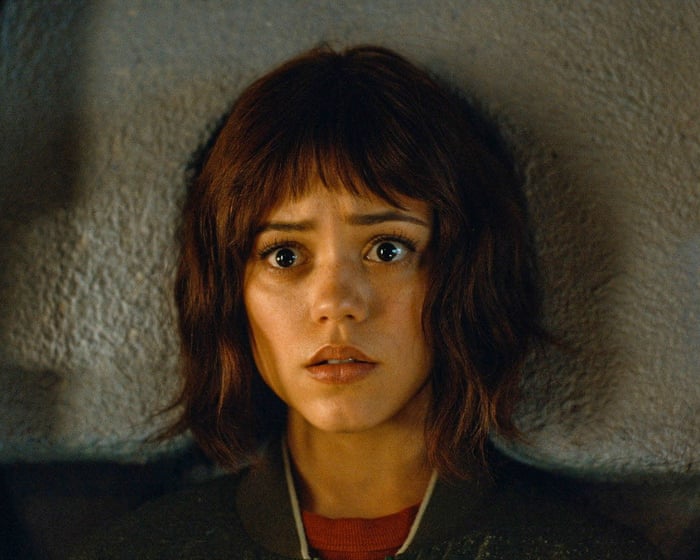
Everybody has a perfect film, just as everybody has a perfect friend, and they vary because everybody is different. In the film, sick 14-year-old Josie loves her discontinued robot doll Klara, whereas most kids her age opt for brighter, shinier models. And the young influencers love Klara and the Sun – Waititi’s adaptation of Kazuo Ishiguro’s acclaimed novel – while most older critics vehemently, violently disagree. All of which shows that there’s no accounting for taste, that people are confounding, and that our hearts and our brains are not always in sync. That keeps life interesting. It’s partly what the film is about. “The emotions that we give very simple labels to are really complex,” says Ishiguro, who is seated alongside the director. “The thing we call love, for example, is incredibly noisy and multifaceted. Nobody knows what the hell love is.”

Continue reading...

© Photograph: No credit
© Photograph: No credit
© Photograph: No credit

  •  

‘To succeed meant to leave’: inside the jolting film about Brummie estate kids knocked flying by demolition

The novel had no hero, no dialogue and little action. So how was I See Buildings Fall Like Lightning turned into such a funny, rousing and acclaimed film? Director Clio Barnard reveals all

As a kid in 90s Birmingham, Keiran Goddard would gather with his friends to watch the tower blocks coming down. That’s what passed for entertainment back then. Controlled explosions, collapsing buildings. The demolition of the city’s postwar council estates marked the end of one story and the start of another. It was a dust-blown display of regeneration and progress. The housing that replaced it would be an improvement. The people of east Birmingham would move on to better lives.

Goddard, specifically, moved on to study English at Oxford University. He now lives in London and writes books for a living. Physically, he has left his home town far behind. Emotionally and spiritually, not so much. “So I feel quite splintered,” he says. “I’m not sure anyone ever really leaves the world they grew up in.”

Continue reading...

© Photograph: Chris Harris

© Photograph: Chris Harris

© Photograph: Chris Harris

  •  

The Steps by Sylvester Stallone review – the inside story of Rocky

The star takes us back to 70s New York to recount his breakthrough, and it’s a great yarn – but it’s laced with anger

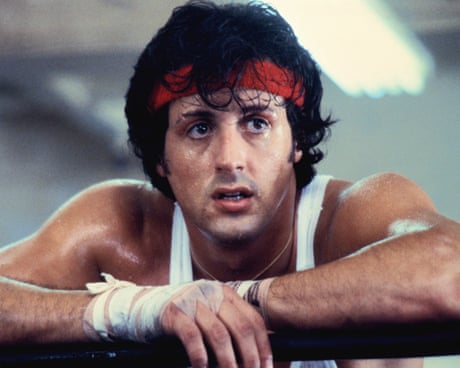
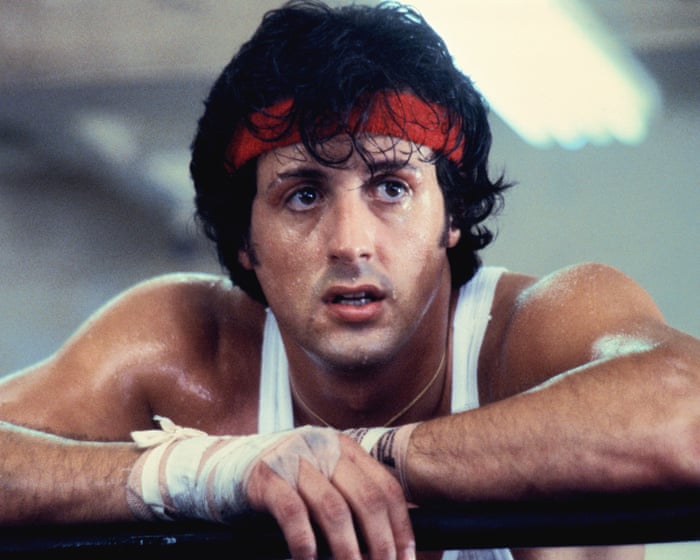
The Philadelphia Museum of Art contains a 14th-century Buddhist temple, a one-acre sculpture garden and works by Picasso, Renoir and Van Gogh. Its most famous attraction, however, is a flight of stone steps that draws several million tourists every year. These are the so-called “Rocky Steps”, immortalised by Sylvester Stallone in his 1976 movie about an underdog boxer who needs to build up his strength. The climb is a lung-busting challenge, but if unremarkable Rocky can sprint all the way to the top, he gives hope and encouragement to everyone down below.

It’s not just the fans who relate to Rocky Balboa. So too does Stallone, whose entertaining rags-to-riches memoir paints the creator and his creation as all but indivisible, each an extension of the other. Stallone was flat broke and beaten down when he wrote his film about “the forgotten man”, the blue-collar schlub with a good heart and firm chin. Everyone knows that Rocky is being set up as a fall guy. He can’t possibly defeat Apollo Creed, the dazzling, charismatic, undefeated heavyweight champion of the world. Except that Rocky doesn’t care, he only wants to be seen, and in scripting an unlikely redemptive arc for his hero, Stallone wound up transforming his own fortunes as well.

Continue reading...

© Photograph: Sunset Boulevard/Corbis/Getty Images

© Photograph: Sunset Boulevard/Corbis/Getty Images

© Photograph: Sunset Boulevard/Corbis/Getty Images

  •  

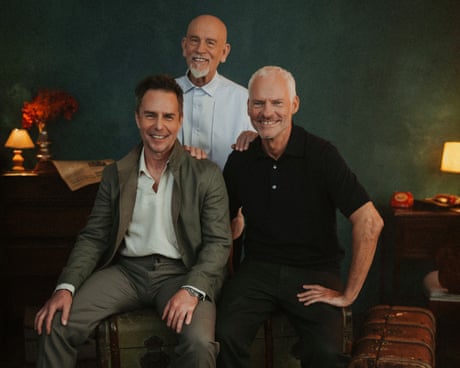
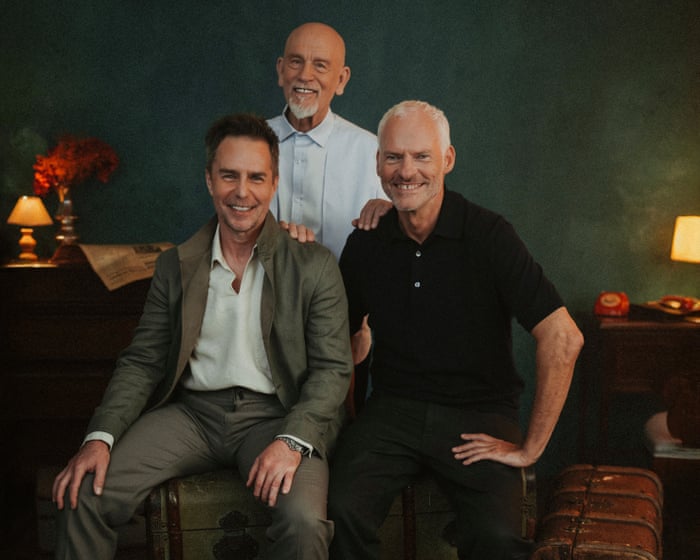
‘Old-timey fascism was kept secret. Now you don’t have to hide it’: Martin McDonagh, John Malkovich and Sam Rockwell on Wild Horse Nine

McDonagh’s latest film has Malkovich and Rockwell shooting the breeze as CIA agents in 1973 on Easter Island. They discuss grandchildren, swimming with turtles and who shot JFK

‘Earmuffs!” says Sam Rockwell, pausing his gushing tribute mid-flow and turning to face John Malkovich on the couch. Rockwell loves Malkovich and has been discussing his work at some length. Malkovich, he says, is charismatic and dangerous, half masculine, half feminine; a unique combination and the perfect sparring partner. He’s one of the world’s finest actors and annoyingly modest to boot. “Earmuffs!” says Rockwell and pivots back towards me. “He hates hearing all this. That’s why I keep saying ‘earmuffs’.”

Malkovich frowns. “I don’t mind it,” he says.

Continue reading...

© Photograph: Giulia Parmigiani

© Photograph: Giulia Parmigiani

© Photograph: Giulia Parmigiani

  •  

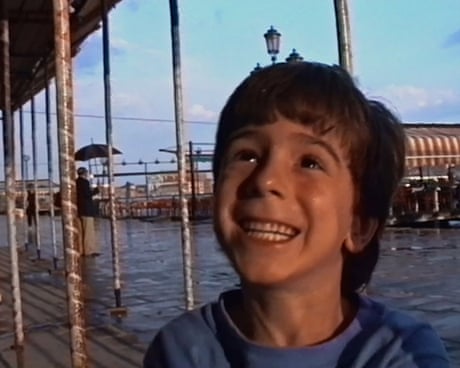
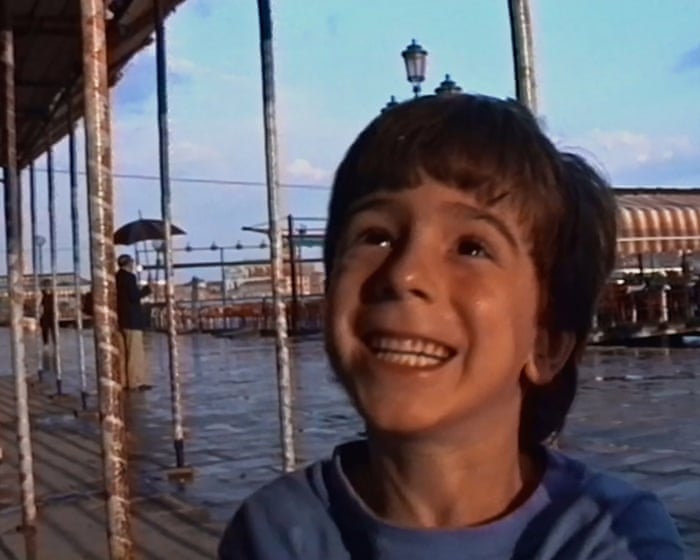
‘I look at the footage to convince myself that you were alive’: how Ross McElwee made a film about unimaginable loss, grief and guilt

When his son died aged 27, the director could barely bring himself to watch his old clips of the boy. When at last he did, it was the genesis of an extraordinary project

Ross McElwee is the film-maker who spun home movies into art, framing himself and his friends and his son Adrian. The director used to film Adrian for a few minutes each month. He tracked the kid from infancy to adulthood, trying to catch the significant turns of his life. When tragedy struck it back-shadowed the footage. Maybe every home movie is a ghost story at heart.

It feels crass to compliment McElwee on his latest documentary, Remake, because it isn’t the picture he’d ever have chosen to make. It is instead a grief-struck tour-de-force: a magnificent film about film-making and its real-world repercussions. McElwee filmed Adrian because he loved him, but now fears he might have hurt him. So he sifts through the material in search of clues, addressing his son as though he’s still in the room. “I look at the footage to convince myself that you were alive,” he says. “But also to convince myself that you’re gone.”

Continue reading...

© Photograph: Giant Squid Films

© Photograph: Giant Squid Films

© Photograph: Giant Squid Films

  •  

Extended reality takes visitors from the ruins of West Bank to 17th-century Amsterdam at Venice Immersive

From frivolous to serious, virtual nosy passersby to the impact of climate change, the groundbreaking festival draws to a close – but this year the exhibits live on

The first installation one encounters on visiting Venice Immersive, the film festival’s reliably head-spinning showcase for new media, is a chest-high metal box fitted with an eyepiece and two speakers. On peering inside you see a view of yourself from about 20ft above. You see the other guests walking past, a couple of pigeons on the ground. When one of these passersby lingers at your side for just a moment too long, the obvious impulse is to glance up from the eyepiece in order to see what they want. It is at this point that the experience blooms into a Lynchian nightmare.

The passerby is not real – or rather, he’s only real in the box. He wears a blue suit and speaks with a heavy French accent and tells a tale that would sit badly in polite company. He says that I must have too much time on my hands, to stand hunched over this eyepiece for several minutes on end. “Why do people keep looking inside this box?” he demands. “What is it that they hope to see? It is not reality.”

Continue reading...

© Photograph: Courtesy Venice Film Festival

© Photograph: Courtesy Venice Film Festival

© Photograph: Courtesy Venice Film Festival

  •  

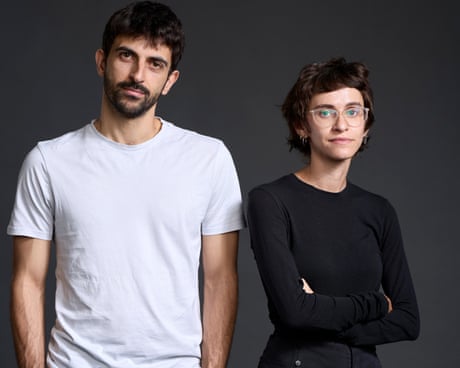
‘They know the house they are bombing is full of children’: NAZA’s directors on their devastating film about Israeli intelligence

Rachel Szor and Yuval Abraham collected the testimony of 24 insiders who helped remotely target Gazans’ homes. They explain how they got these self-professed ‘small cogs’ to talk about the killing

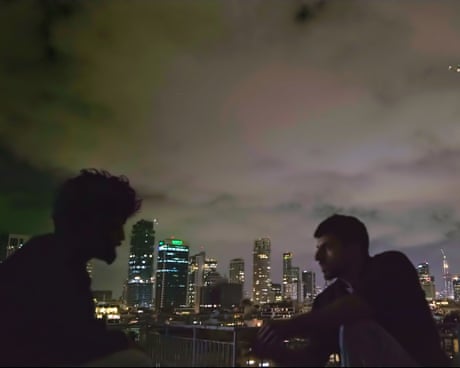
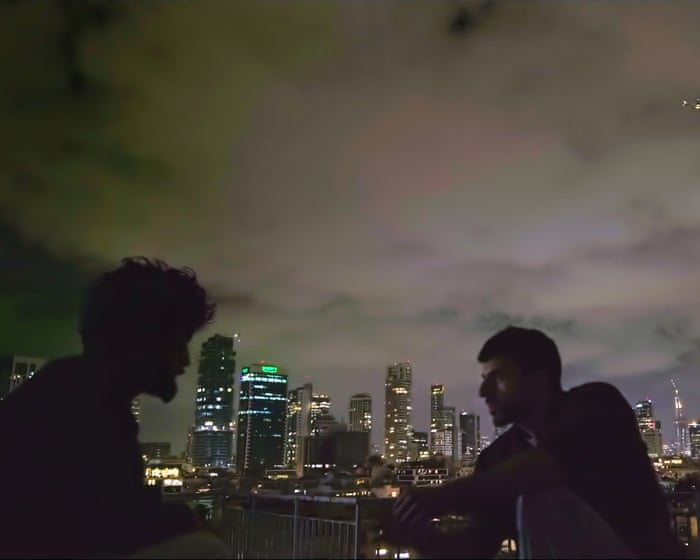
On a darkened rooftop in Tel Aviv, Israeli intelligence officers outline the details of their work. These men tell us how they helped develop an AI mapping tool that trawled for phone signals and recommended apartment buildings in Gaza to bomb. Indirectly, they admit, they are responsible for thousands of deaths, but they never spoke up because that wasn’t their place. “My role is technical,” says one. “I’m just a small cog,” says another.

NAZA – directed by the Israeli film-makers Rachel Szor and Yuval Abraham and produced by the Guardian – is a chilling documentary about a mass slaughter that was authorised at the highest levels of government. But it is also, primarily, about the process, the system, the little links in the killing chain. Szor and Abraham build their film around the accounts of 24 anonymised military and intelligence insiders. NAZA, we learn, is an acronym used by the intelligence service to indicate how many civilians it expects to die in an airstrike on Gaza. The Israel Defense Forces prefer to target Hamas terrorists in their homes at night – and if they live with their family, or in heavily populated neighbourhoods, too bad. At one point, a source claims, approval was given to kill 500 NAZA for one Hamas member.

Continue reading...

© Photograph: David Levene/The Guardian

© Photograph: David Levene/The Guardian

© Photograph: David Levene/The Guardian

  •  

Secret systems used by Israel in mass killings of Gaza civilians revealed in new film

Testimony from Israeli military insiders involved in surveillance and remote killings features in documentary produced by the Guardian

Testimony from 24 Israeli military insiders ​on the secret ​systems used in ​the war on Gaza​ has been revealed in a new documentary film about the mass killing of Palestinian civilians.

NAZA, a film from the Oscar-winning Israeli directors Yuval Abraham and Rachel Szor, was shown at the Venice international film festival on Thursday as the only documentary competing for its prestigious Golden Lion award.

Continue reading...

© Photograph: The Guardian

© Photograph: The Guardian

© Photograph: The Guardian

  •  

The Fire Within You review – overheated family Christmas boils up too many stereotypes

Venice film festival: Edoardo De Angelis’s claustrophobic drama brings a raging mother up from Naples for the holidays, with a capon. What could possibly not go wrong?


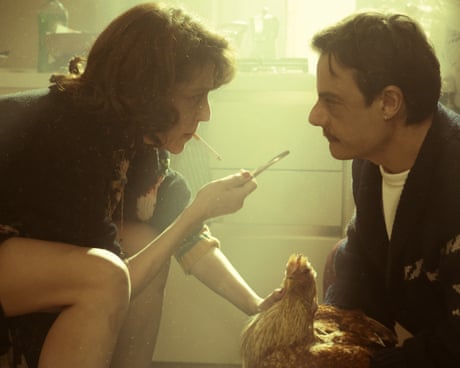
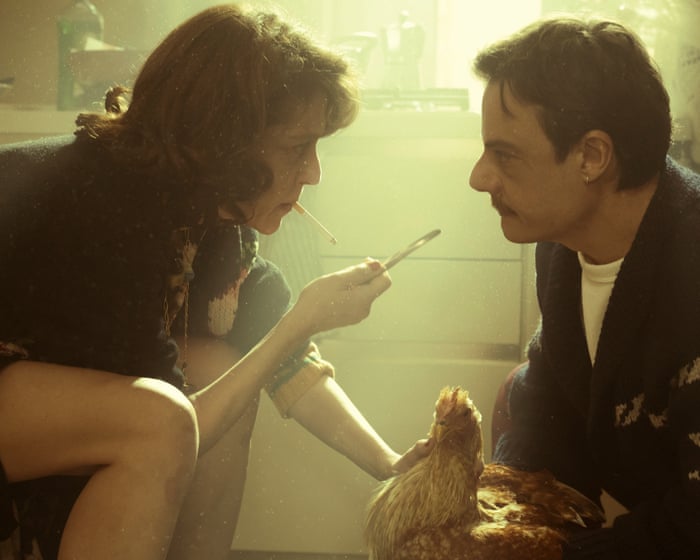
If there were a Golden Lion award for the most Italian film in Venice competition it would go to Edoardo De Angelis’s squawking domestic spat of a picture which contains an imperious matriarch, a pained Catholic priest, an argumentative family, and food, so much food. Bowls are stirred and pans are brandished. Pots are seen rattling angrily on the stove. The festival organisers like to deploy a little judicious home cooking when it comes to the selection and De Angelis is already a favoured guest, having opened the 2023 event with his war drama Comandante. But I fear they may have miscalculated with this one. It’s overdone, on the turn and too liberally salted with tears. It’s liable to provoke the occasional stab of heartburn.

At the head of the table sits the incorrigible Angela (Vanessa Scalera). She’s up from Naples (where she was presumably once a girl from the backstreets, begging in rags) to supervise Christmas Eve dinner at her son’s book-lined apartment in Milan. Angela’s a relic of the old world, breezily unreconstructed and openly disgusted by the woke state of her grandchildren. “One’s a gay dancer and the other’s a vegetarian,” she scoffs. They in turn are perturbed by the fact that she has brought in a live chicken to be cooked as the main course. Who’s going to catch it? Who’s going to kill it? What even is this creature, exactly? “It’s not a hen, it’s a capon,” sighs middle-aged Anto (Lino Musella), who dearly wishes his mother had never come at all. She’s a beautiful woman, he says, but she smells.

Continue reading...

© Photograph: Anna Camerlingo

© Photograph: Anna Camerlingo

© Photograph: Anna Camerlingo

  •  

Union Town review – passionate exposé of US delivery workers’ employment conditions

Venice film festival: Barbara Kopple returns with her third film investigating US workers’ rights – this time, undocumented ‘deliveristas’ and the attempts to unionise Amazon staff

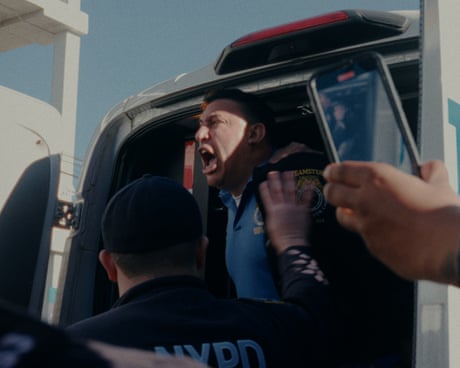
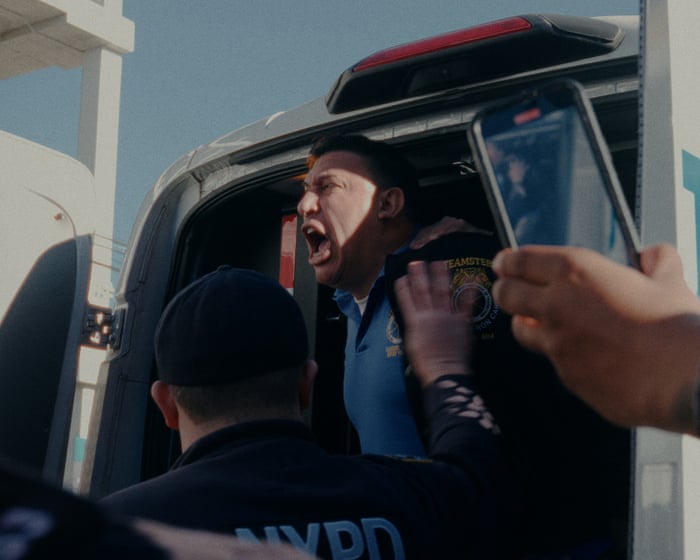
Barbara Kopple’s documentary about app-based delivery workers is a stirring, defiant, battle-hardened affair, swinging between the fraught picket line and the still more hazardous New York City streets. It’s a new film that feels old in the best sense of the word; a hoarse battle cry that summons the ghosts of The Grapes of Wrath and the New Deal, Eugene Debs and Woody Guthrie. That America is long dead and buried, a casualty of changing times, but Kopple sees no reason why it should not rise again.

Union Town, tellingly, is the third part of a loose trilogy which serves as an ongoing audit of US workers’ rights. This began with 1976’s Harlan County, USA, which tackled a Kentucky miners’ strike, and continued through 1990’s American Dream, which covered a meatpacking plant in Austin, Minnesota. Since then, however, the culture has shifted, atomised, with the big corporations increasingly reliant on a shadow economy of undocumented workers. Kopple’s “deliveristas” ferry packages for the likes of Amazon and DoorDash but they are technically third-party contractors. That means if, say, they happen to be injured in the line of duty, they cover the hospital bills and repairs to the bike. It also means that they are likely to be fired while they’re laid up in bed.

Continue reading...

© Photograph: Hannes Hosp/Cabin Creek Films

© Photograph: Hannes Hosp/Cabin Creek Films

© Photograph: Hannes Hosp/Cabin Creek Films

  •  

Company review – Casey Affleck entertains us with creepy campfire tales

Venice film festival: Affleck’s third film as a director is a diverting gothic anthology about mysterious strangers, murder and – pointedly – wronged men

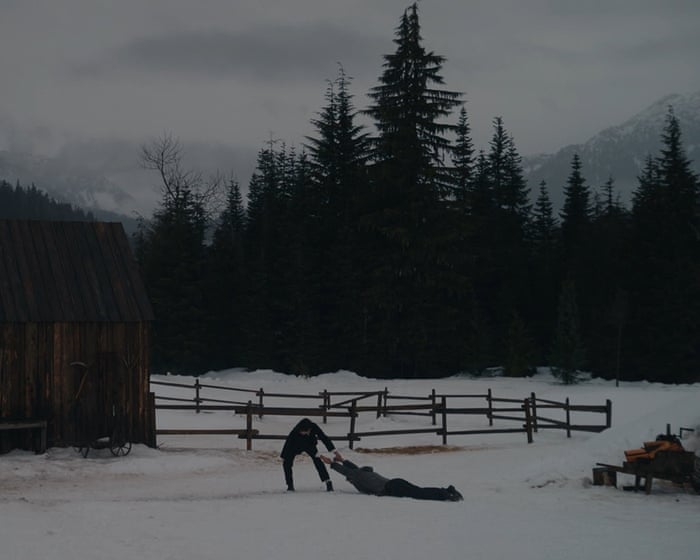
Gather ye ’round the glowing screen for a Casey Affleck campfire tale. It contains superstitions and murder and human oddities of all stripes. An old hermit in his shack. Something nasty in the woodshed. If you like the first tale, fill your boots, settle back, because here comes another and another; each sparked by the embers of its neighbour and playing out with the same deliberately theatrical panache. Affleck’s picture roams and rambles like a creepy cracker-barrel Jackanory.


Actually there is much to relish in Company, Affleck’s third film as a director, even if many of its elements feel like off-the-peg eccentricities; a little too laundered and self-consciously strange. It begins in tried and tested fashion with the arrival of a mysterious stranger on a dark winter’s night. The stranger takes a seat and spins a tale, at which point December 1975 melts into 1953, then 1903, before finally the film crosses the ocean to Europe at the tail end of the plague. Nick Nolte is a hermit pining for his lost daughter, while Ben Mendelsohn plays a mean, mordant farmer who reaches for his handgun too readily. Both men, one suspects, are destined for a bloody end.

Continue reading...

© Photograph: Courtesy of Company

© Photograph: Courtesy of Company

© Photograph: Courtesy of Company

  •  

‘Many of us in Israel live in a state of shock at the savagery’: veteran director Amos Gitai returns to Gaza

The writer-director once called Israel’s ‘one-man New Wave’ is in Venice with The Road to Jericho, a new and poetic attempt to highlight the plight of those in the occupied West Bank

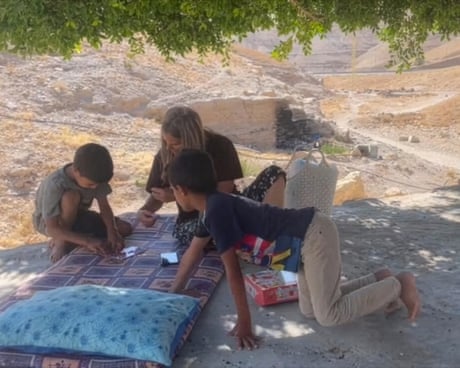
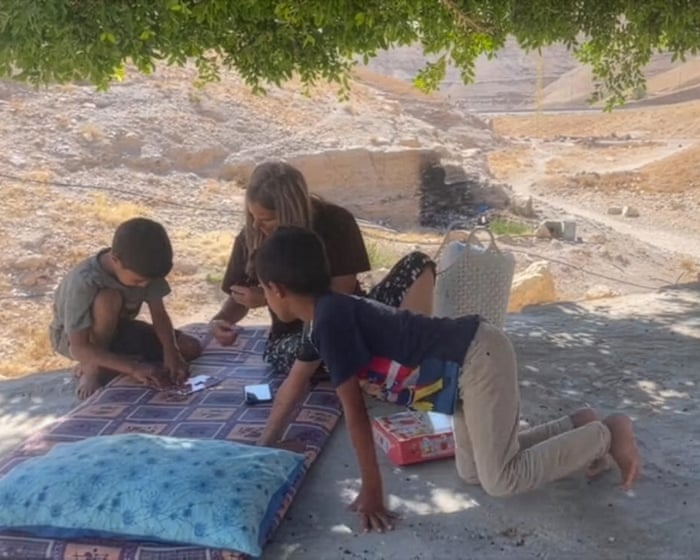
The Palestinian village of Khan al-Ahmar sits off dust-blown Highway-1, between Jerusalem and Jericho in the Israeli-occupied West Bank. At the village centre is the “school of tires”, a fragile construction of rubber, wood and adobe which is attended by around 300 Bedouin boys and girls. The Israeli authorities denied the villagers an official building permit and ruled that the entire settlement is illegal. For the past eight years the school has been operating under threat of imminent demolition, a symbol of resistance to widespread settler violence.

It is only international pressure, says the veteran Israeli writer-director Amos Gitai, that has kept the place upright and still open. “The school has become a litmus paper. It is a test of how far the international community will go [to protect the rights of the people of Khan al-Ahmar]. For once, on this issue, Europe stood up and said no.” As for the future, who can tell?

Continue reading...

© Photograph: Courtesy Venice Film Festival

© Photograph: Courtesy Venice Film Festival

© Photograph: Courtesy Venice Film Festival

  •  

Falling House review – fierce tale of an Iranian prison guard holding his family hostage

Venice film festival: Mohsen Gharaei’s powerfully acted domestic drama watches as the failing patriarch attempts to contain family rebellion

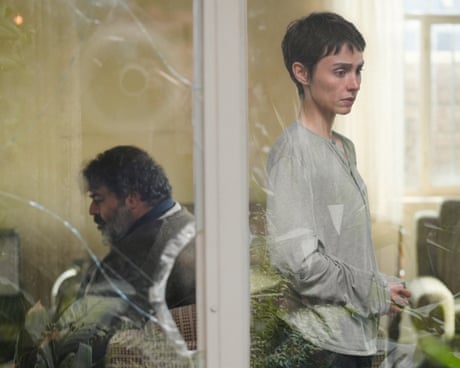
Iran is a prison and everybody is inside: cons and non-cons; parents and their children. That’s the message hammered home, never subtly but with terrific force and conviction, throughout the course of Mohsen Gharaei’s hothouse domestic drama, which plays in the Orizzonti section in Venice. It’s about a low-level jailer, crushed by life, who returns from the day job and proceeds to incarcerate his own family. He does so out of love and to reassert his authority, to protect his wife and kids from the world and from their own foolish notions. For him, it’s a bone-headed busman’s holiday. For his family, it’s a nightmarish tragicomic staycation.

Veteran Iranian actor Farhad Aslani is perfectly cast as Rashid Hafizhi, Gharaei’s misguided prison guard. Rashid is a burly bear of a man who nonetheless carries an air of bewilderment and defeat, as though he’s smart enough to know that everyone in the vicinity is just that little bit smarter than him. He’s been falsely accused of aiding and abetting a jailbreak and is facing imminent eviction from his rented family home. Then, just when it seems his day can’t get any worse, Rashid learns that his cherished eldest daughter, Ensi (Laleh Marzban), is planning to run off to seek work as a model in Turkey. Modelling in Iran is a non-starter, she explains. Ensi has to cover her arms and neck for each job, while the power supply is so unstable and the lights have a tendency to cut out in the middle of a photoshoot.

Continue reading...

© Photograph: @mehdidelkhasteh

© Photograph: @mehdidelkhasteh

© Photograph: @mehdidelkhasteh

  •  

‘He was always a bit of a groundbreaker’: David Bowie enters a new dimension in ‘extended reality’ documentary

Hundreds of unseen images of the star feature at the Venice film festival, alongside virtual worlds exploring wildfires, wolves and the birth of stars

David Bowie shares the bill with starmen, firefighters and Walt Disney wolves at the 10th anniversary edition of Venice Immersive, the film festival’s pioneering showcase for new forms of storytelling. David Bowie: Unseen Unheard – a 3D documentary featuring hundreds of previously unseen images – is among 69 XR (extended reality) pieces playing at the event’s regular base on Lazzaretto Vecchio, a repurposed small island off the Venice Lido.

Venice Immersive’s 10th birthday marks a milestone for an event which aims to provide a bridge between emergent technology and traditional narrative cinema. But the programme’s organisers are at pains to emphasise the ongoing scope of a project that has in recent years prompted similar sections at the Cannes, Geneva and Toronto film festivals. “This is not a retrospective,” declares the official festival blurb that welcomes guests to the island. It almost sounds like a warning.

Continue reading...

© Photograph: Courtesy Venice Film Festival

© Photograph: Courtesy Venice Film Festival

© Photograph: Courtesy Venice Film Festival

  •  

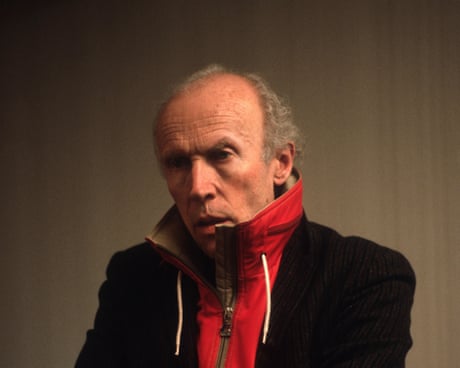
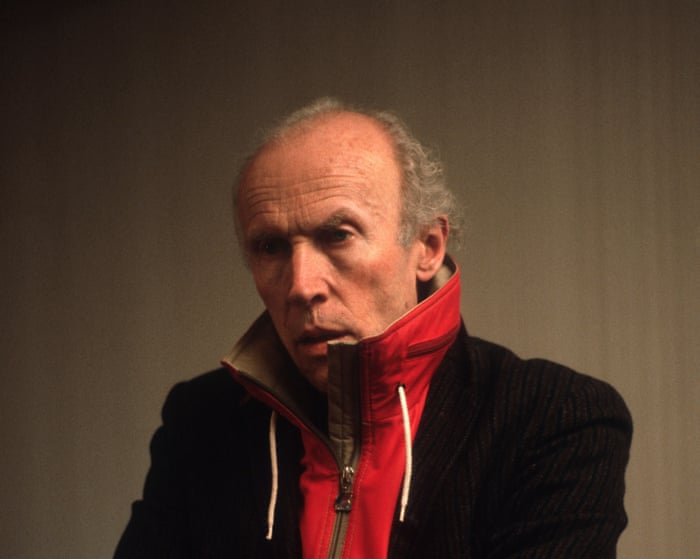
‘Embryonic’: lost novel by French film-maker Éric Rohmer is republished

English translation of Élisabeth, the New Wave director’s 1946 book about young lovers in prewar Paris, receives rave reviews as precursor to auteur’s cinematic work

In the dog days of the second world war, 24-year-old Maurice Schérer wrote a tale of young lovers in prewar small-town France. He described lazy August swims in the Marne River east of Paris. He wrote about age-gap affairs and semi-incestuous flirtations. Schérer gallantly used a nom de plume, Gilbert Cordier, to shield his Catholic family from scandal, but he needn’t have bothered as his concerns were unfounded. The finished novel, Élisabeth, barely made a ripple and quickly slipped out of print. Undeterred, Scherer adopted a second pseudonym – Éric Rohmer – and decided to try his luck as a film-maker instead.

Now – eight decades on from its first publication, 16 years on from its author’s death – Élisabeth belatedly returns from the cold. Republished in an English-language translation by Aaron Kerner, Rohmer’s book has been greeted with glowing reviews, hailed as a lost modernist classic and a crucial origin story for the award-winning director of Claire’s Knee, The Green Ray and My Night at Maud’s. “It would be a rewarding, exciting read even if the identity of its author were unfamiliar,” wrote Richard Brody in the New Yorker. The fact that it’s by Rohmer? That’s the icing on the cake.

Continue reading...

© Photograph: Photo 12/Photo12/Universal Images Group/Getty Images

© Photograph: Photo 12/Photo12/Universal Images Group/Getty Images

© Photograph: Photo 12/Photo12/Universal Images Group/Getty Images

  •  

Hazy sunshine, factor-50 smiles and Cliff Richard at the wheel: the 20 best summer holiday movies – ranked!

From feelgood romances to heated interactions, here are the films that best capture the seasonal moment

Let’s begin at the end. 2 September 1962: the final night of the summer vacation; one last big blowout before adult life intervenes. George Lucas’s rambunctious salute to footloose youth paints vivid vignettes of Modesto, California, rocking around the clock with its loose-knit gaggle of characters. But this has one eye on the meter and knows that time is running short.

Continue reading...

© Photograph: TCD/Prod.DB/Alamy

© Photograph: TCD/Prod.DB/Alamy

© Photograph: TCD/Prod.DB/Alamy

  •  

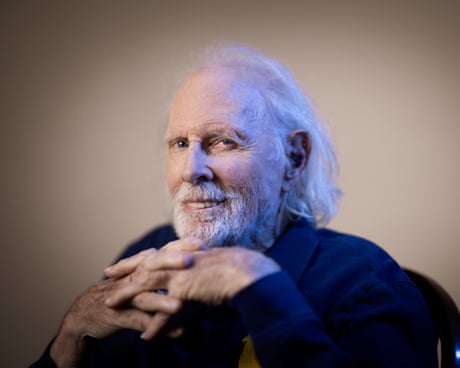
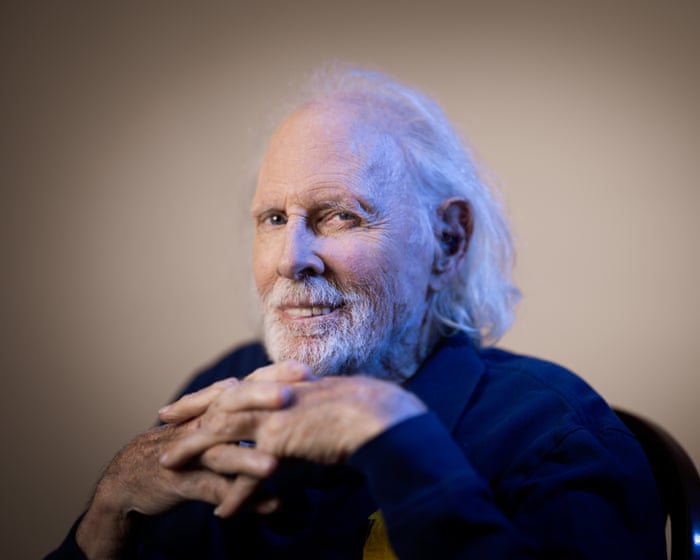
‘I turned down Gandhi because I’m terrified of snakes’: the amazing movie memories of Bruce Dern

Famed for playing loners, cranks and wayward angels, the Hollywood star is now a wolfish 90 – but he still jogs daily. As he takes his latest film to Edinburgh, we meet the man Hitchcock called ‘the golden calf’

‘Can you take another story?” asks the veteran actor Bruce Dern towards the end of our talk, as though every tale is a drink and the landlord has called last orders. He doesn’t want to keep me and knows we’re running out of time. It’s just that one memory sparks another and these tales won’t tell themselves. He says that the next one is a doozy. “It’s about Marilyn Monroe.”

Throw out all the questions and turn the clocks to the wall. One does not interview Dern so much as say hello, hit record and sit back. The man began his career acting alongside Montgomery Clift and Mary Astor and has collaborated with everyone from John Wayne to Tom Hanks, Hitchcock to Tarantino. He’s the lawless survivor of American movies, blown in from the past, and talking 19 to the dozen. “I’m 90 fucking years old,” he tells me. “So I’m not going to be around to see all this AI shit or whatever. But I don’t consider myself old. I still walk and jog every day.”

Continue reading...

© Photograph: Christina House/Contour RA by Getty Images

© Photograph: Christina House/Contour RA by Getty Images

© Photograph: Christina House/Contour RA by Getty Images

  •  

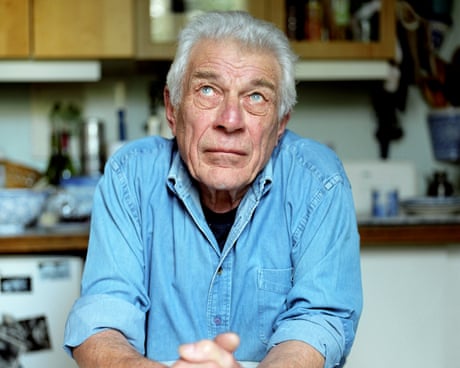
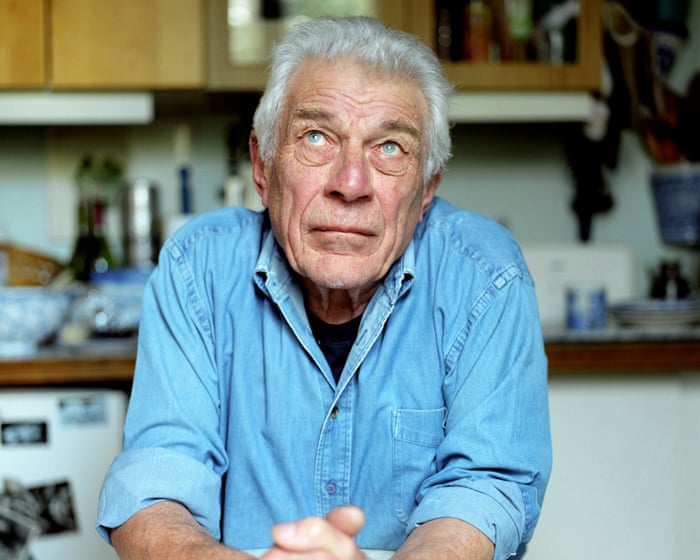
John Berger: From Life by Tom Overton review – a vibrant biography of the pioneering critic

This multi-layered portrait is a fitting tribute to the man behind Ways of Seeing

The cultural critic John Berger was still alive and kicking when he donated his literary archive – heaped boxes of letters and notepads, sketches and scripts – to the British Library in 2009. From his home in the Alps, he proceeded to liaise with the collection’s curator, Tom Overton, sorting each item and recounting the wild stories behind them. When Overton sought permission to write Berger’s biography, though, the critic insisted that he wait a few years. Death changes the relationship between the writer and his subject. More often than not, it complicates and enriches it. Berger – who spent much of his career in passionate conversation with the past – probably knew that better than anyone.

Berger typically described himself as a storyteller, an elastic job title which allowed him to swing between fiction and poetry, essays and screenplays. Implicitly, too, the term helped frame his criticism as something propulsive and inclusive, an invitation to dance as opposed to a judgment from on high. Berger had no time for the “great man” theory of art as espoused by the popular historian Kenneth Clark and instead urged his audience to view each piece as a manifestation of society and politics: the tainted fruit of capitalism, inseparable from the marketplace. Oil paintings were status symbols. Nudes were the product of the lusty male gaze. Looking itself was a political act. “You cannot reply to me,” he would tell 1970s TV viewers, breaking the fourth wall to highlight the medium’s limitations. He liked pointing out the mechanics behind the manufacture of art, demystifying the process to better appreciate its results.

Continue reading...

© Photograph: Franck Courtes/CAMERA PRESS/Agence VU

© Photograph: Franck Courtes/CAMERA PRESS/Agence VU

© Photograph: Franck Courtes/CAMERA PRESS/Agence VU

  •  

Cool Machine by Colson Whitehead review – final part of the Harlem Trilogy is freewheeling fun

The grit and grandeur of 80s New York drive this rollicking story of an underground wheeler-dealer

In the summer of 1977 a bolt of lightning struck a substation on the Hudson River, knocking out power across New York City. Two nights of darkness sparked a wave of looting as Harlem and Bronx teenagers swiped high-end items from the downtown stores. They took speaker systems and turntables to experiment with at home. They taught themselves how to scratch and mix, and sang self-styled scat lyrics into stolen microphones. Hip-hop, according to urban legend, was the child of a lightning strike and a robbing spree.

It’s art from crime, thinks Ray Carney, the hardscrabble hero of Colson Whitehead’s rollicking Cool Machine, the final part of his Harlem Trilogy. Or possibly vice versa, given that the man dislikes rap music and nurses a sneaking affection for old-school smash-and-grab. For years Carney has led the sort of intrepid double life that would make Spider-Man proud, supplementing his furniture business on 125th Street with a lucrative sideline as an underworld fence. In his stealthy, dogged fashion, he helps facilitate a process he describes as “the churn”: the movement of stolen goods through New York. The churn fuels the economy and helps refresh the culture. It’s the city’s equivalent of an endocrine system.

Continue reading...

© Photograph: PR

© Photograph: PR

© Photograph: PR

  •  

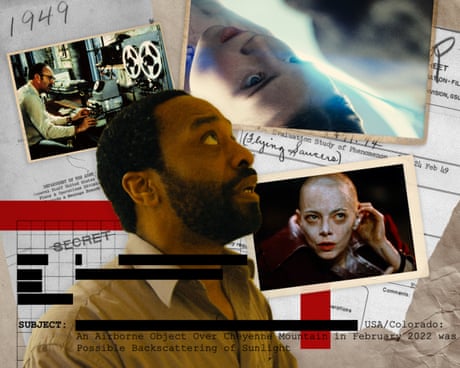
You can handle the truth! Why cinema suddenly loves conspiracy theories

From Disclosure Day to Backrooms, a new wave of films promote stories of paranoia, alienation and mistrust. What are they trying to tell us?

Thank heavens for cinema, that light in the darkness and the source of all shocking scoops. It tells us to wake up and take action before it’s too late. That we live in the Matrix. That the CIA killed JFK. That our spouse is a robot and our boss an Andromedan. Also that there is an Escher-style staircase beneath the Tokyo subway and a disembodied zombie leg stalking the hook-up parks of Brazil.

How might we react if a trusted friend said all this? Would we be entertained or appalled, enlightened or freaked out? Would we even regard them as a trusted friend any more?

Continue reading...

© Composite: Guardian Design; PR; FlixPix/Alamy; AP; PARAMOUNT; U.S. Department of War

© Composite: Guardian Design; PR; FlixPix/Alamy; AP; PARAMOUNT; U.S. Department of War

© Composite: Guardian Design; PR; FlixPix/Alamy; AP; PARAMOUNT; U.S. Department of War

  •  
❌