Japan’s spot power prices surged at the weekend, with elevated fuel costs driving rates in major electricity-consuming regions Tokyo and Chubu to multi-year highs.
Nippon Steel Corp. will spend $3 billion building a hot-strip mill in Pennsylvania, part of its $11 billion investment plan in newly-acquired US Steel.
European Energy Exchange AG is in talks with Australian power traders about launching futures products in the volatile market as the bourse looks to expand its presence in the Asia-Pacific region.
The approaching tropical cyclone Dujuan could cause suspensions and delays on train lines in the greater Tokyo area, with possible disruptions from as early as Sunday evening through Tuesday morning, major operator East Japan Railway Co. warned.
Power futures are becoming an increasingly popular tool for Japanese companies to manage risk arising from fuel-price volatility, with the number of short-term contracts traded on the nation’s biggest platform rising for four straight months.
Chubu Electric Co. and Tokyo Electric Power Co. shares fell after the Japanese utilities said their quarterly earnings were impacted by surging fuel costs, which coincided with the end of a power supply agreement.
Tokyo is planning to expand its financial support to Japanese companies investing in pipeline projects overseas including the Middle East, as part of efforts to strengthen alternative oil and gas transportation routes in the Gulf region to bypass the Strait of Hormuz.
Japan’s spot power price climbed to a six-week high as rising temperatures in the capital city lifted consumption, while renewed disruptions to shipping through the Strait of Hormuz drove up fuel costs.
The Japanese government is expected to call for “appropriate” monetary management in its basic policy guidelines, according to a document seen by Bloomberg, in an apparent bid to dissuade the Bank of Japan from further interest rate hikes.
The Bank of Japan (BOJ) headquarters in Tokyo, Japan, on Tuesday, April 28, 2026. The Bank of Japan left its benchmark interest rate unchanged in a split vote that increased the likelihood of a hike in June and pushed the yen higher. Photographer: Toru Hanai/Bloomberg
Japan is planning to replace up to 14 nuclear reactors by the 2050s, as it looks to meet rising power demand at home and cope with increasing geopolitical risks abroad.
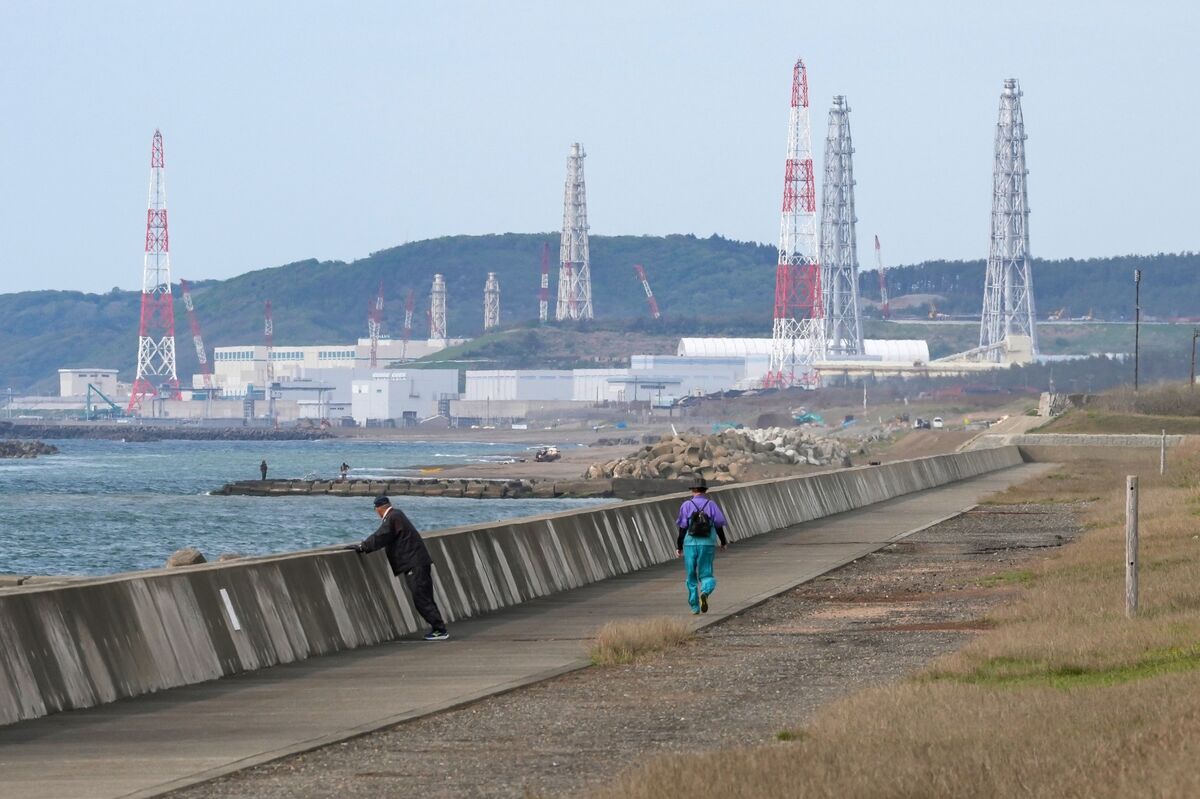
Kashiwazaki Kariwa nuclear power station in Kashiwazaki, Niigata Prefecture. Photographer: Toru Hanai/Bloomberg
The incoming chairman of Tokyo Electric Power Co. said he is open to forming alliances with companies outside of Japan as the nation’s largest utility seeks to restructure its operations and fund the massive cost of cleaning up the Fukushima nuclear disaster.
A Tokyo Electric Power Co. (Tepco) logo. Photographer: Tomohiro Ohsumi/Bloomberg
Japan has launched an anti-dumping probe into imports of key steel products shipped from China, South Korea and Taiwan, adding to signs of trade stress in a sector suffering from global overcapacity.
A subsidiary of Japanese trading house Itochu Corp. will take over SunMed Group Holdings’ Japan sales operations, as the US medical equipment maker struggles to remain profitable in the country due to the weak yen and inflationary pressure.
The Itochu Corp. logo is displayed atop the company's headquarters in Tokyo, Japan, on Tuesday, Sept. 18, 2012. Itochu Corp. agreed to pay $1.69 billion in cash for two units of Dole Food Co., the world's biggest supplier of fresh fruit and vegetables, in its biggest acquisition outside industrial commodities. Photographer: Kiyoshi Ota
Japanese refiner Eneos Holdings Inc. agreed to purchase some of Chevron Corp.’s refining and retail assets across the Asia-Pacific for $2.17 billion in cash, significantly expanding its footprint across the region.
The Eneos Corp. Negishi oil refinery in Yokohama. Photographer: Soichiro Koriyama/Bloomberg
Japanese trading house Sojitz Corp. is looking to Southeast Asia and other regions as new potential sources of rare earths outside Australia, as it aims to boost output and diversify its supply chain of the highly sought-after materials.
Japan’s big five trading houses are set to benefit from war-related supply disruptions this year, with higher energy and metals prices driving stronger earnings.
The Onahama Smelting & Refining Co. plant in Iwaki City, Fukushima Prefecture, Japan.
China’s exports of rare-earth magnets and materials to Japan fell sharply in March, as souring relations between the Asian nations heighten concerns about a potential supply squeeze.
Japan’s Mitsui OSK Lines Ltd., one of the world’s largest shipping companies, said it would need to scrutinize details of a US-Iran ceasefire agreement and its implementation before allowing its vessels to test the Strait of Hormuz.
The Mitsui O.S.K. Lines Ltd. (MOL) Charisma container ship sails near the Yangshan Deepwater Port in Shanghai, China, on Friday, April 9, 2021. China is scheduled to release trade figures on April 13. Photographer: Qilai Shen/Bloomberg
 Anmelden