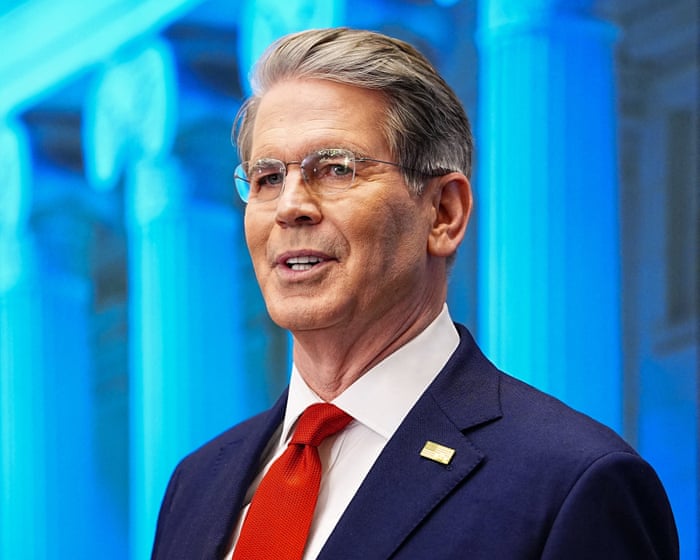
Brian Heywood, a Seattle-area hedge fund founder, has spent millions to put conservative initiatives in front of Washington lawmakers and voters. Next up: parental rights and transgender athletes.
“My intention with the initiatives always is to do as little intrusive damage as possible,” said Brian Heywood, a hedge fund founder using his wealth to bankroll ballot initiatives.
Board unwilling to accept hostile takeover despite $40bn guarantee from billionaire Larry Ellison
Warner Bros Discovery (WBD) has again told its shareholders to reject an “inadequate” $108.4bn (£80bn) hostile takeover bid by Paramount Skydance amid an extraordinary corporate battle to control the media conglomerate.
Paramount, controlled by the billionaire Ellison family, had sought to combat WBD’s criticism of its offer and claims it had “consistently misled” investors by saying it had a “full backstop” – a safety net to ensure it has sufficient funds – from the Ellisons.
High Pay Centre calculates bosses will pass milestone on third working day of 2026 with median pay of £1,353 an hour
The bosses of FTSE 100 companies will have made more money in 2026 before midday on Tuesday than the average worker will all year, according to figures laying bare the yawning income gap.
Median annual pay for FTSE 100 chief executives is £4.4m, the High Pay Centre thinktank calculated, 113 times higher than the £39,039 earned by the median full-time worker.
Agreement finalised by the OECD waters down a landmark 2021 deal that set a minimum global corporate tax of 15%
Nearly 150 countries have agreed on a landmark plan to stop large global companies shifting profits to low-tax jurisdictions, but the US will be exempt from the deal, angering tax transparency groups.
The plan, finalised by the Organisation for Economic Cooperation and Development, excludes large US-based multinational corporations from the 15% global minimum tax after negotiations between the Trump administration and other members of the G7.
Hailing app will now act as agent rather than supplier outside London, avoiding VAT requirement
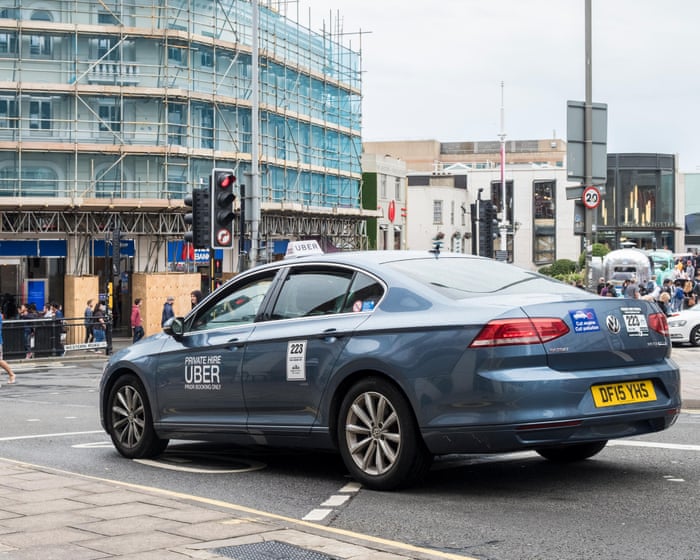
Uber has swerved paying millions of pounds to the UK exchequer under Rachel Reeves’s new “taxi tax” after the ride-hailing app rewrote contracts with its drivers.
The move came as rules announced in November’s budget took effect, which adjusted how VAT is payable on minicab fares and would have resulted in the whole Uber fare becoming subject to the 20% sales tax.
It was a bumper year for stock markets globally and the surprise, perhaps, is that the FTSE 100 index more than kept up. The London market has sometimes been derided as lacking dynamism – the hedge fund manager Paul Marshall called it the “Jurassic Park” of exchanges a few years ago – but its main index enjoyed its best 12 months since 2009. The Footsie didn’t quite make it to the round number of 10,000 but still improved by 21.5%, slightly outperforming the S&P 500 index in the US.
How did that happen amid weakening UK growth, pre-budget chaos and general gloom? The short answer is that a stock market index reflects only its constituent parts. It is not a symbol of national economic virility. That is especially true of the internationally flavoured Footsie, whose members make about three-quarters of their combined revenues overseas.
It is time to roll out the red carpet in recognition of those that worked hard to keep customers at arm’s length
When the year began, I was a listening ear to Your Problems, my column for the Observer. Now I’m a Guardian consumer champion. Reinvention is always bracing. My old life was spent wrestling airlines, insurance firms and energy providers intent on plundering readers’ piggy banks. My new life? Wrestling airlines, insurance firms and energy providers intent on plundering readers’ piggy banks.
It is a comfort in this era of seismic shifts to know some things remain constant. You can bank on energy firms to chill your marrow with billing psychodramas and phantom accounts. Meanwhile, certainty is still the business model of insurers: many would say you can be certain that if you damage your car, or yourself, your provider will look for a reason to stall over your claim.
Over the holiday period, the Guardian leader column is looking ahead at the themes of 2026. Today we look at how the struggle to adapt to a dangerously warming world has become a test of global justice
The record-breaking 252mph winds of Hurricane Melissa that devastated Caribbean islands at the end of October were made five times more likely by the climate crisis. Scorching wildfire weather in Spain and Portugal during the summer was made 40 times more likely, while June’s heatwave in England was made 100 times more likely.
Attribution science has made one thing clear: global heating is behind today’s extreme weather. That greenhouse gas emissions warmed the planet was understood. What can now be shown is that this warming produces record heatwaves and more violent storms with increasing frequency.
Do you have an opinion on the issues raised in this article? If you would like to submit a response of up to 300 words by email to be considered for publication in our letters section, please click here.
Senator Richard Blumenthal is requesting information from an architect hired to oversee the ballroom design and people invited to a donor dinner with the president.
From retailers to banks, carmakers to councils, the bold pledges for carbon-neutral economies are being watered down or scrapped
Almost a year since Donald Trump returned to the White House with a rallying cry to the fossil fuel industry to “drill baby, drill”, a backlash against net zero appears to be gathering momentum.
More companies have retreated from, or watered down, their pledges to cut carbon emissions, instead prioritising shareholder returns over climate action.
The huge sum shows that while the Koch network may not hold significant power at high levels of the Republican Party, it remains a financial juggernaut.
Charles Koch in 2019. The Koch family network now downplays its commitment to campaigns and elections, but it has continued to spend money on politics.
The main dark-money group backing Kamala Harris and Joe Biden raised a staggering $613 million last year, while its pro-Trump counterpart brought in $275 million, new filings show.
Both Donald J. Trump and Kamala Harris benefited heavily from so-called dark money in 2024, but Democrats leaned more on the practice of funneling money through nonprofit groups that do not have to disclose their donors.
An investigation by The Times found the administration’s change in enforcement benefited the industry, including companies that had ties to the president.
The dispute before the court involved a Republican effort to lift limits on how much money political parties can spend in coordination with candidates.
In 2010, in the landmark case Citizens United v. Federal Election Commission, the Supreme Court struck down legal limits on independent political spending by corporations and unions.
Many years ago, I was encouraged to put my name forward to chair a significant government board. It seemed like a long shot to me, I wasn’t in anyone’s club, but my supporters were insistent. I agreed to let my name go into the mix.
It was a surprise then when the chair of the selection committee called a few weeks later and said with an apologetic tone: “Sorry Julianne, it’s just not your turn.”
Julianne Schultz is deputy chair of the Sydney writers’ festival board
A Trump-aligned political group is quietly spending millions to help state Republicans have a friendlier House map in 2028 — not in 2026, as with all of his other redistricting efforts.
A Trump-aligned nonprofit group has put $4.35 million toward supporting a proposed ballot measure that would repeal Utah’s anti-gerrymandering law, potentially giving Republicans an extra House seat in 2028.
The former lieutenant governor is the best-known candidate in a crowded field, but some state Democrats have cooled on him since he lost a Senate bid in 2022.
Mandela Barnes, the former lieutenant governor of Wisconsin, is a progressive who has maintained a large fund-raising network since his 2022 Senate race.
Dawn Butler leads calls for humanitarian visas and fee waivers for vulnerable relatives of UK nationals affected by storm
British MPs have joined campaigners calling for more aid and humanitarian visas for Jamaicans to enter the UK after Hurricane Melissa demolished parts of the country, plunging hundreds of thousands of people into a humanitarian crisis.
The UK has pledged £7.5m emergency funds to Jamaica and other islands affected by the hurricane, but many argue that the country has a moral obligation to do more for former Caribbean colonies.
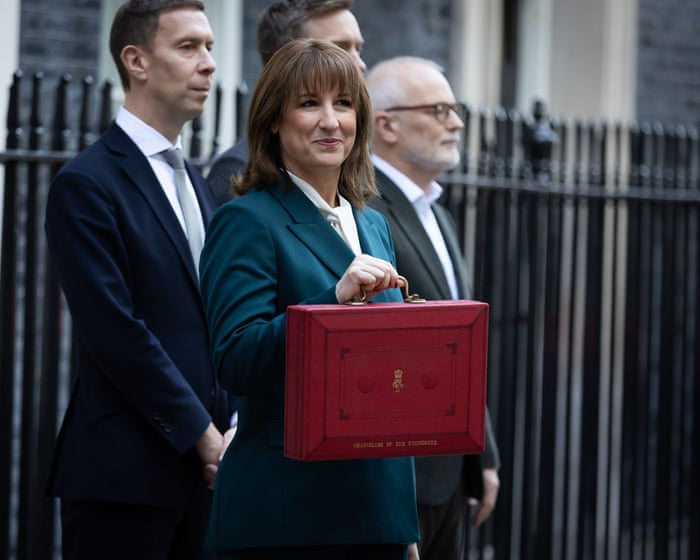
Rachel Reeves targeted Britain’s wealthiest households with a £26bn tax-raising budget to fund scrapping the two-child benefit policy and cutting energy bills.
On a chaotic day that involved key details of her budget accidentally being released early by the Office for Budget Responsibility (OBR), the chancellor defended the measures, saying she was “asking everyone to make a contribution to repair the public finances”, but that she wanted the wealthiest to pay the most.

 Anmelden