The region’s market for carbon permits is drawing attention from governments wary of voter backlash.
Emmanuel Macron, France's president, left, and Friedrich Merz, Germany's chancellor, arrive at an informal European Union (EU) leaders retreat at Alden Biesen Castle in Rijkhoven, Belgium, on Thursday, Feb. 12, 2026. EU leaders are to discuss ways to bolster the single market amid new geoeconomic challenges. Photographer: Simon Wohlfahrt/Bloomberg
European Union leaders are divided over the future of the bloc’s carbon market as they struggle to deliver on ambitious climate goals while also making sure energy costs don’t make domestic industrial companies less competitive globally.
German Chancellor Friedrich Merz said the European Union should be open to revising or postponing its carbon market if it doesn’t enable the industry shift to clean production.
Germany's Chancellor Friedrich Merz addresses the audience during the European Industry Summit in Antwerp on February 11, 2026.
The planned reform of the European Union’s carbon market should involve a slower annual pace of emissions reductions for industries from chemicals to cement, according to a member of the biggest political group in the bloc’s parliament.
The planned reform of the European Union’s carbon market should involve a slower annual pace of emissions reductions for industries from chemicals to cement, according to a member of the biggest political group in the bloc’s parliament.
Greece and Malta have emerged as the main obstacle to a European Union proposal to replace a Russian oil price cap with a ban on the services needed to ship the fuel.
Oil tankers and container ships off the coast of Athens. Photographer: Simon Dawson
The European Union is set to relax emissions-reduction rules for thousands of companies, recalibrating the world’s most rigorous carbon market under pressure from industry and governments concerned about the region’s sinking competitiveness.
The European Union is set to relax emissions-reduction rules for thousands of companies, recalibrating the world’s most rigorous carbon market under pressure from industry and governments concerned about the region’s sinking competitiveness.
The European Union is set to propose a swathe of new conditions to ensure local companies are prioritized when investment decisions are made in the region by member-states and foreign firms, upending a free-trade philosophy that has governed decades of policy.
Employees assemble Schwalbe electric scooters inside the Govecs AG factory in Wroclaw, Poland, on Tuesday, June 18, 2019. The original Schwalbe was made in the East German town of Suhl, 350 kilometers southwest of Berlin, but the factory site was contaminated from decades of weapons manufacturing.
The European Union is planning to ditch a controversial ban on combustion engine cars starting in 2035 after months of debate and pressure from the automotive industry.
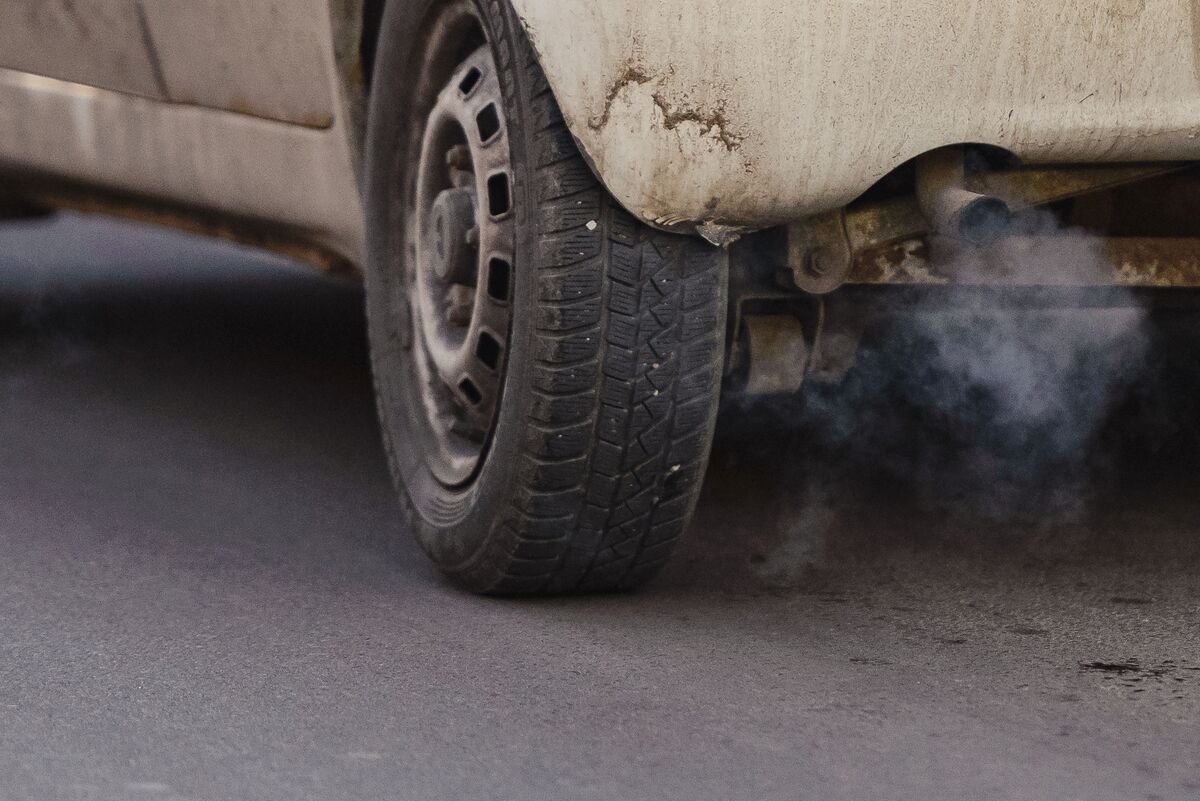
Fumes pump from the exhaust of a combustion engine automobile idling in traffic in Bucharest, Romania, on Thursday, Feb. 13, 2020. The weight of cars clogging Bucharest streets each day is robbing every driver of nine days and 11 hours of life per year, equivalent to the time it takes for Romania’s main auto exporter to make 15,600 cars. Photographer: Ioana Epure/Bloomberg
The European Union is set to propose softening emissions rules for new cars, scrapping an effective ban on combustion engines following months of pressure from the automotive industry.
Combustion engines on a Mercedes-Benz assembly line in Germany. Photographer: Michaela Handrek-Rehle/Bloomberg
The European Union plans to expand an incoming emissions charge on imported goods as part of efforts to strengthen a flagship climate policy that’s aimed at protecting the bloc’s industries during the green shift.
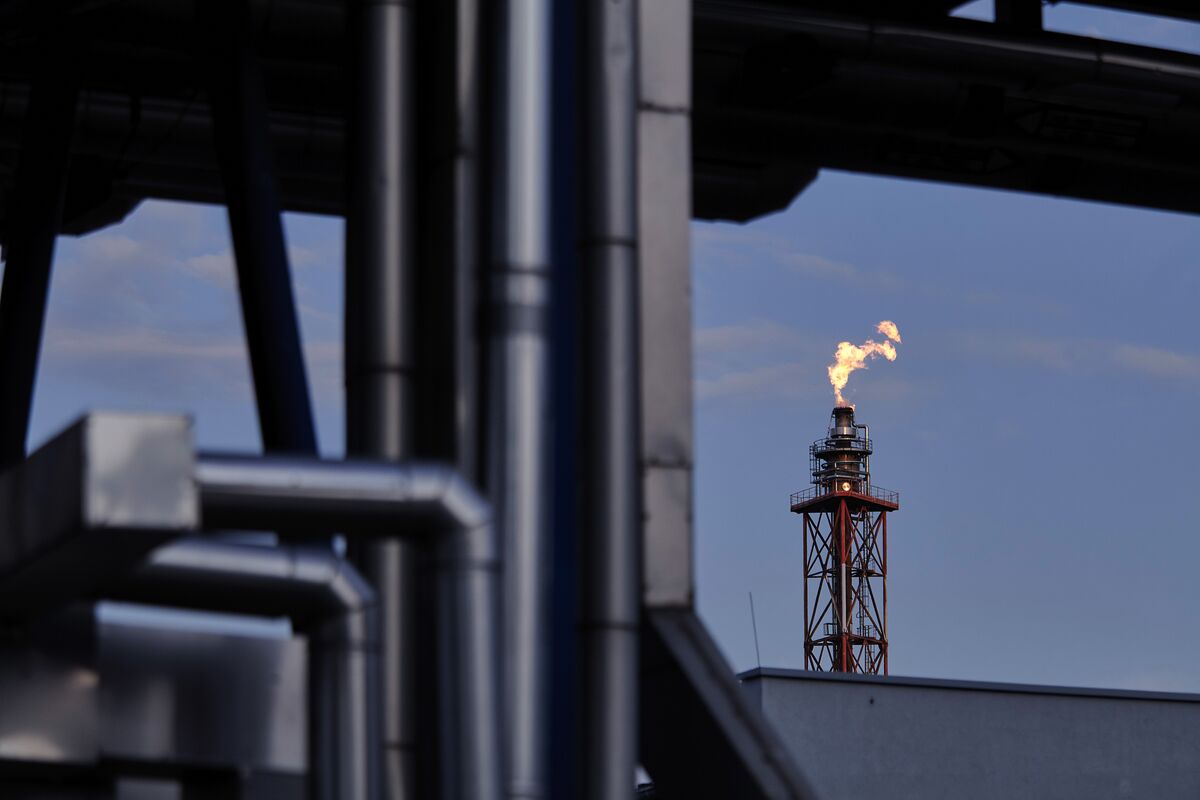
Flames from a flare stack at an oil refinery. Photographer: Bartek Sadowski/Bloomberg
The European Union is set to propose softening emissions rules for new cars, scrapping an effective ban on combustion engines following months of pressure from the automotive industry.
Combustion engines on a Mercedes-Benz assembly line in Germany. Photographer: Michaela Handrek-Rehle/Bloomberg
Europe’s embattled automakers are set to get a breather as they struggle with the transition to emission-free driving, a critical moment that will shape the future of the continent’s transport sector.
Europe’s auto industry faces a critical moment as the EU prepares to loosen emissions rules amid intense competition with China and other rivals.

 Anmelden