❌

Lese-Ansicht

The secret Afghan women’s book club defying the Taliban to read Orwell

Banned from education, a clandestine reading circle meets every week to pour over novels by Abbas Maroufi, Zoya Pirzad and Ernest Hemingway

Four young women sit together, waiting for the phone to ring. When the call finally comes, their friend’s voice is crackly and hard to make out, but they wait patiently for the signal to improve so they can start discussing their chosen book.

Every Thursday, the five friends come together away from the disapproving gaze of the Taliban for a reading circle. They read not for entertainment but, as they put it, to understand life and the world around them. They call their group “women with books and imagination”.

Continue reading...

© Photograph: supplied

© Photograph: supplied

© Photograph: supplied
  •  

I’m married, Pakistani – and I don’t want children. That doesn’t make me broken | Fizza Abbas

I live in a country where a woman’s value is often measured by motherhood, but for me and many others fulfilment simply looks different

I booked an online appointment with a gynaecologist in Karachi during the pandemic. I had a severe urinary tract infection and needed immediate relief. Everything felt routine at first: the doctor joined the video call late, held her phone awkwardly and asked about my symptoms. I explained, she prescribed medication, and then came the expected questions: Was I married? For how long? Any children? When I said “no,” her tone shifted as she asked, “Bachay tou chaihiye na aap ko?” (You do want children, right?). It felt subtly menacing – the assumption was clear: not wanting kids meant something was wrong.

What shocked me more was my own response. “Ji, ji, bilkul,” (Yes, yes, of course) I mumbled. Later, I was furious with myself for crumbling under pressure – for not being honest.

Continue reading...

© Photograph: Arif Ali/AFP/Getty Images

© Photograph: Arif Ali/AFP/Getty Images

© Photograph: Arif Ali/AFP/Getty Images

  •  

Taliban birth control ban: women ‘broken’ by lethal pregnancies and untreated miscarriages

Women across Afghanistan describe the traumatic impact of disappearing clinics and contraception

Parwana* no longer recognises her own children. Once known for her beauty in her village in Kandahar province, the 36-year-old sits on the floor of her mother’s home, rocking silently. After nine pregnancies and six miscarriages, many under pressure from her husband and in-laws, Parwana has slipped into a permanent state of confusion.

“She is lost,” says her mother, Sharifa. “They broke her with fear, pregnancies and violence.”

Continue reading...

© Photograph: Getty Images

© Photograph: Getty Images

© Photograph: Getty Images

  •  

‘It’s not the 90s any more’: the all-women team reinventing abortion advice for the TikTok age

The irreverent approach of the Colombian hotline Jacarandas has made it the most-followed abortion account on social media in the Spanish-speaking world

What do a purple cartoon cat and abortion have in common? Nothing – and that is the point, say the women behind Jacarandas, a Colombian abortion helpline. Determined to set themselves apart from more traditional reproductive health organisations, Jacarandas commissions street and graphic artists to create eye-catching illustrations – most recently a cartoon feline called Gataranda, inspired by the team’s much-loved office pet.

The aim is not to make light of abortion but to appeal to the teenagers and young women who use Jacarandas’ services. “A lot of people do not connect with [an image of] the uterus on fire, so we thought ‘what can we do to connect more with young women?’” says Carolina Benítez Mendoza, the deputy director.

Continue reading...

© Photograph: Courtesy of Jacarandas

© Photograph: Courtesy of Jacarandas

© Photograph: Courtesy of Jacarandas

  •  

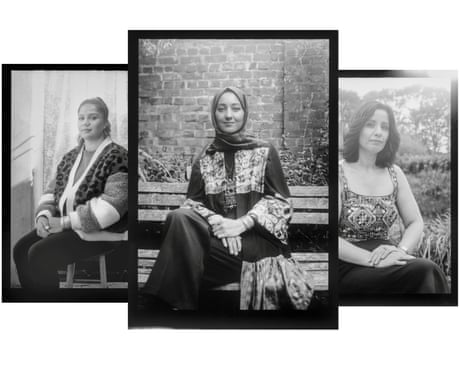
Afghan women in the UK: amplifying their voice – a photo essay

Over four years have passed since the Taliban returned to power in Afghanistan. Claudia Janke’s photographic series features 7 Afghan women who have found safety in the UK after escaping at great personal risk. She worked using an Instant Box Camera, the only type of camera allowed under the Taliban’s first regime, reclaimed for the these women to amplify their voices

Since the Taliban’s return to power in Afghanistan in 2021, the regime has imposed sweeping restrictions on the rights of women and girls, with devastating consequences for society. Girls are barred from attending school beyond the sixth grade, and women are prohibited from working, appearing on television, leaving the house alone, and singing or speaking in public. They have been systematically erased from public life.

A recent UN Women report underscores the scale of this repression. The Afghanistan Gender Index 2025 reveals, among other findings:

No female representation in national or local decision-making bodies.

A complete ban on secondary education for girls.

A staggering 76% gender gap across health, education, finance, and governance – one of the worst in the world.

Continue reading...

© Composite: Claudia Janke

© Composite: Claudia Janke

© Composite: Claudia Janke

  •  

Watched, scared and trapped in an Australian visa nightmare, Kiran is one of India’s ‘abandoned brides’

Kiran was left with her in-laws in a Indian village thousands of kilometres from her husband in Brisbane – but the CCTV was always watching her

Kiran’s* husband was more than 10,000km away from the home she shared with her in-laws in a village in northern India. But despite the vast distance, he watched her constantly through cameras which beamed into a screen in his Brisbane home.

“He would say: ‘I can always see what you do’,” she recalls through an interpreter.

Continue reading...

© Photograph: Paper Boat Creative/Getty Images

© Photograph: Paper Boat Creative/Getty Images

© Photograph: Paper Boat Creative/Getty Images

  •  

Women behind the lens: six of our most striking images from 2025

A few of our favourite photographs taken by women from the global south and capturing moments of everyday life and art

Continue reading...

© Photograph: Indu Antony

© Photograph: Indu Antony

© Photograph: Indu Antony

  •  

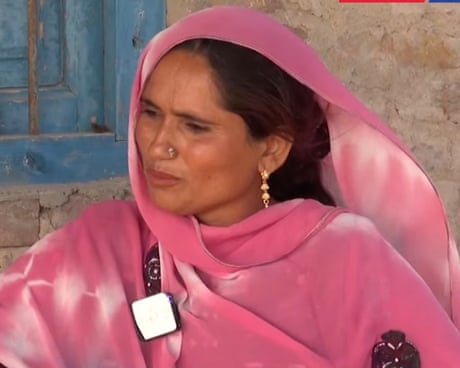
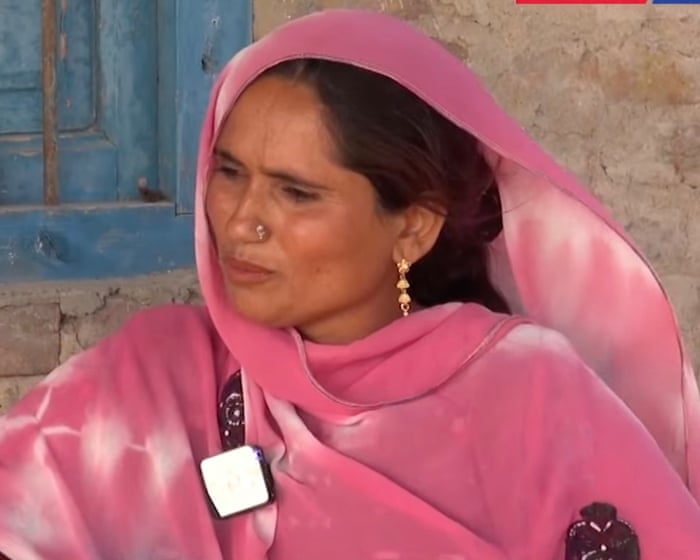
‘I wasn’t allowed to study, but I will make sure no girl in this village hears those same words’

Health worker Naushaba Roonjho was ostracised by her family in Pakistan for wanting to work but now she is campaigning for political office

When Naushaba Roonjho became the first girl anyone in her district knew to have passed Pakistan’s national secondary school exam, the news was not celebrated. At home, in her village of Sheikh Soomar in southern Sindh, her father told her: “This is enough, you don’t need to study more. You should stay at home now.”

It was 2010 and Roonjho was 17; within weeks she was married, to Muhammad Uris, a labourer. Although, like all the girls in Thatta district, she had left school after primary, Roonjho had kept up her studies independently.

Continue reading...

© Photograph: Courtesy of Leader TV

© Photograph: Courtesy of Leader TV

© Photograph: Courtesy of Leader TV

  •  

‘Even in the most unlikely places there is beauty’: stories of hope from newsrooms around the world

From the construction worker who won a place at medical school to an art exhibition in a country with no galleries, we asked journalists for their most optimistic tales of the year

Founder of the Migration Story, India

Continue reading...

© Composite: e/Hawo Nor Osman/Bilan Media/Rakhi Ghosh/The Migration Story,/Rukhshana Media/Rukhshana Media/ Paola Jinneth Silva Melo

© Composite: e/Hawo Nor Osman/Bilan Media/Rakhi Ghosh/The Migration Story,/Rukhshana Media/Rukhshana Media/ Paola Jinneth Silva Melo

© Composite: e/Hawo Nor Osman/Bilan Media/Rakhi Ghosh/The Migration Story,/Rukhshana Media/Rukhshana Media/ Paola Jinneth Silva Melo

  •  

Yes, women’s rights are under threat around the world. But we’ve found hope in unlikely places | Rahila Gupta

From El Salvador to Russia, Iceland and Syria, women are pushing back against the rise of regressive forces. Let’s support their fight

  • Rahila Gupta is an anti-racist feminist activist and the co-author, with Beatrix Campbell, of Planet Patriarchy

In 2025, the world that had been opened up by women has often seemed to be closing in. The forces behind the rollback of abortion rights in Donald Trump’s US are attempting to do the same in the UK. In Afghanistan, the Taliban has doubled down on its attacks on women and girls. Sexual violence is commonplace in Haiti and the Democratic Republic of the Congo. In Mexico, even the president is not safe from sexual assault. A perverse rewilding appears to be taking place.

You’d be forgiven for thinking that around the world, women’s rights are being concreted over. But in researching our book, Planet Patriarchy, Beatrix Campbell and I found women’s resistance erupting like green shoots through the cracks. In El Salvador, women can receive sentences of 30-50 years for miscarriages construed to be abortions. Yet feminists have managed to free all 72 women who had been imprisoned for this, using innovative penal and legal strategies. In Russia, feminists have taken to wearing blue and yellow ribbons, the colours of the Ukrainian flag, to signal their anti-war solidarity.

Rahila Gupta is an anti-racist feminist activist and the co-author, with Beatrix Campbell, of Planet Patriarchy

Continue reading...

© Photograph: Delil Souleiman/AFP/Getty Images

© Photograph: Delil Souleiman/AFP/Getty Images

© Photograph: Delil Souleiman/AFP/Getty Images

  •  

‘That video saved our lives’: how women are defying the Taliban’s brutal crackdown on protest

The activist Zarmina Paryani speaks from exile in Germany about how Afghanistan has tried to silence the voices of women and girls since the 2021 takeover

It was nearly dark on 19 January 2022 when the knocking began. At first soft, then insistent, the sound echoed through the flat in the Afghan capital, Kabul. Zarmina Paryani and her sisters froze. They had known this day was coming.

“We always knew the risks of protesting and we were prepared to die on the streets,” the 26-year-old activist told the Guardian. “But I never imagined they would come for us like that – in the middle of the night, breaking into our home.”

Continue reading...

© Photograph: Wakil Kohsar/AFP/Getty Images

© Photograph: Wakil Kohsar/AFP/Getty Images

© Photograph: Wakil Kohsar/AFP/Getty Images

  •  

We can be heroes: the inspiring people we met around the world in 2025 – part two

From the ‘warrior’ midwife saving lives in Senegal to the outed Kenyan pop star speaking up against prejudice, these are some of the people that gave us hope

In the thick of the monsoon this June, I found myself squinting at the smallest of orchids and rarest of impatiens (a flowering plant) inside an enclave of lush rainforest in Kerala, southern India. With Laly Joseph, 56, at the helm, dozens of women from the local neighbourhood were in charge of preserving and cultivating more than 2,000 species of native plants either ignored or forgotten by the rest of the world. Together, they are more popularly known as “rainforest gardeners”.

Continue reading...

© Photograph: Willis Austin Chimano

© Photograph: Willis Austin Chimano

© Photograph: Willis Austin Chimano

  •  

‘You sneak in and hope you make it back’: the Sudanese volunteers risking it all to bring care to millions

Members of Sudan’s Emergency Response Rooms network tell Guardian they didn’t mind missing out on the Nobel peace prize because ‘we only want to help’

Doing good gets you killed in Sudan. It was why Amira did not tell her mother when she joined a volunteer group that felt like the only thing stopping her country sliding deeper into dystopia.

Each morningshe secretly crossed the shifting frontline of Sudan’s North Kordofan state. Amira was entering territory held by the Rapid Support Forces (RSF), paramilitaries who have committed countless war crimes, including genocide, during the country’s cataclysmic war.

Continue reading...

© Photograph: David Levene/The Guardian

© Photograph: David Levene/The Guardian

© Photograph: David Levene/The Guardian

  •  

‘I can’t forget the horror’: a young mother on giving birth twice during the Gaza war

Hadeel Al Gherbawi survived her two pregnancies despite extreme hunger and pain

Hadeel Al Gherbawi was seven months pregnant when the war started in October 2023. Up until that point the 26-year-old had meticulously prepared for her son’s arrival. She visited her doctor twice a month because the pregnancy was high risk, had regular ultrasounds and took vitamins. “I love the details,” she says.

Living on the east side of Gaza City, close to the border with Israel, and knowing that being pregnant would make moving fast difficult, she decided to go to her parents in the west of Gaza City that first day. “I thought it was just going to be a few days and I would go back.”

Continue reading...

© Photograph: supplied

© Photograph: supplied
© Photograph: supplied
  •  

Shackled, alone and scared: the grim reality for women forced to give birth in prison

Across the world, incarcerated pregnant women are often held in deplorable conditions, leading some to miscarry or give birth alone inside a cell, say campaigners

Dina Hernández was 35 weeks pregnant when she was arrested near her home in San Salvador in March 2024. The 28-year-old human rights activist, who was with her five-year-old son, was accused of “illicit association” with gang members and jailed without evidence.

Three weeks later, her family received a call from the prison authorities to collect the body of her newborn baby. The cause of death has not been investigated and the family has no idea what happened, or whether Hernández – who is believed to remain in prison – received any postnatal care.

Continue reading...

© Illustration: Jenya Polosina/The Guardian

© Illustration: Jenya Polosina/The Guardian

© Illustration: Jenya Polosina/The Guardian

  •  

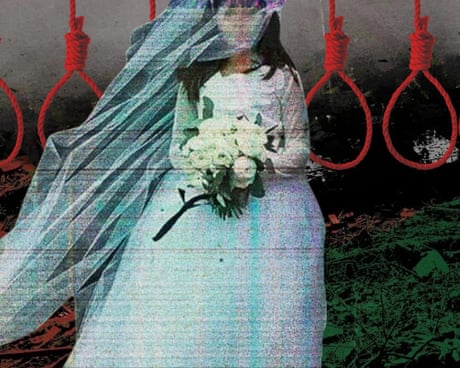
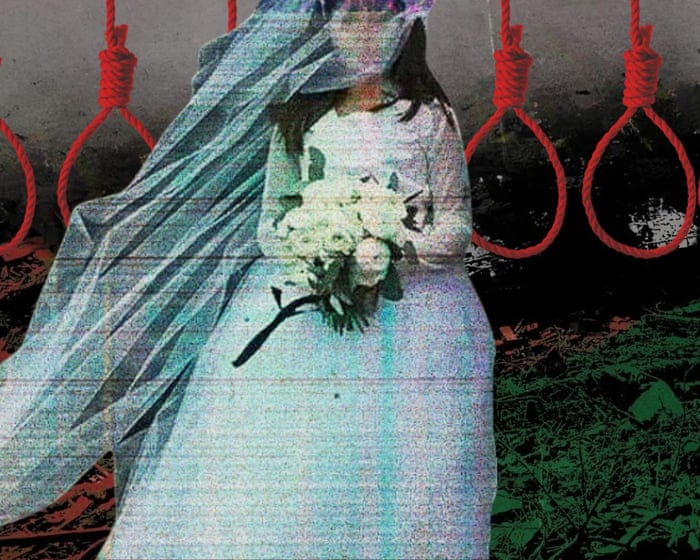
Child bride spared execution in Iran after blood money is paid

Guardian story helped to draw attention to planned hanging of Goli Kouhkan over death of abusive husband

A child bride who was due to be executed this month in Iran over the death of her husband has had her life spared by his parents, who were paid the equivalent of £70,000 in exchange for their forgiveness.

Goli Kouhkan, 25, has been on death row in Gorgan central prison in northern Iran for the past seven years. At the age of 18 she was arrested over allegedly participating in the killing of her abusive husband, Alireza Abil, in May 2018, and sentenced to qisas – retribution-in-kind.

Continue reading...

© Illustration: Centre for Human Rights Iran

© Illustration: Centre for Human Rights Iran

© Illustration: Centre for Human Rights Iran

  •  

Zimbabwe’s only female heart surgeon on medicine, misogyny and making a difference

Despite the challenges of working in a healthcare system in crisis, Kudzai Kanyepi has resisted the temptation to move abroad

When Dr Kudzai Kanyepi qualified as Zimbabwe’s first female cardiothoracic surgeon four years ago, she was filled with pride and anticipation after succeeding in an area long dominated by men. She was only the 12th woman in Africa to qualify in the field – four more have joined her since.

Even now, with 100 operations under her belt, the reality of working in a role in which she confronts misogyny and discrimination daily has not dented Kanyepi’s love of the surgical theatre.

Continue reading...

© Photograph: Cynthia R Matonhodze/Cynthia R Matonhodze for The Guardian UK

© Photograph: Cynthia R Matonhodze/Cynthia R Matonhodze for The Guardian UK

© Photograph: Cynthia R Matonhodze/Cynthia R Matonhodze for The Guardian UK

  •  

How many women are in prison and on death row around the world? – in charts

While fewer women than men are incarcerated, their numbers are rising faster and most often for non-violent offences

More than 733,000 women and girls are held in penal institutions globally, according to the Institute for Crime and Justice Policy Research, either as pre-trial detainees or remand prisoners, or having been convicted and sentenced. The actual total is thought to be much higher, as figures for five countries are not available and those for China are incomplete.

Continue reading...

© Composite: Guardian Design/Getty Images

© Composite: Guardian Design/Getty Images

© Composite: Guardian Design/Getty Images

  •  

‘Drone operators are hunted. You feel it from your first day’: the female pilots on Ukraine’s frontline

As casualties mount, recruitment is expanding. Three women talk about why they signed up for a brutal combat environment

Women have been involved in Ukraine’s drone operations since the early months of the full-scale invasion, but as shortages in the military increase their presence has grown, particularly in FPV (first-person-view) attack units.

Casualty figures are not disclosed but widely understood to be high, and Ukraine is becoming reliant on civilians to fill roles that once belonged to trained military personnel. A short but intensive 15-day course is given to a trainee operator for frontline deployment, a turnaround that reflects the urgent need.

Indoor and outdoor training courses set up for trainee pilots at a drone school

Continue reading...

© Photograph: Gaby Schuetze

© Photograph: Gaby Schuetze

© Photograph: Gaby Schuetze

  •  

South Africa declares gender-based violence a national disaster amid G20 protests

Women’s groups welcomed the announcement on the eve of the international leaders’ summit in Johannesburg

Hundreds of women gathered in cities across South Africa on Friday to protest against gender-based violence in the country before the G20 summit in Johannesburg this weekend.

Demonstrators turned out in 15 locations – including Johannesburg, Pretoria, Cape Town and Durban – wearing black as a sign of “mourning and resistance”.

Continue reading...

© Photograph: Anadolu/Getty Images

© Photograph: Anadolu/Getty Images

© Photograph: Anadolu/Getty Images

  •  
❌