Oil gained for a second day as the US and Israel stepped up attacks against Iran and the sprawling conflict’s impact on Persian Gulf energy assets deepened.
Fuel storage tanks at the Sunoco LP Terminal in Crockett, California, US, on Sunday, March 1, 2026. Oil surged by the most in four years, as the US-Israeli war against Iran plunged the global crude market into turmoil, with the effective closure of the critical Strait of Hormuz.
A hoard of Iranian oil on tankers at sea and swelling onshore inventories in China will provide an initial cushion for the world’s biggest importer from the fallout of the conflict in the Middle East.
Vessels are seen anchored along the Singapore straits in Singapore on February 26, 2026. (Photo by Roslan RAHMAN / AFP via Getty Images)
Oil surged as the first impacts of the war in the Middle East began to be felt, with a near halt to traffic through the Strait of Hormuz and disruption at a big refinery in Saudi Arabia upending energy markets.
Smoke plumes rise following missile strikes in Tehran on March 1. Photographer: ATTA KENARE/AFP
Oil fell after the close, wiping out a day of gains after US President Donald Trump said he had been assured that Iran would stop killing protesters, in a signal he could hold off on a threatened military response to the repression of widespread demonstrations in the nation.
Vitol Group and Trafigura Group are in talks with large Indian and Chinese refiners over potential sales of Venezuelan crude, days after they obtained a preliminary green light from the US to market the oil.
The silhouette of the Panamanian-flagged crude oil tanker Nord Star on Lake Maracaibo, in Maracaibo, Venezuela, on Jan. 7.
Oil rose to the highest level since early December as unrest in Iran raises the specter of supply disruptions from OPEC’s fourth-biggest producer, with the Wall Street Journal reporting that President Donald Trump is leaning toward striking the country.
China’s refiners, all but cut off from Venezuelan crude in the past week as the US positions itself for access to the world’s largest oil reserves, are eyeing a pricier alternative source — Canada.
An oil tanker is loaded at the Westridge Marine Terminal at the end point of the Trans Mountain Pipeline System in Burnaby, British Columbia, Canada, on Sunday, Jan. 26, 2025. A project to triple the capacity of the Trans Mountain Pipeline still has a high value after massive cost overruns to build it, Canada's government spending watchdog concluded.
Oil moved higher as traders digested a mix of geopolitical risks that could add a premium to prices while continuing to assess US measures to exert control over Venezuela’s oil.
An oil refinery in Houston. Photographer: Mark Felix/Bloomberg
Oil crept higher as the capture of Venezuelan President Nicolás Maduro by US forces raised new currents of geopolitical risk and as Washington appears set to continue clamping down on shipments from the South American nation.
A pumpjack near Crane, Texas. Photographer: Justin Hamel/Bloomberg
Oil slumped in muted post-Christmas trading as investors assessed a fresh development in long-stalled Ukraine peace talks which could lead to a deal that allows more Russian oil into global markets grappling with oversupply.
A pump jack in Midland, Texas. Photographer: Anthony Prieto/Bloomberg
A hoard of Venezuelan crude on tankers at sea will provide a cushion for Chinese refiners — the biggest buyers — should the US escalate hostilities against the OPEC producer and disrupt exports.
Russian ESPO crude was recently sold to at least one Chinese buyer at what traders say was the steepest discount this year, after demand for the grade tumbled following US sanctions on Rosneft PJSC and Lukoil PJSC.
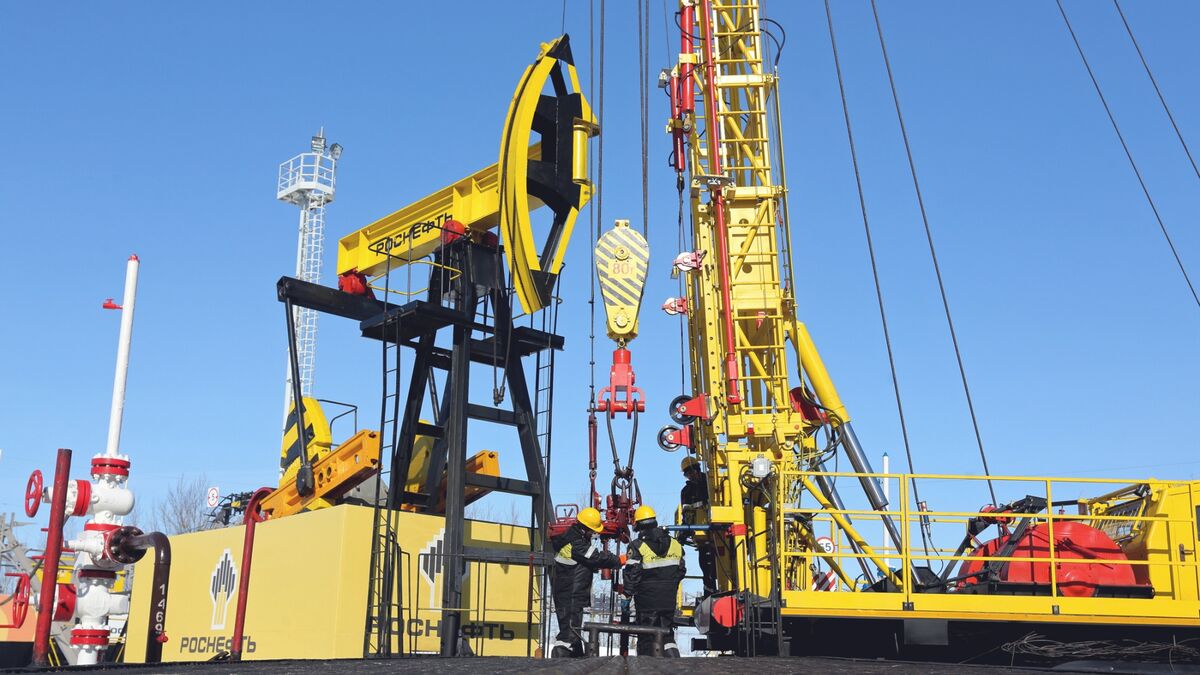
Workers at a Rosneft oil field in Russia. Source: Bloomberg/Bloomberg
The US oil benchmark fell to its lowest level since February 2021, with traders weighing renewed signs of optimism surrounding a deal to end the war in Ukraine and mixed economic data from China.
China’s robust stockpiling of crude is expected to continue next year, helping to cushion global markets from a swelling surplus, but masking a broader trend of slowing oil demand growth.
China’s independent oil refiners are boosting their intake of Iranian crude from onshore tanks and ships idling at sea after Beijing issued a fresh round of import quotas late last month.
A wave of new Chinese petrochemical plants is raising fears of a deluge of exports that will put pressure on other producing nations that are already struggling with oversupply.
Oil crept higher alongside global equities, bouncing off a one-month low as the White House signaled optimism about a peace deal between Russia and Ukraine, which could bring back Moscow’s barrels into an already saturated market.
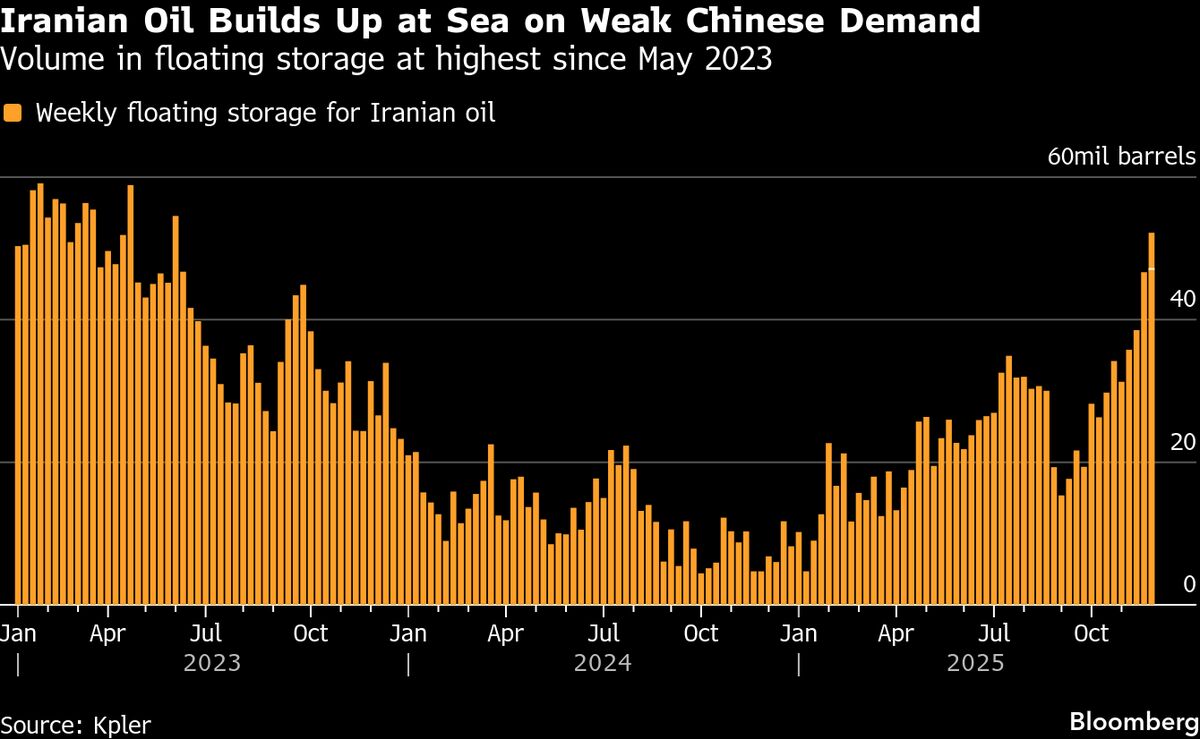
The amount of Iranian crude held on tankers at sea has swelled to the highest in two-and-a-half years, reflecting slower demand from top buyer China even as exports from the OPEC member remain elevated.

 Anmelden