❌

Lese-Ansicht

‘It means missile defence on datacentres’: drone strikes raise doubts over Gulf as AI superpower

Iran’s targeting of commercial datacentres in the UAE and Bahrain signals a new frontier in asymmetric warfare

It is believed to be a first: the deliberate targeting of a commercial datacentre by the armed forces of a country at war.

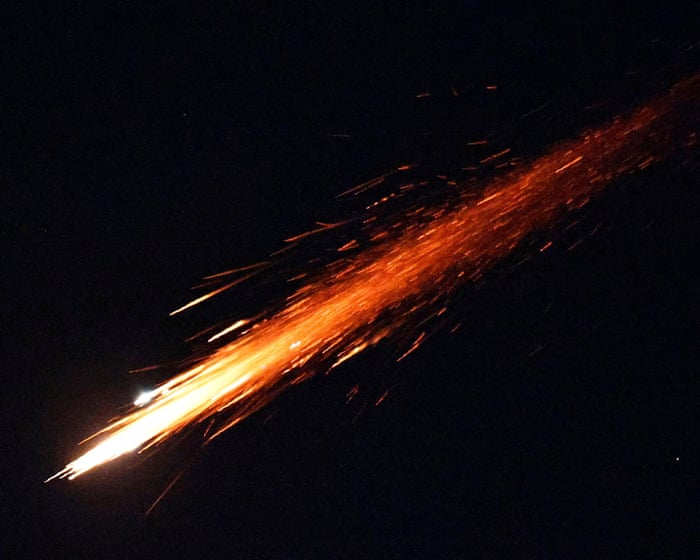
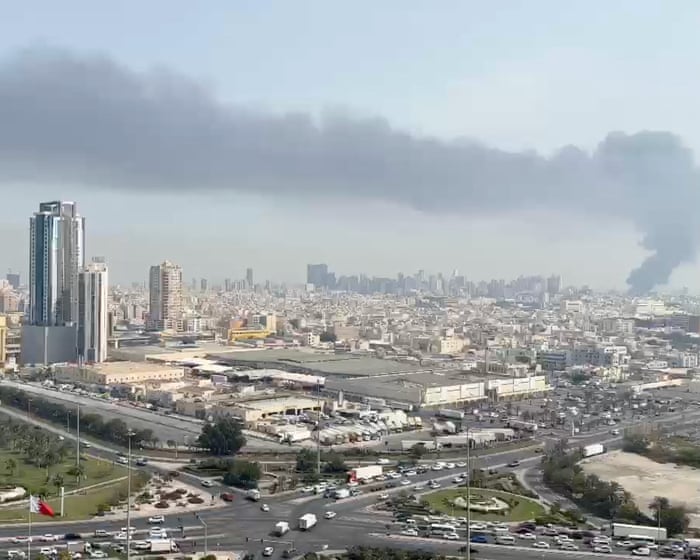
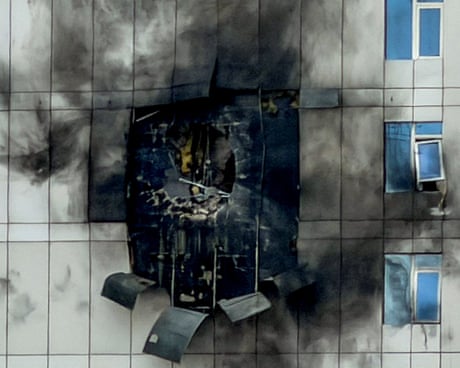
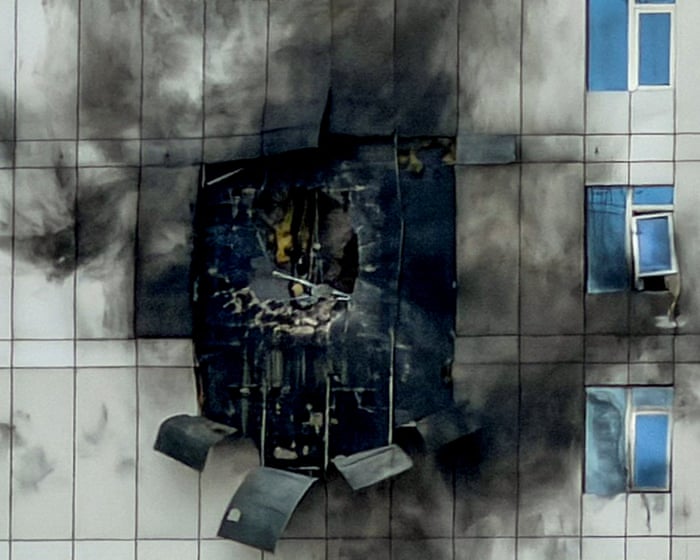
At 4.30am on Sunday morning, an Iranian Shahed 136 drone struck an Amazon Web Services datacentre in the United Arab Emirates, setting off a devastating fire and forcing a shutdown of the power supply. Further damage was inflicted as attempts were made to suppress the flames with water.

Continue reading...
© Photograph: Video Obtained By Reuters/Reuters

© Photograph: Video Obtained By Reuters/Reuters
© Photograph: Video Obtained By Reuters/Reuters

  •  

Airline groundings expose depth of world travel’s reliance on Gulf corridor

Restart of operations will be a relief to those stranded but may not dispel doubts raised by past week about key transit hub

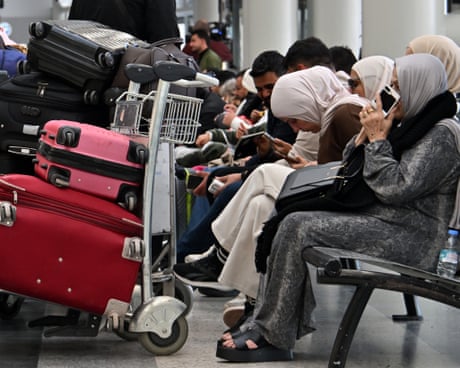
After nearly a week of uncertainty, airspace closures and very limited flights, news that hundreds of thousands of passengers around the world were hanging on for emerged: the Gulf-based carrier Emirates was restarting operations in earnest despite the US-Israel war on Iran.

Those relieved by the restart will include the UK’s Foreign Office, after its travails in organising delayed rescue flights out of neighbouring Oman.

Continue reading...

© Photograph: Jaimi Joy/Reuters

© Photograph: Jaimi Joy/Reuters

© Photograph: Jaimi Joy/Reuters

  •  

Influencers sold the world a fantasy Dubai – and now it’s gone in a puff of missile smoke | Gaby Hinsliff

The city was portrayed as an aspirational place to live, but now those who moved there are realising the precarity that comes with being an economic migrant

To be fooled by a mirage, you needn’t be lost in the desert. Sometimes, the illusion is strongest just when you thought you were safely home, posting from the pool about your teenage daughter’s spa party and your own glittering life in a city where “the possibilities are endless”, as they tend to be for billionaires’ daughters living in tax havens. Only then does the fantasy explode in a puff of intercepted missile smoke, leaving just another woman in her pyjamas telling Instagram (as Petra Ecclestone did at the weekend) that she moved to Dubai “to feel safe” and war was never mentioned in the small print.

Who could have guessed that living a few hundred miles as the drone flies from Tehran might have risks? Certainly not the anonymous hedge funder who fumed to the Financial Times that “the trade was not that you were getting exposed to geopolitics”.

Continue reading...

© Photograph: Ali Haider/EPA

© Photograph: Ali Haider/EPA

© Photograph: Ali Haider/EPA

  •  

The US and Israel gravely underestimated Iran’s response – here in the UAE, we are seeing the consequences | Aniseh Bassiri Tabrizi

My family is in Tehran; I am in Abu Dhabi. Across the region, ordinary people are paying the price for these attacks

Since Saturday, my mind has been torn between the place I live, Abu Dhabi, and Tehran, which has been the focus of my work and research for more than 15 years, and where I still have family. When I saw that Israel and the US had attacked Iran, I started worrying for family, thinking about potential consequences. But I barely had time to consider that before Donald Trump announced that this was about regime change. At that moment, I knew this was going to be big – worse than last June – and that it would lead into a regional schism. Predictably, Iran’s response started shortly after: first against Israel, then against states across the Gulf region, including the United Arab Emirates. It all followed the worst-case escalation scenarios we had been outlining since June, and especially since January, when – in the midst of protests – Donald Trump said “help” was on its way.

I kept on trying to reach family when the internet there was working, which is, at best, for a few minutes a day. Each conversation is short, practical: are you OK? Is your area affected?

Aniseh Bassiri Tabrizi is an associate fellow at the Chatham House Middle East and North Africa programme and senior analyst at Control Risks

Continue reading...

© Photograph: Fadel Senna/AFP/Getty Images

© Photograph: Fadel Senna/AFP/Getty Images

© Photograph: Fadel Senna/AFP/Getty Images

  •  

Why some British expats in Dubai insist it’s business as usual – despite Iran war

Amid schadenfreude back home as UK nationals express their fears, others say they are not leaving anytime soon

It is not always seen as a positive when the ruling family of a dictatorship makes a public show of mingling among the people.

On Monday, Sheikh Mohamed bin Zayed al-Nahyan, the royal who is both president of the United Arab Emirates and ruler of Abu Dhabi, joined Dubai’s crown prince, Sheikh Mohammed bin Rashid al-Maktoum, for a stroll around Dubai’s mall, before settling down alongside awkward looking officials on the banquette-style seating at one of its most visible cafes.

Continue reading...

© Photograph: Raghed Waked/Reuters

© Photograph: Raghed Waked/Reuters

© Photograph: Raghed Waked/Reuters

  •  

Middle East war could be decided by who runs out of missiles or interceptors first, analysts say

Stockpiles of the most advanced US-made weapons are limited – while few know how large Iran’s arsenal is

The outcome and duration of the war in the Middle East may be decided by a grim calculus based on the size of Iran’s drone and missile stocks v vital air defence munitions held by the US, Israel and Gulf states, analysts and officials say.

Since Saturday, Iran and its proxies have sought to counter the intensive joint US and Israeli offensive with more than 1,000 strikes against targets across almost a dozen countries spread over 1,200 miles. With its antiquated air force unable to compete with those of Israel and the US, Tehran has relied on its arsenal of missiles and drones.

Continue reading...

© Photograph: Amir Cohen/Reuters

© Photograph: Amir Cohen/Reuters

© Photograph: Amir Cohen/Reuters

  •  

Iran continues to hit back at US-Israeli strikes as Trump says it is too late to talk

Iranian drones hit US embassy in Riyadh as Israel bombs Tehran and sends troops into southern Lebanon

Iran continued its bombardment the Gulf and Israel on Tuesday in retaliation for further Israeli-US airstrikes, as Donald Trump said it was too late for dialogue with Tehran.

“Their air defense, Air Force, Navy and Leadership is gone. They want to talk. I said ‘Too Late!’,” the US president wrote on his Truth Social platform, rejecting what he claimed was an attempt by Tehran to restart negotiations. He said the US was prepared “to go far longer” than a four to five-week war against Iran.

Continue reading...

© Photograph: Nir Elias/Reuters

© Photograph: Nir Elias/Reuters

© Photograph: Nir Elias/Reuters

  •  

Airlines in Middle East rule out services resuming before Thursday

Some repatriation flights depart as governments around the world work to extract their citizens from the conflict-hit region

The biggest Middle East carriers have ruled out resuming scheduled flights until at least Thursday as the US-Israeli war on Iran continues, denting hopes of a swift return to normal air travel after the first repatriation flights left the United Arab Emirates.

Etihad, based in Abu Dhabi, said its commercial services were suspended until 2pm local time on Thursday 5 March, with Emirates ruling out scheduled flights until midnight on Wednesday.

Continue reading...

© Photograph: Raghed Waked/Reuters

© Photograph: Raghed Waked/Reuters

© Photograph: Raghed Waked/Reuters

  •  

‘It was surreal’: holidaymakers on first flight out of Abu Dhabi describe petrifying experience

Hundreds of thousands of passengers have found themselves stranded in the middle of a conflict between Iran and its Gulf neighbours
Holidaymakers on the first flights out of Abu Dhabi since Saturday have described their experiences up close as conflict erupted between Iran and its Gulf neighbours.

With thousands of flights cancelled across the Middle East, leaving hundreds of thousands of passengers stranded, the UK has begun forming evacuation plans for some of the estimated 300,000 Britons in the region.

Continue reading...

© Photograph: Isaaq Tomkins

© Photograph: Isaaq Tomkins

© Photograph: Isaaq Tomkins

  •  

Private jet prices soar as wealthy scramble to leave Dubai

People drive to Oman and Saudi in hope of a flight, while most tourists stay stuck in hotels and on cruise ships

Iranian attacks on Dubai and the closure of its airport have triggered a scramble among the wealthy to leave the emirates via alternative routes on private jets.

The normally glitzy city – a playground for billionaires, influencers and millions of international visitors – has been on edge since drones and missiles fired in response to US and Israel strikes on Iran damaged the airport and struck several high-profile hotels and landmarks.

Continue reading...

© Photograph: Altaf Qadri/AP

© Photograph: Altaf Qadri/AP

© Photograph: Altaf Qadri/AP

  •  

Gulf states on verge of acting against Iran over ‘reckless’ strikes across region

Meeting of six-country cooperation council says option to respond to attacks by Tehran remains on the table

Gulf states, encouraged by Donald Trump, are on the verge of ending their neutrality in the war against Iran in reprisal for Tehran’s repeated “reckless and indiscriminate attacks” on their territory and infrastructure.

The calls, led by the United Arab Emirates from inside the six-country Gulf Cooperation Council, are for the Arab states to act in self-defence against Iran, but it would be a huge step for Gulf leaders in effect to side with Israel in a war that will determine the future shape of the Middle East, probably to the advantage of Israel.

Continue reading...

© Photograph: AP

© Photograph: AP

© Photograph: AP

  •  

Iraq or UAE could take Iran’s World Cup finals spot due to Middle East crisis

  • Fifa regulations vague on issue of replacing any teams

  • Withdrawal would be first since France and India in 1950

Iraq and the United Arab Emirates are viewed as the most likely beneficiaries should Iran withdraw from the World Cup. Fifa’s general secretary, Mattias Grafström, said on Saturday that “our focus is to have a safe World Cup with everybody participating”, but the president of the Iranian Football Federation, Mehdi Taj, has raised doubts over his country’s participation by saying: “After this attack, we cannot be expected to look forward to the World Cup with hope.”

Fifa has not commented since Grafström spoke and remains determined to ensure the World Cup, thats starts on 11 June, goes ahead as planned, but several sources have said that if its hand were forced by Iran’s withdrawal the replacement will probably come from the Asian Football Confederation.

Continue reading...

© Photograph: Scott Taetsch/FIFA/Getty Images

© Photograph: Scott Taetsch/FIFA/Getty Images

© Photograph: Scott Taetsch/FIFA/Getty Images

  •  

‘We thought it was fireworks’: Dubai’s luxury seekers shaken by Iranian missiles

Authorities move to reassure visitors after tourists at five-star resorts had to shelter in underground car parks

The weekend began as it often does in Dubai. By late morning on Saturday, the beach clubs on Palm Jumeirah were already at capacity. Along the waterfront promenade, running clubs gathered beneath the towers, filming their warmups before setting off in neat formation.

On Instagram, the city appeared untouched: blue skies, a flat sea and the steady churn of shoppers inside the Dubai Mall. Across the Gulf, however, the largest regional war since the 2003 invasion of Iraq was intensifying.

Continue reading...

© Photograph: EPA

© Photograph: EPA

© Photograph: EPA

  •  

UK personnel just 200 metres away from Iranian missile strike

British forces in Bahrain and Iraq being drawn into Iran conflict in defence of ‘civilian sites and military assets’

Three hundred British personnel were within 200 metres (650ft) of an Iranian missile and drone strike on the US naval base in Bahrain on Saturday – one of several incidents where UK forces have been drawn into the war in the Middle East.

No casualties were reported in the incident, one of more than 25 waves of retaliatory attacks in response to the massive US-Israeli joint bombing campaign launched against Iran on Saturday.

Continue reading...

© Photograph: Hamad I Mohammed/Reuters

© Photograph: Hamad I Mohammed/Reuters

© Photograph: Hamad I Mohammed/Reuters

  •  

Hundreds of thousands of travellers stranded or diverted by airspace closures in Middle East

UK plans evacuation of more than 76,000 Brits as key transit hubs in Dubai, Abu Dhabi and Doha close

The US and Israeli attack on Iran continued to cause severe disruption to flights throughout the Middle East and beyond on Sunday, creating uncertainty for hundreds of thousands of travellers.

Countries across the region closed their airspace, and three of the key airports that connect Europe, Africa and the west to Asia halted operations.

Continue reading...

© Photograph: Wael Hamzeh/EPA

© Photograph: Wael Hamzeh/EPA

© Photograph: Wael Hamzeh/EPA

  •  

These atrocities in Sudan were entirely predictable. So why did the rest of the world fail to stop them? | Husam Mahjoub

Western governments have put elite bargains before civilian lives. If El Fasher is to mean anything, this approach must change

The latest report from the UN independent fact-finding mission on the fall of El Fasher in Sudan reads like a postmortem of a preventable tragedy. The report details what it calls the “hallmarks of genocide”: mass killings, systematic sexual violence and ethnic cleansing targeting non-Arab communities by the Rapid Support Forces (RSF).

The atrocities in El Fasher should have surprised no one in the international community. Western governments were warned repeatedly by civil society, humanitarian organisations, investigative journalists and their own agencies. In Britain, a whistleblower last year accused the Foreign Office of censoring internal warnings about imminent genocide. The US state department and members of the UN security council received continuous reporting from the Yale Humanitarian Research Lab documenting the RSF’s military buildup and preparations to overrun the city. Senior US officials warned the Biden administration that El Fasher was at imminent risk. A security council resolution in 2024 called for an end to the siege. None of this prevented the city from being strangled.

Husam Mahjoub is co-founder of Sudan Bukra, an independent non-profit Sudanese TV channel

Do you have an opinion on the issues raised in this article? If you would like to submit a response of up to 300 words by email to be considered for publication in our letters section, please click here.

Continue reading...

© Photograph: Dan Kitwood/Getty Images

© Photograph: Dan Kitwood/Getty Images

© Photograph: Dan Kitwood/Getty Images

  •  

RSF siege of El Fasher in Sudan has ‘hallmarks of genocide’, UN mission finds

Report details harrowing 18-month occupation of North Darfur capital, showing destruction aimed at ethnic communities

The siege and capture of the Sudanese city of El Fasher by the paramilitary Rapid Support Forces group last October bore “the hallmarks of genocide”, a UN-mandated fact-finding mission has said.

In a report detailing the harrowing 18-month occupation of the capital of North Darfur, investigators concluded that the RSF and allied militias deliberately inflicted conditions calculated to bring about the physical destruction of the Zaghawa and Fur ethnic communities.

Continue reading...

© Photograph: Mohammed Abaker/AP

© Photograph: Mohammed Abaker/AP

© Photograph: Mohammed Abaker/AP

  •  

Will the Gulf’s push for its own AI succeed?

Tech giants Alphabet, Amazon, Microsoft and Meta to collectively invest $600bn on artificial intelligence this year

Hello, and welcome to TechScape. Today in tech, we’re discussing the Persian Gulf countries making a play for sovereignty over their own artificial intelligence in response to an unstable United States. That, and US tech giants’ plans to spend more than $600bn this year alone.

Bitcoin loses half its value in three months amid crypto crunch

How cryptocurrency’s second-largest coin missed out on the industry’s boom

Files cast light on Jeffrey Epstein’s ties to cryptocurrency

Why has Elon Musk merged his rocket company with his AI startup?

Hail our new robot overlords! Amazon warehouse tour offers glimpse of future

Social media companies are being sued for harming their users’ mental health – but are the platforms addictive?

Anthropic’s launch of AI legal tool hits shares in European data companies

Continue reading...

© Photograph: Noushad Thekkayil/NurPhoto/Shutterstock

© Photograph: Noushad Thekkayil/NurPhoto/Shutterstock

© Photograph: Noushad Thekkayil/NurPhoto/Shutterstock

  •  

Andrew vouched for Epstein on state visit to UAE with queen in 2010

Emails appear to show Mountbatten-Windsor attempting to introduce Epstein to UAE crown prince via foreign affairs minister

Andrew Mountbatten-Windsor vouched for Jeffrey Epstein during a UK state visit to the United Arab Emirates with Queen Elizabeth II in 2010, according to newly released emails.

The email was sent from “The Duke” to Epstein on 24 November of that year, with the subject listed as “Abdullah” – an apparent reference to the UAE foreign affairs minister, Sheikh Abdullah bin Zayed Al Nahyan.

Continue reading...

© Photograph: Karim Sahib/AFP/Getty Images

© Photograph: Karim Sahib/AFP/Getty Images

© Photograph: Karim Sahib/AFP/Getty Images

  •  

The Guardian view on Saudi Arabia and the UAE: as former allies clash, others are likely to pay | Editorial

The growing rift between two Gulf powers will be felt across the Middle East and the Horn of Africa

In 2017, Saudi Arabia and the United Arab Emirates spearheaded a blockade of Qatar, disrupting trade, stability and lives in the region. Their de facto leaders – the Saudi crown prince, Mohammed bin Salman, and Abu Dhabi’s then crown prince, Mohamed bin Zayed Al Nahyan, now president of the UAE – had forged a close alliance. The older man had eagerly promoted the younger Saudi royal in Washington and elsewhere, and was seen as his mentor. Riyadh borrowed aspects of the UAE’s model, and the countries together intervened – at huge cost – against Houthi rebels in Yemen. Together they sought to contain the Arab spring and backed authoritarian rule in Egypt, Bahrain and elsewhere.

Yet by 2023 the relationship had soured: the Saudi crown prince reportedly accused the UAE of “stabb[ing] us in the back”. Late last year the disputes became spectacularly public. In Yemen, Southern secessionists backed by the UAE made dramatic advances in oil-rich areas – before being forced out by Saudi-backed forces. Riyadh effectively described the UAE as threatening its national security. Saudi commentators voiced increasing contempt for the kingdom’s former partner. In turn, a senior Emirati official complained of “wickedness” in the media campaign against it.

Do you have an opinion on the issues raised in this article? If you would like to submit a response of up to 300 words by email to be considered for publication in our letters section, please click here.

Continue reading...

© Photograph: WAM/Reuters

© Photograph: WAM/Reuters

© Photograph: WAM/Reuters

  •  
❌