❌

Lese-Ansicht

Why Populists Are Winning and How to Beat Them by Liam Byrne review – a surprisingly original prescription

A former New Labour minister tackles the question of our times with rigour and verve – but blindspots remain

At first glance, the former New Labour minister Liam Byrne is not the ideal person to explain the rise of rightwing populism in Britain and beyond, and how it might be stopped. At the end of Gordon Brown’s government in 2010, Byrne infamously wrote a one-line letter to whoever would succeed him as chief secretary to the Treasury: “I’m afraid there is no money.” Both friendly advice and an inside joke, these words were used for years by the Tories and Lib Dems to justify their austerity policies – and were arguably one of the causes of the modern disillusionment with conventional politicians. This loss of faith, and the damage to society and public services from austerity, have fuelled populism ever since.

Byrne’s short but ambitious book is, in a sense, his attempt to make amends. Yet some of the arguments and evidence he presents, in quick, confident sentences which fit his past reputation as a clever but impatient minister, are unlikely to persuade many people that he is thinking afresh. He often cites and echoes centrist authorities such as the Tony Blair Institute and Keir Starmer’s former advisers Claire Ainsley and Deborah Mattinson, who have all long said that the way to defeat populism is to respect its supporters, however rightwing. Given that Reform UK has surged ahead in the polls, while Labour is regarded by most populist voters with contempt, this deference seems a dead end.

Continue reading...

© Photograph: Christopher Furlong/Getty Images

© Photograph: Christopher Furlong/Getty Images

© Photograph: Christopher Furlong/Getty Images


  •  

It’s taboo to admit it, but voters bear some responsibility for the frayed state of Britain | Andy Beckett

Populists blame an ever-expanding list of enemies for social ills – many of which are in fact caused by changes in our habits and social norms

One of the great strengths of populism, in all its rightwing and leftwing varieties, is its readiness to blame people. When democracies are discontented, as most are now, the old early 21st-century politics of relative consensus and moderation is seen by many voters as insincere and inadequate, as many unpopular centrist leaders have discovered. Societies are always divided between clashing interests, especially under the current, ultracompetitive version of capitalism, and populism recognises that. In some ways, it is more honest than conventional politics.

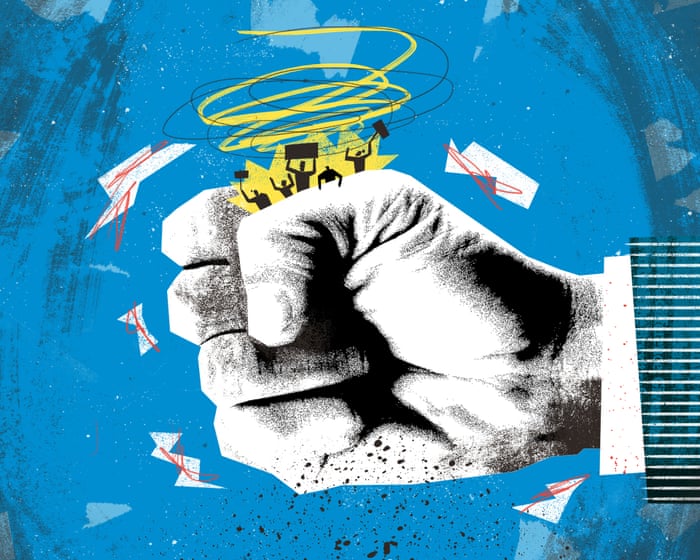
But only in some. Rightwing populism in particular relies on an ever-expanding list of enemies – from urban elites to benefit claimants, immigrants to deep-state bureaucrats, diversity officers to leftwing radicals, net zero “zealots” to mild liberals – yet this list always contains a striking omission. In Britain as in other countries, many of the social trends that rightwing populists and their supporters say they hate, and want to reverse, are partly being driven by populist voters themselves.

Continue reading...

© Photograph: Dan Kitwood/Getty Images

© Photograph: Dan Kitwood/Getty Images

© Photograph: Dan Kitwood/Getty Images

  •  

The slow implosion of Keir Starmer’s government is the ultimate repudiation of ‘Labour minimalism’ | Andy Beckett

This dominant tradition in the party has long insisted on appeasing powerful interests. But it’s unsuited to modern times

Labour is a more complicated political party than most. For over a century, it has tried to contain warring traditions, philosophies and factions. Internal disagreements have been driven not just by personal rivalries, but by profound differences about how, and how much, to challenge Britain’s deeply embedded arrangements of power and wealth.

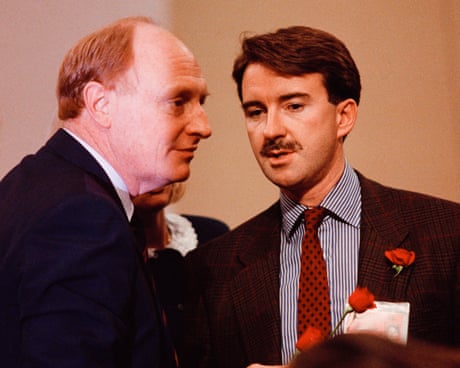
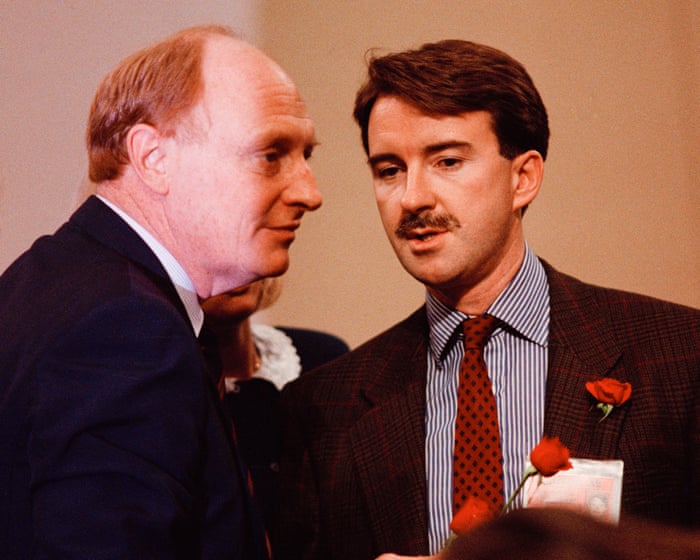
The party’s current crisis, while most directly caused by Keir Starmer’s political shortcomings and the chillingly selective morality of Peter Mandelson, is really the result of one Labour tradition demonstrably failing in government to meet the needs of today’s world. Often dominant in the party, especially over the past 40 years, you could call that tradition Labour minimalism.

Andy Beckett is a Guardian columnist

Continue reading...

© Photograph: Colin Davey/Getty Images

© Photograph: Colin Davey/Getty Images

© Photograph: Colin Davey/Getty Images

  •  

We have entered a new age of political rhetoric – and that’s bad news for Keir Starmer | Andy Beckett

Pre-2008, voters with prosperous and improving lives didn’t mind being excluded from the conversation. Those days are over

Who was the last politician you listened to for any length of time? Perhaps it was Andy Burnham or Zack Polanski. Or maybe it was Wes Streeting, Nigel Farage or Zarah Sultana. Perhaps your dark secret is that it was Donald Trump.

One thing these politicians have in common is that they are all unusually good communicators. From Farage’s drawling provocations to Polanski’s pithy directness, Sultana’s concentrated blasts of outrage to Trump’s mesmerising ramblings, they compel you to listen. The completely forgettable passages that voters across western democracies have associated with political speech for decades are largely absent.

Continue reading...

© Illustration: Nathalie Lees/The Guardian

© Illustration: Nathalie Lees/The Guardian

© Illustration: Nathalie Lees/The Guardian

  •  

The greatest threat facing Britain may soon be the US – but the establishment won’t recognise it | Andy Beckett

Since the end of the second world war, all eyes have been on Russia. Yet Trump’s increasingly erratic, hostile presidency is shattering old assumptions

One of the things that the depleted, often denigrated British state is still pretty good at is persuading the public that another country is a threat. As a small, warlike island next to a much larger land mass, Britain has had centuries of practice at cultivating its own sense of foreboding. Arguably, preparing for conflict with some part of the outside world is our natural mindset.

Warnings about potential enemy countries are spread by our prime ministers and major political parties, intelligence services and civil servants, serving and retired military officers, defence and foreign affairs thinktanks, and journalists from the right and the left. Sometimes, the process is relatively subtle and covert: reporters or MPs are given off-the-record briefings about our “national security” – a potently imprecise term – facing a new threat.

Andy Beckett is a Guardian columnist

Continue reading...

© Photograph: Evan Vucci/AFP/Getty Images

© Photograph: Evan Vucci/AFP/Getty Images

© Photograph: Evan Vucci/AFP/Getty Images

  •  

Did 2025 mark the end of British parliamentary democracy as we know it? | Andy Beckett

The conventions and rituals that define the way we do politics rapidly eroded this year – setting the UK on a course into the unknown

Was this the year that British democracy as we have known it began to turn into something else? Politicians, voters and journalists have made this claim before – when their side has been out of power for a long while, or when an elected government has been unusually dictatorial – and their warnings have usually been overstated. But this time the evidence of a fundamental shift away from a century-old status quo seems stronger.

Familiar landmarks have disappeared: Labour and Tory dominance, two-party electoral contests, the decisive power of a big Westminster majority, the patience voters usually show towards a new government, the predictable pendulum swing between right and left, the red lines between mainstream and extreme politics and even the central role of parliament.

Andy Beckett is a Guardian columnist

Do you have an opinion on the issues raised in this article? If you would like to submit a response of up to 300 words by email to be considered for publication in our letters section, please click here.

Continue reading...

© Illustration: Nate Kitch/The Guardian

© Illustration: Nate Kitch/The Guardian

© Illustration: Nate Kitch/The Guardian

  •  
❌