The 2,000 paratroopers heading to the region may give President Trump more leverage in negotiations, but they also leave him with the option of doubling down on military force.
President Trump postponed his threat to strike power plants in Iran, citing “productive conversations” with the Iranians. But officials said the talks were in an early stage and not substantive.
Abbas Araghchi, Iran’s foreign minister, in Tehran last year. He is said to have conveyed to the U.S. that Iran would need sanctions relief and guarantees against future attacks.
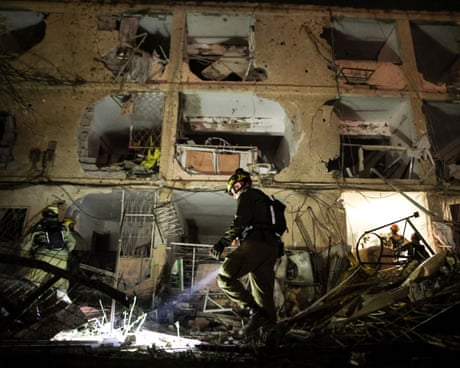
An Iranian missile has hit the Israeli town of Dimona, home to a nuclear facility, in what Iran said was retaliation for strikes on its own nuclear site at Natanz.
Dimona hosts a facility just outside the main town widely believed to possess the Middle East’s sole nuclear arsenal, although Israel has never admitted to possessing nuclear weapons.
A satellite image of the Pickaxe Mountain tunnel complex near the Natanz nuclear facility in central Iran last week. It is not certain where all of Iran’s nuclear material resides.
The president is no stranger to staking out contradictory stands, part of what his aides say is his negotiating style. But on Iran, his shifting positions are colliding with the consequences of war.
President Trump leaving the White House last month. The conflict in Iran has come with consequences including a rising death toll and soaring gas prices.
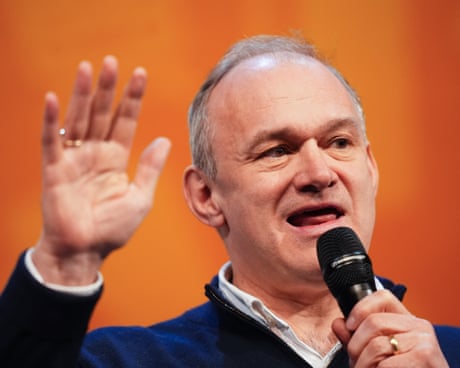
Lib Dem leader will tell spring conference Britain can no longer rely on US while Donald Trump is president
Britain should have a completely independent nuclear deterrent as it can no longer rely on the US, Ed Davey is expected to say on Sunday.
In a speech at the Liberal Democrats spring conference, the party leader will argue that the UK should manufacture and maintain its nuclear weapons in Britain, a move that Davey acknowledges will cost billions.
The Trump administration is reportedly considering the deployment of special forces into Iran to secure its stockpile of highly enriched uranium (HEU), which experts say could be used to make at least 10 nuclear warheads.
Preventing Iran from acquiring a bomb is one of Trump’s stated war aims, and the 440kg HEU stockpile represents the greatest nuclear threat as it could be turned into weapons-grade uranium relatively easily. The US secretary of state, Marco Rubio, has told Congress that “people are going to have to go and get it”.
As speculation mounts that Kim Jong-un and Trump could meet this month, analysts say Pyongyang will continue to see nuclear weapons as a matter of survival
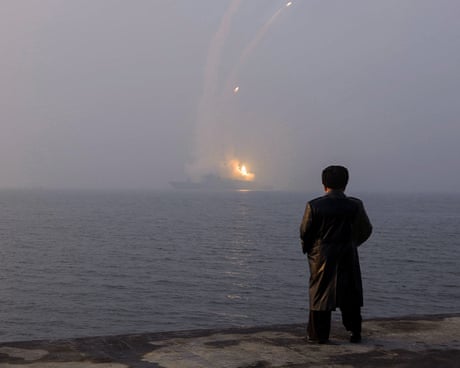
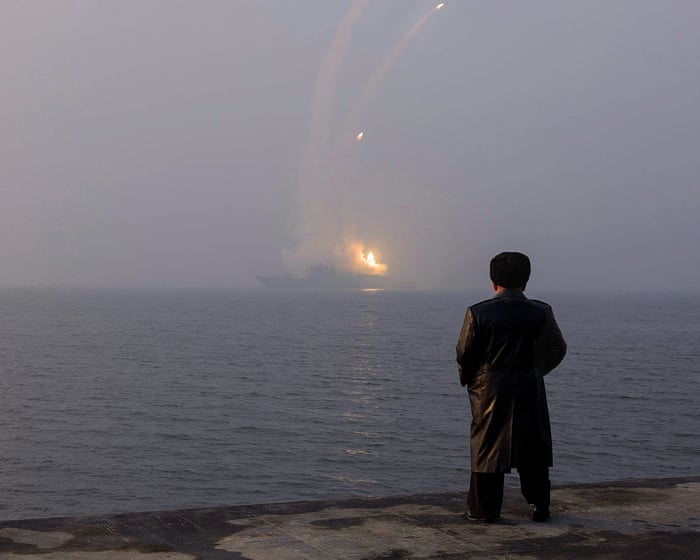
North Korea’s launch last week of a missile from a naval destroyer elicited an uncharacteristically prosaic analysis from the country’s leader, Kim Jong-un. The launch was proof, he said, that arming ships with nuclear weapons was “making satisfactory progress”.
But the test, and Kim’s mildly upbeat appraisal, were designed to reverberate well beyond the deck of the 5,000-tonne destroyer-class vessel the Choe Hyon – the biggest warship in the North Korean fleet.
Takeshi Ebisawa, sentenced to 20 years in prison last week, believed he was selling weapons-grade plutonium to Iran
A plot to supply Iran’s nuclear weapons program, heroin from the Golden Triangle, Burmese ethnic insurgents and rocket launchers were the subject in courtroom 24A in New York’s federal courthouse last week when a man described as a leader in Japan’s Yakuza organized crime syndicate was sentenced to 20 years in prison.
The transnational plot, which the US Drug Enforcement Administration had been investigating since 2019, involved Japanese organised crime leader Takeshi Ebisawa, who along with three Thai men, had been arrested in New York in 2022.
The US-Israeli onslaught against Iran is intended to resolve a 24-year standoff over Tehran’s nuclear programme, but it runs the risk of backfiring and driving the regime towards making a secret bomb, proliferation experts have warned.
The regime in Tehran has long insisted that the programme is for civilian purposes and it has no intention of making a nuclear weapon. However, since two undeclared sites, for uranium enrichment and heavy water plutonium production, were discovered in 2002, the programme has been treated with intense suspicion.
French president says Paris could deploy nuclear-capable fighter jets to countries such as Germany and Poland
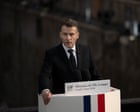
France will increase the size of its nuclear arsenal for the first time in decades and significantly intensify nuclear weapons cooperation with eight European allies including the UK as part of a “major” strengthening of its deterrence doctrine, Emmanuel Macron has said.
Amid growing concern among European leaders about wavering US commitments to help defend the continent, the French president said on Monday that Paris could deploy nuclear-capable Rafale fighter jets to partner countries such as Germany and Poland.
President Trump’s embrace of military action in Iran was spurred by an Israeli leader determined to end diplomatic negotiations. Few of the president’s advisers voiced opposition.
There was no immediate threat from Iran. But the president saw a chance to push a weakened government over the edge, and is betting he can spark a popular uprising.
Donald Trump’s likely casus belli for an attack on Iran – which would be the largest US intervention since the Iraq war – is fraught with contradictions, and his top advisers have been left to cover for him as the White House makes the case for intervention.
In his State of the Unionaddress this week, Trump alleged that Iran posed a direct threat to the US and that the country was “working to build missiles that will soon reach the United States of America”. But that claim has not been backed up with evidence by the White House or the Pentagon, and US intelligence reports from just last year say that it would take Iran 10 years to develop an intercontinental ballistic missile that could reach the US.

 Anmelden