India’s most dramatic step in more than a decade to curb speculation in the foreign-exchange market delivered only fleeting gains, with the rupee’s initial jump reversing.
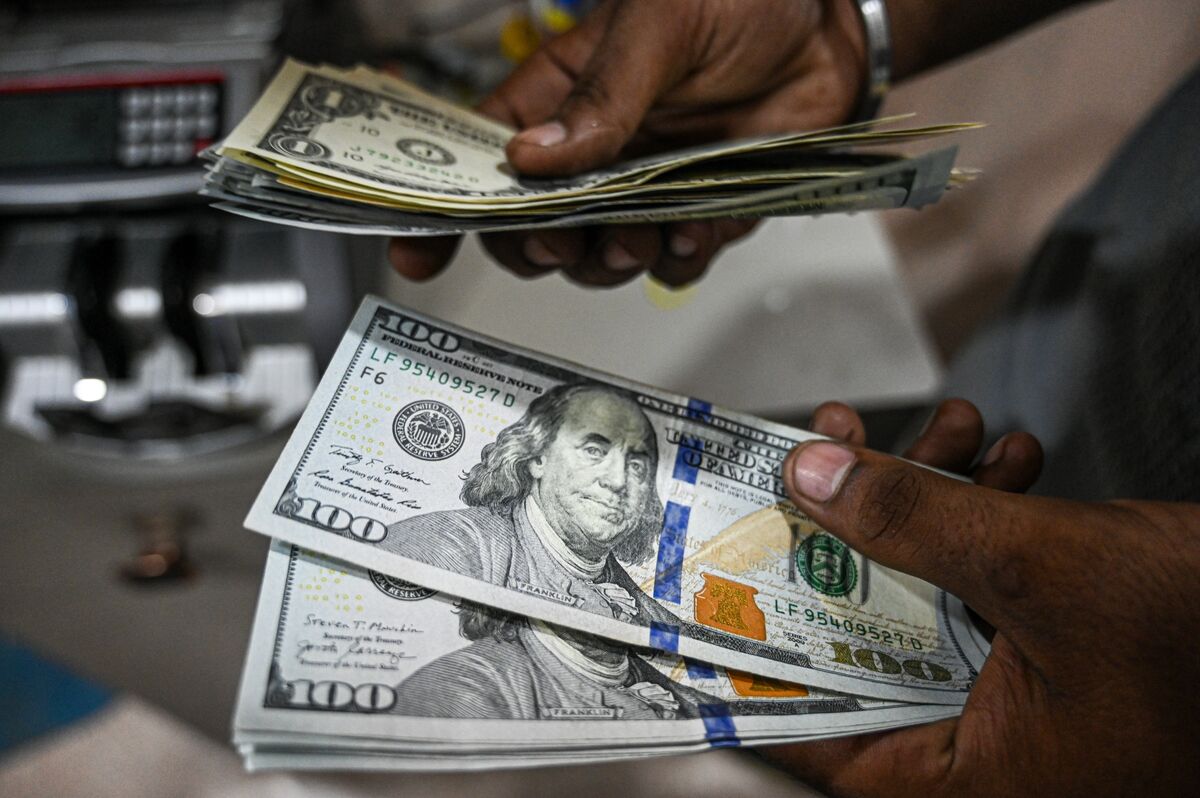
500 rupee banknotes counted by a cash counting machine at a currency exchange in New Delhi, India, on Saturday, Aug. 30, 2025. The Indian rupee slumped to a record low versus the dollar on concern that 50% US tariffs will hurt the country’s economic growth and corporate earnings. Photographer: Prakash Singh/Bloomberg
Lenders in India are urging the central bank to rethink new rules for foreign-exchange transactions designed to shore up the rupee, saying the measures would saddle them with large losses, according to people familiar with the matter.
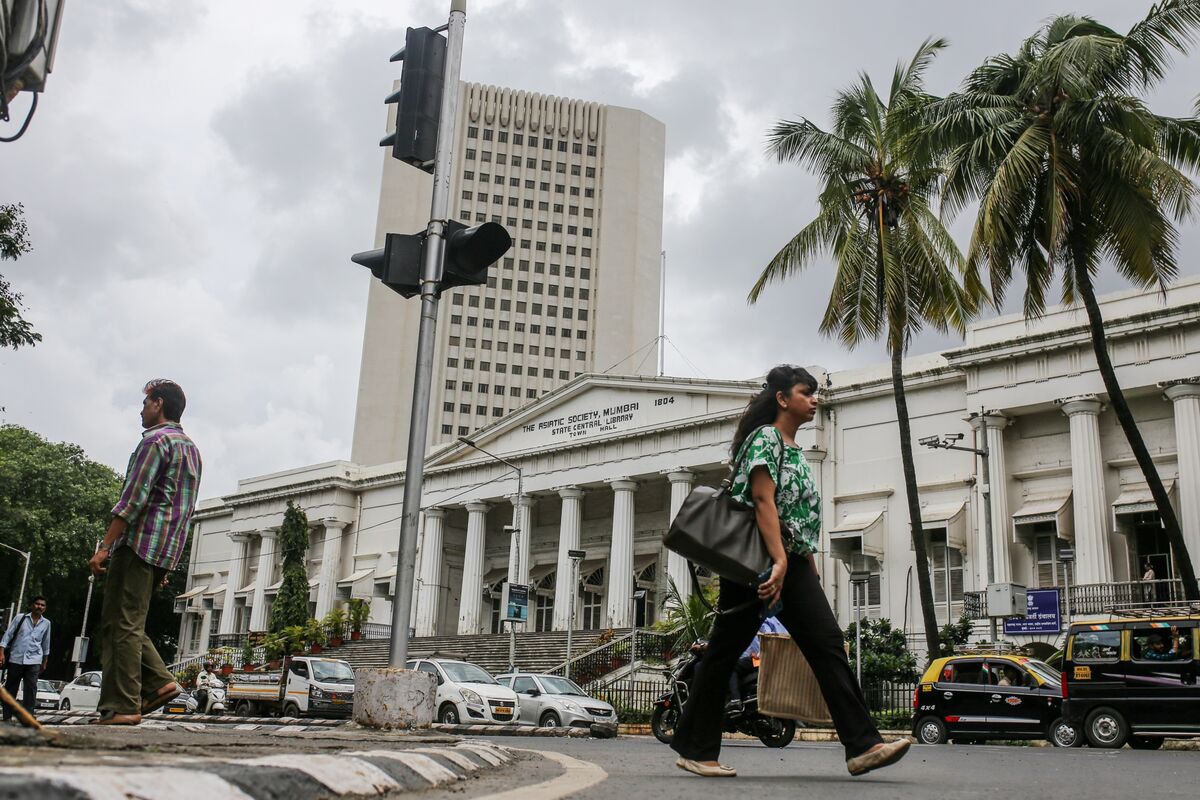
The Reserve Bank of India (RBI) headquarters building in Mumbai, India, on Wednesday, Aug. 6, 2025. RBI Governor Sanjay Malhotra said the country contributes more to global growth than the US, responding to President Donald Trump’s recent remark dismissing the South Asian nation as a “dead” economy.
India’s central bank stepped up its defense of the battered rupee, rolling out a measure to curb speculation after it slid to a new low amid concerns of a widening trade gap driven by the US-Iran war.
The Reserve Bank of India (RBI) headquarters in Mumbai, Friday, Feb. 6, 2026. The Reserve Bank of India kept its benchmark interest rate unchanged on Friday, signaling an end to its easing cycle as the economy gets a boost from higher government spending and a surprise US trade deal to lower tariffs.
India will borrow 8.2 trillion rupees ($86.5 billion) in the first half of the financial year beginning April 1, around half of the amount scheduled for the full 12-month period, the government said in a statement Friday.
India’s rupee weakened to a fresh low, lagging behind regional peers, as foreign investors sped up sales of stocks and bonds on fears that elevated energy prices would drive up the import-heavy nation’s inflation and trade deficit.
Indian insurers asked their regulator to soften a proposal that requires them to set aside capital when they buy state bonds, warning it would make the debt less attractive to own, according to people familiar with the matter.
India ramped up use of a key tool for defending the rupee to record levels as the currency weakened to an all-time low against the dollar, according to people familiar with the matter.
Local shares have shed more than $600 billion in market value this year.
An employee counts US dollar banknotes at a currency exchange in New Delhi, India, on Saturday, Aug. 30, 2025. The Indian rupee slumped to a record low versus the dollar on concern that 50% US tariffs will hurt the country's economic growth and corporate earnings. Photographer: Prakash Singh/Bloomberg
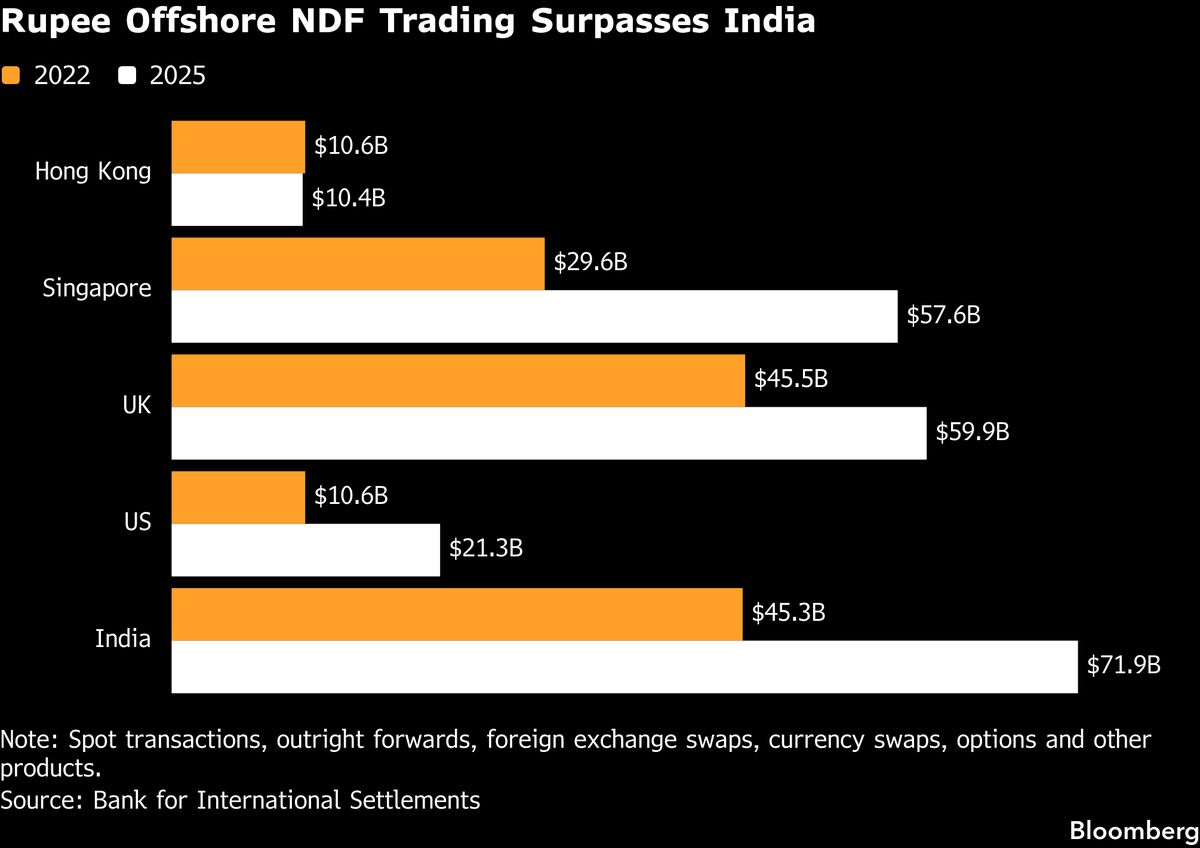
Global lenders pushed back against a proposal by India’s central bank for more reporting of offshore rupee trades, according to people familiar with the matter.
Bundles of 500 rupee banknotes at a currency exchange in New Delhi, India, on Saturday, Aug. 30, 2025. The Indian rupee slumped to a record low versus the dollar on concern that 50% US tariffs will hurt the country's economic growth and corporate earnings. Photographer: Prakash Singh/Bloomberg
India’s rupee advanced the most in Asia on Thursday as the central bank stepped in to shore up the currency after it weakened to a record low in the previous session.
Bundles of 500 rupee banknotes at a currency exchange in New Delhi, India, on Saturday, Aug. 30, 2025. The Indian rupee slumped to a record low versus the dollar on concern that 50% US tariffs will hurt the country's economic growth and corporate earnings. Photographer: Prakash Singh/Bloomberg
India’s rupee fell to a record low, while stocks and bonds declined amid concerns that rising crude prices — driven by the escalating conflict in the Middle East — may stoke inflation and worsen the country’s widening trade deficit.
500 rupee banknotes counted by a cash counting machine at a currency exchange in New Delhi, India, on Saturday, Aug. 30, 2025. The Indian rupee slumped to a record low versus the dollar on concern that 50% US tariffs will hurt the country’s economic growth and corporate earnings. Photographer: Prakash Singh/Bloomberg
Costly oil will pressure the rupee and push up inflation, Macquarie warns.
The Indian Oil Corp. logo is displayed on a petrol gas pump at a gas station in Mumbai, India, on Monday, May 26, 2013. Indian Oil is scheduled to release fourth-quarter earnings on May 29. Photographer: Vivek Prakash/Bloomberg
Central banks in Indonesia and India intervened in the foreign-exchange markets to support their respective currencies as emerging market assets came under pressure following the Iran war.
Indonesian 100,000 rupiah banknotes arranged in Bogor, West Java, Indonesia, on Wednesday, Sept. 10, 2025. Indonesia’s new finance minister unveiled a roughly $12 billion cash injection to stimulate lending, proving his commitment to President Prabowo Subianto’s growth agenda barely two days into the job. Photographer: Muhammad Fadli/Bloomberg
Indian banks’ bond holdings have neared the regulatory minimum threshold, prompting some to speed up purchases, with the treasurer at the country’s second-largest state lender saying higher yields are boosting demand.
Indian bankers that specialize in selling corporate debt securities are asking the financial regulator for permission to borrow funds against bonds, according to people familiar with the matter, as authorities themselves seek to deepen local capital markets.
The Securities and Exchange Board of India (SEBI) building at the Bandra Kurla Complex (BKC) in Mumbai, India, on Sunday, Feb. 1, 2026. Indian officials moved to counter concerns that the country may have made too many concessions to secure lower tariffs from the US after a surprise trade deal announced by President Donald Trump this week.
Retail investors’ favorite stocks are down a median 20% since January 2025.
The National Stock Exchange (NSE) building in Mumbai, India, on Monday, Nov. 10, 2025. SoftBank Group Corp.-backed Lenskart Solutions Ltd. swung between gains and losses on its Mumbai trading debut after the company’s initial public offering raised 72.8 billion rupees ($821 million) and fueled a debate over soaring Indian startup valuations. Photographer: Dhiraj Singh/Bloomberg

 Anmelden