Campaigning in Newcastle before next month’s local elections shows the rise of the far right, the climate and cost of living are concerning voters as much as the Middle East
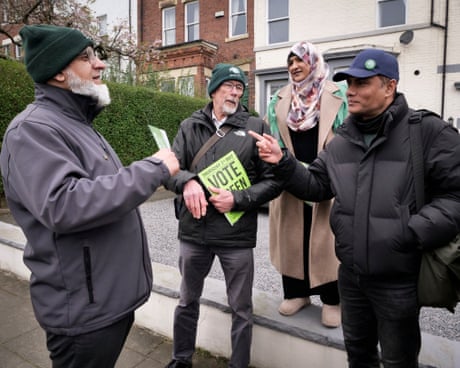
Mohammed Suleman, a self-described “straight-talking Geordie”, doesn’t love politics. The taxi driver and businessman prefers to focus on community initiatives. But when the time came, he voted Labour as the lesser of two evils.
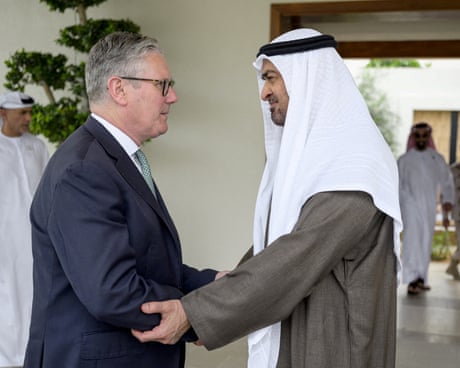
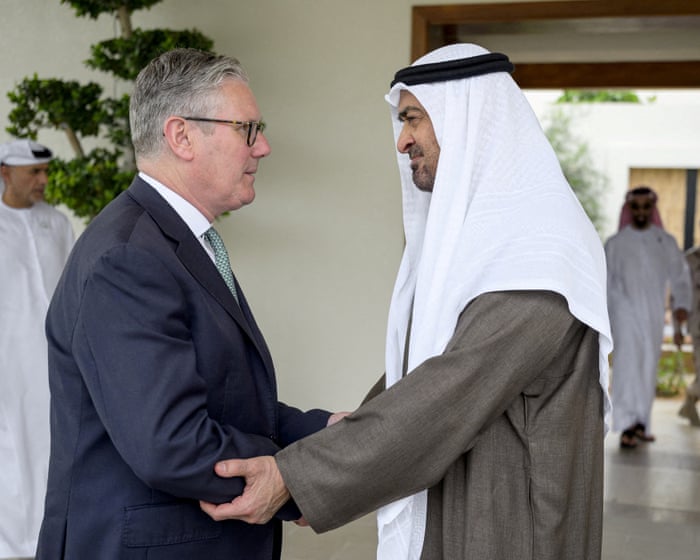
Prime minister has been in talks with Saudi crown prince and UAE president today
In interviews this morning Yvette Cooper, the foreign secretary, declined to confirm reports that a Russian warship has been escorting two sanctioned Russian ships through the English channel.
What I can tell you is that we have given permission now for action to be taken against the Russian shadow fleet. Operational decisions then have to be taken in the right way by the military.
There are indications of the way in which not just the Russian shadow fleet is operating, but also the way in which we are seeing increased Russian threats, not just to the UK, but across Europe as well.
Previous Labour voters in Yardley discuss issues including cost of living, public services and the Iran war
Almost two years into Keir Starmer’s government, the polls suggest that many swing voters, including some of those who voted Labour, are unimpressed with how the country is being run.
In the constituency of Birmingham Yardley, a focus group of eight previous Labour voters last week found support was now splintering in different directions, with one person considering going to Reform and several to the Greens. The group, convened by More in Common, had very little good to say about the government on the key issues.
PM will meet leaders in the region to discuss diplomatic efforts to support the ceasefire agreed between the US and Iran
OpenAI, the company behind ChatGPT, is proposing the extension of the four-day working week, as a response to AI taking over some of the work done by humans. But for the Conservative party the four-day working week, at least in the public sector, is viewed as a menace. Officially, that’s a value-for-money position, but it also overlaps with their opposition to civil servants working from home, which has some of the traits of a culture war obsession.
Today the Conservatives have announced that, if they were in government, they would ban councils from letting staff work a four-day working week on full pay. Explaining why, the Tories say in a news release:
The four-day working week, as introduced by Liberal Democrat-run South Cambridgeshire district council, has left residents with more council tax for less public service. Bin collectors and social housing officials receive 100 per cent of their pay for around 80 per cent of their originally contracted hours.
The Labour government have failed to act. As communities secretary, Angela Rayner scrapped [Whitehall opposition to the South Cambridgeshire policy]. Labour are refusing to legislate against a four-day week, giving councils an effective green light to get away with charging more for less work. Consequentially, Labour-run Cambridge City Council has become the second council to sign up to the four-day week.
Those areas which saw a statistically significant improvement include: the percentage of calls answered by the contact centre; the average number of days taken to update housing benefit and council tax support claims; the average number of weeks for householder planning applications to be decided; the percentage of planning applications (both large and small) decided within target or agreed timescales; the percentage of council house repairs complete within 24 hours; [and] the percentage of complaints responded to on time.
If performance variations caused by Covid are discounted, every single service monitored either got better or stayed the same.
Keir Starmer is facing increasing pressure to limit US access to British airbases after Donald Trump threatened “a whole civilisation” would die if Iran ignored his demands, comments that Downing Street has not directly criticised.
No 10 has allowed US forces to use UK bases only for defensive missions against Iran, such as targeting missile sites, ruling out involvement in attacks on civilian infrastructure such as power stations, which the US president has threatened.
Guardian journalist among those to get surprise request, though Farage denies party are ‘begging’ people to stand
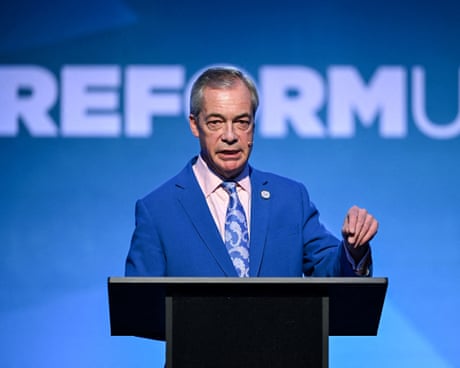
Reform UK has been cold calling people asking them to become “paper” candidates for the party at the local elections, as parties dash to sign up enough names before Thursday’s deadline.
Nigel Farage’s party has been ringing members of the public asking them to stand despite apparently knowing very little about them except that they have signed up for Reform’s email updates.
The Reform UK leader says he is ‘shocked’ by the remarks which were ‘over the top in every single way’
The Green party is backing resident doctors who are on strike. This morning the party issued a statement on the dispute from its co-deputy leader, Mothin Ali, saying:
Rather than shifting goalposts or arm twisting resident doctors with threats over training places, Wes Streeting needs to get serious about resolving resident doctors long term concerns over pay, training and working conditions. The government’s 10-year plan for the NHS will go nowhere if the workforce feels unappreciated, devalued and demotivated.
I think I’m going to stay out of the selection of music by different bands. We live in a free country; people are going to say things. Let’s just let people listen to the music they want to.
People should choose their music and they don’t really they need advice from John Swinney unless they want to listen to The Jam or Amy McDonald.
Well, the government should go on and take their decisions within their powers, but I’m not going to give a running commentary on music taste.
Keir Starmer has used a series of new workers rights that come into force on Monday to attack the Green party, saying a vote for Labour’s rivals puts such progress on sick pay, parental leave and zero-hours contracts at risk.
The prime minister also took a swipe at business figures and opponents of what he described as the biggest strengthening of workers’ rights in a generation,dismissing “vested interests” who had warned against them.
With this escalating cost of living crisis, so many are really suffering – yet Labour lacks the imagination, boldness and will to do anything about it
Six weeks ago, I was doing what I’ve always done – working as a plumber in people’s houses. I’d just completed a plastering qualification and was looking forward to putting it to good use. Now, I’m here in parliament, and to call it a culture shock would be an understatement.
It’s easy to see why a lot of MPs don’t understand how hard things in the country are right now. This place is a bubble. And there just aren’t enough of us here who get it; who come from working-class backgrounds, who’ve had ordinary jobs like me.
Hannah Spencer is the Green party MP for Gorton and Denton
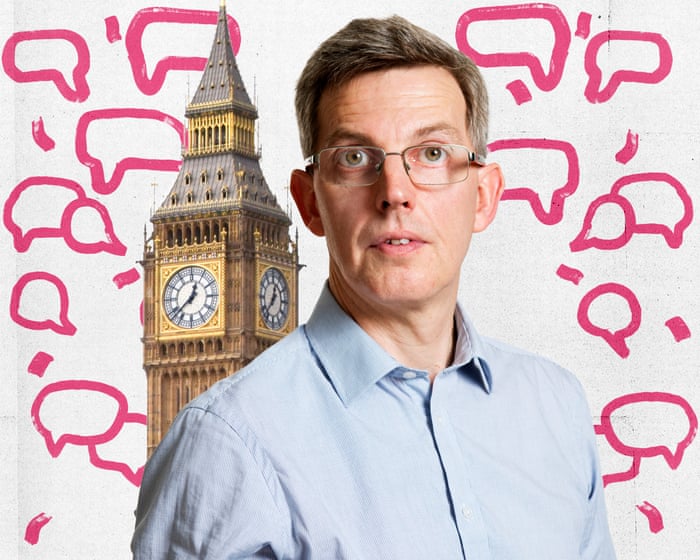
Post your questions below to get insight from the Guardian’s politics live blogger on the future of Labour and the role of the political reporter
Q: Do you agree with the Tories about wanting more oil and gas drilling from the North Sea?
Davey says Kemi Badenoch claims she can get an extra £2.5bn in tax revenue by allowing more exploration in the North Sea. He says she is “just lying”. He says everyone knows that that is not realistic.
Charity calls for a levy on the very richest and the closing of tax loopholes in its report on offshore wealth
The global super-rich may have as much as $3.55tn hidden away from tax authorities, according to estimates by Oxfam.
The charity renewed its call for a wealth levy and urged governments to close tax loopholes as it published its latest analysis of the scale of offshore holdings.
‘I’m angry that Donald Trump has chosen to go to war in the Middle East,’ chancellor says
Starmer says he understands why people are concerned about the cost of living.
He says he has already set out a five-point plan to deal with the crisis.
Just look at what’s happening today. Today your energy bills will be cut because of the action that we took at the budget. And whatever happens in Iran, that price is now fixed until July.
The most effective way we can support the cost of living in Britain is to push for de-escalation in the Middle East, and a reopening of the strait of Hormuz, which is such a vital route for energy.
To that end, we’re exploring each and every diplomatic avenue that is available to us.
Report by Verdant says rooting out waste, fraud and tax avoidance would save money that could help improve public services
A “Doge of the left,” could save up to £30bn a year for taxpayers by rooting out waste, fraud and tax avoidance, according to the first report from a new green thinktank.
Launched amid growing interest in the future manifesto of Zack Polanksi’s Green party, the Verdant thinktank will be co-chaired by James Meadway, a former adviser to Labour shadow chancellor John McDonnell, and civil society campaigner Deborah Doane.
Chris Parry, the party’s Hampshire mayoral candidate, was reportedly suspended after derogatory remarks about Jewish group
The live feed from the Lib Dem local elections campaign launch did not last long, and it did not include footage of Ed Davey taking questions from reporters. But this is what the Lib Dems are saying about their five key campaign issues.
-Cut the cost of living: A plan to halve energy bills within a decade, saving households an average of £870 a year
-Fix the NHS and care: Guarantee the right to see a GP within seven days (or 24 hours for urgent cases) and ending 12-hour A&E waits.
-Rescue high streets: Give an emergency cut to VAT for hospitality businesses, to bring prices down and boost struggling high streets.
-Clean up rivers: Ban water companies from dumping raw sewage into local rivers and coastal areas.
-Restore community policing: Ensure visible, effective local policing to reduce crime.
Local elections are often regarded as a referendum on the sitting government, with many previous administrations taking a bloody nose from the electorate but successfully fighting back by the next general election.
Senior Labour figures have taken to reeling off a list of midterm results – 1999, 2003, 2012 – to prove that point. “As we get closer to the general election, it will be less about people’s view of the parties generally and more about the actual choice in front of them,” one said.
Tribalism and political ambiguity worked with a less fragmented electorate. The party must reconnect with its base – and be open to work with other progressives
Led by a probably doomed prime minister, presiding over a struggling economy, exposed by an ongoing scandal, besieged by populist insurgents to its right and left, ambushed by a war that will bring higher inflation and public debt, and predicted to win just 75 seats at the next general election, according to the website Electoral Calculus, Labour is in an unprecedented crisis. The party will have to do unprecedented things to get out of it.
One could be making its political approach both narrower and more expansive. This would require Labour to drop habits and orthodoxies which have become ingrained since the 1980s.
The foreign secretary has condemned Iran’s strikes on a joint US-UK military base on the island of Diego Garcia, while stressing the UK has “taken a different position from the US and Israel” on the conflict.
Yvette Cooper said ministers wanted to see a swift resolution to the war, adding the government was supporting defensive action against the “reckless Iranian threats”.
From Brexit to fiscal rules to living costs, diagnoses multiply. Steel policy points to a missing link – the need for a strategy to rebuild
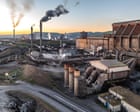
The government has raised tariffs to protect the steel industry. It also nationalised the UK’s remaining blast furnaces last year to keep them running. Both moves point to the same conclusion: the current economic model is not working. A series of interventions from Labour’s Sir Sadiq Khan and Angela Rayner as well as the Green party leader, Zack Polanski, this week suggests that an economic debate on the centre-left and left of politics is under way. The disagreement is no longer about whether there is a problem. It is where the problem lies.
Sir Sadiq, the London mayor, is right that Brexit has raised costs for businesses and households. Closer EU alignment would improve trade, investment and market access. That matters. But rejoining the EU won’t on its own rebuild the UK’s domestic capability. Ms Rayner points to a real institutional problem. If the Office for Budget Responsibility (OBR) understates the benefits of public investment, the state may be constraining itself unnecessarily. That matters too. However, changing the OBR model is not a strategy.
Do you have an opinion on the issues raised in this article? If you would like to submit a response of up to 300 words by email to be considered for publication in our letters section, please click here.
Nick Timothy said an event attended by the mayor of London that included prayers was an ‘act of domination’
Polanski says the government should be doing more to improve home insulation, and on the drive towards renewable energy.
And he says the government should commit to ensuring energy bills do not rise above the April-June price cap.
The government should guarantee right now that it will not allow energy bills to rise beyond the April-June price cap – instead setting aside approximately £8.4bn to prevent a rise of up to £300 per household that could be coming down the track.
No, it’s not cheap. But the alternative is unacceptable: if the price cap rises, we will see interest rate rises. Mortgage rates up. Bond yields up. And inflation up – and we will be back into the doom loop that has done untold damage to our economy and caused misery for households across the UK for years now.
There are ways to pay. Instead of scrapping the windfall tax on energy companies, as this government is planning to do, we should be strengthening it instead. We need a real, loophole-free windfall tax with no exemptions for reinvesting in fossil fuels. A robust tax that claws back every single pound of reckless profiteering from this crisis and repurposes it immediately to protect every home in the country. And while taxing extreme wealth in the ways we need to will take time to implement, there are levers the government could pull right now – like equalising capital gains tax with income tax and reforming the base, to raise £12bn.
It’s time for the government to act decisively, eliminate the uncertainty that is plaguing people and the markets and insulate us from some of the worst economic effects of Trump’s war.
This was not a war of self-defence, there was no imminent threat. Negotiations were ongoing. It was, as the BBC’s international editor said, a war of choice.
People across the Middle East are terrified of what Trump and Netanyanhu’s war will mean for them and their loved ones. And the repercussions are echoing across the world as instability spreads and oil prices spike.
People are already struggling so hard just to make ends meet. People feel like they’re running every day just to stay in the same place. The idea that yet again – for the second time in just a few years – that we are going to have to deal with another enormous spike in the cost of the basics is unacceptable.
It’s unacceptable because we didn’t need to be here. It’s unforgivable that just four years after we last saw an energy price shock, that one triggered by Putin’s illegal invasion of Ukraine, far too little has been done to protect this country, its people, and its economy – from the impact of yet another energy price shock.
A government led by the Green party would not set targets for GDP growth but would instead focus on people’s mental health, social cohesion and community welfare, Zack Polanski has said in a major speech to set out his plans for the economy.
In his first policy address since taking over as leader of the Greens in England and Wales six months ago, Polanski condemned what he called “rip-off Britain”, where a minority of asset owners benefited at the expense of people obliged to pay unaffordable sums for housing and other basics.

 Anmelden