Frustrated by Iran’s unwillingness to give up its stranglehold over the Strait of Hormuz, US President Donald Trump is trying to force the issue. The US military announced that it had imposed a full blockage of Iran’s southern coastline, including traffic from there through the Strait of Hormuz, as of April 13.
A satellite view of the Strait of Hormuz in the Persian Gulf, on April 9.
Three tankers — the first to attempt a transit of the Strait of Hormuz since the US announced a blockade — have successfully cleared the waterway. After sailing near the Iranian coast, the trio have now emerged into open waters.
The New Future (in white) and Auroura (blue) appear to be attempting a transit through the Strait of Hormuz just south of Iran’s Larak island on Monday morning.
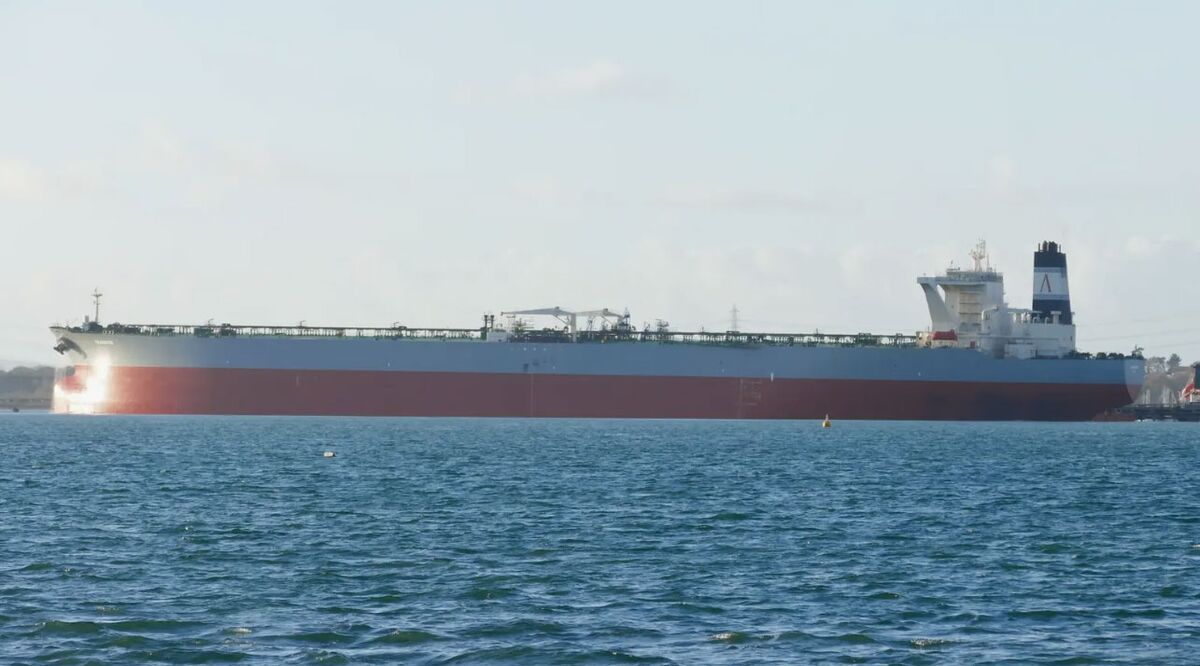
Two sanctioned supertankers laden with Iranian crude have dropped anchor off Indian ports, marking what could be the first such cargoes to arrive in the country in nearly seven years, just as the US escalates efforts to curb Tehran’s exports.
The Felicity (in blue) and Jaya (white) both signaled over the weekend that they’re outside Indian ports, laden with Iranian crude, ship-tracking data show.
Two empty crude tankers attempted to make their way through the Strait of Hormuz and into the Persian Gulf on Sunday, only to make last-minute U-turns just as peace negotiations between the US and Iran broke down, threatening a fragile ceasefire.
Two empty crude tankers attempted to make their way through the Strait of Hormuz and into the Persian Gulf on Sunday, only to make last-minute U-turns just as peace negotiations between the US and Iran broke down, threatening a fragile ceasefire.
Two Chinese supertankers loaded with crude sailed through the Strait of Hormuz hours after a Greek vessel moved through the waterway, marking a significant uptick in oil shipping traffic days after a fragile ceasefire between the US and Iran was announced.
A Russian-flagged supertanker passed through the Strait of Hormuz into the Persian Gulf, marking a rare passage for one of the nation’s ships as traders scrutinize every transit through the war-hit waterway.
Two Japanese crude tankers are heading east along the Persian Gulf in the direction of the Strait of Hormuz, adding to a growing number of vessels gathered at the entrance to the waterway during a US-Iran ceasefire, even as President Donald Trump ramps up criticism and transits remain limited.
Vessels have been gathering near the Strait of Hormuz since a US-Iran ceasefire was announced.
Ship traffic through the Strait of Hormuz remained blocked Thursday, limited to a handful of Iran-linked ships, another sign that a fragile ceasefire between the US and Iran has yet to improve flows through the world’s key energy chokepoint.
Vessels passing through Strait of Hormuz in Oman on April 8.
Two fully laden Chinese oil tankers are waiting near the Strait of Hormuz with a third on its way, putting them in a position to become the first such vessels to leave the Persian Gulf under a day-old US-Iran ceasefire, even as shipowners scrutinize the details of the truce.
An oil tanker is docked unloading crude oil at the port in Qingdao, in China's eastern Shandong province, on April 7, 2026. (Photo by CN-STR / AFP via Getty Images) / China OUT
Shipowners are rushing to understand the fine print of a US-Iran ceasefire that could temporarily unblock the Strait of Hormuz and, at least in theory, provide an exit window for more than 800 vessels trapped in the Persian Gulf.
Shipowners are rushing to understand the fine print of a US-Iran ceasefire that could temporarily unblock the Strait of Hormuz and, at least in theory, provide an exit window for more than 800 vessels trapped in the Persian Gulf.
Iran is tightening control over the strategic waterway even as the US demands a reopening.
US President Donald Trump during a news conference in the James S. Brady Press Briefing Room of the White House in Washington, DC, US, on Monday, April 6, 2026. President Donald Trump said talks with Iran are "going well" ahead of a Tuesday night deadline to agree to a deal, even as he insisted that freedom of navigation through the Strait of Hormuz must be part of any agreement. Photographer: Aaron Schwartz/CNP/Bloomberg
India is set to import the most oil from Venezuela in almost six years, helping the world’s third-largest crude importer replace Middle East grades disrupted by the Iran war.

 Anmelden