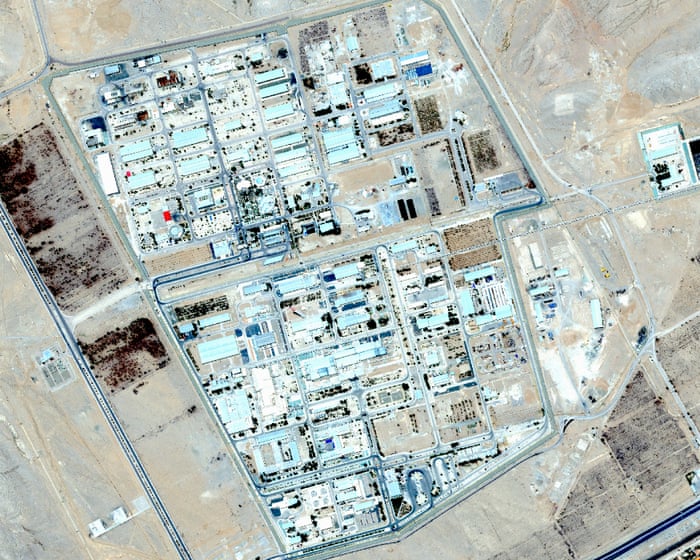
Iranian leaders fear being burned again by President Trump, who tore up a nuclear agreement reached during the Obama administration after lengthy negotiations.
President Trump is confronting a crisis that is not bending to his narrative of a “pretty reasonable” new regime in Iran and all-but-assured victory for the United States.
President Trump in Miami last week. Mr. Trump has declared a “regime change” accomplishment in Iran, even though analysts believe the war may have only increased the internal sway of Iran’s Islamic Revolutionary Guards Corps.
Pyongyang making ‘very serious’ progress on producing weapons, with rapid rise in activity at main nuclear complex
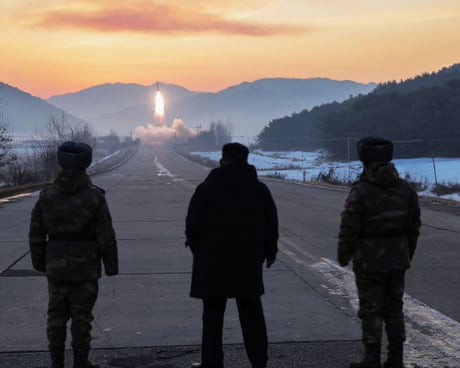
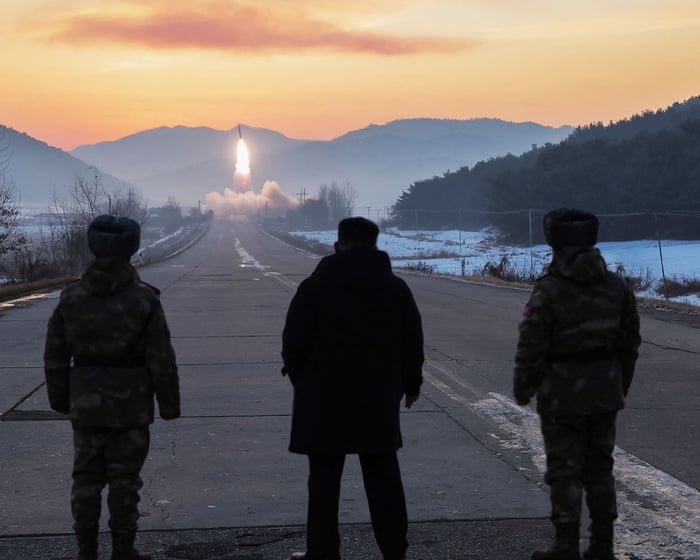
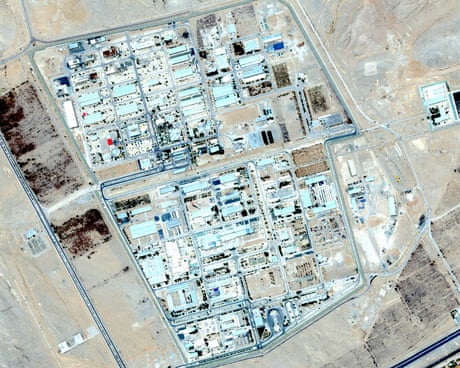
North Korea has made “very serious” progress in its ability to produce more nuclear weapons, the head of the UN’s nuclear watchdog has said, in another sign that the regime is seeking to use its nuclear arsenal to ensure its survival.
North Korea is thought to have assembled about 50 nuclear warheads, although some experts are sceptical of its claims that it is able to miniaturise them so they can be attached to long-range ballistic missiles.
The United States proposed a 20-year “suspension” of all nuclear activity, even as President Trump demands assurances that Iran can never build a nuclear weapon.
Vice President JD Vance arriving at Joint Base Andrews from Islamabad, Pakistan, on Sunday. Mr. Vance there were “some good conversations” with Iran in Pakistan, and the ball is now in Tehran’s court.
Vice President JD Vance in the Oval Office with President Trump last month. Mr. Vance is to lead a U.S. delegation to Islamabad for a meeting on Saturday with Iranian officials.
The Lib Dems’ Sue Miller has spent most of her life trying to reduce the risk of nuclear war. And it’s not going well. Why are so few people talking about non-proliferation, let alone disarmament?
Almost the mildest remark that Sue Miller makes about nuclear weapons is also the scariest: “The last people to take a big interest in any of this were Gordon Brown and Margaret Beckett.” Those people seem such a long way away – Brown, of course, still campaigns valiantly against poverty, and Beckett is a working baroness, but as voices against the global buildup of nuclear arms, theirs are so historical as to be almost nostalgic.
Yet the Doomsday Clock, the Bulletin of the Atomic Scientists’ symbolic representation of how near the world is to destroying itself, has never been closer to midnight than it is now: 85 seconds (and this was prior to the current war in Iran). Russia has been making thinly veiled threats of “tactical” use since its invasion of Ukraine, while its drone incursions into Nato nations have “heightened European threat perceptions” (as the bulletin puts it), without those perceptions driving anyone’s thoughts towards nuclear de-escalation, let alone disarmament. Meanwhile, non-nuclear European nations are talking about developing “nuclear latency” – building the ability to develop nuclear capacity at speed.
In a series of Situation Room meetings, President Trump weighed his instincts against the deep concerns of his vice president and a pessimistic intelligence assessment. Here’s the inside story of how he made the fateful decision.
The decision by President Trump to give the go-ahead to join Israel in attacking Iran was influenced by a presentation by Prime Minister Benjamin Netanyahu in February that led to a series of discussions inside the White House over the following days and weeks.
While President Trump still suggests that Iran is begging for a deal, intelligence analysis generated by the United States and some of its closest Western allies suggests the opposite.
President Trump faces the possibility that at the end of his own two-to-three week window for wrapping up the war in Iran, nothing much will have changed.
US president’s apparent decision to leave highly enriched uranium in hands of regime creates a more risky scenario than before the war began, experts say
Donald Trump has said he does not care about Iran’s stock of highly enriched uranium (HEU), arguing it was deep underground and could be monitored by satellite, raising questions about one of the key US justifications for the war.
Experts said that if the US-Israeli offensive against Iran concluded with the Tehran government still in control of its 440kg HEU stockpile, it would be significantly closer to the capability of making nuclear warheads than if the US had pursued a potential negotiated settlement that was on the table at the time the US and Israel launched the war on 28 February.
The United States and Israel have done significant damage to Iran’s military capabilities. But Iran still fires missiles, has nuclear material and coordinates with militias in the region.
A new mural in Valiasr Square in Tehran on Wednesday. A large number of Iran’s ballistic missiles and launchers remain undamaged after a month of airstrikes by the United States and Israel.
Multiple U.S. intelligence agencies have assessed that the Iranian government is not, for now, willing to engage in serious negotiations over ending the war.
Joani Reid MP reportedly swapped flirtatious messages with senior officer in charge of nuclear-armed submarine
A Royal Navy captain in charge of one of Britain’s nuclear-armed submarines stepped back from his duties over his relationship with the MP Joani Reid, whose husband faces allegations of spying for China.
The married senior officer was investigated by the navy last year over his contact with Reid after the messages, described as inappropriate, prompted an assessment of a potential blackmail risk, the Financial Times first reported.

 Anmelden