President Donald Trump’s administration has given a 90-day extension to a shipping waiver making it easier to move oil, fuel and fertilizer around the US, marking the latest effort by the White House to counter supply disruptions tied to the Iran war.
The Enterprise Marine Terminal in Freeport, Texas. Photographer: Mark Felix/Bloomberg
President Donald Trump and his officials tell Americans almost daily that the spike in fuel costs is a temporary blip that will reverse just as soon as he reaches a deal to end the war in Iran.
A driver refuels a tractor trailer with diesel fuel at a truck stop in Tracy, California. Photographer: David Paul Morris/Bloomberg
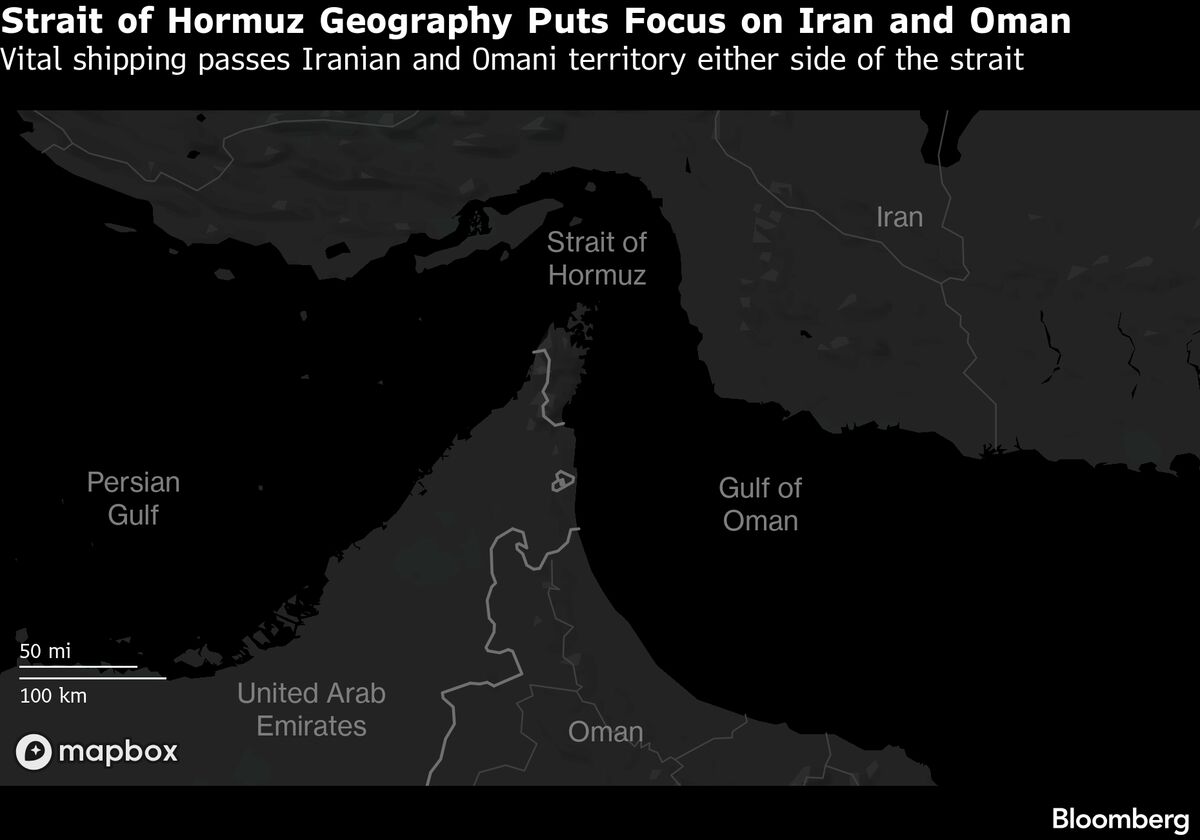
The US and Iran are locked in a battle for control of the Strait of Hormuz after failing to meet for a fresh round of peace talks, with both sides blocking the waterway to gain leverage during an extended ceasefire.
US forces patrol the Arabian Sea near the Touska cargo ship, on April 20. Source: US Navy
US President Donald Trump indefinitely extended a ceasefire with Iran after the two sides failed to meet for more peace talks, with the war developing into a game of brinkmanship over the critical Strait of Hormuz.
US President Donald Trump departs after speaking in the State Dining Room of the White House in Washington, DC, US, on Tuesday, April 21, 2026. The White House is hosting an event to honor NCAA collegiate national champions. Photographer: Daniel Heuer/Bloomberg
President Donald Trump announced he was extending a ceasefire with Iran indefinitely a day before it was set to expire, even as plans for a fresh round of talks between the two countries fell apart.
Security personnel stand guard at a checkpoint near the Serena Hotel at the Red Zone area in Islamabad, Pakistan on April 21.
A group of Venezuelan bond investors met for the first time with Trump administration officials last week, holding talks on their potential role in the nation’s economic recovery.
The Eisenhower Executive Office Building in Washington, DC
President Donald Trump invoked the Defense Production Act to provide federal funds for a wide range of energy projects, as his administration faces pressure to help curb rising oil, gasoline and electricity costs.
President Donald Trump invoked the Defense Production Act to provide federal funds for a wide range of energy projects, as his administration faces pressure to help curb rising oil, gasoline and electricity costs.
The US on Friday issued a license letting countries buy more Russian oil that’s already been loaded on tankers, part of the White House’s push to prevent prices from surging.
The Valero Port Arthur Refinery in Port Arthur, Texas, US, on Tuesday, April 14, 2026. US natural gas futures ended lower for a fifth consecutive session, erasing earlier gains as traders weighed plunging oil prices against mixed weather outlooks. Photographer: Mark Felix/Bloomberg
Trump administration officials urged US oil producers to boost output, driving home a message to the industry that’s become more urgent amid the war in Iran.
A pumpjack in Martin County, Texas, US, on Saturday, March 15, 2025. The Permian Basin, a sprawling shale patch that lies beneath Texas and New Mexico, is North America's most prolific shale patch.
Treasury Secretary Scott Bessent reaffirmed that the US would not renew general licenses that allowed for the temporary sale of certain Russian and Iranian crude.
Oil pumping jacks operate in an oilfield near Almetyevsk, Tatarstan, Russia.
The Trump administration will allow a waiver temporarily authorizing the purchase of certain Iranian crude oil to expire this weekend.
The impounded Iranian crude oil tanker, Grace 1, is silhouetted as it sits anchored off the coast of Gibraltar on Saturday, July 20, 2019. Tensions have flared in the Strait of Hormuz in recent weeks as Iran resists U.S. sanctions that are crippling its oil exports and lashes out after the seizure on July 4 of one of its ships near Gibraltar. Photographer: Marcelo del Pozo/Bloomberg
The US and Iran are looking to arrange a second round of peace talks in the coming days as a standoff in the Strait of Hormuz worsens a global energy crisis and complicates diplomatic prospects.
The Rich Starry (in white) is currently transiting the Strait of Hormuz signaling Chinese ownership. The Elpis had passed through a few hours earlier.
The Trump administration will allow a waiver temporarily authorizing the purchase of certain Iranian crude oil to expire this weekend.
The impounded Iranian crude oil tanker, Grace 1, is silhouetted as it sits anchored off the coast of Gibraltar on Saturday, July 20, 2019. Tensions have flared in the Strait of Hormuz in recent weeks as Iran resists U.S. sanctions that are crippling its oil exports and lashes out after the seizure on July 4 of one of its ships near Gibraltar. Photographer: Marcelo del Pozo/Bloomberg
Indian Prime Minister Narendra Modi said he spoke with US President Donald Trump to discuss the Iran war and situation in the Strait of Hormuz, as a US blockade of the waterway risks exacerbating a global energy crisis.
Narendra Modi, India's prime minister, speaks during a news conference with Mark Carney, Canada's prime minister, not pictured, at Hyderabad House in New Delhi, India, on Monday, March 2, 2026. Carney met Modi in New Delhi on Monday to reset relations after years of strain, with both leaders looking to clinch deals to boost trade and supply chains.
President Donald Trump said the US will blockade the Strait of Hormuz following the failure of peace talks with Iran in Islamabad this weekend, a move that will likely exacerbate oil and fuel shortages globally.
President Donald Trump said the US will blockade the Strait of Hormuz following the failure of peace talks with Iran in Islamabad this weekend, a move that will likely exacerbate oil and fuel shortages globally.
Several Asian countries are pushing the US Treasury Department to renew a sanctions waiver allowing them to purchase Russian crude, according to people familiar with the matter.

 Anmelden