❌

Lese-Ansicht

What makes good ‘game feel’? These three titles have pinned it down perfectly

Pragmata, Saros and Vampire Crawler bring together aesthetics, responsiveness and creative opportunities in joyous ways that can’t be defined, only experienced

Game feel is one of the most elusive concepts in the glossary of interactive entertainment, at once perfectly clear and difficult to define. Obviously, it refers to what a game feels like to play, but where does that feeling come from? How does it manifest? Or consider it from a different angle. When the chef Samin Nosrat started her career at the renowned Chez Panisse in California, she began to understand that what diners really responded to in their food were four key factors – salt, fat, acid and heat – and how these elements interacted. This idea formed the basis of her bestselling cookbook. It perhaps also inspired a video game audio director to once compare game feel to eating a potato chip: the salt and fat are part of it but so are the crunch and the sensation of the chip dissolving in your mouth (pdf). Game feel is a combination of elements – the responsiveness of the controls, the intuitiveness of the action, the aesthetics of the world and the creative opportunities they engender – all coming together in the right quantities.

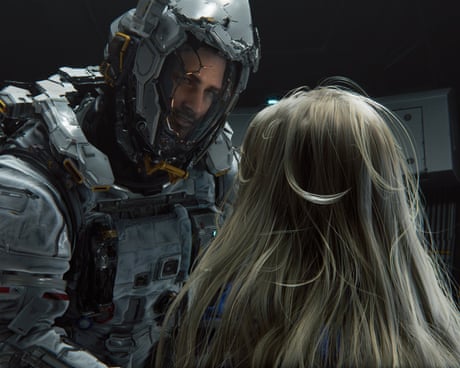
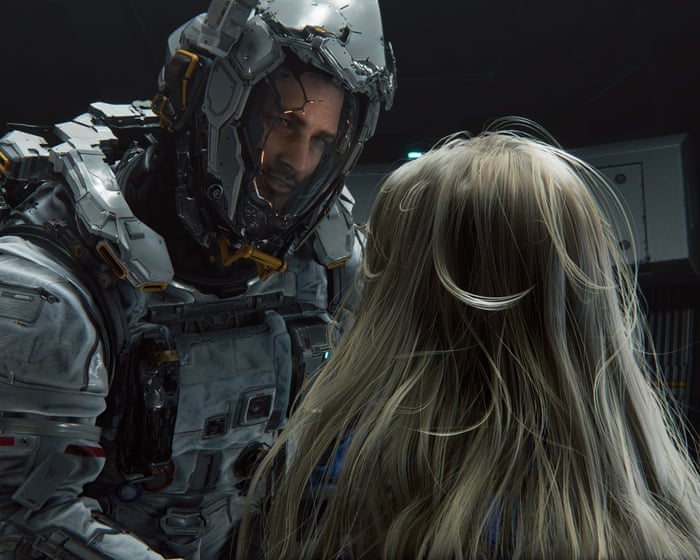
I’m thinking about this a lot right now, because three games released in the last few days illustrate the idea of good game feel beautifully. The first is Pragmata, Capcom’s sci-fi action adventure in which you explore an abandoned colony base with the help of a child-like android, who lets you hack robotic enemies, lowering their defences before you blast them to pieces. The hacking mini-game takes place on a grid with nodes that add power-ups to your hack attack. As you progress, you add new types of nodes, as well as new weapons, and the interplay between these elements is complex, multifaceted and fun. This takes place in a linear world filled with hidden areas, so exploration is guided but discovery is possible. You run, jump and glide – it all feels seamless. It is joyous simply to be there.

Continue reading...

© Photograph: Capcom
© Photograph: Capcom
© Photograph: Capcom

  •  

‘People still remember it 40 years later’: the making of Chuckie Egg

The iconic game that came to define 8-bit programming still conjures flutters of nostalgia 40 years on – all thanks to a 15-year-old tea boy who worked a Saturday shift in a computer shop in Greater Manchester

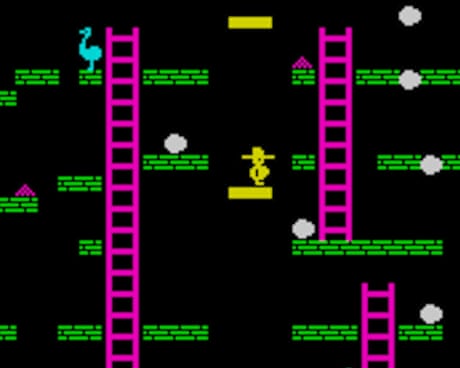
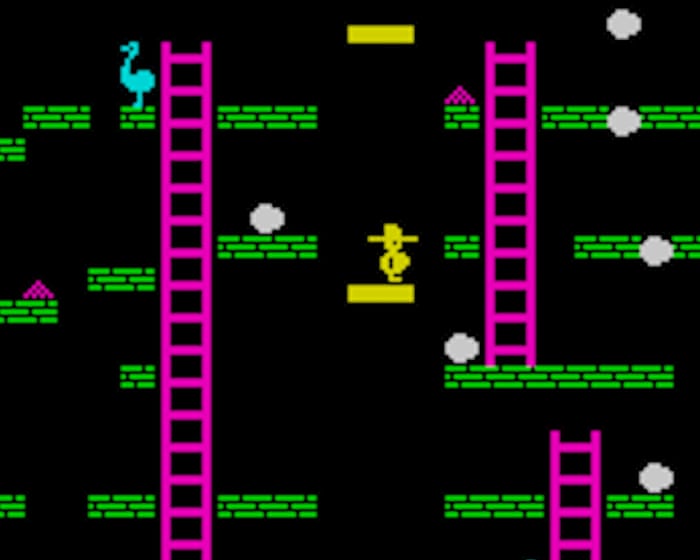
If you were playing games on a home computer in the early 1980s, you knew about Chuckie Egg. No question. This simple-looking platform game had you wandering around a chicken shed, collecting eggs and avoiding the patrolling hens. But when you reached level eight, a large duck was suddenly let loose and would stalk the player like a feathery missile, completely changing the pace and tactics of the game. It was a boss battle before boss battles existed.

Everyone knew about Chuckie Egg because everyone could play it. Originally released on the ZX Spectrum, BBC Micro and Dragon 32 in the autumn of 1983, it immediately topped the charts, encouraging its publisher, A&F Software, to begin porting it to as many machines as possible. Around 11 conversions followed, including the Commodore 64, Amstrad and Acorn Electron. I first played it on the BBC computer in my school library, but I also had it on my C64 and a friend played on his Speccy. Like Manic Miner, Bruce Lee and Skool Daze, it was woven into the tapestry of British 8-bit gaming culture.

Continue reading...

© Photograph: A&F Software, MobyGames

© Photograph: A&F Software, MobyGames

© Photograph: A&F Software, MobyGames

  •  

Clair Obscur and Dispatch share top honours at Bafta games awards

Role-playing adventure and superhero comedy among big winners on a varied night in London

With 12 nominations, acclaimed role-playing adventure Clair Obscur: Expedition 33 was expected to be the runaway success at the 2026 Bafta games awards, held in London on Friday evening.

And while it couldn’t quite match its nine wins at the Game Awards back in December, it was still the joint biggest winner on the night, taking best game and debut game as well as the performer in a leading role award for Jennifer English.

Continue reading...

© Photograph: Scott Garfitt/BAFTA/Getty Images

© Photograph: Scott Garfitt/BAFTA/Getty Images

© Photograph: Scott Garfitt/BAFTA/Getty Images

  •  

Super Mario what?! The seven best obscure Mario games

As The Super Mario Galaxy Movie storms the box office, we look back at the best forgotten games inspired by Tetris, Lemmings and … vitamins?

It should be no surprise that the latest Super Mario movie is smashing box office records – despite the, let’s say mixed, reviews. Nintendo’s iconic plumber has been a pop culture staple for 45 years, starring in some of the bestselling video games ever made, from the original Donkey Kong through to the joyous Super Mario Bros Wonder and the chaotic Mario Kart World.

But as with any storied showbiz career, there have been some lesser works. Who can forget – or actually remember – Hotel Mario, a door-shutting puzzle game for the doomed Philips CD-i console? Or what about Mario Teaches Typing, a 1992 educational game for the PC in which players navigate the Mushroom Kingdom by … correctly inputting words. Yet there have also been genuine treasures lost along the way. Here, then, are seven of our favourite much-overlooked Mario odysseys.

Continue reading...

© Photograph: Nintendo

© Photograph: Nintendo

© Photograph: Nintendo

  •  

How games capture the awe and terror of cosmic isolation

As real astronauts vanish behind the moon, games have long tried to evoke the fragile quiet of drifting through space

• Don’t get Pushing Buttons delivered to your inbox? Sign up here

Last week’s launch of the Artemis II space mission was a stunning spectacle, the 17-storey-high rockets erupting into cacophonous life before wrenching the craft through the Earth’s atmosphere. But the images that have come since hold just as much impact: the tiny Orion craft and its four-person crew drifting silently through space, further and further from home.

In his autobiography, the Apollo astronaut Michael Collins described this feeling perfectly. Left in the command module as Neil Armstrong and Buzz Aldrin touched down on the lunar surface, he wrote: “I am alone now, truly alone, and absolutely isolated from any known life. I am it. If a count were taken, the score would be three billion plus two over on the other side of the moon, and one plus God knows what on this side.”

Continue reading...

© Photograph: 505 Games

© Photograph: 505 Games

© Photograph: 505 Games

  •  

‘I am trapped in a sweet-smelling cycle of video game-branded toiletries’: Lush’s Mario Galaxy range, reviewed

From a subtle Princess Peach lip jelly to a Yoshi egg that’s been traumatising children, the cosmetic chain’s latest tie-in is out of this world

When The Super Mario Bros Movie came out in 2023, it came with a rather unlikely tie-in: a range of skincare and bathing products from cosmetics chain Lush. The store, known for its devotion to natural ingredients and support for social justice causes, didn’t seem like the obvious partner for a major video game franchise. Because of this, I thought I should try them out, assuming that my dalliance with beauty journalism would be short-lived.

I was wrong. The collection was so successful, Lush later released a Minecraft range, which I also reviewed, and now there’s a Super Mario Galaxy range to tie in with the new movie. Somehow, I have become the Guardian’s Lush correspondent and it seems I am now trapped in a sweet-smelling cycle of video game-branded toiletries. There are definitely worse fates, so I’m just going with it.

Continue reading...

© Composite: Lush

© Composite: Lush

© Composite: Lush

  •  

My ​quest to ​preserve VHS-​era ​gaming ​culture​, one eBay bid at a time

As physical media makes an unlikely comebac​k​ among younger gamers, the humble VHS emerges as an unexpected archive of gaming’s messy, magical evolution​ that I saw first time around

• Don’t get Pushing Buttons delivered to your inbox? Sign up here

As I am nostalgic and of a certain age, I recently bought a VHS video recorder, just for the retrospective thrill of it; then I won a 32-inch CRT television at an auction in Shepton Mallet. Partly, this was to play a few old videos I had found in my loft, including one of me appearing in a 1990s youth TV show talking about sexism and Tomb Raider. (I was against the sexism, to be clear). But it was also because I wanted a new way of spending my money on fragile video-game nostalgia.

The rise of the games industry in the 1980s and 90s coincided with the explosion of the home-video business, and the two crossed paths in lots of interesting ways. There are the obvious treasures I want to get hold of: VHS copies of Street Fighter: The Movie and the 1993 Super Mario Bros. movie, naturally, as well as early games-inspired hits such as The Last Starfighter, The Wizard and WarGames. I rented most of these from my local video shop in the 80s – which, like many others, also sold computer games by the budget publisher Mastertronic, another interesting (at least to me) crossover between these two entertainment formats.

Continue reading...

© Photograph: Tengku Bahar/AFP/Getty Images

© Photograph: Tengku Bahar/AFP/Getty Images

© Photograph: Tengku Bahar/AFP/Getty Images

  •  

The creator of Fortnite has laid off more than 1,000 staff – despite billions in revenue

Huge cuts announced this week show that truly no developer working in games is safe from corporate whims

The video game industry is currently experiencing a seemingly endless bout of ruinous deja vu. Every month, another publisher posts an all too familiar statement about job losses in its development studios. There will be airy expressions of regret and platitudes praising the skill and contribution of the imminently jobless; it is all filtered through layers of corporate doublespeak intended to disguise the human cost of downsizing.

On Tuesday, it was the turn of Epic Games, creator of Fortnite, one of the most successful titles on the planet. In a note posted online, CEO Tim Sweeney announced that more than 1,000 jobs would be lost – this followed the cutting of 830 staff in September 2023.

Continue reading...

© Photograph: M4OS Photos/Alamy

© Photograph: M4OS Photos/Alamy

© Photograph: M4OS Photos/Alamy

  •  

Resident Evil at 30: how Capcom’s horror opus has survived and thrived

From owing a debt to obscure Japanese horror Sweet Home to the influence of Aliens and Texas Chain Saw Massacre, the franchise continues to petrify players three decades on

To many of us playing and writing about video games in the 1990s, Resident Evil seemed to come out of nowhere. The emerging PlayStation and Saturn consoles were all about slick, bright arcade conversions – the shiny thrills of Daytona and Tekken – and Japanese publisher Capcom was in a rut of coin-op conversions and endless sequels to Street Fighter and Mega Man. Scary games were rare at the time and mostly confined to the PC. So when the news of a horror title named Biohazard (the Japanese name for the series) started to emerge in 1995, it caught the attention of games journalists as it seemed radically out of step with prevailing trends. Games were about power, but as early demos quickly revealed, Resident Evil was about vulnerability.

Thirty years later, it’s still here. The series has sold more than 180m copies worldwide, with 11 core titles and dozens of spinoffs and remakes, as well as film, television and anime tie-ins. Its characters and monsters are icons, its tropes now embedded in game design practice. What has allowed it to not only survive but flourish in such a rapidly changing industry? Why do we still let it scare us?

Continue reading...

© Photograph: Capcom

© Photograph: Capcom
© Photograph: Capcom
  •  

Mythmatch review – a match-three game made in heaven

Team Artichoke; PC/Mac
Ancient Greek gods, adorable raccoons and hypnotic puzzling from Olympus to the mortal realm and back

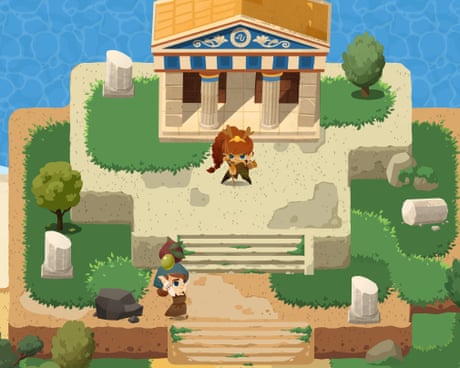
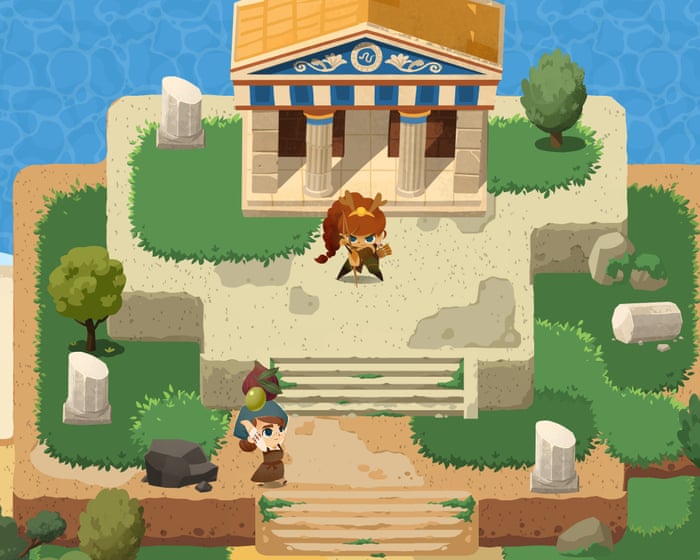
There’s been a trend for a while where familiar puzzle game genres are imbued with novel stories to give them depth and meaning beyond simply clearing a screen for points. Occult object sorter Strange Horticulture and historical romance card game Regency Solitaire are lovely examples, and now here’s Mythmatch, a match-three game in the style of Candy Crush or Bejeweled that’s also a warming tale of friendship and community set in a small town in ancient Greece. Interspersed with cerebral challenges are dialogue scenes with villagers and with gods which accentuate each other and give little clues that are picked up later, making this both puzzle game and communal oral drama.

You play as Artemis, the immortal daughter of Zeus, who is tired of getting overlooked for plum jobs in favour of her oafish brother Apollo (brilliantly portrayed as an insufferable proto-tech bro). When the role of God of the Hunt comes up, she applies, but finds she must first earn favour with a council of her elders on Mount Olympus, and they all have puzzle-based jobs for her. Hephaestus wants her to help make arrows and hammers in his foundry, while Apollo needs her to protect his collection of chimp soft toys (a not-so-subtle dig at NFTs). These mini-tasks take the form of match-three puzzles, though cleverly they also bring in elements of other puzzle games such as Plants vs Zombies and Overcooked.

Continue reading...

© Photograph: Team Artichoke

© Photograph: Team Artichoke

© Photograph: Team Artichoke

  •  

With its fluorescent characters and ASCII text, Marathon is a masterclass in 90s nostalgia

The revival of this 90s favourite is a retro-futuristic fever dream that is first incomprehensible, then thrillingly evocative. Plus, Donald Glover’s Yoshi debut

Back in the mid-1990s, when I was a staff writer for Edge magazine, Marathon was our multiplayer shooter of choice. We all worked on Apple Macs, not PCs, so Bungie’s sci-fi opus was one of the only networked shooters we could all play together. At the end of every day, staff from magazines around the company loaded it up and played for hours (usually with Chemical Brothers or Orbital blasting from the stereo). This was the era in which video games discovered club culture – Sony employed the legendary Sheffield studio the Designers Republic to create its box art and licensed the latest dance tunes for its marketing and game soundtracks. Western developers swooned over cyberpunk anime, newly available thanks to video distributors such as Viz Media and Manga Entertainment, and the internet was emerging as a weird, wild global meeting place. It felt, for a while, as if we were living in a William Gibson novel.

I’m reminded of these things while playing the new version of Marathon, released this week by Bungie and heavily inspired by 1990s futurism. It’s now an online sci-fi extraction shooter in which players beam down to the planet Tau Ceti IV to scavenge for loot, carry out missions and potentially blast each other in the process. Its closest rival is Arc Raiders, which makes a similar use of stylised retro-futurism. In a recent Twitter exchange, Bungie’s global franchise director, Philip Asher, namechecked Sony’s Wipeout game, its Mental Wealth ads for PlayStation and its translucent Dual Shock controllers as inspirations.

Continue reading...

© Photograph: Bungie

© Photograph: Bungie

© Photograph: Bungie

  •  

Five of the most interesting upcoming indie games

From the ghostly Shutter Story to road trip adventure Outbound and strategy puzzler Titanium Court, here are the titles we enjoyed the most from this year’s Steam Next Fest showcase

These days, it’s easy to fall into the trap of thinking that every new indie game is either a co-op extraction shooter or a roguelike deck-builder – fortunately that’s not quite the case. Each February, the week-long Steam Next Fest is a vast and varied showcase of forthcoming titles, all with downloadable demos, and only a minority of them adhere to those dominant genres. It’s a lovely chance to dig into the sometimes bewildering Steam store and pick out interesting treats – and that’s exactly what I’ve been doing. Here are five of my favourites.

Continue reading...

© Photograph: Square Glade Games

© Photograph: Square Glade Games

© Photograph: Square Glade Games

  •  

Why Xbox’s corporate shake-up matters for everyone who plays games

With ​i​ts longtime figureheads stepping aside, Microsoft’s gaming division faces a pivotal moment​, raising questions about whether ​i​t can still balance creative ambition with corporate strategy​ in the age of AI

• Don’t get Pushing Buttons delivered to your inbox? Sign up here

And so it’s all change at Xbox. Last Friday it was announced that the CEO of Microsoft’s gaming division, Phil Spencer, is to retire, while its president Sarah Bond is resigning. In their place, a new partnership: Xbox Game Studios head Matt Booty is promoted to chief content officer, while the new CEO is Asha Sharma, who moves from her post as president of Microsoft’s CoreAI product.

In a company-wide email, Spencer stated that he would stay on until the summer in an advisory role before, “starting the next chapter of my life”. For her part, Bond issued a statement on her LinkedIn account: “I’ve decided this is the right time for me to take my next step, both personally and professionally.” It was all extremely good natured, but its doubtful these airy missives tell the full tale.

Continue reading...

© Photograph: Casey Rodgers/AP

© Photograph: Casey Rodgers/AP

© Photograph: Casey Rodgers/AP

  •  

Pieced Together review – poignant narrative game gathers bittersweet fragments of a friendship

Glowfrog Games; PC
Short but very sweet tale asks the player to compile a scrapbook of mementoes telling the story of a heartfelt bond that frays over time

There are few things sadder than the end of a close friendship. Whether it happens in a sudden moment of betrayal or after years of gradual separation, the feelings of loss can stay with you for a lifetime.

This is the theme of Pieced Together, a quiet, charming narrative game about best pals Connie and Beth, who meet at school in the 1990s and form an immediate, seemingly inseparable bond. Through the ingenious medium of an interactive scrapbook, we play as Connie, glueing in photos, notes and memories of her friend after years of separation. The game begins with several attempts to write Beth a letter, before we cut-out, stick and sort the story of their lives together.

Continue reading...

© Photograph: Glowfrog Games

© Photograph: Glowfrog Games

© Photograph: Glowfrog Games

  •  

The QuickShot II joystick review – 80s clicks and waggles lovingly recreated

The updated QuickShot II brings retro gameplay into the modern era while preserving the no-frills button smashing and endearing flaws that fans loved

Nostalgia is big in the modern games industry. It’s ironic that the most technologically obsessed art form on the planet is just as watery-eyed about the past as cinema and music. And to prove it here is the new version of the legendary QuickShot II, a plasticky joystick from the early 1980s that wasn’t even that good the first time round. It was, however, cheap and it resembled an actual fighter plane control stick with its multiple fire buttons and ergonomic shaft. If you wanted a rugged and precise controller you’d go for the Competition Pro, but that one didn’t let you pretend to be in Star Wars or Airwolf. Plus, the QuickShot II had suckers on its base so you could stick it to your cockpit control panel – sorry, I mean MDF computer table.

The new QuickShot II from Retro Games and Plaion Replai is almost an exact replica in terms of its dimensions. You can grasp it in your fist and wrap your thumb and forefinger around its large red buttons. Yes, you can stick it to your table; the designers have even included the original auto-fire switch at the rear for players who weren’t prepared to hit the fire button repeatedly while playing Green Beret.

Continue reading...

© Photograph: Retro Games/Plaion Replai

© Photograph: Retro Games/Plaion Replai

© Photograph: Retro Games/Plaion Replai

  •  

Mario Tennis Fever review – serving up banana peel-laced multiplayer chaos

Nintendo Switch 2; Nintendo
This ruthlessly competitive game will have everyone from your granny to semi-pros trying to set fire to their opponent’s side of the court with powered-up ‘fever rackets’

Tennis has been a regular hobby of Mario’s for the past 30 years, beginning with the headache-inducing Mario’s Tennis on the Virtual Boy and most recently resurfacing as the surprisingly complex Mario Tennis Aces on the Switch. Now he’s back in his whites (and reds) with a charming new take on the sport that dials back the difficulty level and adds lots of fun modes and features, aiming to appease complete newcomers and Djokovic-esque veterans.

At first, the range of options is almost bewildering. You can opt to play in one-off matches with up to three other players or NPCs, or enter a more structured tournament of singles or doubles play. Then there’s the extremely fun Mix It Up, which offers a range of fun tennis derivatives. These include Forest Court where piranha plants appear and gobble any balls that get close, and Pinball where bumpers and barriers pop up as you play. Trial Towers, meanwhile, presents a tower of increasingly tough tennis challenges which all have to be completed to open the next two buildings; fail more than three times and you’re sent back to the beginning – yes, it’s Mario Tennis: The Roguelike.

Continue reading...

© Photograph: Nintendo

© Photograph: Nintendo

© Photograph: Nintendo

  •  

​T​he ​Winter Olympics ​feel like a 90s ​snowboarding ​game​, and I’m here for it

Milano Cortina​ has cutting‑edge replays, chase‑cam drones and exuberant commentary ​bringing a wave of unexpected nostalgia for anyone who grew up on 90s extreme‑sports games

• Don’t get Pushing Buttons delivered to your inbox? Sign up here

As someone whose childhood holidays consisted of narrowboating along the Grand Union canal or wandering the harbour-side at Whitby looking for vampires, I have never been on a skiing break. The idea of plummeting down a hill on anything but a plastic sledge is totally alien to me. And yet, my wife and I have been gripped by the Winter Olympics, especially the snowboarding and freestyle skiing events. And I think I know why. Those events are really channelling the look and feel of the wintery sports sims I’ve always loved – especially those that arrived during a golden period in the mid-1990s.

This was the era in which snowboarding was exploding in popularity, especially among twentysomethings with disposable incomes and no responsibilities – which coincidentally was the games industry’s target market at the time. Perhaps the first title to take advantage of this trend was Namco’s 1996 arcade game Alpine Surfer, which challenged players to stand on a snowboard-shaped controller and swoop as quickly as possible down a mountainside – it was one of the most physically exhausting coin-ops I ever played. Later that year came the self-consciously hip PlayStation sim Cool Boarders, and then in 1998, my absolute favourite, 1080° Snowboarding on the N64, with it’s intuitive analog controls and incredibly authentic sound effects of boards cutting through deep, crisp snow.

Continue reading...

© Photograph: MobyGames/Sony Computer Entertainment

© Photograph: MobyGames/Sony Computer Entertainment

© Photograph: MobyGames/Sony Computer Entertainment

  •  

Is surprise box-office hit Iron Lung the future of ‘video game films’?

The YouTube gaming star’s weird and divisive adaptation of his obscure horror film is a game within a film about a game – and hints at new directions for storytelling

• Don’t get Pushing Buttons delivered to your inbox? Sign up here

Something weird struck me early on while watching the movie Iron Lung, which has so far taken $32m at the box office, despite being a grungy low-budget sci-fi thriller adapted from an independent video game few people outside of the horror gaming community have even heard of. Set after a galactic apocalypse, it follows a convict who must buy his freedom by piloting a rusty submarine through an ocean of human blood on a distant planet. Ostensibly, he’s looking for relics that may prove vital for scientific research, but what he finds is much more ghastly. So far, so strange.

The film was also written, directed and financed by one person – the YouTube gaming superstar Mark “Markiplier” Fischbach – who also stars. But that’s not the weird part, either. The weird part is that watching the film Iron Lung feels like watching Fischbach play Iron Lung the game. Maybe it’s the fact that he spends most of the movie sitting at the sub’s controls, trying to figure out how to use them correctly – like a gamer would. Maybe it’s that, as the film progresses, he has to solve a series of environmental puzzles linked by various codes, computer read-outs and little injections of narrative – just like in a video game. Long periods of the movie involve Fischbach trying to decide what to do next, the camera close up on his confused face. This is incredibly similar to watching his YouTube videos about playing Iron Lung, an experience he often found bewildering. It was the most metatextual experience I’ve had in the cinema since The Truman Show – but I’m not sure this is what Fischbach intended.

Continue reading...

© Photograph: Everett Collection Inc/Alamy

© Photograph: Everett Collection Inc/Alamy

© Photograph: Everett Collection Inc/Alamy

  •  

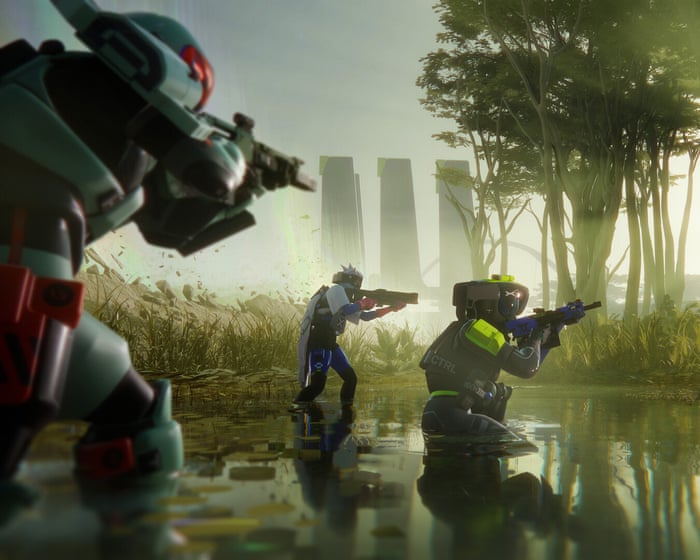
A poor surprise reveal for Highguard leaves it fighting an uphill battle for good reviews

​In the fiercely competitive market ​of the online multiplayer game, Highguard​’s rocky start means it now has a lot to prove

• Don’t get Pushing Buttons delivered to your inbox? Sign up here

In the fast-paced, almost psychotically unforgiving video game business, you really do have to stick the landing. Launching a new game is an artform in itself – do you go for months of slowly building hype or a sudden shock reveal, simultaneously announcing and releasing a new project in one fell swoop? The latter worked incredibly well for online shooter Apex Legends, which remains one of the genre’s stalwarts six years after its surprise launch on 4 February 2019. What you don’t do with a new release, is something that falls awkwardly between those two approaches. Enter Highguard.

This new online multiplayer title from newcomer Wildlight Entertainment has an excellent pedigree. The studio was formed by ex-Respawn Entertainment staff, most of whom previously worked on Titanfall, Call of Duty and the aforementioned Apex Legends. They know what they’re doing. But the launch has been … troubled.

Continue reading...

© Photograph: Wildlight Entertainment, Inc.

© Photograph: Wildlight Entertainment, Inc.

© Photograph: Wildlight Entertainment, Inc.

  •  

‘I didn’t have anything to prove’: what Traitors finalist Jade Scott learned about survival from video games

Accused, isolated and constantly under scrutiny, The Traitors contestant drew on years of social deduction gaming to stay calm under pressure

The latest series of The Traitors, which ended last week on a nail-biting finale, featured some of the usual characters – from guileless extroverts to wannabe Columbos endlessly observing fellow contestants for the slightest flicker of treachery. But one faithful stood out for her quiet determination, despite a ceaseless onslaught of suspicion and accusation. That person was Jade Scott, and I wasn’t at all surprised when, quite early on in the series, she revealed she was a keen gamer.

“Minecraft was my way in, when I was 15,” she says. “I made loads of friends at school playing that.” From this innocent introduction, however, she moved on to darker titles: the first-person shooter Counter-Strike: Global Offensive and the multiplayer battle-arena game Dota. “That’s where my interest in strategy gaming really kicked in,” she says.

Continue reading...

© Photograph: Paul Chappells/Studio Lambert/BBC/PA

© Photograph: Paul Chappells/Studio Lambert/BBC/PA

© Photograph: Paul Chappells/Studio Lambert/BBC/PA

  •  
❌