Three of the biggest names in private credit moved to reassure investors this week about the AI risks facing their software borrowers, deploying proprietary “score cards” and outside consultants.
The fund finance market has surged past $1 trillion, according to a pair of new reports, as money managers borrow more to manage liquidity and bridge delayed exits.
Pedestrians in the Plaza District in New York. Photographer: John Taggart/Bloomberg
Private credit funds with outsized exposure to software and tech loans face rising refinancing and credit risks as a wave of debt maturities loom from 2028, according to Moody’s Ratings.
Direct-lending strategy funds raised a total of about $10.7 billion in funds completed during the first quarter, the lowest quarterly amount recorded in the past three years, according to data compiled by With Intelligence, an alternative investment research provider owned by S&P Global.
Artificial intelligence is becoming a bigger fault line in credit markets, according to a Moody’s Analytics report that points to emerging signs of broader strain among exposed lenders.
Artificial intelligence is becoming a bigger fault line in credit markets, according to a Moody’s Analytics report that points to emerging signs of broader strain among exposed lenders.
A swelling wave of redemptions has driven Moody’s Ratings to revise its outlook for private credit investment vehicles to negative, after holding the line at stable for over two years.
Pedestrians on Park Avenue in the Plaza District of New York, US, on Tuesday, March 24, 2026. The world's largest alternative asset managers, which for years have fueled the private credit boom, are suddenly grappling with investors skittish about the industry's lending practices and exposure to businesses vulnerable to artificial intelligence.
Software-sector weakness, liquidity concerns and a series of bad underwriting vintages are all widening the moat between public and non-traded private credit vehicles, according to Oaktree Capital Management’s Armen Panossian.
Armen Panossian, co-chief executive officer of Oaktree Capital Management LP, during a Bloomberg Television interview in London, UK, on Monday, June 30, 2025. US banks are kicking the commercial real estate can down the road, Panossian said. Photographer: Betty Laura Zapata/Bloomberg
Stephen and Blake Nesbitt built their modest consulting business into a private credit giant. Now their industry connections are being scrutinized as investors rush for the exits.
S&P Global Ratings lowered its outlook on Cliffwater LLC’s flagship private credit fund to negative from stable, citing elevated redemption requests that risk putting pressure on its liquidity.
The snow-covered San Gabriel mountain range past the downtown Los Angeles skyline after a winter storm in Los Angeles on March 2, 2023. Photographer: Eric Thayer/Bloomberg
Default rates in direct lending will climb to 8% as advances in artificial intelligence continually disrupt the software industry, according to Morgan Stanley.
A Morgan Stanley logo hangs in the window of a retail brokerage office in New York, Thursday, July 28, 2005. Morgan Stanley, the world's biggest securities firm, is eliminating about 1,000 retail brokers to boost profitability in a business that trails Merrill Lynch & Co. and Citigroup Inc.
Rebecca Pacholder, founder of hedge fund Snowcat Capital Management and a protege of billionaire Leon Cooperman, has been appointed as senior managing director of investment firm EnTrust Global.
The world’s largest alternative asset managers are confronting a painful choice: Block investors who want to exit private debt funds and deal with potential blowback, or honor the requests and betray their guiding principles.
UFC and WWE operator TKO Group Holdings, Inc. launched a nearly $1 billion offering in the leveraged loan market, according to a person familiar with the transaction, after the company announced a dividend to equity holders on Wednesday.
Micheal Bisping, left, punches Cung Le during Ultimate Fighting Championship (UFC) Fight Night at Cotai Arena.
Business development companies are sitting on a massive pile of leveraged loans, which could be sold to meet redemption requests and push spreads wider, according to Deutsche Bank AG analysts.
Falling income, slashed dividends and loan markdowns: the results from some of the most transparent private credit funds this week have done little to soothe investors concerned about cockroaches in the market.
As concerns continue to mount about loans to software companies, one private credit fund is calling itself a relative “safe haven” due to lack of exposure.
A $330 million leveraged loan to two units of methanol maker Consolidated Energy Ltd. is being marketed at what would be the biggest discount in over two years.
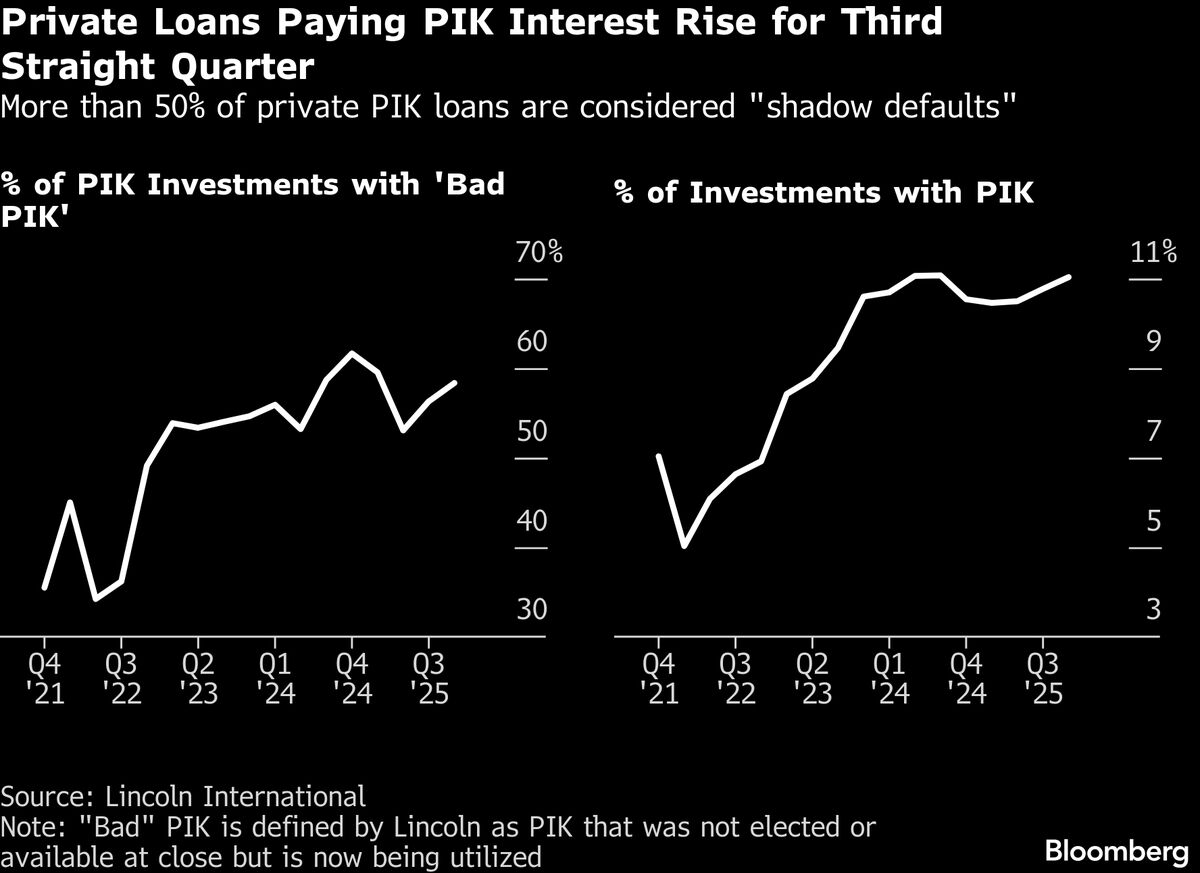
The share of private equity-backed companies that deferred cash interest payments ticked higher for a third consecutive quarter, pointing to growing signs of stress, according to Lincoln International.

 Anmelden