Einer wie Morris Pearl ist in den USA selten: Er ist Millionär und fordert höhere Steuern für Reiche. Ein Gespräch über Steuertricks, die keine sind, seinen Verbündeten Zohran Mamdani und die neue Wut auf die Superreichen.
Plans for the project include formal gardens, reflecting pools and plazas alongside the statues of 250 notable Americans, according to documents obtained by The New York Times.
Republican commentators have argued, incorrectly, that political violence is largely a left-wing problem. Liberals have countered by citing the threats made against former President Obama.
President Trump spoke after a shooting at the White House correspondents’ dinner on Saturday. Prosecutors charged the gunman with attempting to assassinate Mr. Trump.
Determining the attacker’s motivation may take time. But toxic rhetoric, polarisation and the ubiquity of firearms are a dangerous mix
Forty-five years ago, John Hinckley Jr attempted to assassinate Ronald Reagan as he left the Hilton hotel in Washington, injuring the US president and three others. Obsessed with the actor Jodie Foster, and seeking to gain her attention, the shooter had initially pursued Reagan’s Democratic predecessor, Jimmy Carter.
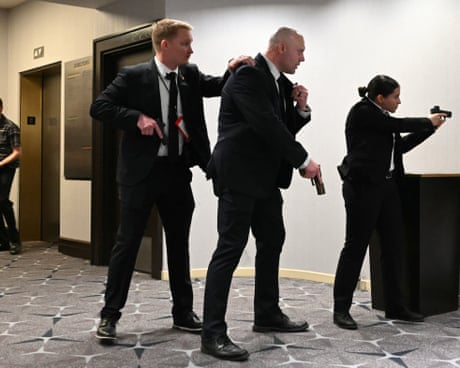
On Saturday night, the hotel again rang to shots as it hosted the annual White House correspondents’ dinner. Tuxedo-clad politicians and journalists dived under tables as bangs were heard from the lobby, and Donald Trump was rushed from the stage. A secret service agent was shot, though saved by his ballistics vest. The echoes of the 1981 attack are a potent reminder that violence has long been a tragic strand of the American political tradition. Gun violence is grimly familiar. This does not diminish the seriousness of an incident that was widely and rightly condemned. Rather, it highlights its importance.
Do you have an opinion on the issues raised in this article? If you would like to submit a response of up to 300 words by email to be considered for publication in our letters section, please click here.
Presidents since at least the Carter administration have seen their approval ratings tied to gas prices. But there are signs the correlation may be weakening.
The notice suspends the practice of allowing helicopter pilots to rely on visual separation to avoid striking other aircraft, as happened during last year’s deadly midair collision in Washington.
The use of visual separation was a key factor in last year’s midair collision between an Army Black Hawk helicopter and an American Airlines commercial jet near Ronald Reagan National Airport.
J. Todd Inman, who was prominent in the investigation of the midair collision in Washington last year, said no reason was given for his firing two years into his term on the transportation safety board.
J. Todd Inman of the National Transportation Safety Board during a Jan. 27 hearing on the midair collision that killed 67 people near Reagan National Airport the previous January.
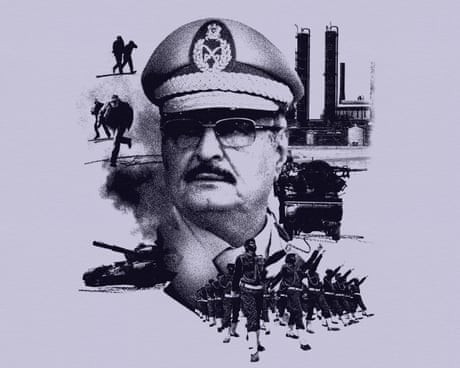
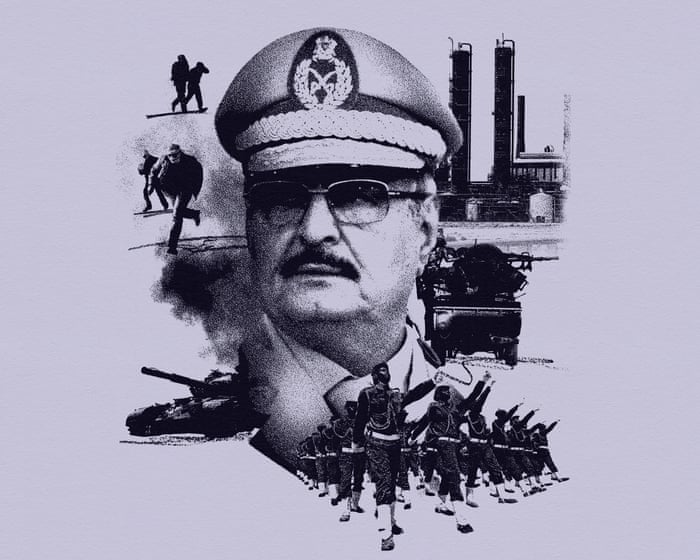
When Nato helped overthrow Gaddafi in 2011, there were hopes of a new beginning. More than a decade later, a former CIA asset runs the country – and Libya has become yet another lesson in the unintended consequences of foreign intervention
In July 2025, four of Europe’s most senior officials landed in eastern Libya for an urgent meeting. Italy’s interior minister had watched migrant arrivals surge during the previous six months. Greece’s migration chief was reeling after 2,000 people reached Crete in a single week. Malta’s home minister feared his island was next. And the EU’s migration commissioner was scrambling to rescue an agreement worth many hundreds of millions that was visibly failing to stop the boats.
Libya is a place where crises converge. Its 1,100-mile coastline, the longest Mediterranean coastline in Africa, has become the main departure point for migrants heading north. Since Muammar Gaddafi was toppled in 2011, the country has been torn apart by successive civil wars. Russia, Turkey, Egypt and the UAE arm rival factions, and the contest no longer stops at Libya’s borders. From military bases in the south, Russia and the UAE funnel weapons and fighters into Sudan’s civil war, which has driven hundreds of thousands more refugees north towards Libya’s coast.
The mutual resentments that have fueled tensions between the US and Iran have simmered for nearly half a century
For millions of younger Americans, the sudden explosion of Iran onto the national political stage and consciousness may seem like a bolt from the blue.
Yet for older generations and those with deeper historical awareness, Donald Trump’s announcement on Saturday of strikes against a distant foe is more like the outcome of a collision long foretold.
Lawmakers could vote as early as next week on legislation aimed at avoiding another collision like the one that killed 67 people near Reagan National Airport last year.
The Rev. Jesse Jackson entered the national spotlight during the civil rights movement and ran for president twice. He also courted controversy while in the public eye.
Jennifer Homendy, the outspoken chairwoman of the National Transportation Safety Board, is reclaiming the spotlight at a meeting on Tuesday about the Washington, D.C., crash that killed 67.
The announcement of a reorganization comes nearly a year after a midair collision killed 67 people and prompted a public outcry for enhancing the security of aviation travel.
The Federal Aviation Administration says it has reduced traffic in and out of the airport and designed safer routes. Crash victims’ families want more.
As I write my last regular column for the Guardian, my thoughts turn to the lessons and hope we can take from history
From Greenland’s icy mountains, from India’s coral strand, as the old hymn has it, we seem to inhabit a world that is more seriously troubled in more places than many can ever remember. In the UK, national morale feels all but shot. Politics commands little faith. Ditto the media. The idea that, as a country, we still have enough in common to carry us through – the idea embedded in Britain’s once potent Churchillian myth – feels increasingly threadbare.
Welcome, in short, to the Britain of the mid-1980s. That Britain often felt like a broken nation in a broken world, very much as Britain often does in the mid-2020s. The breakages were of course very different. And on one important level, misery is the river of the world. But, for those who can still recall them, the 1980s moods of crisis and uncertainty have things in common with those of today.
The War Powers Resolution is a set of statutes Congress enacted in 1973 — and tweaked in 1983 — in an effort to reclaim its constitutionally intended role of deciding if the United States would go to war.

 Anmelden