The number of supertankers hauling unsanctioned oil through the Strait of Hormuz has shown signs of rising in recent days, offering limited relief to an oil market that’s suffered the largest supply disruption in history.
Tankers anchored in the Strait of Hormuz, in a photo from Iran’s ISNA news agency on May 2.
A Chinese-owned supertanker hauling Iraqi crude through the Persian Gulf is set to test the US blockade over the next 24 hours as it attempts to exit the largely shuttered Strait of Hormuz. The transit would coincide with President Donald Trump’s visit to Beijing.
USS Rafael Peralta implements a maritime blockade against a tanker attempting to pass through the straight of Hormuz.
The oil jetties at Iran’s Kharg Island were once again empty on Tuesday, curbing the nation’s ability to export crude, satellite images collected by Bloomberg show.
Iran's main oil export terminal at Kharg Island in the Persian Gulf. Source: AFP/Getty Images
Oil shipments from Iran’s main export terminal appear to have come to a standstill over the past several days, according to satellite images, the first sign of a prolonged halt since the start of the war.
The Strait of Hormuz remains largely shuttered, with Iran-linked vessels dominating what little traffic is moving across the waterway. An Iraqi supertanker’s rare passage has come to a halt after a retreat from the US naval blockade line.
An oil supertanker that exited the Persian Gulf on Sunday hauling a cargo of Iraqi crude appears to have stopped shy of the US naval blockade line and is now turning back into the Gulf of Oman.
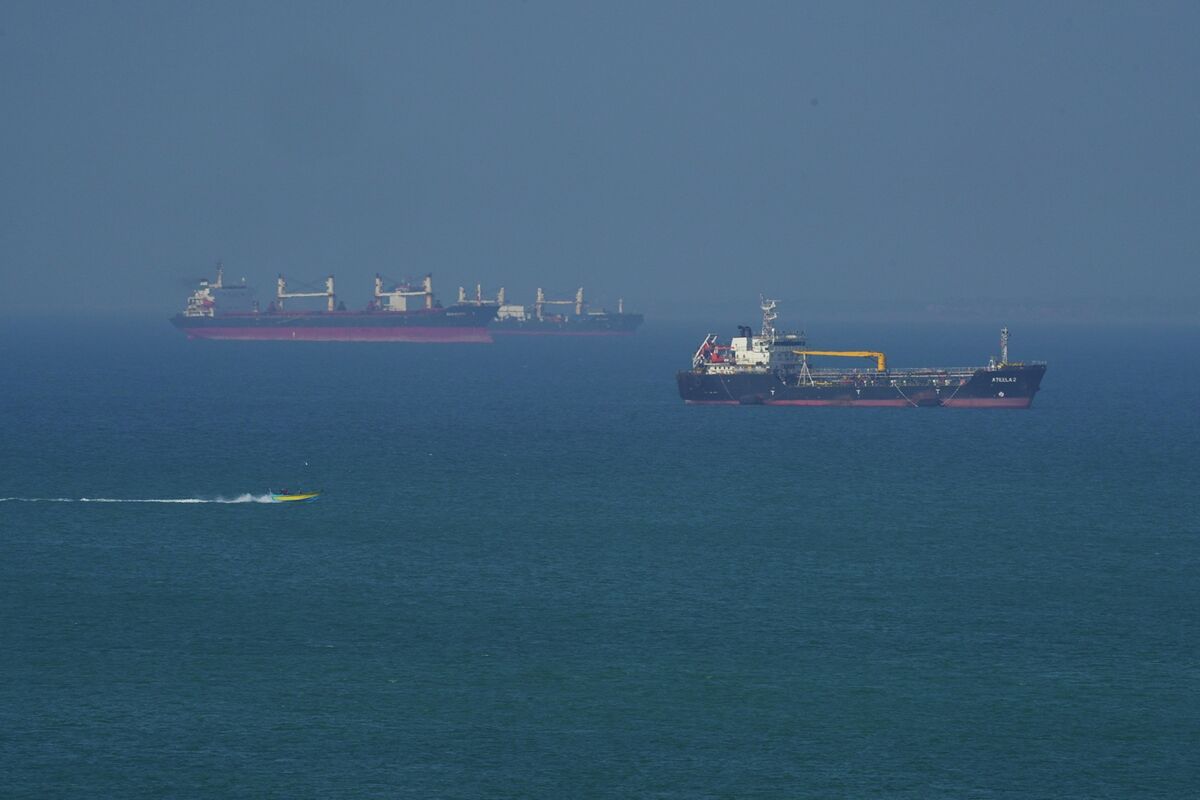
A motorboat and tanker off the town of Al Jeer, United Arab Emirates on the Strait of Hormuz. Photographer: Fadel Senna/AFP/Getty Images
The Strait of Hormuz remains effectively closed to commercial shipping after the US and Iran clashed overnight near the waterway, attacking each other’s assets in the area.
USS Michael Murphy patrols the Arabian Sea on April 15. Source: US Navy
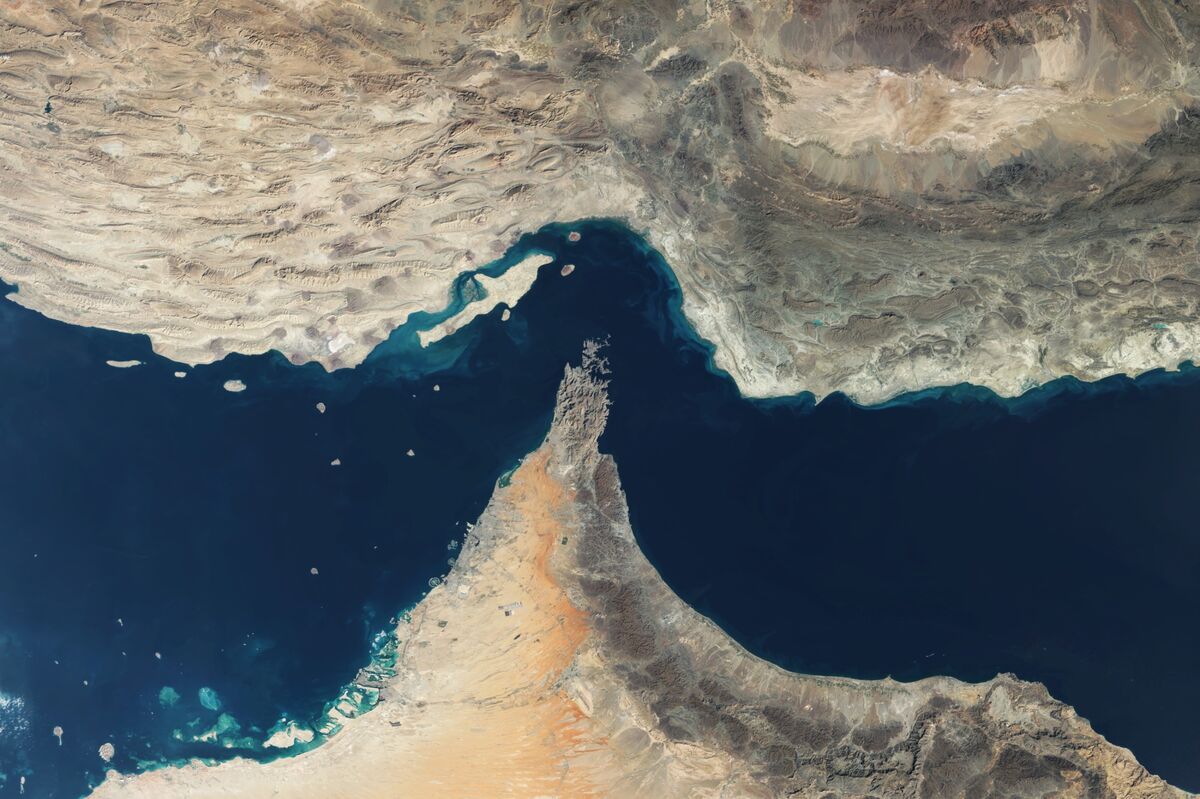
No region of the world produces more oil and gas than the countries straddling the Persian Gulf. Most of this energy can only be exported aboard tankers that cross the Strait of Hormuz — a waterway that’s effectively been blocked for more than two months.
A satellite view of the Strait of Hormuz Photographer: Gallo Images/Orbital Horizon/Copernicus Sentinel Data 2025/Getty Images
OPEC’s crude production fell to a new 36-year low last month as the Iran war continued to choke off exports from the Persian Gulf and forced further shut-ins, according to a Bloomberg survey.
The headquarters of the Organization of the Petroleum Exporting Countries (OPEC) in Vienna, Austria, on Sunday, April 5, 2026. The United Arab Emirates will leave OPEC and its wider alliance, dealing a blow to the group and its leader Saudi Arabia as the global oil industry grapples with the massive supply disruption caused by the Iran war.
No region of the world produces more oil and gas than the countries straddling the Persian Gulf. Most of this energy can only be exported aboard tankers that cross the Strait of Hormuz — a waterway that’s effectively been blocked for more than two months.
A satellite view of the Strait of Hormuz Photographer: Gallo Images/Orbital Horizon/Copernicus Sentinel Data 2025/Getty Images
No region of the world produces more oil and gas than the countries straddling the Persian Gulf, and most of it needs to travel by tanker via the Strait of Hormuz.
Tankers anchored in the Strait of Hormuz, on April 18. Source: AP Photo
A few Iran-linked vessels are making their way through the Strait of Hormuz, as the crucial waterway remains effectively closed to most international shipping amid blockades by both Tehran and the US.
Oil tankers navigates the sea near Qeshm Island, Iran in the Strait of Hormuz on April 28.
A fully-laden Japan-linked oil tanker completed a rare transit of the Strait of Hormuz, as the effective closure of the waterway to most international traffic enters its third month.
Sooner or later, the US blockade may force Iran to cut oil production.
Cargo ships, oil tankers and other vessels off the shore of Singapore, on Tuesday, March 17, 2026. A widening conflict in the Middle East has led to dramatic swings and surges in the price of fuel for ships, prompting distributors in Singapore, the world’s top bunkering hub, to cut back their purchases. Photographer: Ore Huiying/Bloomberg

 Anmelden