❌

Lese-Ansicht

The UAE tries hard to keep its reputation spotless. But with the war in Sudan, how can it? | Nesrine Malik

Outrage is mounting about the Gulf country’s complicity in Sudan’s catastrophic civil war – and it might be starting to hit them where it hurts

There are certain states whose reputations in the global community are tainted. For habitual violations of international law, they are shunned, boycotted or slammed with economic sanctions. Reading these words, perhaps you’re thinking of Russia, Israel, Iran or North Korea. But there is one country that is rarely considered an outlaw, even if its actions increasingly fit the bill.

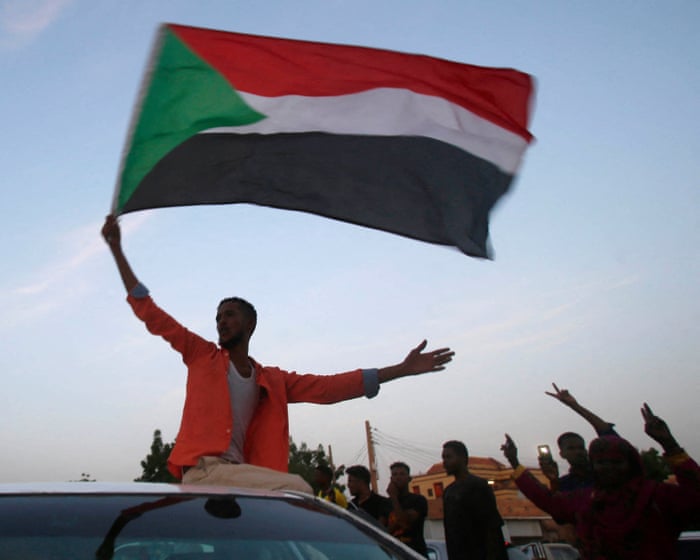
The United Arab Emirates (UAE) is belatedly starting to draw some scrutiny over mounting evidence that it is backing the Rapid Support Forces (RSF) that have been terrorising Sudan for years. Since the beginning of the civil war in 2023, which was triggered by a contest for power between the RSF militia and the Sudanese army, the RSF has been accused of ethnic cleansing and sexual violence. A United Nations fact-finding mission concluded that its assault on non-Arab populations in the west of the country carried “the hallmarks of genocide”.

Continue reading...

© Photograph: AP

© Photograph: AP

© Photograph: AP
  •  

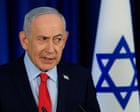
Benjamin Netanyahu says he made secret trip to UAE at height of Iran war

Emirates’ foreign ministry rejects claims that Netanyahu visited the country describing them as ‘baseless’

Benjamin Netanyahu has claimed he made a secret trip to the United Arab Emirates at the height of the Iran war to meet the president, Sheikh Mohamed bin Zayed Al Nahyan.

“This visit has led to a historic breakthrough in relations between Israel and the UAE,” the Israeli prime minister’s office said on Wednesday night.

Continue reading...

© Photograph: Ronen Zvulun/Reuters

© Photograph: Ronen Zvulun/Reuters

© Photograph: Ronen Zvulun/Reuters

  •  

UAE’s secret attack on Iran risks drawing Gulf states into the war

If current precarious ceasefire between US and Iran ends, Emirates are more likely to be targeted by Tehran

The risk of some Gulf states becoming embroiled in a direct war with Iran has risen after it was reported the United Arab Emirates had secretly launched a major attack on Iran during the conflict.

In addition, Kuwait has said that at least four members of the Islamic Revolutionary Guard Corps had been captured trying to carry out “terrorist attacks” on the Kuwaiti-owned Bubiyan Island, the largest island in the Kuwaiti coastal chain.

Continue reading...

© Photograph: Benoît Tessier/Reuters

© Photograph: Benoît Tessier/Reuters

© Photograph: Benoît Tessier/Reuters

  •  

As Stockpiles Fall, U.S. Sells More Missiles Worth $17 Billion to Gulf Nations

The United States and its partners have burned through an enormous amount of air defense missiles in the Iran war, and production is slow.

© Noufal Ibrahim/EPA, via Shutterstock

A Patriot missile launcher in Kuwait City in 2019. The United States is selling Kuwait another $9.3 billion worth of interceptor missiles.
  •  

UAE’s ruling royal family benefits from more than €71m in EU farming subsidies

Al Nahyans’ control over farmland in Europe has meant they receive proportion of payments to farms

The United Arab Emirates’ ruling royal family is benefiting from tens of millions in EU subsidies to grow crops destined for the Gulf, it can be revealed.

A cross-border investigation by DeSmog and shared with the Guardian found subsidiaries controlled by the Al Nahyans collected more than €71m (£61m) in six years for farmland it controls in Romania, Italy and Spain.

Continue reading...

© Photograph: Anadolu/Getty Images

© Photograph: Anadolu/Getty Images

© Photograph: Anadolu/Getty Images

  •  

US-Iran truce teeters on meltdown as stalemate takes toll on each side

Conflict appears to have reached impasse, but leaders in Tehran and Washington seem to think victory is near

The month-old ceasefire between Iran and the US appeared to be in new peril on Tuesday with a fresh barrage of Iranian missiles reported to have targeted the United Arab Emirates as US naval forces pressed ahead with efforts to reopen the strait of Hormuz.

The Iranian strike on the UAE was the second in 48 hours, and came shortly after the US defence secretary, Pete Hegseth, insisted the shaky truce which has paused the war in the Middle East was intact, despite the new increase in violence.

Continue reading...

© Photograph: Amirhossein Khorgooei/ISNA/AFP/Getty Images

© Photograph: Amirhossein Khorgooei/ISNA/AFP/Getty Images

© Photograph: Amirhossein Khorgooei/ISNA/AFP/Getty Images

  •  

Concierge firm co-founded by queen’s nephew went on ‘ill-timed’ hiring spree before Iran war

Quintessentially almost quadrupled staff in Middle East and Asia less than year before wealthy began to flee Gulf

The embattled luxury concierge service co-founded by Queen Camilla’s nephew Ben Elliot embarked on what appeared to be an inopportune hiring spree in the Middle East and Asia before wealthy individuals began fleeing the region because of the US-Israel war on Iran.

Quintessentially almost quadrupled staff in the regions from 22 to 84 during its financial year to 30 April 2025, according to newly released annual accounts, which again reported multimillion-pound losses and warned of “material uncertainty” about its future.

Continue reading...

© Photograph: AFP/Getty Images

© Photograph: AFP/Getty Images

© Photograph: AFP/Getty Images

  •  

Could the UAE’s shock exit from Opec cause an oil price war?

A standoff between Gulf oil giants Saudi Arabia and the UAE could cause greater market volatility for years to come

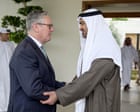
The conflict in the Middle East has claimed Opec as the latest casualty of war. The United Arab Emirates’ shock exit from the oil cartel on Tuesday after 60 years is expected to weaken the alliance, which under the leadership of Saudi Arabia has helped to soothe volatility in the global oil market for decades.

Global oil prices reached the highest level in four years on Thursday, rising above $126 a barrel. But as the region grapples with the continuing conflict, a fresh war may be brewing in the international oil markets, which could lead to greater market volatility for years to come.

Continue reading...

© Photograph: Kamran Jebreili/AP

© Photograph: Kamran Jebreili/AP
© Photograph: Kamran Jebreili/AP

  •  

The Guardian view on the UAE quitting Opec: whatever importers pay, the price of fossil fuels is too high | Editorial

The world must accelerate the shift to renewables, regardless of the economic effects of Abu Dhabi’s decision

Opec appears to be the latest casualty of the Iran war. On Tuesday, the United Arab Emirates announced that it was leaving the oil cartel after 60 years. The loss of a critical member is a blow to the group and its de facto leader, Saudi Arabia, in the midst of the biggest supply crisis in history.

This is a geopolitical decision, not merely an economic one. The UAE has built itself into an increasingly interventionist and unilaterally minded power, not only challenging Riyadh’s dominance but undermining its more cautious approach to regional affairs. The rift has become increasingly public and bitter – with Saudi Arabia bombing what it called a UAE-linked arms shipment in Yemen in December. Abu Dhabi, as the main target of Iranian strikes among the Gulf countries, is also enraged by what it sees as a feeble regional response to the current conflict, and has been privately pushing for counterattacks.

Do you have an opinion on the issues raised in this article? If you would like to submit a response of up to 300 words by email to be considered for publication in our letters section, please click here.

Continue reading...

© Photograph: Bloomberg/Getty Images

© Photograph: Bloomberg/Getty Images

© Photograph: Bloomberg/Getty Images

  •  

UAE quits Opec in win for Trump as oil cartel weakened

US president has accused organisation of ‘ripping off the rest of the world’ by inflating oil prices

The United Arab Emirates has quit the Opec oil cartel after 60 years of membership, in a heavy blow to the group and its de facto leader, Saudi Arabia, as global energy markets contend with the biggest supply crisis in history.

The shock loss of the UAE, Opec’s third-largest oil producer, is expected to weaken the group, which for decades has worked together to use its collective oil production to influence global oil market prices.

Continue reading...

© Photograph: Giuseppe Cacace/AFP/Getty Images

© Photograph: Giuseppe Cacace/AFP/Getty Images

© Photograph: Giuseppe Cacace/AFP/Getty Images

  •  

Sudan paramilitary leaders acquired £17.7m property portfolio in Dubai, investigation reveals

The RSF leadership, accused of committing genocide, used UAE as a ‘safe haven’ for family members and their wealth, records show

A network linked to the leadership of a militia accused of genocide has amassed a vast property portfolio in Dubai as part of a sprawling “paramilitary-industrial complex” across Africa and the Middle East, an investigation has revealed.

Family members, sanctioned individuals, and entities linked to the leader of Sudan’s Rapid Support Forces (RSF), Mohamed Hamdan Dagalo, known as Hemedti, have acquired more than 20 luxury properties, worth £17.7m, in the United Arab Emirates (UAE), according to the Sentry, a US investigative group.

Continue reading...

© Photograph: Abdel Hadi Ramahi/Reuters

© Photograph: Abdel Hadi Ramahi/Reuters

© Photograph: Abdel Hadi Ramahi/Reuters

  •  

Bessent Backs Financial Support for Oil-Rich U.A.E.

The Treasury secretary said that currency swap line would benefit both the United Arab Emirates and the United States.

© Kenny Holston/The New York Times

Treasury Secretary Scott Bessent testified on Capitol Hill on Wednesday.
  •  

When the ‘Dubai dream’ goes wrong - podcast

Journalist Will Coldwell tells the story of how a British businessman was imprisoned in Dubai – and how his family finally got him home

When Albert Douglas found out he was facing a long prison sentence in Dubai, he tried to escape the UAE … and failed. What followed was years of court proceedings, time in prison and even, Douglas says, beatings and torture.

In recent years, scores of business owners, unsuspecting tourists and influencers have been detained in Dubai – caught up in an opaque legal system, charged with breaking laws they may not even have been aware of.

Continue reading...

© Photograph: Greg Funnell/The Guardian

© Photograph: Greg Funnell/The Guardian

© Photograph: Greg Funnell/The Guardian

  •  

UK to call for end to Sudan bloodshed at Berlin talks on third anniversary of war

British aid to double as 19m people face acute hunger, but summit unlikely to end conflict amid Saudi-UAE tensions

The British foreign secretary, Yvette Cooper, will urge Sudan’s warring parties to “cease bloodshed” during a major conference on Wednesday, which analysts believe is unlikely to deliver a significant step towards peace.

The talks in Berlin – held on the third anniversary of the start of Sudan’s ruinous war – are expected to help address a catastrophic funding shortfall that is compounding the world’s worst humanitarian crisis.

Continue reading...

© Photograph: Ashraf Shazly/AFP/Getty Images

© Photograph: Ashraf Shazly/AFP/Getty Images

© Photograph: Ashraf Shazly/AFP/Getty Images

  •  

Gulf states rethink security in light of US-Israel war on Iran

Whatever outcome of ceasefire talks, the region will have to live with a continuing threat from the regime in Tehran

Gulf nations will seek to add security partners as they rebuild battered economies after the US and Israel’s war on Iran and deal with an emboldened Tehran.

The Gulf will have to live with a continuing threat from the regime in Iran and its remaining missile arsenal. American bases on their soil turned them into targets for Iran, as it retaliated against a joint attack by the US and Israel.

Continue reading...

© Photograph: WPA/Getty Images

© Photograph: WPA/Getty Images

© Photograph: WPA/Getty Images

  •  

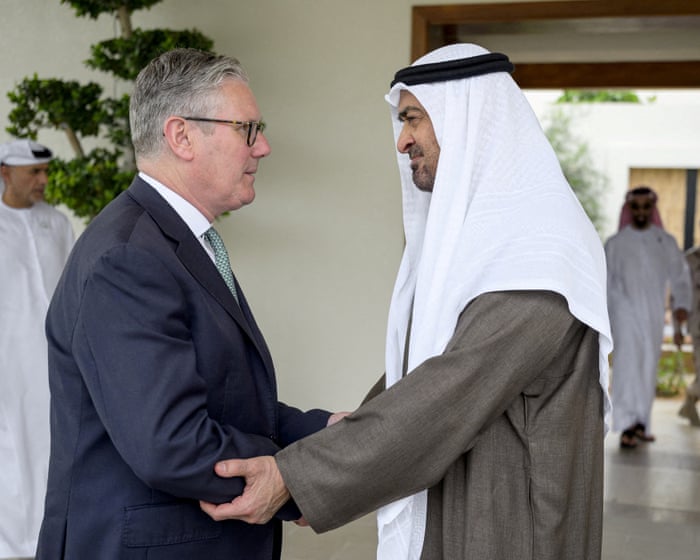
Starmer says talks with Gulf leaders have reinforced sense Iran war ceasefire is ‘fragile’ – as it happened

Prime minister has been in talks with Saudi crown prince and UAE president today

In interviews this morning Yvette Cooper, the foreign secretary, declined to confirm reports that a Russian warship has been escorting two sanctioned Russian ships through the English channel.

Sanctioned Russian ships carry oil being sold to fund the war in Ukraine, and the UK government recently announced that the armed forces have been authorised to board these ships in British waters to stop them.

What I can tell you is that we have given permission now for action to be taken against the Russian shadow fleet. Operational decisions then have to be taken in the right way by the military.

There are indications of the way in which not just the Russian shadow fleet is operating, but also the way in which we are seeing increased Russian threats, not just to the UK, but across Europe as well.

Continue reading...

© Photograph: Omar Al Askar/UAE Presidential Court/Reuters

© Photograph: Omar Al Askar/UAE Presidential Court/Reuters

© Photograph: Omar Al Askar/UAE Presidential Court/Reuters

  •  

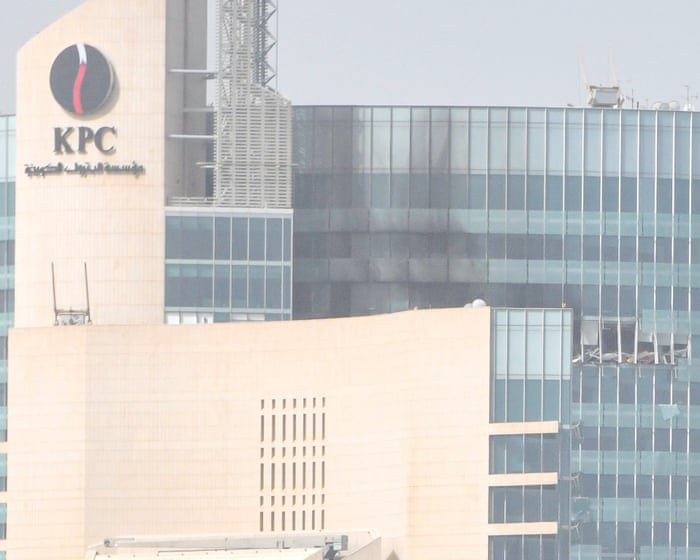
Iran strikes Kuwait’s oil infrastructure before Opec+ supply talks

Members reportedly agree a rise of 206,000 barrels a day in May, but move symbolic while strait of Hormuz is effectively closed

Iranian drones have struck Kuwait’s oil infrastructure, causing “severe material damage” that threatens to further disrupt oil supplies already hit by the US-Israel war on Iran.

The drone strikes on Sunday came hours before members of the Opec+ group of major global oil suppliers gathered to discuss how to bolster output despite Iran’s effective closure of the strait of Hormuz shipping route.

Continue reading...

© Photograph: Anadolu/Getty Images

© Photograph: Anadolu/Getty Images

© Photograph: Anadolu/Getty Images

  •  

‘I was beaten and tortured’: how a British father and son made a fortune in Dubai then became wanted men

As the Middle East is drawn into war, expats and influencers are under pressure to only share the positive side of the UAE. In reality many are at risk of being put behind bars, and often find the UK government has little interest in helping them get out

A four-metre barbed-wire fence runs through the desert at the UAE‑Omani border. In the early hours of 17 February 2021, Albert Douglas, 58, a British businessman, was creeping along it, looking for a way through. Douglas, who cuts a slight figure, wears spectacles and has a broad, earnest smile, never expected things to come to this. He’d been forced to abandon his home on Dubai’s Palm Jumeirah, the tree-shaped archipelago lined with upmarket residences, and go into hiding. Usually he’d be driving around in a Rolls-Royce, now he was in a pickup truck, being chauffeured by people smugglers. They’d transported him to the edge of the Al Ain border, which neighbours Oman, in the dead of the night. It was incredible, really, how fast the life he once led could evaporate. All that mattered now was getting to the other side of that fence.

A few weeks earlier, Douglas had been sitting at home, watching his supreme court appeal via video link. He was being hounded by the Dubai authorities over debts incurred by his son Wolfgang Douglas’s company and, while Wolfgang was in the UK, Albert had been arrested. Albert was facing a £2.5m fine and a three-year prison sentence – this was his final chance for a reprieve. He had always believed the truth would prevail, but as he watched the hearing play out, his faith in the system deserted him. He decided to lie low in a friend’s apartment while he weighed his options. It soon became clear that he didn’t have any. “That’s when I decided to leave,” he says. “I left it not to the last minute, but the last second.”

Continue reading...

© Photograph: Greg Funnell/The Guardian

© Photograph: Greg Funnell/The Guardian

© Photograph: Greg Funnell/The Guardian

  •  

Jared Kushner is seeking peace deals in the Middle East. He’s also raising money for his own firm | Mohamad Bazzi

The president’s son-in-law is acting as an envoy even as he looks to secure billions for his company from foreign governments

After Donald Trump returned to the White House, his son-in-law and former senior adviser Jared Kushner declined to take a job in the new administration and instead planned to focus on running his Miami-based private equity firm. Kushner said he would also forgo raising more money for his company while Trump was in office, to avoid any appearance of a conflict.

But since last summer, Kushner has re-emerged as a high-level peace envoy for Trump, helping broker a ceasefire between Israel and Hamas in Gaza; steering negotiations to end the war between Russia and Ukraine; and, most recently, playing a central role in the aborted negotiations between Iran and the US over Tehran’s nuclear program. Kushner still doesn’t hold an official government position – he’s a private citizen who has been negotiating some of the most important foreign policy agreements on behalf of the Trump administration, with a direct line to the president.

Continue reading...

© Photograph: Evan Vucci/AP

© Photograph: Evan Vucci/AP

© Photograph: Evan Vucci/AP

  •  

Families condemn UK ‘impotence’ over UAE ‘social media misuse’ detentions

Ministers accused of being too fearful of offending Emirates to help Britons detained for sharing images of war

The families of UK citizens held in the United Arab Emirates over allegations that they shared images of the conflict with Iran have voiced frustration at the British government’s failure to help.

Several British citizens are among more than 100 foreign nationals who have been detained under draconian Emirate rules that outlaw publishing or sharing material that could “disturb public security”.

Continue reading...

© Photograph: Altaf Qadri/AP

© Photograph: Altaf Qadri/AP

© Photograph: Altaf Qadri/AP

  •  
❌