❌

Lese-Ansicht

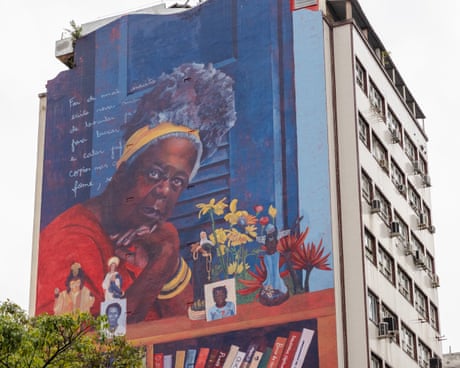
The mural project honouring the Black cultural heritage of Rio de Janeiro – photo essay

Despite its majority Afro-descendant population, fewer than 10% of public monuments across Rio commemorate Black people. Photographer María Magdalena Arréllaga chronicles the project seeking to redress the balance

Once home to the world’s largest port of arrival for enslaved Africans, Rio de Janeiro has, like the rest of Brazil, a majority Afro-descendant population.

Many of the country’s most prominent Black figures – scientists, lawyers, athletes, politicians, writers, musicians, activists and intellectuals – were either born or lived in the country’s second-largest city, which served as the capital for nearly 200 years.

A mural of the Brazilian singer-songwriter and composer Luiz Melodia, painted on a wall in Estácio, the Rio de Janeiro neighbourhood where he lived

Continue reading...

© Photograph: María Magdalena Arréllaga/The Guardian
© Photograph: María Magdalena Arréllaga/The Guardian

© Photograph: María Magdalena Arréllaga/The Guardian

  •  

Just what the doctor ordered: Brazil’s drive to ditch UPFs from hospital menus

Following the successful reduction of ultra-processed foods in schools, scientists and politicians hope to improve patient health with locally grown and freshly prepared meals

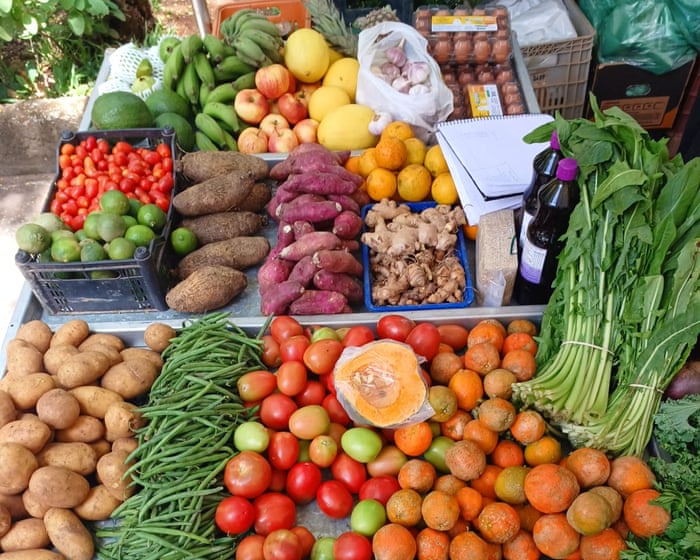
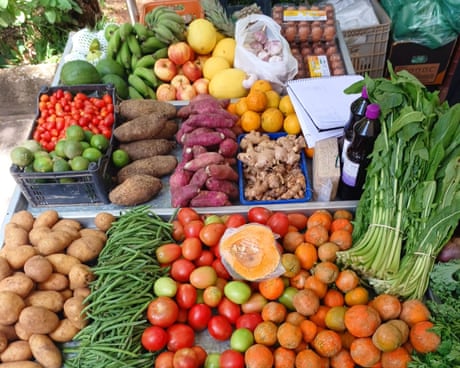
Every month a few dozen staff from some of São Paulo’s leading hospitals take time out of their busy schedules to visit food fairs where stallholders from more than 50 local farms display their produce. The aim is to strike deals that will supply the hospitals with organic vegetables, homemade bread and other locally made foods.

Started in October 2023, the fairs are part of a revolutionary scheme in São Paulo state to phase out ultra-processed foods (UPFs) from hospital menus in favour of healthier alternatives. “It’s not only cooks, nutritionists, meal planners and hospital management who attend the fairs but also nurses and doctors,” says Weruska Davi Barrios, a specialist in hospital nutrition at the University of São Paulo, the institution that has initiated the project.

Continue reading...

© Photograph: ECCCoUSP

© Photograph: ECCCoUSP

© Photograph: ECCCoUSP

  •  

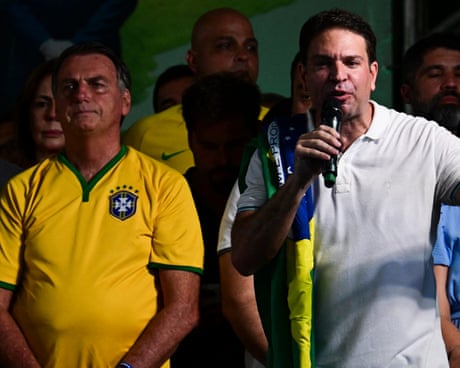
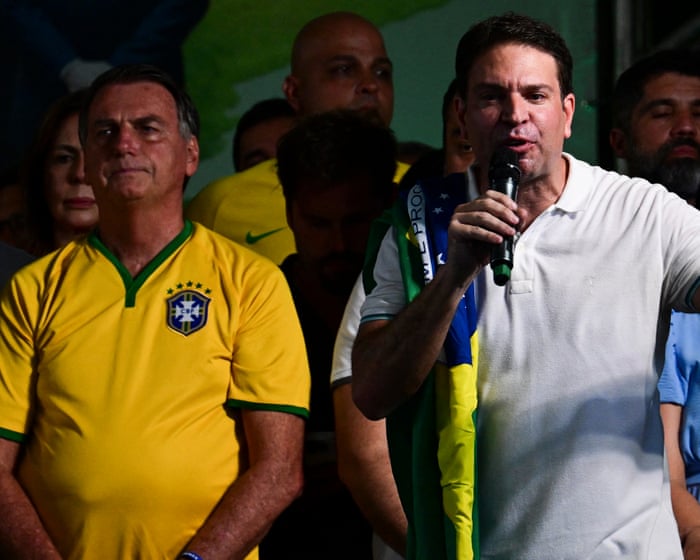
Tape shows Bolsonaro son asking jailed banker for $26.8m to fund film on father

Revelation seen as serious blow to candidacy of Flávio Bolsonaro, Brazil’s leading rightwing presidential hopeful

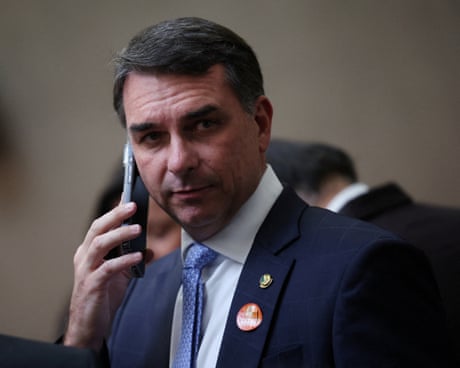
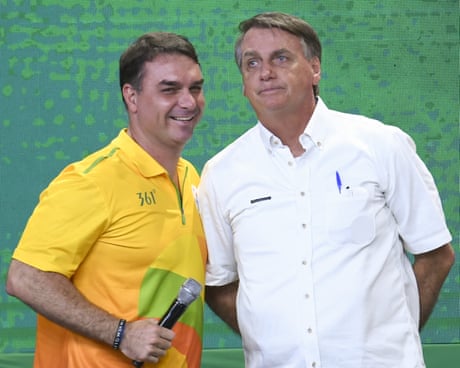
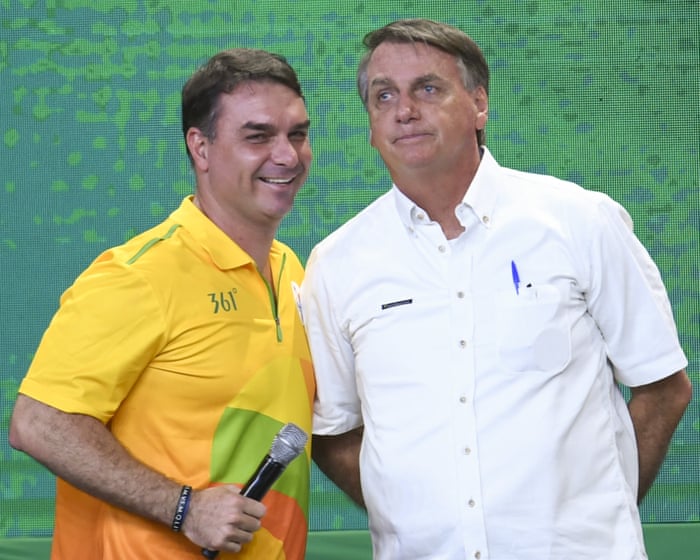
Flávio Bolsonaro, Brazil’s leading rightwing presidential hopeful, has been caught on tape asking a banker accused of corruption for $26.8m (£20m) to fund a film about his father, the former president Jair Bolsonaro.

The leaked voice memos and text messages were published on Wednesday by the Intercept Brasil, and later acknowledged by Flávio Bolsonaro, a far-right senator who is tied in polls with President Luiz Inácio Lula da Silva ahead of October’s election.

Continue reading...

© Photograph: Adriano Machado/Reuters

© Photograph: Adriano Machado/Reuters

© Photograph: Adriano Machado/Reuters

  •  

Carlo Ancelotti: ‘Neymar’s call-up depends only on him and what he shows on the pitch’

In an exclusive interview the Brazil coach talks about being in charge of ‘the most important national team’, how to get the best out of Vinícius Júnior and what he learned at Madrid

Is Carlo Ancelotti an ambitious man? The Italian leans back and smiles. “Me? I’m not ambitious. Why? Why are you asking that?” The reason for the question is simple: the 66-year-old is one of the most successful managers ever, with five Champions League wins and league titles in England, France, Germany, Italy and Spain. But he still wants more. Last May he was appointed Brazil head coach with one objective: to win the World Cup.

“I’m not obsessed with winning,” Ancelotti says. “What I have is a passion for enjoying the moments that football has given me. I’m not obsessed with winning the World Cup, but I have the pleasure and passion to enjoy the moment I’m living in, leading the most important national team in the world.”

Continue reading...

© Photograph: Lucas Figueiredo/The Guardian

© Photograph: Lucas Figueiredo/The Guardian

© Photograph: Lucas Figueiredo/The Guardian

  •  

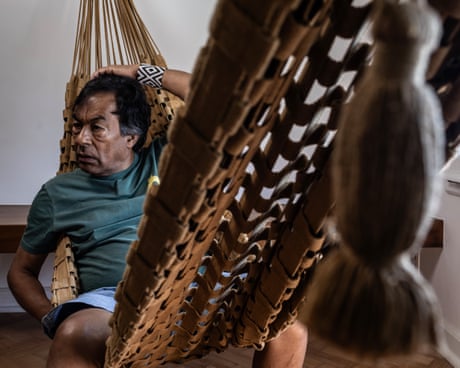
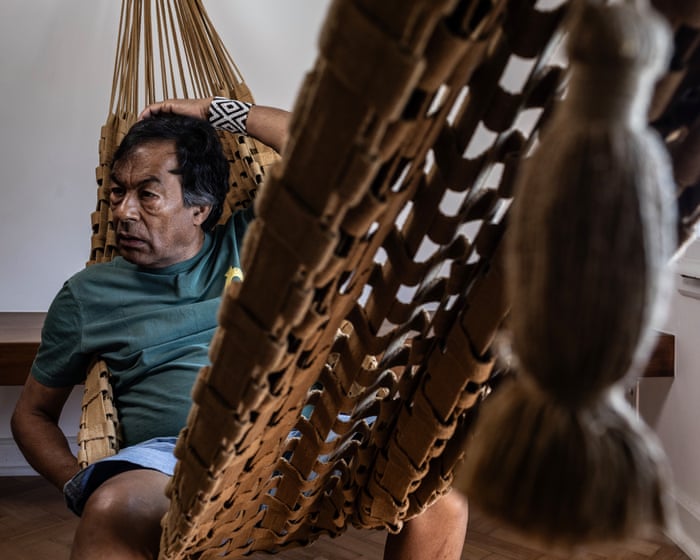
‘We are treading heavily on the Earth’: Ailton Krenak on consumerism, shock tactics and how to sleep in a hammock

Since his groundbreaking address to the Brazilian congress in 1987, the 72-year-old Indigenous leader has challenged assumptions and championed rights, urging us to ‘have the courage to change’

After 21 years of military dictatorship in Brazil, it was a pivotal moment. Wearing a suit and tie, Ailton Krenak, then an Indigenous leader in his 30s, stepped on to the rostrum in congress. It was 1987, a new constitution was being drafted for the re-established democracy – and Indigenous people were finally being heard in Brasília.

“I hope that my statement does not violate the protocol of this house,” he began, firmly but politely. As he spoke, he smeared his face with jenipapo, a fruit used for Indigenous bodypainting, until it was covered in black. “Indigenous blood has been spilt over every hectare of Brazil’s 8m square kilometres,” he told the constituent assembly. “You are witnesses of this.”

Continue reading...

© Photograph: Dado Galdieri/The Guardian

© Photograph: Dado Galdieri/The Guardian

© Photograph: Dado Galdieri/The Guardian

  •  

‘Amazon of America’: film paints vision of a post-coup Brazil giving up rainforest

Vitória Régia imagines rightwing Bolsonaro plot succeeded with US help – and highlights threats facing Indigenous peoples

The year is 2025 and far-right coup plotters have annihilated Brazil’s democracy, assassinating the president, closing the national congress and surrendering the Amazon rainforest and its untold riches to the United States.

“Ladies and gentlemen, welcome to the Amazon of America,” a thick-accented North American soldier tells a group of journalists being taken on a propaganda tour of an oil refinery in the newly annexed jungle realm. Nearby, a replica of the Statue of Liberty has been carved out of the wilderness to celebrate Washington’s tutelage over more than half of Brazil.

Continue reading...

© Photograph: Vetor Zero

© Photograph: Vetor Zero

© Photograph: Vetor Zero

  •  

Brazil caught up in craze for whistling-only WhatsApp groups

Some chats can get up to 600 voice notes a day and reach the 1,024-member limit in less than 24 hours

The WhatsApp groups have one simple rule: typing and speaking are forbidden, on pain of immediate removal.

Only voice notes with whistling are allowed, although the choice of content is up to the sender: it can be an imitation of a bird or a tune such as the theme from The Pink Panther or the introduction to Scorpions’ Wind of Change.

Continue reading...

© Photograph: Anadolu/Getty Images

© Photograph: Anadolu/Getty Images

© Photograph: Anadolu/Getty Images

  •  

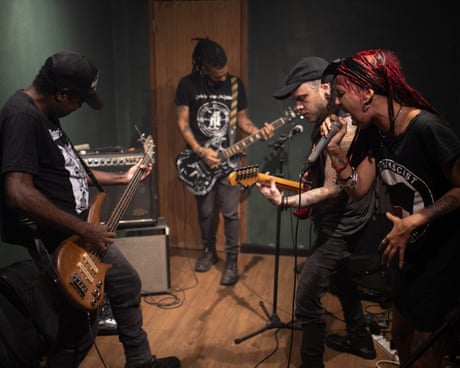
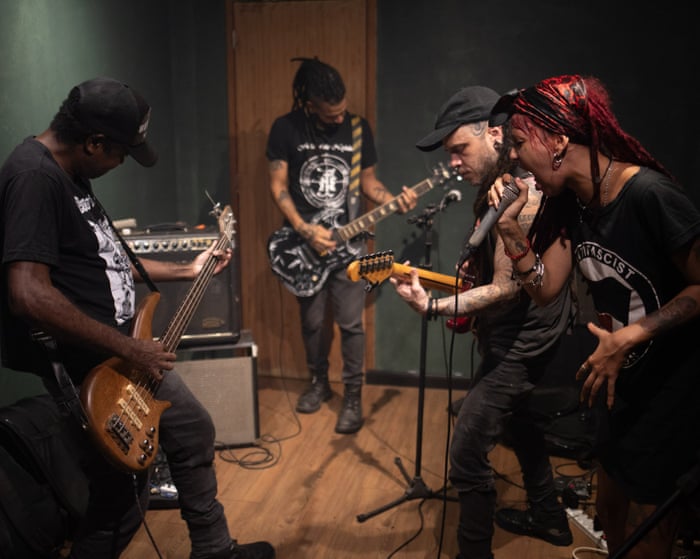
‘We feel angry – and we have reason to be’: Brazil’s resurgent punk scene is a howl of outrage at injustice

Thriving punk culture seen as response to frustrations at unemployment, urban violence, police brutality and deprivation

As black-clad police combatants charged into the hillside favela and opened fire, a black-clad punk scurried out of the community in the opposite direction, his hands trembling from fright.

“Holy shit! All those guns! Things are getting ugly!” spluttered Rodrigo Cilirio, the founder and bassist of one of Rio’s most enduring punk bands, as he took cover behind a tree.

Continue reading...

© Photograph: Alan Lima/The Guardian

© Photograph: Alan Lima/The Guardian

© Photograph: Alan Lima/The Guardian

  •  

‘Total peace’ or ‘all-out war’? Colombian voters face stark choice as rebel attacks surge

As the country prepares to elect a new president, a fierce debate is raging on how to end the decades-long armed conflict for good

The landmark 2016 peace deal between the Colombian government and the largest insurgent army in Latin America succeeded in some ways: the Revolutionary Armed Forces of Colombia (Farc) agreed to lay down their weapons, and the violence that had racked the country was substantially reduced.

But the deal alone could not end the decades-long armed conflict for good. Subsequent administrations slow-walked the implementation of the settlement, which was rejected by Farc dissidents and other rebel factions.

Continue reading...

© Photograph: Jair Coll/Reuters

© Photograph: Jair Coll/Reuters

© Photograph: Jair Coll/Reuters

  •  

‘A sudden gap’: poorest to suffer from Trump’s drive to stop Cuba sending doctors to its neighbours

People across Latin America and the Caribbean find themselves without care as countries bow to US pressure

Novlyn Ebanks, 73, had been due to receive the eye surgery she needed free of charge at St Joseph’s hospital in Kingston.

But after Jamaica’s unilateral decision in March to end the nearly 30-year agreement with Cuba to provide doctors, she was no longer able to schedule the procedure. The hospital’s ophthalmology centre was mainly staffed by Cuban doctors, many of whom had already left Jamaica.

Continue reading...

© Photograph: Fernando Llano/AP

© Photograph: Fernando Llano/AP

© Photograph: Fernando Llano/AP

  •  

‘We feel unsafe in our own homes’: women in Brazil’s favelas learn to fight back amid rising violence

Demand for martial arts classes grows as women face increase in gender-based attacks

In a martial arts studio at the entrance to one of Rio de Janeiro’s beachside favelas, a muay thai instructor teaches a group of young women how to avoid blows, protect their head while falling and break free from an arm grab. “Women are vulnerable,” Ana Paula Lima tells them, “but we don’t have to be helpless.”

Sabrina Fortunato, a law student, is one of the 30 women who turned up for this free self-defence class on a Saturday, organised by the civil rights organisation Instituto de Defesa da População Negra and Rio city hall after a flood of gender-based violence grabbed headlines in Brazil.

Continue reading...

© Photograph: courtesy

© Photograph: courtesy

© Photograph: courtesy

  •  

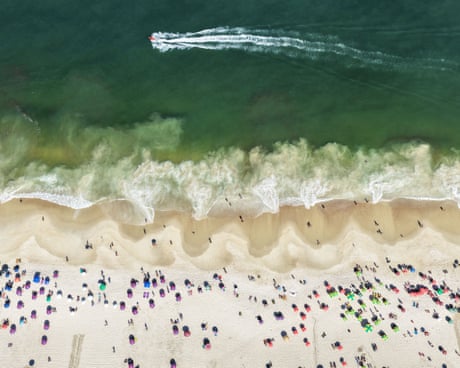
Swindled British tourist pays £1,500 for kebab on Rio beach

Scammer arrested after manipulating payment terminal to overcharge 1,000-fold in latest in spate of seaside cons

A scammer has been arrested in Rio de Janeiro for selling a kebab to an unsuspecting British tourist for nearly £1,500 – the latest in a spate of brazen beachside swindles.

The man was detained on Tuesday on Copacabana beach, just over the road from two of the region’s top hotels. He and an accomplice allegedly manipulated a payment terminal to dramatically overcharge the foreigner for their meat skewer. The victim reportedly paid 10,000 reais (£1,480) for the meal rather than 10 (£1.50).

Continue reading...

© Photograph: Xinhua/Shutterstock

© Photograph: Xinhua/Shutterstock

© Photograph: Xinhua/Shutterstock

  •  

Brazil’s former spy chief who fled country arrested by ICE agents in US

Alexandre Ramagem fled country after he was sentenced to 16 years for his role in plotting military coup in Brazil

When Brazil’s former president Jair Bolsonaro was sentenced to nearly 30 years in prison for an attempted coup, six other members of his cabinet were also found guilty and all began serving their sentences – except for one.

Days before the verdict, Alexandre Ramagem, Bolsonaro’s former spy chief, fled by car to Guyana and boarded a flight to the United States, where he has remained ever since.

Continue reading...

© Photograph: Pablo Porciúncula/AFP via Getty Images

© Photograph: Pablo Porciúncula/AFP via Getty Images

© Photograph: Pablo Porciúncula/AFP via Getty Images

  •  

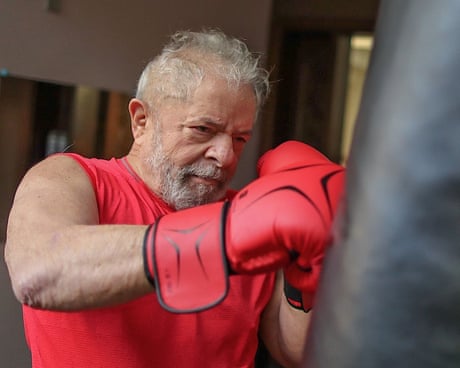
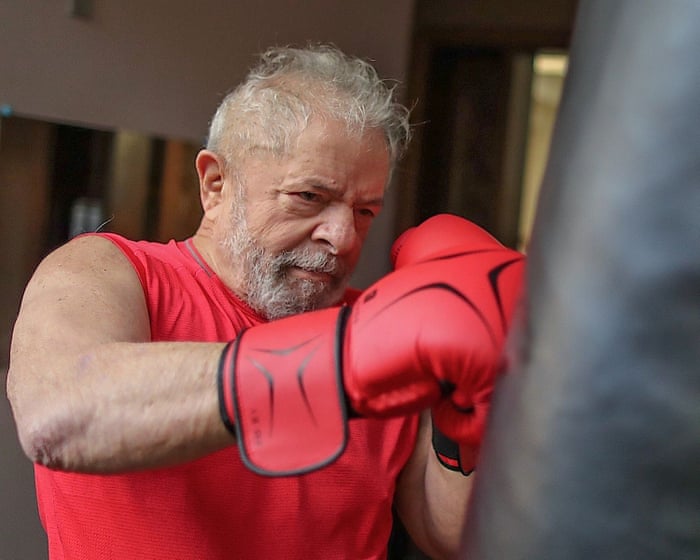
Brazil’s Lula, 80, livestreams workouts before election against rival half his age

President contrasts his health with challenger Flávio Bolsonaro, who fainted during a TV debate

The Brazilian president, Luiz Inácio Lula da Silva, is seeking to lunge and leg press his way to a historic fourth term, as the octogenarian politician uses a flurry of workout videos to convince voters he is fighting fit ahead of October’s crunch election.

Lula looks set to face off against a senator almost half his age in what will be the leftist’s seventh presidential campaign since he first sought Brazil’s top job in 1989, when he was 44.

Continue reading...

© Photograph: Ricardo Stuckert

© Photograph: Ricardo Stuckert

© Photograph: Ricardo Stuckert

  •  

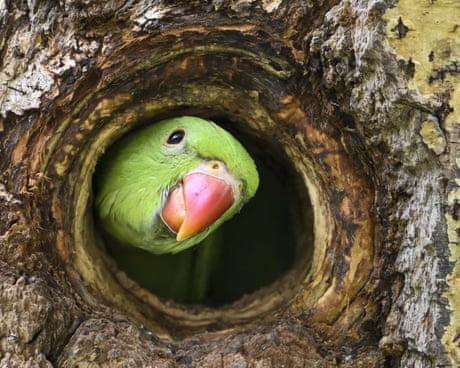
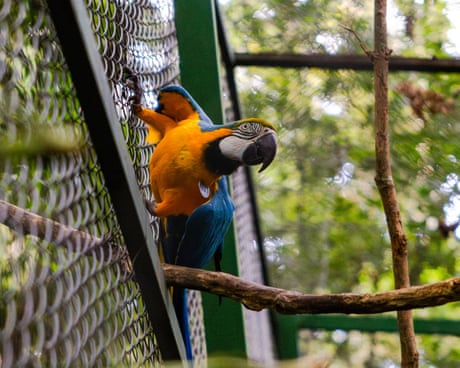
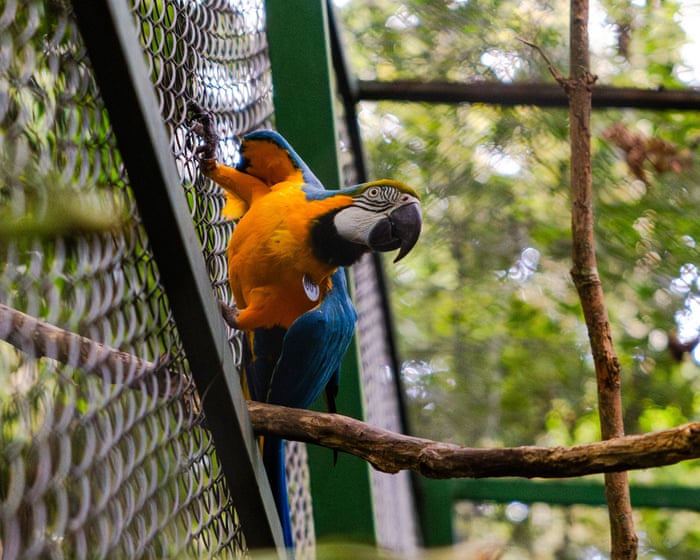
‘A dream come true’: Brazil’s blue-and-yellow macaws return to Rio after 200 years

An ambitious ‘refaunation’ project is bringing the much-loved birds and other lost species back to the city’s national park

Images of the iconic blue-and-yellow macaw can be spotted all over Rio de Janeiro. Yet the real thing has been seen so rarely in the Brazilian city that some wondered if it ever really existed there at all.

The French explorer Jean de Léry first described an abundance of the giant, colourful parrots around Indigenous tribes in the 16th century, and the Austrian naturalist Johann Natterer sighted the Ara ararauna in the city in 1818.

Continue reading...

© Photograph: Maria Magdalena Arréllaga/The Guardian

© Photograph: Maria Magdalena Arréllaga/The Guardian

© Photograph: Maria Magdalena Arréllaga/The Guardian

  •  

‘It’s not just Flávio’: is surname-dropping son downplaying Bolsonaro connection?

Many Brazilians believe there is a ploy to free the younger Bolsonaro from baggage of his father’s name to return the family to power

He possesses one of the most famous family names in Latin American politics. But when the Brazilian senator took to the stage at a conservative conference in Grapevine, Texas, last weekend it was only his forename that was on people’s lips.

“Flávio! Flávio! Flávio!” the audience shouted as the 44-year-old politician announced he would run for president in order to fight the “radical environmental and woke” agendas he claims have made Brazil awful again.

Continue reading...

© Photograph: Anadolu/Anadolu Agency/Getty Images

© Photograph: Anadolu/Anadolu Agency/Getty Images

© Photograph: Anadolu/Anadolu Agency/Getty Images

  •  

‘The US is no longer the go-to place’: How Korean culture is taking Latin America by storm

Everything Korean – from K-pop and skincare to food and clothing – is booming in popularity in Chile, Mexico and Brazil

On the polished flagstones of a Santiago cultural centre’s forecourt, four Chilean girls dance in energetic union, counting their steps aloud in Korean.

In front of them, a YouTube video with 1.3bn views plays atop a speaker throbbing to the beat of How You Like That, by the K-pop megastars Blackpink.

Continue reading...

© Photograph: Mauricio Santana/Getty Images

© Photograph: Mauricio Santana/Getty Images

© Photograph: Mauricio Santana/Getty Images

  •  

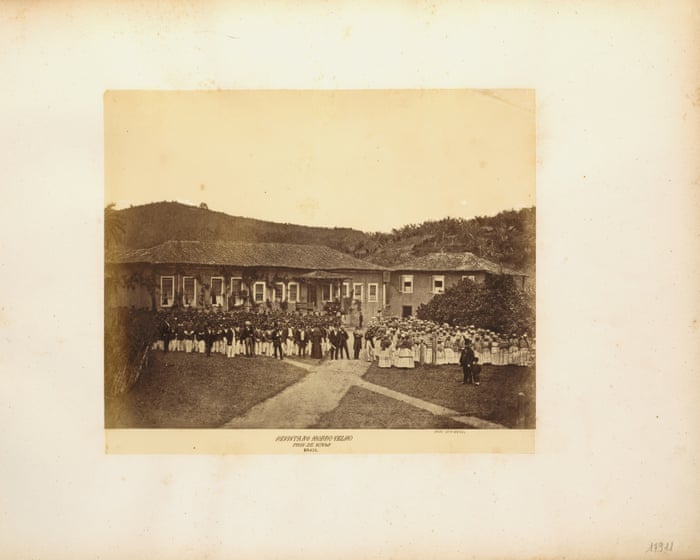
‘These connections are overlooked’: how British companies profited from slavery in Brazil long after abolition

Britons learn about the country’s involvement ‘almost as a self-congratulatory narrative’, says historian Joseph Mulhern

In 1845 British citizens and companies were already legally prohibited from owning or buying enslaved people overseas, yet that year 385 captives were “transferred” to a British mining company in Brazil named St John d’El Rey.

Despite a global campaign waged by the UK against slavery and the transatlantic slave trade, the move was not technically illegal because the enslaved people were not sold but “rented” – a practice permitted overseas under the 1843 Slave Trade Act.

Continue reading...

© Photograph: Courtesy of the National Library of Brazil.

© Photograph: Courtesy of the National Library of Brazil.

© Photograph: Courtesy of the National Library of Brazil.

  •  

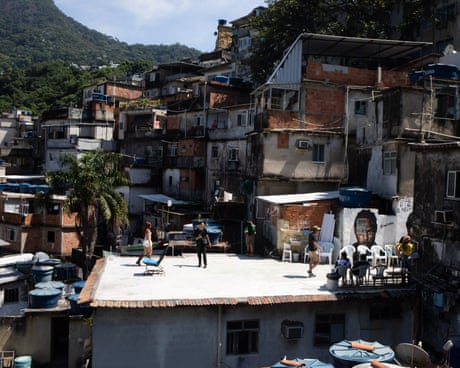
‘It’s one of those lifetime things’: viral videos turn Rio favela rooftop into tourist hotspot

People from across the world queue for hours to get a video taken on the famous ‘Gateway to Heaven’ rooftop in the heart of Brazil’s most iconic city

It was day three of the British family’s holiday in Brazil and, as the sun rose over Rio’s undulating mountains, they set off for the city’s most talked about tourist haunt.

“It’s our first time in Brazil. We’re really looking forward to it,” said Paul Boswell, a 58-year-old builder from Basildon, Essex, before clambering on to the motorbike that would carry him there.

Continue reading...

© Photograph: Alan Lima/The Guardian
© Photograph: Alan Lima/The Guardian
© Photograph: Alan Lima/The Guardian

  •  

Iran is not Venezuela, despite Trump’s hopes of repeating ‘regime capture’ strategy
Experts say US influence over South American neighbour will be hard to replicate in country with deep and long-standing antipathy to the west
First, the CIA tracks the head of an oil-rich, US-baiting nation to a heavily guarded compound at the heart of his country’s mountain-flanked capital.

Then, that leader is removed from power with a deadly and irresistible show of US military force.

Continue reading...

© Photograph: Akhtar Soomro/Reuters

© Photograph: Akhtar Soomro/Reuters

© Photograph: Akhtar Soomro/Reuters

  •  
❌