❌

Lese-Ansicht

In praise of polpette, Italy’s infinitely adaptable little balls

From bread and ricotta to vegetables and fish, there’s no single recipe for these beloved ‘meatballs’ – just your own way of making them

While the Italian word polpette is generally translated as “meatballs”, it actually has a much broader definition than that. In fact, the literal translation is “little balls of polpa”, or pulp. And, yes, the word polpa is strongly associated with minced meat, so, for many people, the word polpette conjures up round or torpedo-shaped morsels of minced and seasoned meat fried or simmered in sauce. But polpa can also refer to an infinite range of pulps and mixtures of pulps made from vegetables, pulses, fruit, bread, cheese or fish, all of which can be shaped into balls, wonderful balls.

Whatever the pulp base, one thing is generally agreed on: once formed, let those balls rest for at least 30 minutes (and up to a few hours), so they firm up and are therefore easier to poach, simmer, fry, air-fry and so on. Beyond resting, however, freedom reigns: the type of pulp, the inclusion of bread, or eggs, or herbs, or seasonings …

Continue reading...

© Photograph: Ola O Smit/The Guardian. Food styling: Esther Clark. Prop styling: Anna Wilkins. Food assistant: Clare Cole.
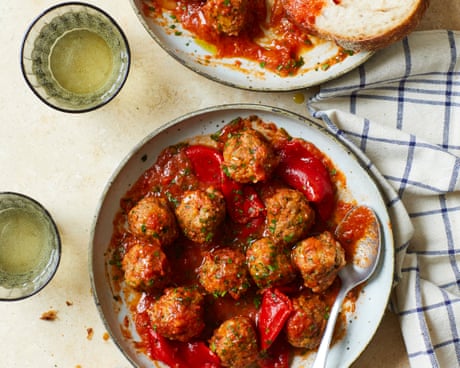
© Photograph: Ola O Smit/The Guardian. Food styling: Esther Clark. Prop styling: Anna Wilkins. Food assistant: Clare Cole.
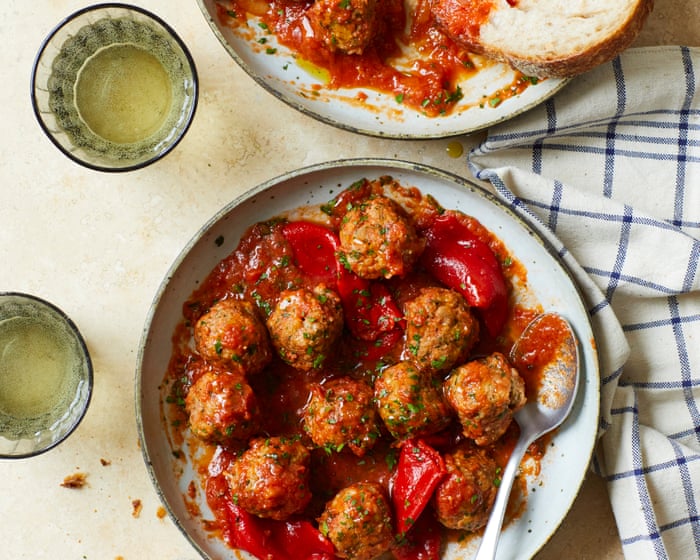
© Photograph: Ola O Smit/The Guardian. Food styling: Esther Clark. Prop styling: Anna Wilkins. Food assistant: Clare Cole.


  •  

Bubble trouble: the hunt for a good low-ABV sparkling wine

Let’s pop the cork on a some naturally low-alcohol ‘session-style’ sparklers

I don’t know if it’s my cobbled liver or having young children, but these days I wish that “session wine” was more of a thing. By this I mean wine that, like session beer, is easily quaffable over several hours and doesn’t plunge me into inebriation – in other words, wine with a relatively low ABV (less than 11%), a light body and bracing acidity. Why are they so hard to find, especially in the mainstream? The false premise, perhaps, that wine is sipped rather than chugged, or that it is enjoyed only with food? (You need only set foot in a Wetherspoons to learn otherwise.)

So, yes, I’m after a delicious, low-ABV wine, specifically one I can drink at a party without ending up looking like a Heat! magazine cover star in circa 2003. My favourite party drink is something fizzy, so I’m essentially looking for a session sparkling wine.
Continue reading...

© Photograph: Ingolf Pompe 54/Alamy

© Photograph: Ingolf Pompe 54/Alamy

© Photograph: Ingolf Pompe 54/Alamy

  •  

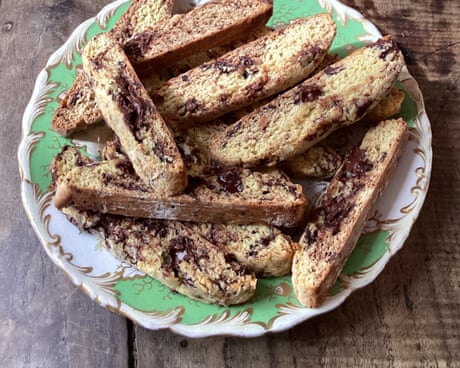
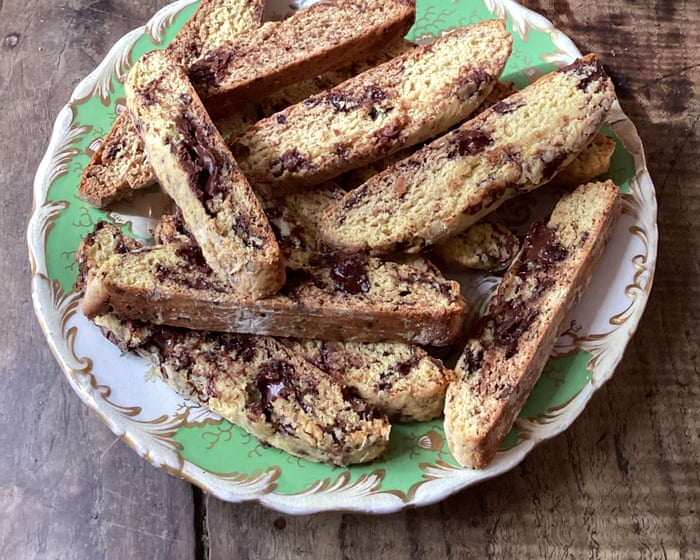
Rachel Roddy’s recipe for tozzetti, AKA dipping biscuits with chocolate chips and orange

These crunchy ‘cupboard biscuits’ from central Italy are just made to be dunked, be that in a cuppa or in wine

Considering that the word tozzetto means an irregular and rounded piece, and is the diminutive of tozzo, which refers to something with excessive thickness and width in relation to its height, my tozzetti are not faithful. In fact, the proportions I gave them mean they are more Janet McTeer than Danny DeVito. Fortunately, their length doesn’t compromise their texture and Terry’s Chocolate Orange flavour, or their status as biscotti da credenza (cupboard biscuits).

Today’s recipe is adapted from one by the Neapolitan food writer Simona Mirto, who, since 2011, has built an exceptional website of recipes called TavolArteGusto. Her pie, savoury tart, cake and biscuit recipes and notes are particularly effective. It is from Simona that I learned tozzetti are found in central Italy, particularly in Lazio, with its epicentre in the Tuscia Viterbo area, as well as in Umbria and Abruzzo; and that they originated between the 18th and 19th centuries as cupboard biscuits, designed to use simple, easily available ingredients: flour, eggs, sugar (or honey, which gives a chewier texture) and dried fruit. I have adjusted her tozzetti quantities slightly, to take into account the addition of orange juice as well as the orange zest she suggests. The dough, while slightly sticky, should be firm enough to shape into loaves (the form is rather like small ciabatta), so you may need to add a little more flour (cautiously) or simply work with flour-dusted hands on a well-floured work surface.

Continue reading...

© Photograph: Rachel Roddy/The Guardian. Food styling also by Rachel Roddy.

© Photograph: Rachel Roddy/The Guardian. Food styling also by Rachel Roddy.

© Photograph: Rachel Roddy/The Guardian. Food styling also by Rachel Roddy.

  •  

Forget limoncello! How Lillet became the fruity, floral drink of the summer

In 2008, only 70,000 cases of this classic French aromatised wine were sold. In 2024, that boomed to 1.3m. What accounts for its sudden enormous resurgence?

I’m a sucker for a spritz. So when I saw a sign in the French House pub in London, advertising its spring special, “Lillet spritz, £6.50”, I immediately ordered one. I wasn’t exactly transported from rainy Soho to sunny Saint-Tropez in just one sip, but the honey-scented, golden-hued bubbles did put me in a summery mood.

Since then, I’ve started seeing Lillet more often. In the UK, it is on the spritz menu at Greene King and Young’s pubs for a second summer. It is a staple in French-style restaurants such as Côte Brasserie and Café Rouge, and in Gallic bars such as Boulebar and Baranis, where punters can play petanque while they drink. Venues around the world have started to serve it too, from Wolf food market in Brussels to Bar Bridge in Sydney. Global sales are reported to have grown from 70,000 cases in 2008 to 1.3m in 2024.

Continue reading...

© Photograph: Linda Nylind/The Guardian

© Photograph: Linda Nylind/The Guardian

© Photograph: Linda Nylind/The Guardian

  •  

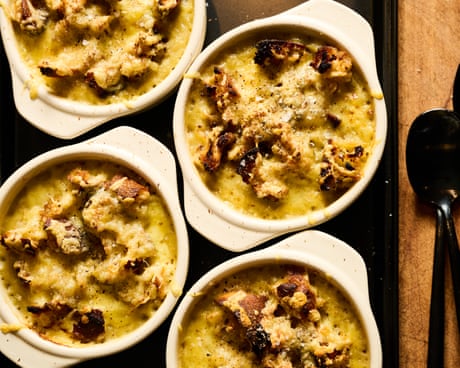
Alice Zaslavsky’s parsnip and pear soup with cheesy toast tops – recipe

Parsnip at a clip! The root veg is affordable now and, paired with pears, the retro combo works wonders in Alice Zaslavsky’s midweek soup

Some vegetables are a Tuesday night no-brainer, while others feel like more of a Sunday schlep. Poor parsnip falls into the latter category, relegated to slow braises and weekend roasts.

Weather-resistant root veg such as parsnips, swedes and celeriac are affordable at this time of year but their fibrousness doesn’t yield as easily or quickly as tender, fair-weather veg.

Continue reading...

© Photograph: Eugene Hyland/The Guardian

© Photograph: Eugene Hyland/The Guardian

© Photograph: Eugene Hyland/The Guardian

  •  

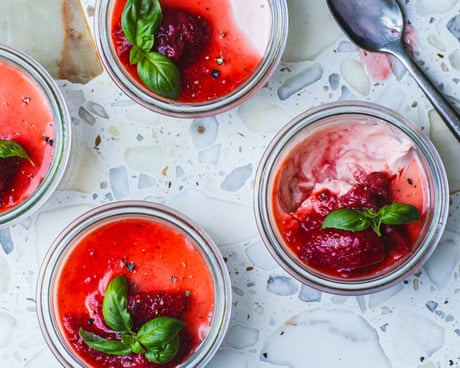
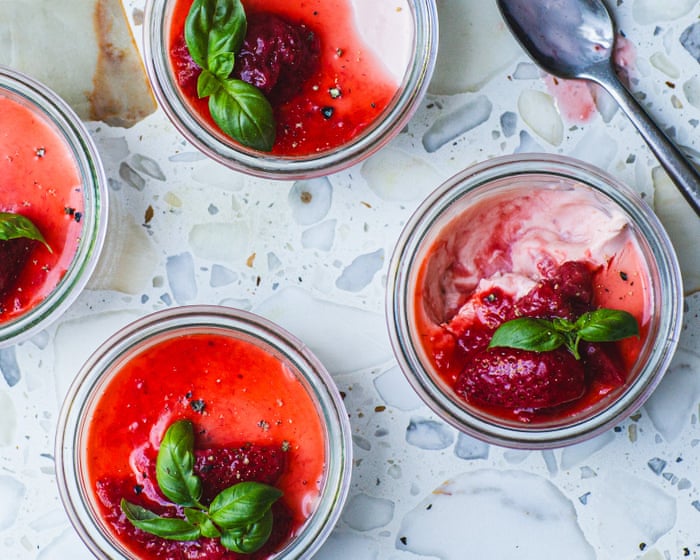
How to turn squishy strawberries into a classic British dessert – recipe | Waste not

Their short shelf life might count against them, but even when they’re past their best, strawberries still offer plenty of possibility

This year, I’m an ambassador for Cole & Mason, a British brand that makes some of the best pepper mills I know and for whom I’ve come up with The Art of Seasoning, a recipe series about my approach to seasoning food. It covers both the basics, including the impact of different salts and peppers, as well as innovative ways to use seasoning, such as in Eton mess and today’s posset. Strawberries have a pretty short shelf life, but even when they’re a bit squishy, they can still be turned into something delicious, be that a topping for your morning porridge or this simple, rich and seasonal dessert.

Continue reading...

© Photograph: Tom Hunt./The Guardian.Food and props: Tom Hunt.

© Photograph: Tom Hunt./The Guardian.Food and props: Tom Hunt.

© Photograph: Tom Hunt./The Guardian.Food and props: Tom Hunt.

  •  

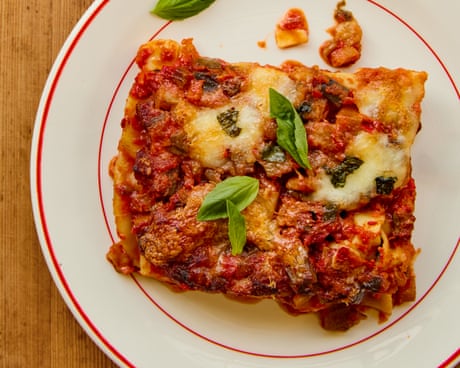
Barney Desmazery’s recipes for late spring and summer vegetable lasagnes

Banish all memories of those limp, soggy vegetarian lasagnes of old: these spins on a true classic are simple and seasonal

The words “vegetable lasagne” can strike fear into anyone who’s ever endured a soggy rendition with limp veg, bland tomato sauce and watery bechamel. Many of us still shudder at the memory of early attempts to veggie-fy traditional comfort foods that did a disservice to both the diner and the ingredients. But it doesn’t have to be that way. These recipes show how vegetarian lasagne can be elevated into a true classic, with seasonal variations that right those past wrongs and let great ingredients shine. As the dishes in Feast’s pages prove week after week, we’ve come a long way when it comes to creative meat-free cooking, and baked pasta can pair beautifully with vegetables in every season.

Continue reading...

© Photograph: Kim Lightbody/The Guardian, Food and Props Emma Cantlay

© Photograph: Kim Lightbody/The Guardian, Food and Props Emma Cantlay

© Photograph: Kim Lightbody/The Guardian, Food and Props Emma Cantlay

  •  

A thousand and one uses for a zested lemon | Kitchen aide

Well, maybe not quite a thousand, but when life gives you bald lemons, make lemon ice cubes or indeed any of these super suggestions from our panel of lemonheads

I regularly use lemon zest, but the result is that I often have two or three bald lemons hanging around going mouldy. What can I do with them?
Bel, by email
“We use a lot of zest and peel in our cooking at the restaurant,” sympathises Chris Shaw of Toklas in London, “so we also end up with a load of peeled lemons.” Not that that’s a hardship, mind, because no matter what you’re making, you’re almost always going to need acid in some shape or form. As Jad Youssef, author of Lebnani, says: “If something’s flat, lemon juice is usually the fix. In Lebanon, we always have cut lemons on the table, ready to squeeze over pretty much every meal.”

To be a bit more specific, though, Bel’s first port of call might be dressings, particularly at prime salad time. “Whisk the juice with olive oil, a pinch of salt, maybe a bit of garlic, and a drizzle of pomegranate molasses,” Youssef says. That would then mingle nicely with all manner of things: tomatoes, radishes, cucumber, or grilled courgette or aubergine.

Got a culinary dilemma? Email feast@theguardian.com

Continue reading...

© Photograph: Ola O Smit/The Guardian. Food and prop styling: Kitty Coles. Food styling assistant: Megan Lambert.

© Photograph: Ola O Smit/The Guardian. Food and prop styling: Kitty Coles. Food styling assistant: Megan Lambert.

© Photograph: Ola O Smit/The Guardian. Food and prop styling: Kitty Coles. Food styling assistant: Megan Lambert.

  •  

Asparagus tart and fattoush: Sami Tamimi’s Palestinian recipes for spring

A fresh, fragrant tart and a vibrant, crunchy salad to accompany it – flavours of the season, and of home

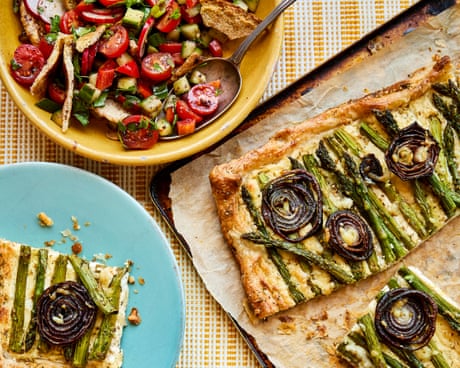
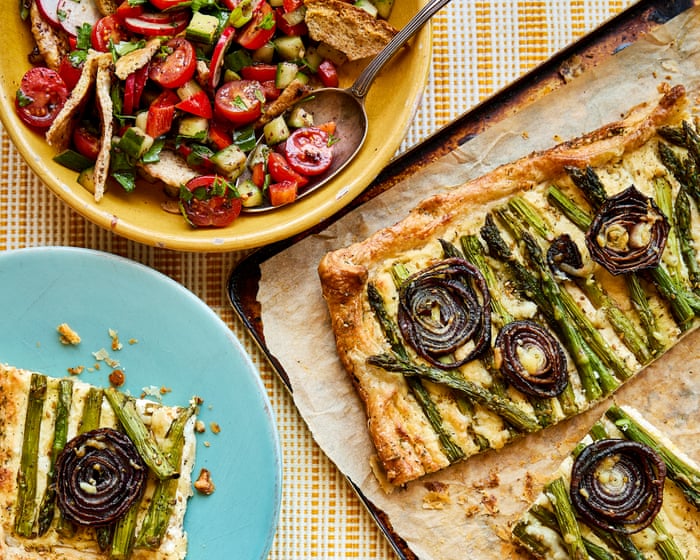
The first taste of English asparagus always feels like a quiet celebration, and those fresh, green spears snap with promise after the long winter. That same thrill echoes in the hills of Palestine, where foraging for wild asparagus becomes a small adventure. Eyes scan the ground for slender shoots hiding among thorns, and each find is a victory. At home in the UK, however, I’m obsessed with encasing them in pastry and turning the season’s simplest treasure into a showstopper. I like to serve that with fattoush, and I can’t help but groan whenever I think of my mum’s one; nothing quite matches that comforting bowl with its tangy buttermilk dressing. It’s the version I grew up on, and it’s the one still made across our family. This take has its own charm, though: vibrant, crunchy, herby, and full of tomatoes, cucumbers and toasted pitta.

Continue reading...

© Photograph: Phoebe Pearson/The Guardian. Food styling: Hanna Miller. Prop styling: Louie Waller. Food styling assistant: Isobel Clarke.

© Photograph: Phoebe Pearson/The Guardian. Food styling: Hanna Miller. Prop styling: Louie Waller. Food styling assistant: Isobel Clarke.

© Photograph: Phoebe Pearson/The Guardian. Food styling: Hanna Miller. Prop styling: Louie Waller. Food styling assistant: Isobel Clarke.

  •  

Rukmini Iyer’s quick and easy recipe for kimchi tofu noodles with chilli peanuts | Quick and easy

Simple and spicy, this dish is adaptable enough to become a firm favourite with all the family – and it will fill lunchboxes the next day, too

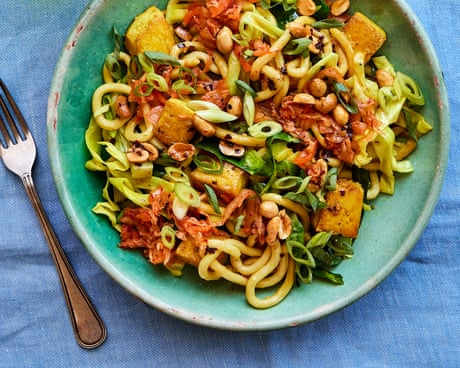
This is one of those rare dishes that I can make both for us and for the children – reserving the kimchi topping and chilli peanuts for the adults, of course. I also like to add the kimchi just before serving for freshness (this helps to keep all the good stuff in it from deactivating, too). Leftovers are excellent in lunchboxes the next day, so it’s well worth making the full quantity and popping the excess in the fridge.

Continue reading...

© Photograph: Phoebe Pearson/The Guardian. Food styling: Hanna Miller. Prop styling: Louie Waller. Food styling assistant: Isobel Clarke.

© Photograph: Phoebe Pearson/The Guardian. Food styling: Hanna Miller. Prop styling: Louie Waller. Food styling assistant: Isobel Clarke.

© Photograph: Phoebe Pearson/The Guardian. Food styling: Hanna Miller. Prop styling: Louie Waller. Food styling assistant: Isobel Clarke.

  •  

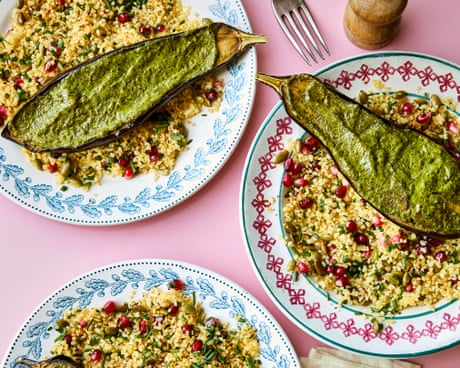
Honey & Co’s recipes for tahini aubergines and green fishballs

Two recipes that transform lunch or dinner from simple pleasures into magic moments

Every day, no matter what it brings with it, gives us at least three opportunities to clock out and have a moment of pure bliss. We’re talking about breakfast, lunch and dinner, of course, and we’re not factoring in snacks and tea time, either, because those are bonus opportunities. It doesn’t need to be complicated, it doesn’t need to be a big ceremony; in fact, most days, it’s the humble little treats, the simple, delicious things, that bring us the most happiness. Honey & Co. Daily is our cafe in Bloomsbury, central London, and now also the name of our latest cookbook, and we want both of them to be a haven, a place where you can go to get a simple, delicious moment.

Continue reading...

© Photograph: Phoebe Pearson/The Guardian. Food styling: Hanna Miller. Prop styling: Louie Waller. Food styling assistant: Isobel Clarke.

© Photograph: Phoebe Pearson/The Guardian. Food styling: Hanna Miller. Prop styling: Louie Waller. Food styling assistant: Isobel Clarke.

© Photograph: Phoebe Pearson/The Guardian. Food styling: Hanna Miller. Prop styling: Louie Waller. Food styling assistant: Isobel Clarke.

  •  

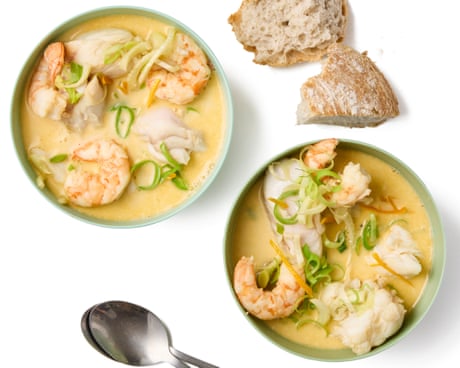
How to make Provençal fish stew – recipe | Felicity Cloake's Masterclass

Fish stew in the south of France doesn’t have to mean a complicated bouillabaise: bourride is a simpler and equally perfect match for a summer’s evening

Much as I love bouillabaisse, I’ve never come across rascasse, the spiny Mediterranean rockfish that’s the backbone of Marseille’s signature dish, outside its homeland. Bourride, another southern French fish stew, is a simpler affair that’s much easier to recreate here. Enriched with garlicky aïoli, it’s a lovely thing for a summer’s evening, and can be prepared ahead up to the end of step 7.

Prep 20 min
Cook 1 hr 10 min
Serves 2, generously

Continue reading...

© Photograph: Robert Billington/The Guardian. Food styling: Loïc Parisot.

© Photograph: Robert Billington/The Guardian. Food styling: Loïc Parisot.

© Photograph: Robert Billington/The Guardian. Food styling: Loïc Parisot.

  •  

Meera Sodha’s vegetarian recipe for crispy one-pan spaghetti with gochujang and mozzarella |. Meera Sodha recipes

A funky fusion dish with crisped up pasta edges, like spaghetti all’assassina, but with a Korean backbeat

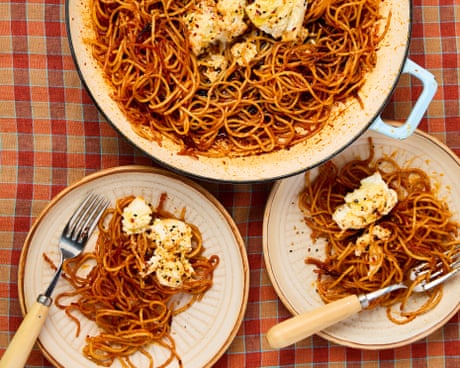
Today’s recipe is based on the famous spaghetti all’assassina, a dish native to Bari in Puglia. The pasta is cooked directly in the pan risottata, or risotto-style, and tomato stock is poured in a little at a time until the spaghetti is bruciata, or burnt and crisp. I won’t call the dish by its original name because that contains dried chilli and tomatoes, whereas my version features two of my favourite ingredients: gochujang, the Korean sweet and hot chilli paste, and my beloved sun-dried tomato paste. The result is killer, even if the name is not.

Continue reading...

© Photograph: Louise Hagger/The Guardian. Food styling: Emily Kydd. Prop styling: Jennifer Kay. Food styling assistant: Eden Owen-Jones

© Photograph: Louise Hagger/The Guardian. Food styling: Emily Kydd. Prop styling: Jennifer Kay. Food styling assistant: Eden Owen-Jones

© Photograph: Louise Hagger/The Guardian. Food styling: Emily Kydd. Prop styling: Jennifer Kay. Food styling assistant: Eden Owen-Jones

  •  

Rachel Roddy’s recipe for ricotta and breadcrumb balls in tomato, chilli and basil sauce | A kitchen in Rome

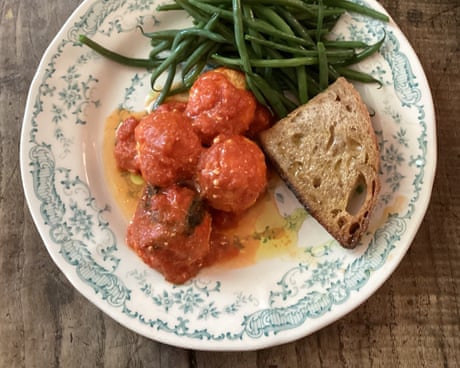
Luscious, herby ricotta and breadcrumb balls, simmered in a rich tomato, basil and chilli sauce … that’s one weeknight dinner sorted

To begin with, the situation looks far from promising. Having given up its protein for cheese, the whey that has been returned to the huge pan is thin, opaque and not unlike cloudy washing-up water. The situation changes slightly when whole milk is added to the whey, along with rennet, and it’s then reheated, or re-cooked (ri-cotta). For a while, nothing happens. Then follows a slight, just perceptible wobbling, before, quite suddenly, like scudding clouds moving into view, scraggy clumps of coagulated protein, albumin and globulin appear on the surface. These are lifted out in the same way as foam from a pan of broth: scooped off with a large slotted spoon. At least that is how it is done by Filippo Privitera at Caseificio Privitare in Castellana Sicula in the province of Palermo. The coagulated protein, otherwise known as ricotta, is then dropped into perforated plastic tubes on a slanting surface so it can drain some more, before being eaten in many ways.

For the Feast newsletter a few weeks ago, I wrote about the many ways to eat ricotta. Like many, I have long known what a useful ingredient it is, but, going through decades of archives, I was reminded just how versatile ricotta is, moving with ease between savoury and sweet, and both straight from the pot and cooked. However, since writing that newsletter, things I forgot to mention have also scudded into my head: how good ricotta is in pastry (a roast pumpkin, mushroom and chestnut pie is especially good); that it can be whipped with coffee for Anna Del Conte’s quick pudding; mixed with flour for sweet fritters; or made into polpette di ricotta e pane (ricotta and breadcrumb balls), which can be deep-fried or simmered in a rich tomato, basil and chilli sauce.

Continue reading...

© Photograph: Rachel Roddy/The Guardian

© Photograph: Rachel Roddy/The Guardian

© Photograph: Rachel Roddy/The Guardian

  •  

How to turn leftover cooked new potatoes into a spicy Indian snack – recipe

Leftover new potatoes – if there are any – are a gift of the season. Try them in these samosas

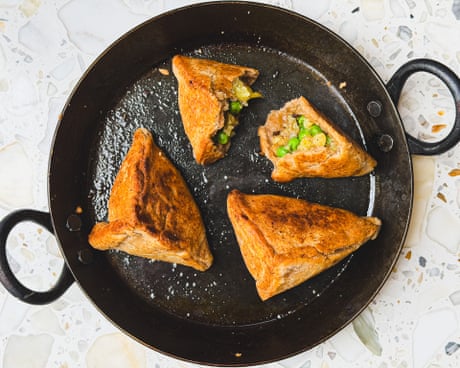
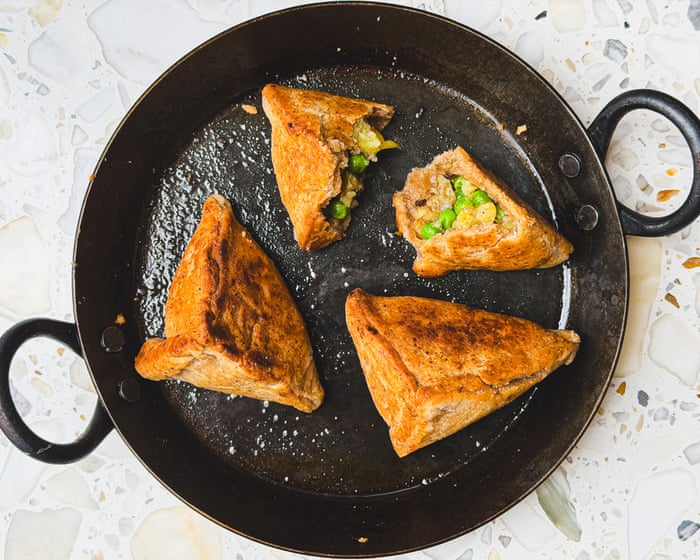
As with asparagus, I get completely seduced by the arrival of new potato season and cook and eat them with wild abandon. Any leftover cooked potatoes, meanwhile, are a kitchen gift with infinite possibilities, from a simple crushed potato salad to these spicy, Punjabi-inspired samosas.

Continue reading...

© Photograph: Tom Hunt/The Guardian

© Photograph: Tom Hunt/The Guardian

© Photograph: Tom Hunt/The Guardian

  •  

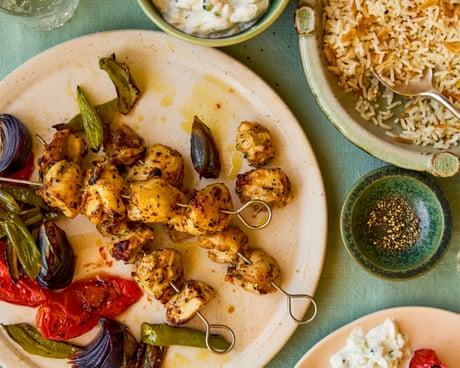
Özlem Warren’s recipes for chicken shish and Turkish-style rice pilaf

Chicken kebabs and Turkish rice: a perfect weeknight supper.

For these succulent kebabs, tavuk (chicken), marinated in yoghurt, olive oil and spices, is threaded on to şiş (skewers). Often served with pilav and roast vegetables, they are popular throughout Turkey. My father, Orhan, was a lawyer with the Turkish government’s transport department, which has an employees’ lokanta (restaurant) in Ortaköy, İstanbul, with mesmerising views of the Bosphorus. I have very fond memories of enjoying tavuk şiş with my family there.

Continue reading...

© Photograph: Kim Lightbody/The Guardian, Food and Props Emma Cantlay

© Photograph: Kim Lightbody/The Guardian, Food and Props Emma Cantlay

© Photograph: Kim Lightbody/The Guardian, Food and Props Emma Cantlay

  •  

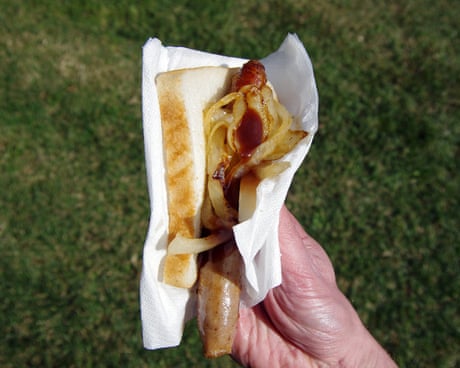
Fry off: did New Zealand invent the sausage sizzle? Australian claims hit a snag

The sausage open-sandwich is a cherished part of Australia’s culture. But its origins may be in the land of the long white cloud

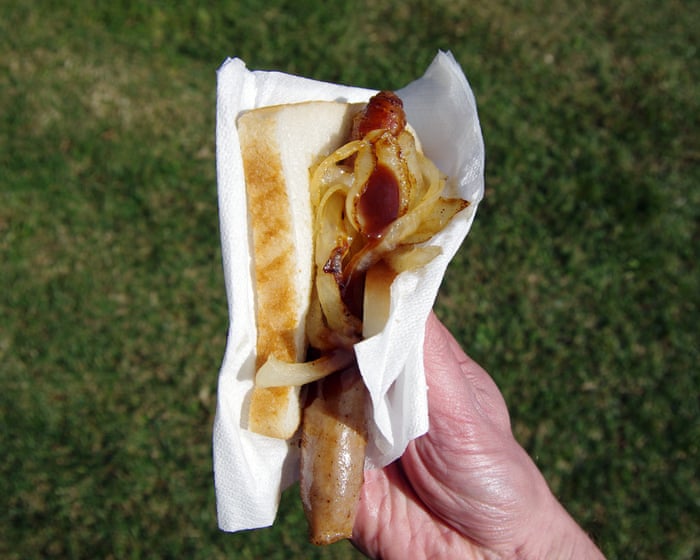
A thin sausage wrapped in a slice of white bread with cooked onions on top shouldn’t work as well as it does. But walking past any school fair, open-air market or Bunnings on the weekend, if the bangers are frying, there will be a line.

Sausage sizzles are a cherished part of Australian culture. Anni Turnbull, a Powerhouse collection curator specialising in the Australian culinary archive says democracy sausages – sold outside polling booths on election day – in particular are an edible manifestation of the idea of “a fair go”.

Sign up for a weekly email featuring our best reads

Continue reading...

© Photograph: Simon McGill/Getty Images

© Photograph: Simon McGill/Getty Images

© Photograph: Simon McGill/Getty Images

  •  

Roasted butternut pumpkin with chickpeas and tahini mandarin yoghurt – recipe

It’s seeds off, skin on in this autumnal pumpkin dish – and don’t be afraid to let it turn extra golden in the oven

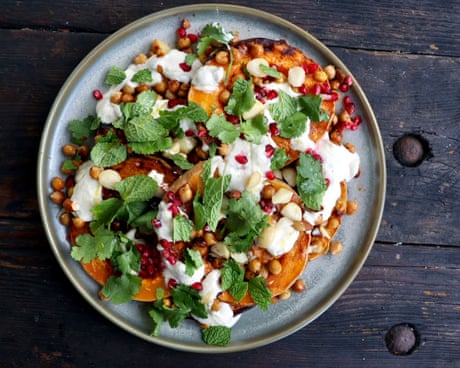
A delicious way to enjoy butternut pumpkin. No need to remove the skin, and try not to overcrowd the tray; give everything space so it roasts rather than steaming. And don’t be shy with colour – those dark edges on the pumpkin are where all the flavour is. I serve this with sliced chilli on the side to keep it family friendly.

Sign up for a weekly email featuring our best reads

Darren Robertson, co-founder of Three Blue Ducks, and Doug Innes-Will, Bundanon executive chef, are hosting a Twilight Feast as part of the Make Good festival on 30 May at Bundanon, NSW

Continue reading...

© Photograph: Supplied

© Photograph: Supplied

© Photograph: Supplied

  •  

How to stop pasta sticking together | Kitchen aide

Don’t just tip it into boiling water and leave it, says our pasta panel – it needs a bit of attention

When I cook pasta with a hollow (eg, orecchiette), how do I stop it sticking together? The water is always boiling and salted, sometimes with oil, but last week my granddaughter and I spent half an hour going through the damn stuff.
David, Manchester
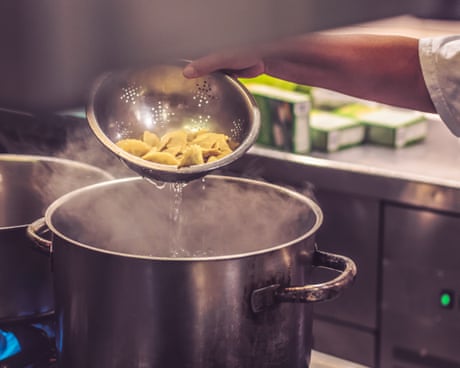
“Pasta is an engaged activity, so it’s really important that you don’t just drop it [in boiling water] and walk away,” says Dara Klein, of Tiella in east London. “Like a dear friend, pay it some attention.” David mentions orecchiette, which is a particularly vulnerable shape, says the Guardian’s Italian correspondent, Rachel Roddy: “They have a habit of falling into each other,” she sympathises, and in such times it’s best to check your basic principles. “It’s always the same rules,” Roddy says. “The water should be fast boiling, add salt, then stir, so you’ve got that double movement.” She isn’t one for adding olive oil, mind. Neither is Klein: “It’s just not necessary. And even if you’ve added a healthy glug of oil to the water, you’re still going to get clumping if you don’t stir.”

This may seem obvious, but make sure your pasta hasn’t intertwined in the bag before shaking it into the rolling water, and don’t be daft and dump the lot in all at once. “As soon as the pasta is in the water, give it a stir with a wooden spoon,” says Klein, who then stirs every minute to ensure those pasta shapes float free.

Got a culinary dilemma? Email feast@theguardian.com

Continue reading...

© Photograph: Eva-Katalin/Getty Images

© Photograph: Eva-Katalin/Getty Images

© Photograph: Eva-Katalin/Getty Images

  •  

José Pizarro’s recipe for spiced crab croquetas

Spain’s favourite staple snack gets a delicate and indulgent seafood makeover

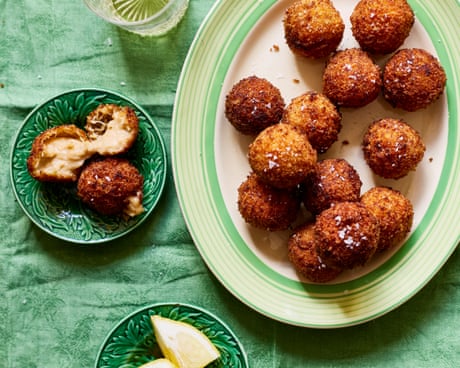
Croquetas have always been part of my life, and my favourites have always been my mum Isabel’s hake croquetas. That’s really where it all started for me: simple but full of flavour, the kind of thing you grow up eating without really thinking about it and then never forget. What I especially love about croquetas, however, is that they can be made from almost anything. Many people say that they rely on good leftovers, and that’s true, but they can also be made with rather more indulgent ingredients, like crab. It just goes to show quite how versatile croquetas are – and how they always go with a good glass of white rioja!

Continue reading...

© Photograph: Yuki Sugiura/The Guardian. Food styling: Tamara Vos. Prop styling: Rachel Vere. Food styling assistant: Georgia Rudd.

© Photograph: Yuki Sugiura/The Guardian. Food styling: Tamara Vos. Prop styling: Rachel Vere. Food styling assistant: Georgia Rudd.

© Photograph: Yuki Sugiura/The Guardian. Food styling: Tamara Vos. Prop styling: Rachel Vere. Food styling assistant: Georgia Rudd.

  •  
❌