Europe’s reliance on natural gas from the US is expected to surge to a record this year as the country helps offset supplies lost from the Middle East, according to an energy think tank.
Europe is beginning the roll-out of a ban on imports of Russian liquefied natural gas at a difficult time, with the war in Iran seriously disrupting global supply.
Europe is facing its first monthly drop in seaborne supply of natural gas in over a year, with volumes dampened by terminal works and tighter global flows.
The global natural gas market is set to remain tight well beyond this year, as the ongoing conflict in the Middle East and damage to regional infrastructure continue to disrupt supply, according to the International Energy Agency.
Europe is beginning the roll-out of a ban on imports of Russian liquefied natural gas at a difficult time, with the war in Iran seriously disrupting global supply.
European natural gas resumed its advance as uncertainty over the duration of the supply disruption from the Iran war persisted, even as Washington extended a truce.
A gas storage facility in Muhldorf, Germany. Photographer: Krisztian Bocsi/Bloomberg
Several liquefied natural gas tankers appear to be nearing the Strait of Hormuz, as the market closely watches if flows of the super-chilled fuel through the waterway will resume despite Iran’s mixed messages.
Britain’s natural gas supply looks sufficient this summer despite the disruption to global energy flows caused by the Iran war, according to the grid manager.
European natural gas pulled back as broader markets weighed efforts by the US and Iran to make their way back to the negotiating table.
Gas pipes on the jetty at the Wilhelmshaven LNG Terminal, operated by Uniper SE, in Wilhelmshaven, Germany, on Thursday, Dec. 17, 2022. Germany opened its first state-chartered liquefied natural gas vessel as Europe's largest economy races to replace Russian gas amid an energy crunch and freezing temperatures. Photographer: Liesa Johannssen/Bloomberg
Britain’s natural gas supply looks sufficient this summer despite the disruption to global energy flows caused by the Iran war, according to the grid manager.
European gas and power markets, once a niche corner of global energy trading, are in for a major change next week: Hours will more than double to 21 from 10, ending the narrow daytime window that has been the norm for years.
Vapour rises from oil processing and refining structures in the Duna oil refinery, operated by MOL Hungarian Oil & Gas Plc, in Szazhalombatta, Hungary, on Monday, Feb. 13, 2019. Oil traded near a three-month high as output curbs by OPEC tightened global supply while trade talks between the U.S. and China lifted financial markets.
European natural gas steadied as the Strait of Hormuz remained largely closed and fighting continued in the Middle East, threatening a fragile ceasefire agreement between the US and Iran.
European natural gas plunged after the US and Iran agreed to a two-week ceasefire that could temporarily reopen the vital Strait of Hormuz and ease strained global energy markets.
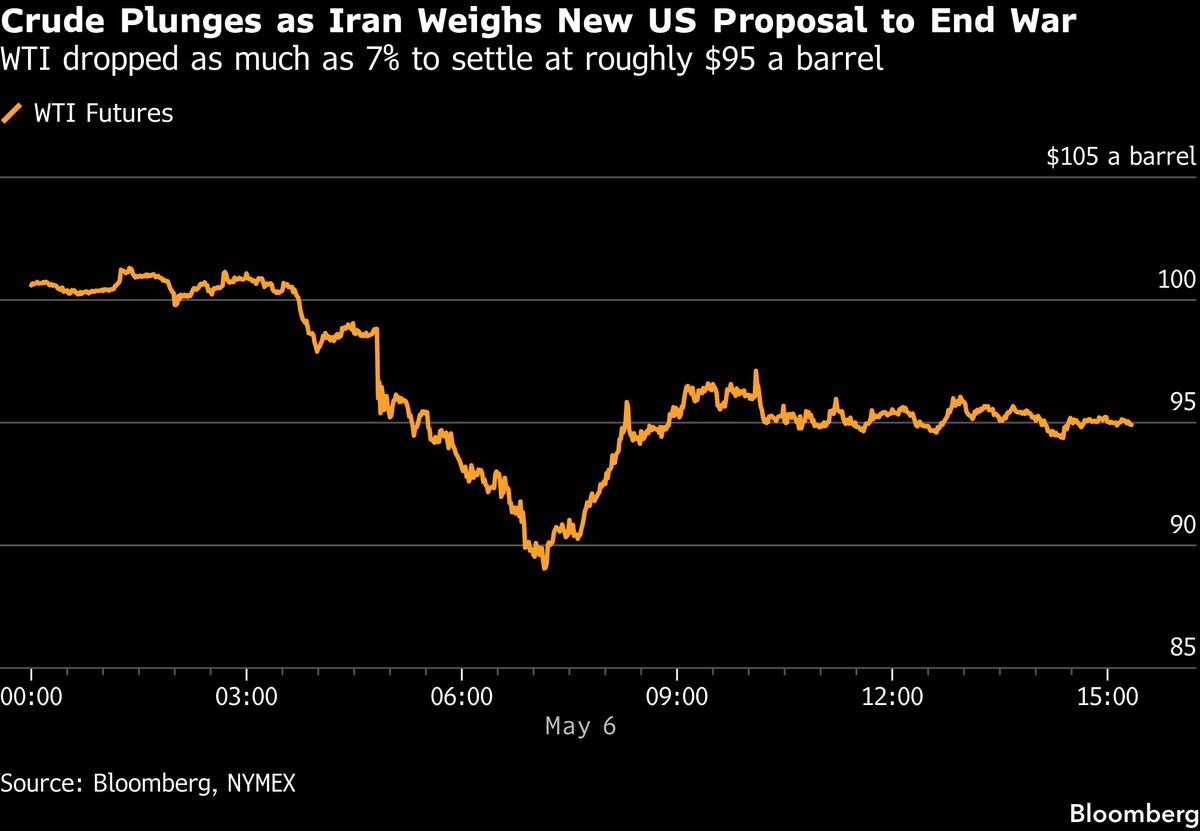
Oil and gas prices both plummeted after the US and Iran agreed to a two-week ceasefire deal aimed at halting the American-Israeli military campaign, with the White House announcing the US would hold direct talks with Iran in a bid to end the six-week conflict.
The silhouette of a pumpjack is seen in the Permian Basin near Orla, Texas on March 2, 2018. Photographer: Daniel Acker/Bloomberg
European natural gas futures resumed gains as traders watched the US and Iran exchange threats over the Strait of Hormuz, adding nervousnesses to an already volatile market.
Oil and gas markets have been rocked by disruption to supply out of the Persian Gulf. Prices of both commodities have jumped since the US and Israel began their strikes on Iran.
The liquefied natural gas production facility in Qatar's Ras Laffan Industrial City.
Oil and European natural gas prices surged after Iran carried out an attack on a major LNG site in Qatar, after earlier warnings from Tehran on threats to energy facilities across the Gulf.
File photo of the South Pars gas field in Assaluyeh. Photographer: Atta Kenare/AFP
 Anmelden