Ships can consider transiting the Strait of Hormuz along the southern route at any time of day with their signals on, a key naval information group said, as energy traders and shipowners look for clues about how quickly and safely Hormuz traffic can return to normal.
Traffic through the Strait of Hormuz appeared to thin early on Friday, just a day after a burst of oil flows through the waterway as the US and Iran vowed to lift a dual blockade.
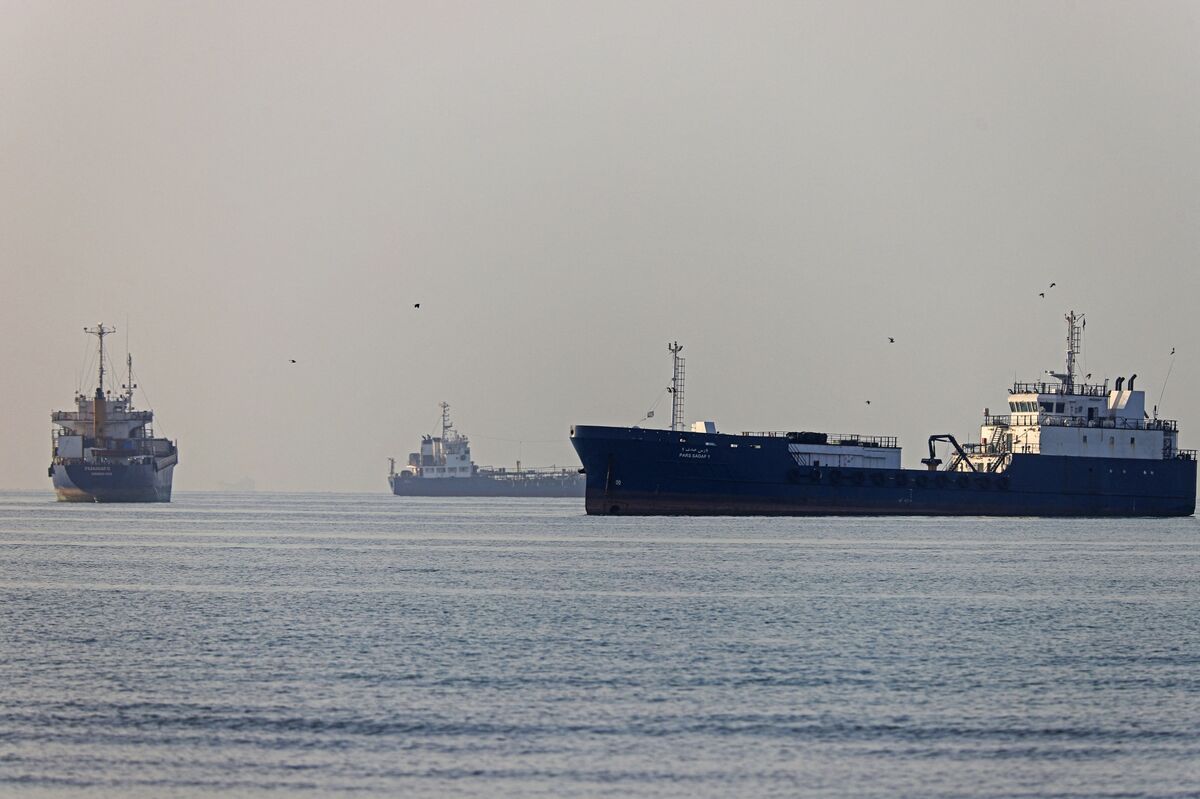
In this picture obtained from Iran's ISNA news agency on June 18, 2026, vessels are seen anchored in Bandar Abbas along the Strait of Hormuz. Oil prices tumbled after Trump and his Iranian counterpart separately signed their accord to end the Middle East war, with the Strait of Hormuz to reopen but two months of negotiations lying ahead. (Photo by AMIRHOSSEIN KHORGOOEI / ISNA / AFP via Getty Images) /
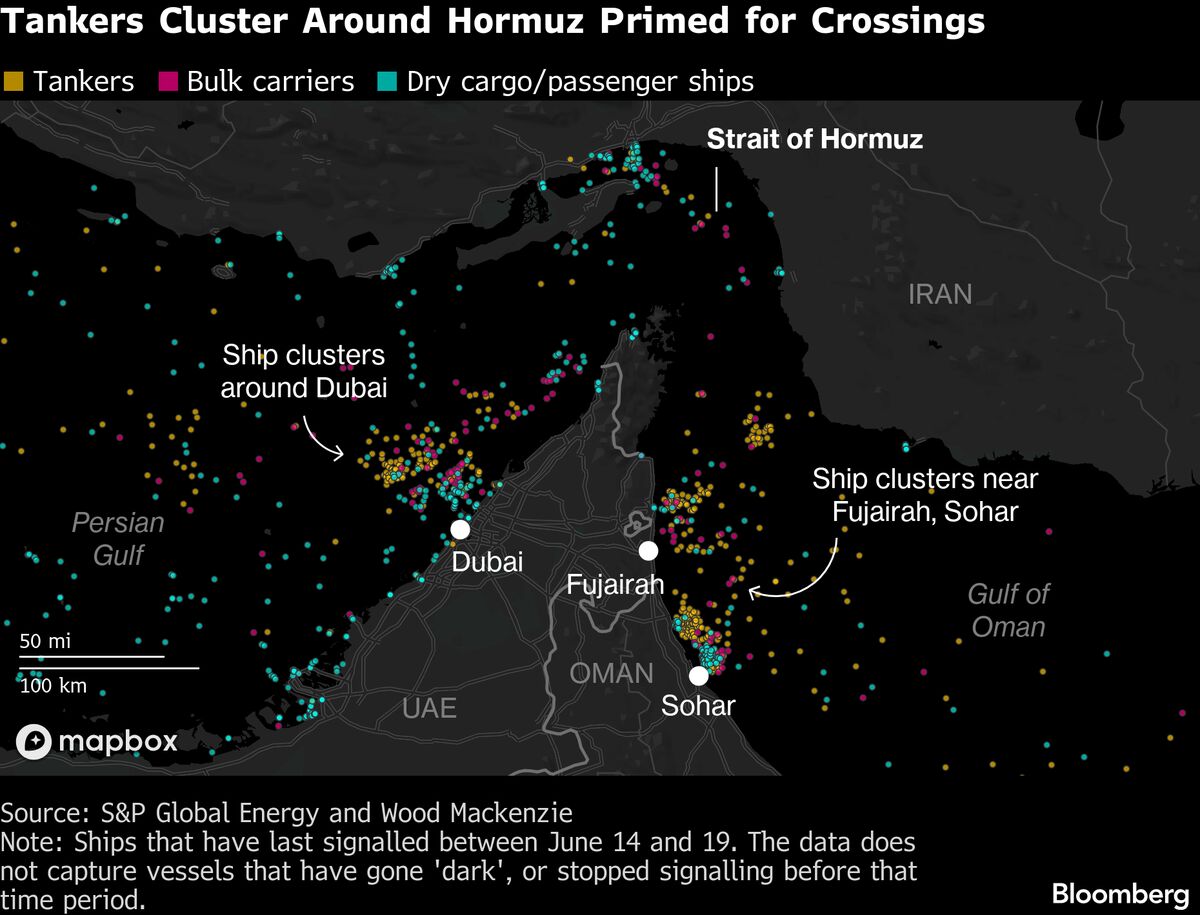
Supertankers laden with almost 80 million barrels of oil are sitting in the Persian Gulf and ready to cross the Strait of Hormuz at a moment’s notice, if traders and shipowners give the go-ahead.
A growing stream of stranded oil is making its way out of the Strait of Hormuz and Kuwait said it will start ramping up production, as the US-Iran interim peace deal sparks a flurry of activity that is already pushing Middle East flows toward pre-war levels.
The Shaden very large crude carrier in 2025. Source: MarineTraffic
Oil flows going through the Strait of Hormuz may recover to only about 70% of their pre-war level, according to Goldman Sachs Group Inc., which highlighted regional producers leaning on alternative routes.
Vessels sail along the Strait of Hormuz in this image from ISNA news agency on June 1. Photographer: AMIRHOSSEIN KHORGOOEI/AFP
A laden liquefied natural gas carrier and an empty products tanker are crossing the Strait of Hormuz, as traders watch for signs of traffic through the key waterway after an interim US-Iran peace deal went into effect.
The oil and shipping industry remains largely in wait-and-see mode ahead of Friday’s deadline to reopen the Strait of Hormuz, although there are some tentative signs of preparations as a handful of ships begin rerouting toward the Middle East while Iranian tankers laden with oil move out.
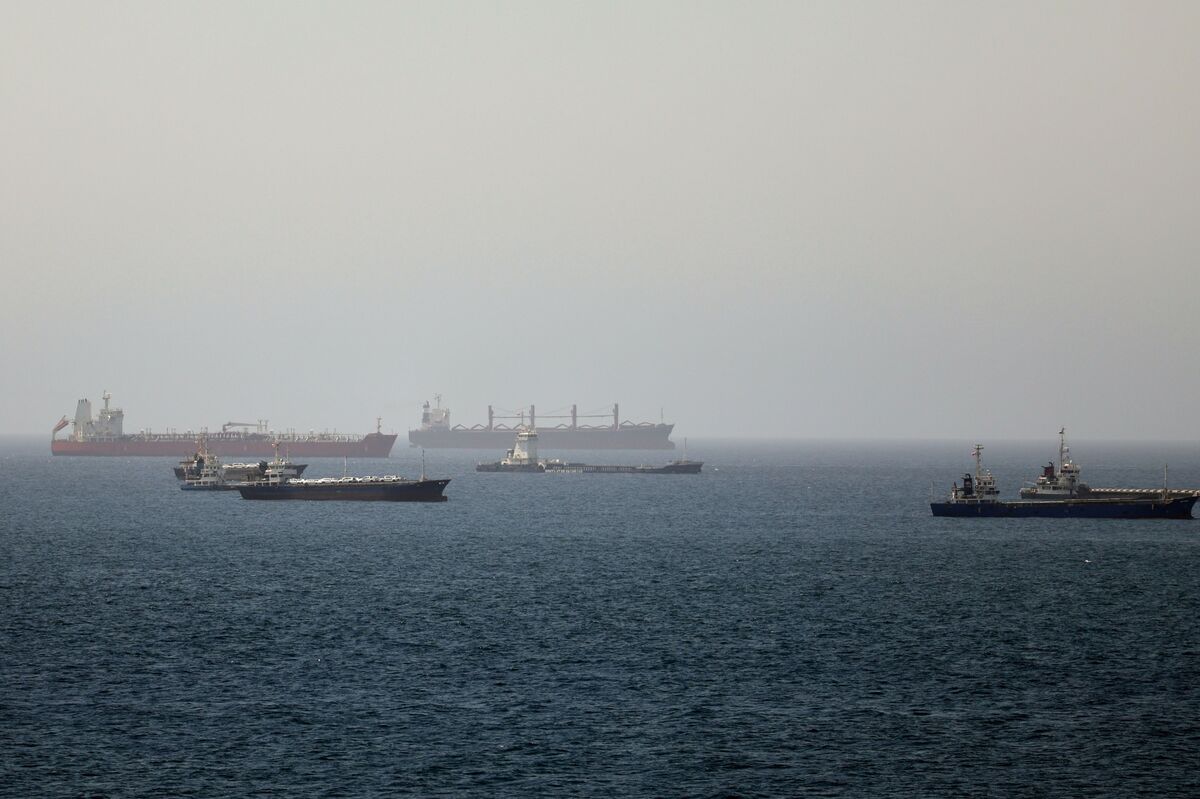
Tankers and cargo vessels are seen in the Gulf of Oman, along shipping routes linking the Strait of Hormuz and the Arabian Sea, on June 16. AP Photo
Two oil tankers heading toward Africa have U-turned in the Indian Ocean this week, switching their destinations to the Middle East as shipowners race to re-position vessels ahead of the possible reopening of the Strait of Hormuz.
Empty tankers Kapodistrias 21 (in white) and Coslucky Lake were seen U-turning toward Middle East this week, after previously indicating Africa as their destinations.
The US military says it has defended commercial ships in the Strait of Hormuz against regular threats since starting a program to assist vessels moving through the waterway, according to a document sent to the industry that lays out details of the help it’s been offering.
The US military says it has defended commercial ships in the Strait of Hormuz against regular threats since starting a program to assist vessels moving through the waterway, according to a document sent to the industry that lays out details of the help it’s been offering.
The transit of empty ships through the Strait of Hormuz into the energy-rich Persian Gulf is being eagerly watched by the market, which would indicate increasing confidence in the outlook for a sustained peace deal.
Oil and gas tankers were seen clustering in the Gulf of Oman near the Strait of Hormuz on Tuesday.
Two Iran-linked tankers are sailing eastward through the Strait of Hormuz ahead of the US and the Islamic Republic signing an interim peace agreement on Friday that would re-open the waterway.
The Musik tanker in May. Photographer: Ashish Pandey/MarineTraffic
Wall Street’s biggest banks are cutting their oil-price forecasts for the coming quarters, as optimism grows over a revival of Middle East crude output following an interim deal to reopen the Strait of Hormuz.
A US-Iran deal intended to reopen the Strait of Hormuz within days left many of the world’s top shipowners, traders and oil producer nations seeking clarity about the terms of the pact that’s pivotal to the global economy.
Non-Iranian oil flows through the Strait of Hormuz have surged by about 50% so far this month, as more Persian Gulf producers find ways of transiting the waterway despite continued tension between Washington and Tehran.
ULSAN, SOUTH KOREA - JUNE 10: The oil tanker Universal Winner, described as the first South Korean vessel to exit the Strait of Hormuz after being stranded there since the outbreak of conflict in the Middle East, arrives at the port of Ulsan, South Korea, on June 10, 2026, to unload crude oil. (Photo by Hwawon Ceci Lee/Anadolu via Getty Images)
A third tanker carrying Indian crew was struck by American forces in the Gulf of Oman this week, intensifying concerns over maritime trade security as the conflict escalates in the Middle East.
STRAIT OF HORMUZ - 2 OCTOBER 2024: Satellite view of the Strait of Hormuz, a critical chokepoint for global energy supply, connecting the Persian Gulf to the Gulf of Oman. This vital maritime route facilitates the transportation of goods, including oil and natural gas, between the Middle East and the rest of the world. (Photo by Gallo Images/Orbital Horizon/Copernicus Sentinel Data 2025)
The US military fired at an empty tanker for its suspected involvement in the Iranian oil trade this week as Washington continues to enforce a blockade of the Islamic Republic’s ports.
The world’s shipowners have placed orders for a record number of new oil supertankers, surpassing a boom back in 2008 that ultimately led to a glut and a collapse in rates.
Iran struggled to get energy exports past the US Navy’s blockade last month, with around 80 million barrels of oil and petrochemicals stranded in waters behind the line, according to a US non-profit advisory group.
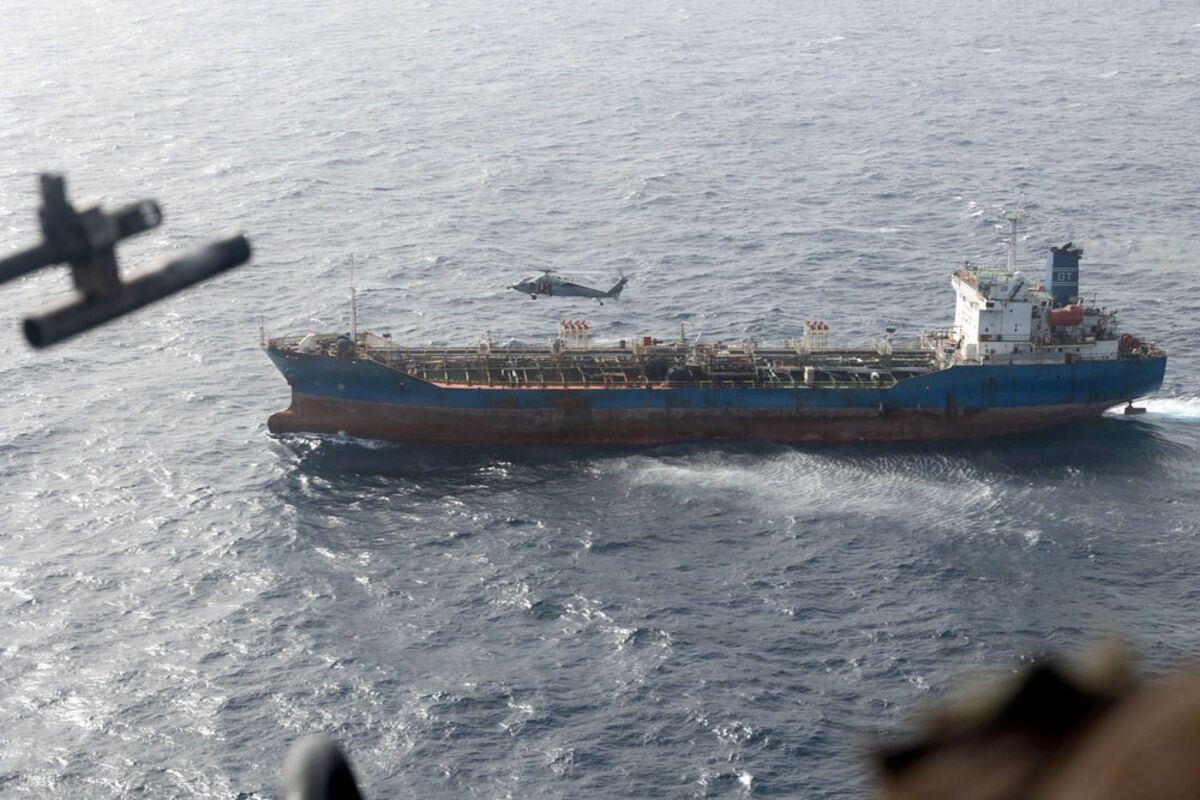
US Marines board an Iranian-flagged oil tanker in May. Source: US Marine Corps.
Iran struggled to get energy exports past the US Navy’s blockade last month, with around 80 million barrels of oil and petrochemicals stranded in waters behind the line, according to a US non-profit advisory group.
US Marines board an Iranian-flagged oil tanker in May. Source: US Marine Corps.

 Anmelden