Millions of barrels of oil continued to flow through the Strait of Hormuz this weekend even after Iran claimed to have closed the waterway again, as Washington and Tehran offer contrasting narratives over the status of the world’s most important shipping chokepoint.
Iran has resumed loading crude from its Kharg island export terminal after a break of about six weeks, following the lifting of a US Navy blockade of its ports.
Three very large crude carriers moored at Iran’s Kharg Island oil terminal on Saturday, June 20, 2026.
A growing stream of stranded oil is making its way out of the Strait of Hormuz and Kuwait said it will start ramping up production, as the US-Iran interim peace deal sparks a flurry of activity that is already pushing Middle East flows toward pre-war levels.
The Shaden very large crude carrier in 2025. Source: MarineTraffic
Tankers crossing the Strait of Hormuz with signals turned off are keeping this month’s oil flows at more robust levels than earlier in the Middle East conflict, as shippers await the signing of a US-Iran peace deal this week.
Tankers crossing the Strait of Hormuz with signals turned off are keeping this month’s oil flows at more robust levels than earlier in the Middle East conflict, as shippers await the signing of a US-Iran peace deal this week.
A third fully-loaded crude tanker has left the Iranian port of Chabahar and crossed the US blockade line heading toward Asia, just days before the planned signing of a ceasefire that will give Tehran the right to sell oil immediately.
The Sonia I Suezmax tanker in 2018. Source: Nevran/MarineTraffic
No region of the world produces more oil and gas than the countries straddling the Persian Gulf. Most of this energy can only be exported aboard tankers that cross the Strait of Hormuz — a waterway that’s effectively been closed for more than three months since the US and Israel launched strikes against Iran in late February.
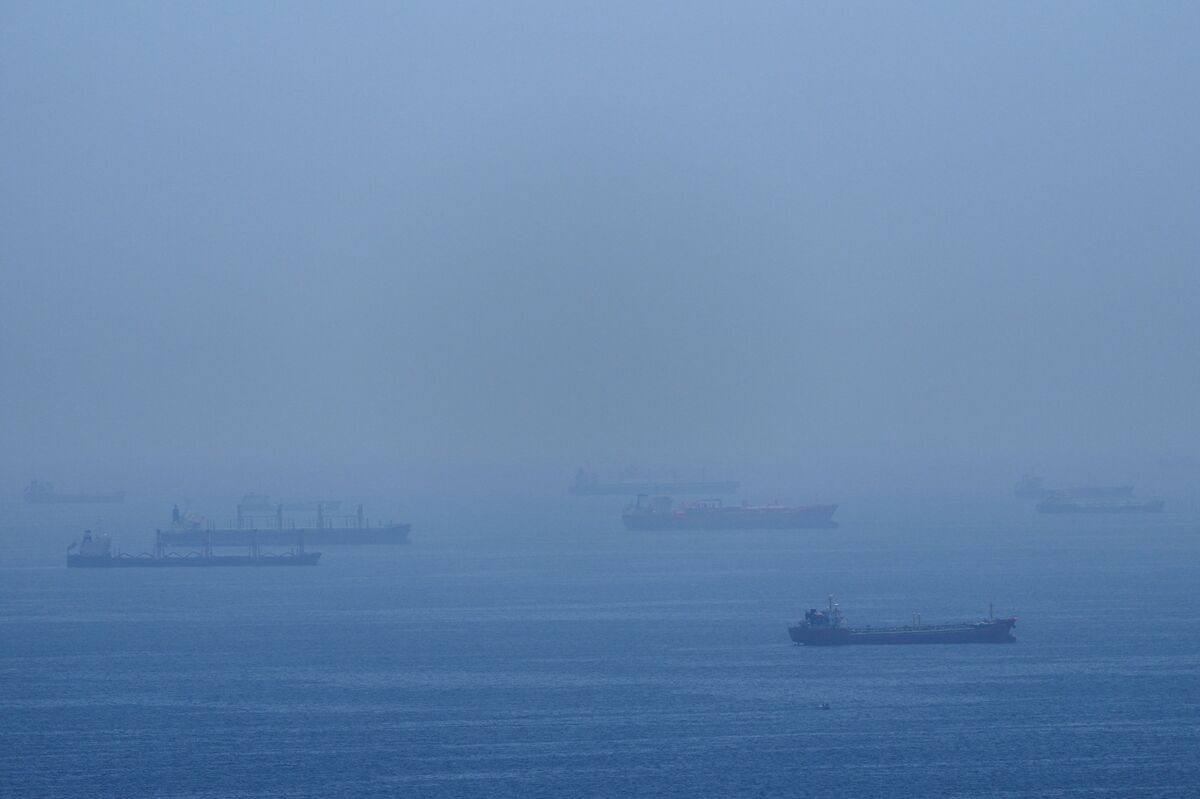
Tankers anchored in the Strait of Hormuz on April 18.
Commercial traffic through the Strait of Hormuz was limited to just a few ships over the past 24 hours as peace talks between the US and Iran show little sign of advancing.
A commercial vessel waits in the Gulf of Oman to pass through the Strait of Hormuz, on June 4.
Commercial traffic through the Strait of Hormuz was limited to just a few ships over the past 24 hours as peace talks between the US and Iran show little sign of advancing.
A commercial vessel waits in the Gulf of Oman to pass through the Strait of Hormuz, on June 4.
OPEC crude output fell last month, hitting its lowest level in decades as the US blockade of Iran and disruption in the Persian Gulf continued to curb production.
An Organization of the Petroleum Exporting Countries oil drum.
The first oil supertanker in almost a month has been spotted moored at Iran’s main crude-export facility in the northern Persian Gulf, highlighting the largely effective nature of an American blockade on Tehran’s shipping.
An image from the European Union's Sentinel 1 satellite shows a very large crude carrier moored at Iran's Kharg Island oil terminal on June 2, 2026, the first in nearly a month.
No region of the world produces more oil and gas than the countries straddling the Persian Gulf. Most of this energy can only be exported aboard tankers that cross the Strait of Hormuz — a waterway that’s effectively been blocked for more than three months.
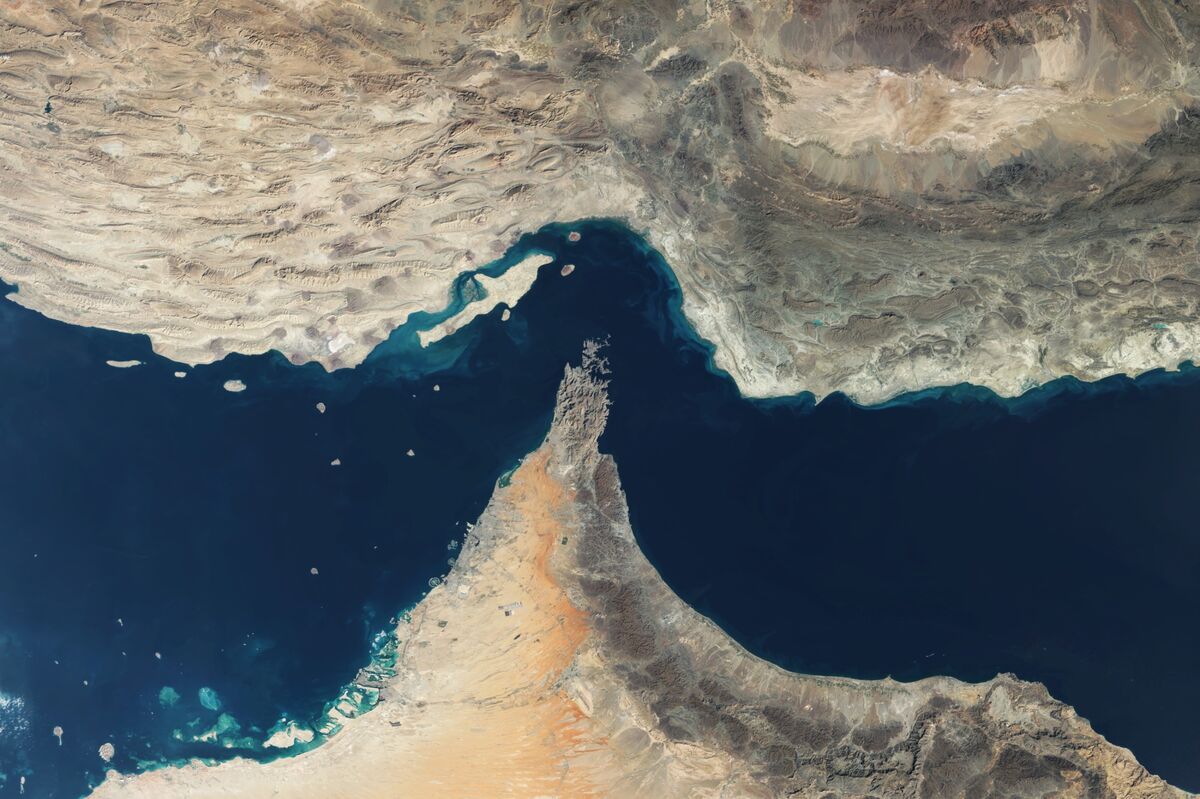
A satellite view of the Strait of Hormuz Photographer: Gallo Images/Orbital Horizon/Copernicus Sentinel Data 2025/Getty Images
Commercial vessel traffic through the crucial Strait of Hormuz appeared to remain limited over the past day, amid uncertainty over prospects for a US-Iran peace deal.
People walk on the shoreline in the Strait of Hormuz, where cargo and service vessels are anchored off Bandar Abbas, Iran, on June 1, 2026.
Roughly one-quarter of the non-Iranian large oil tankers trapped inside the Persian Gulf at the outbreak of the Iran war have managed to slip out in a slow, stealthy trickle.
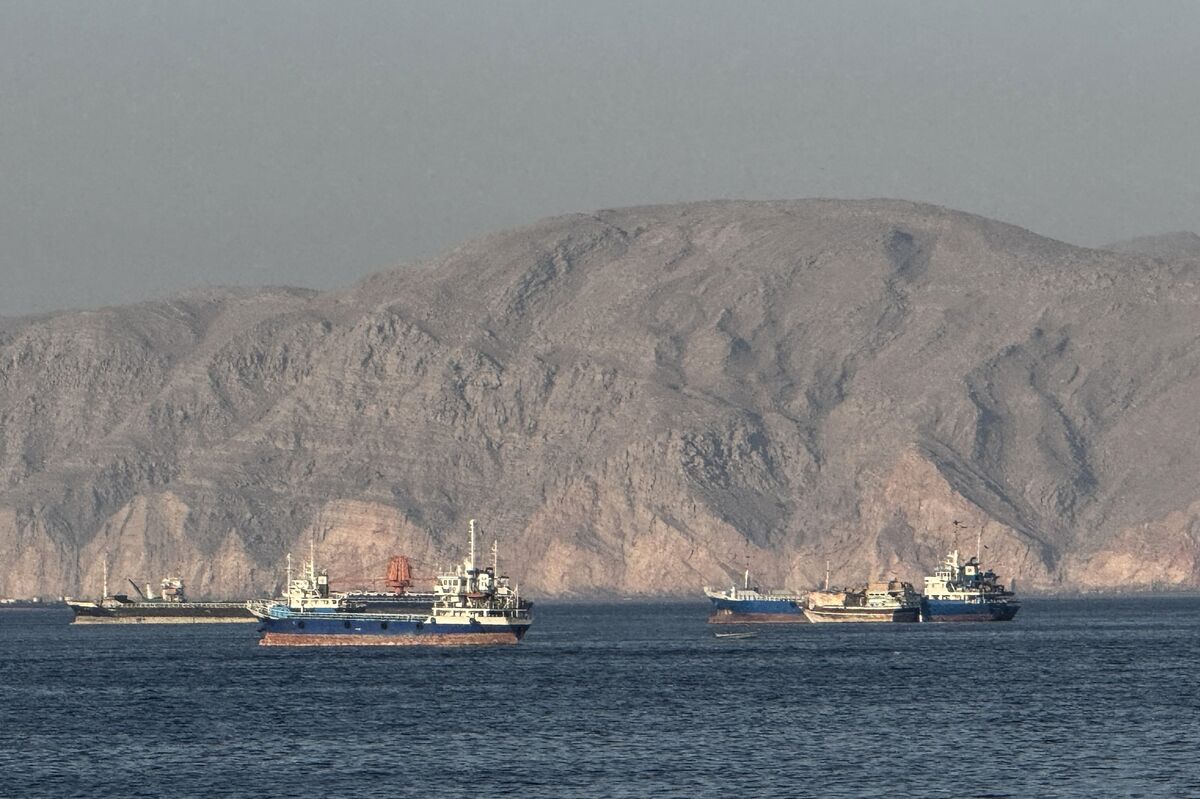
Vessels anchored in the Strait of Hormuz, near Khasab, Oman, on May 17.
Commercial shipping through the Strait of Hormuz dwindled to only a few mostly Iran-linked vessels crossing on Wednesday, underscoring the stop-start nature of traffic through the world’s most vital energy chokepoint.
A vessel is anchored off the coast of Sharjah in the United Arab Emirates on May 21.

 Anmelden