A ship was hit by an unidentified projectile in the Strait of Hormuz on Thursday in the first reported attack since an interim US-Iran peace deal, marking a setback to efforts to restore traffic through the vital energy thoroughfare.
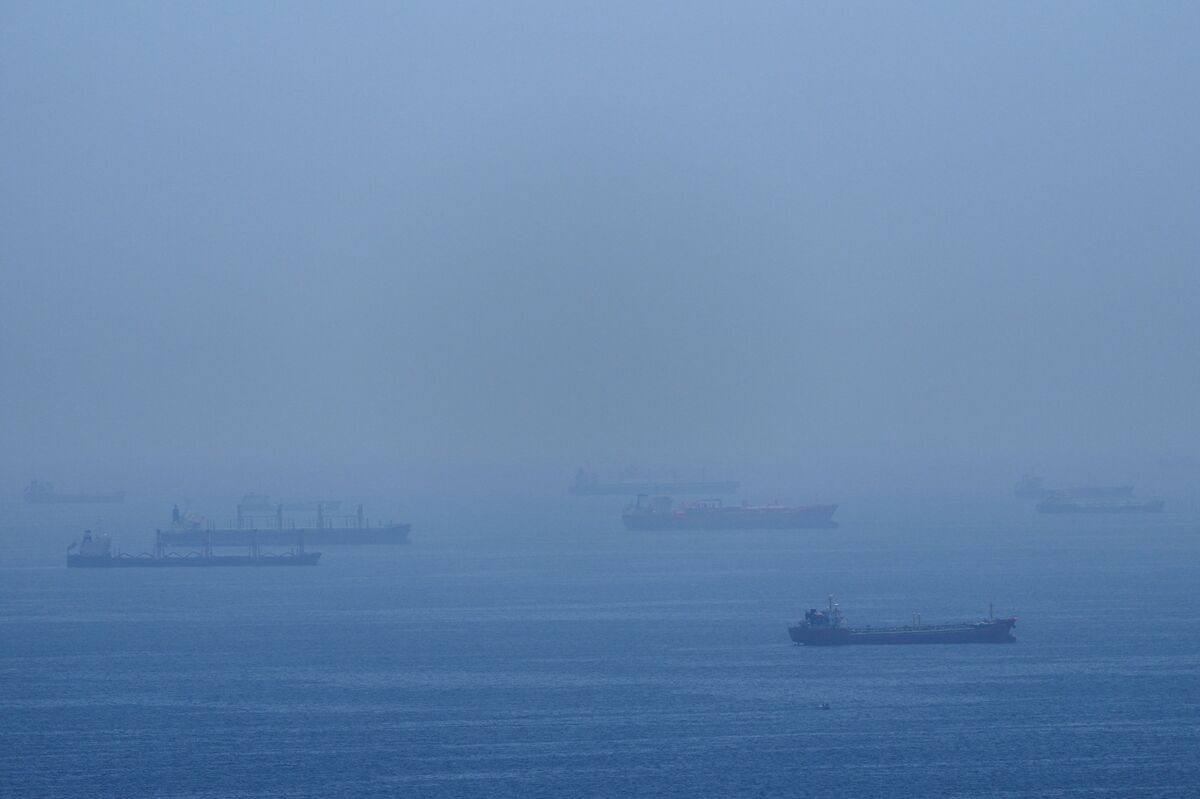
Oil tankers and cargo vessels anchored off the coast of Oman on June 23.
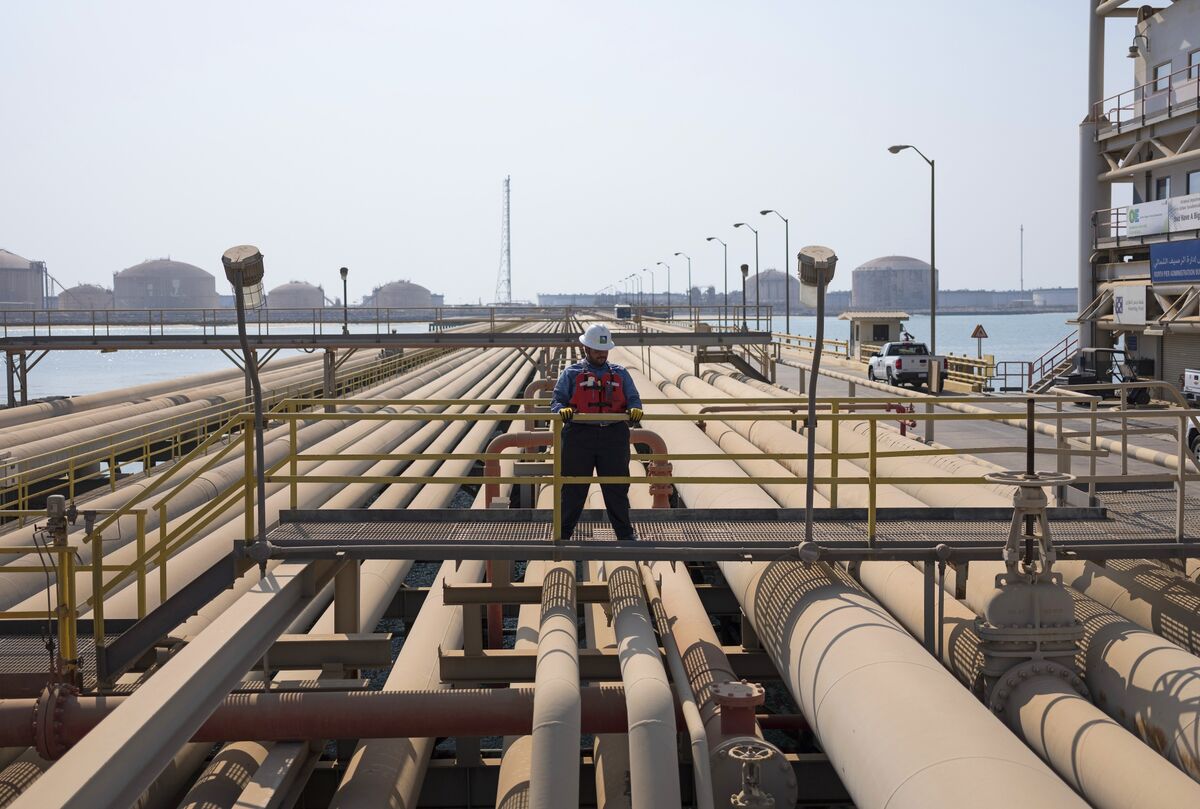
Top oil exporter Saudi Arabia is set to restart loading crude at the giant Ras Tanura terminal inside the Persian Gulf, a landmark moment in the resumption of Middle Eastern supplies after the Iran war.
Iran and Oman said they’ll begin work on finding an agreement over the future administration of the Strait of Hormuz, including the cost of managing transit, as traders and shipowners fret over the prospect of the introduction of a tolling arrangement.
The flow of oil through the Strait of Hormuz is running at the fastest pace since the Iran war began — despite Tehran stating that the world’s key shipping chokepoint is shut and a report that the Islamic Republic continues to harass passing vessels.
Oil tankers and cargo vessels anchored off Port Sultan Qaboos in Muscat, Oman.
Millions of barrels of oil continued to flow through the Strait of Hormuz this weekend even after Iran claimed to have closed the waterway again, as Washington and Tehran offer contrasting narratives over the status of the world’s most important shipping chokepoint.
Iran has resumed loading crude from its Kharg island export terminal after a break of about six weeks, following the lifting of a US Navy blockade of its ports.
Three very large crude carriers moored at Iran’s Kharg Island oil terminal on Saturday, June 20, 2026.
A growing stream of stranded oil is making its way out of the Strait of Hormuz and Kuwait said it will start ramping up production, as the US-Iran interim peace deal sparks a flurry of activity that is already pushing Middle East flows toward pre-war levels.
The Shaden very large crude carrier in 2025. Source: MarineTraffic
Tankers crossing the Strait of Hormuz with signals turned off are keeping this month’s oil flows at more robust levels than earlier in the Middle East conflict, as shippers await the signing of a US-Iran peace deal this week.
Tankers crossing the Strait of Hormuz with signals turned off are keeping this month’s oil flows at more robust levels than earlier in the Middle East conflict, as shippers await the signing of a US-Iran peace deal this week.
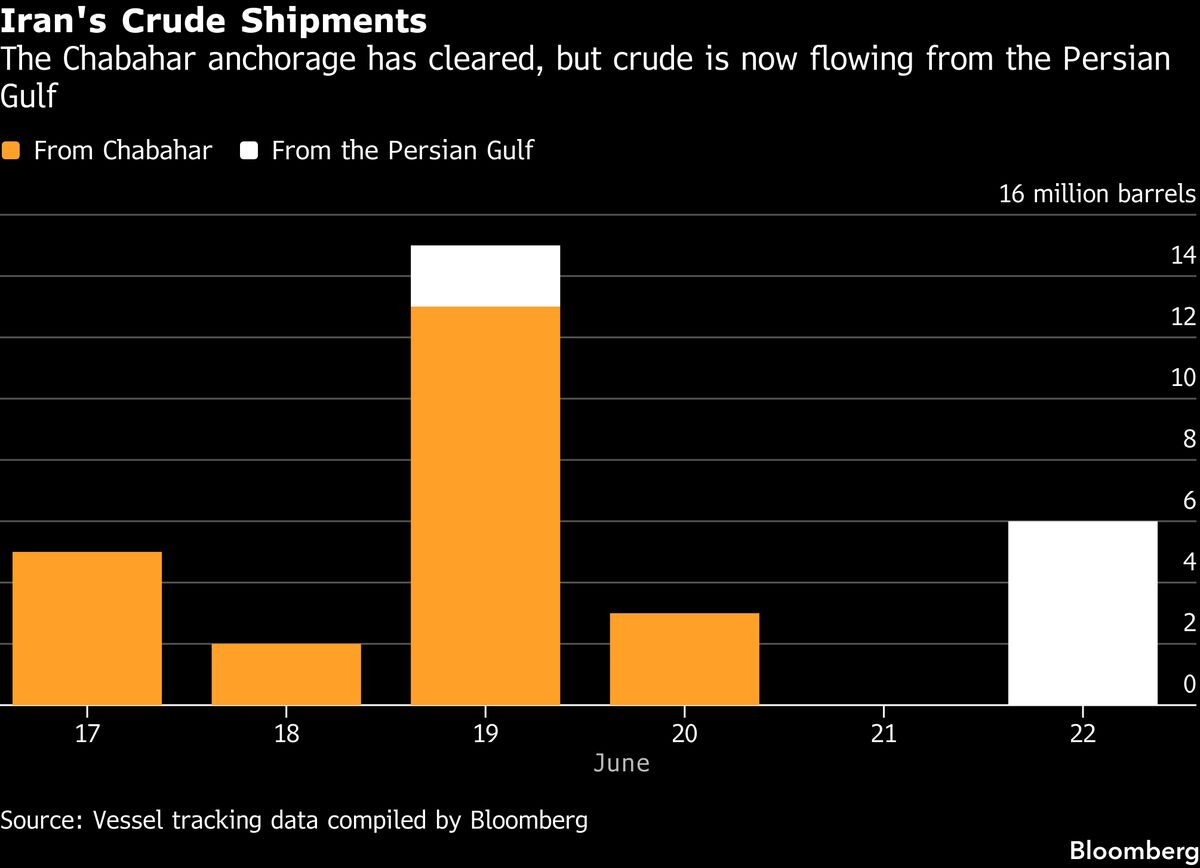
A third fully-loaded crude tanker has left the Iranian port of Chabahar and crossed the US blockade line heading toward Asia, just days before the planned signing of a ceasefire that will give Tehran the right to sell oil immediately.
The Sonia I Suezmax tanker in 2018. Source: Nevran/MarineTraffic
No region of the world produces more oil and gas than the countries straddling the Persian Gulf. Most of this energy can only be exported aboard tankers that cross the Strait of Hormuz — a waterway that’s effectively been closed for more than three months since the US and Israel launched strikes against Iran in late February.
Tankers anchored in the Strait of Hormuz on April 18.
Commercial traffic through the Strait of Hormuz was limited to just a few ships over the past 24 hours as peace talks between the US and Iran show little sign of advancing.
A commercial vessel waits in the Gulf of Oman to pass through the Strait of Hormuz, on June 4.
Commercial traffic through the Strait of Hormuz was limited to just a few ships over the past 24 hours as peace talks between the US and Iran show little sign of advancing.
A commercial vessel waits in the Gulf of Oman to pass through the Strait of Hormuz, on June 4.
OPEC crude output fell last month, hitting its lowest level in decades as the US blockade of Iran and disruption in the Persian Gulf continued to curb production.
An Organization of the Petroleum Exporting Countries oil drum.

 Anmelden