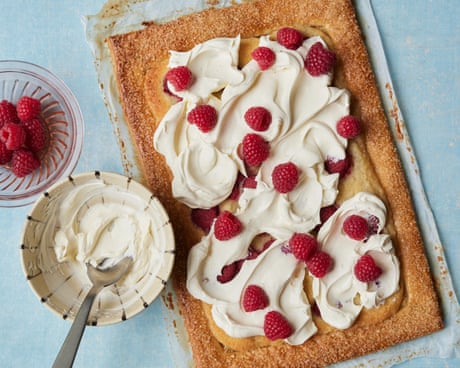
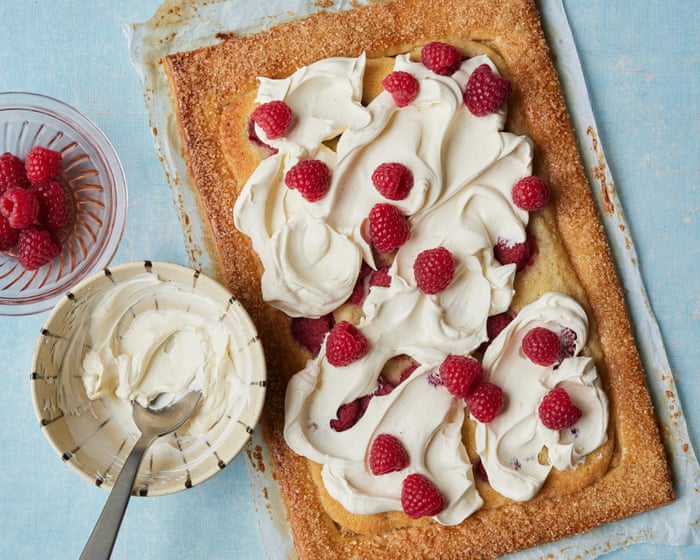
This fruity summer dessert combines taste and texture with its layers of soft frangipane, crunchy sugar crust and a silky topping
If there’s one thing I’m very likely to have in my freezer, it’s a pack of ready-rolled puff pastry. And especially so during the warmer months, when I can use it for quick sweet or savoury tarts, be it a casual midweek bake or a fancier dinner party dessert. Layering texture is key, and here we’ve got crisp pastry; soft, slightly chewy at the edges frangipane; a crunchy demerara sugar crust; a silky mascarpone topping and squidgy raspberries.
Aluminium is practical, recyclable and, for wines drunk young, the ideal container. Better still – high-quality options are increasingly available
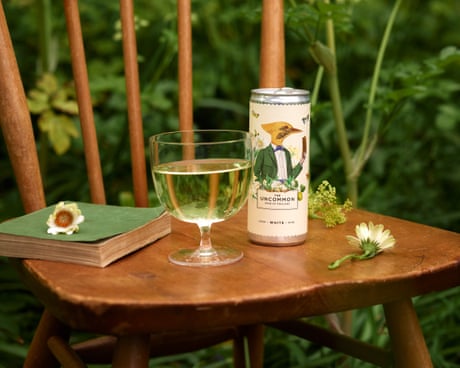
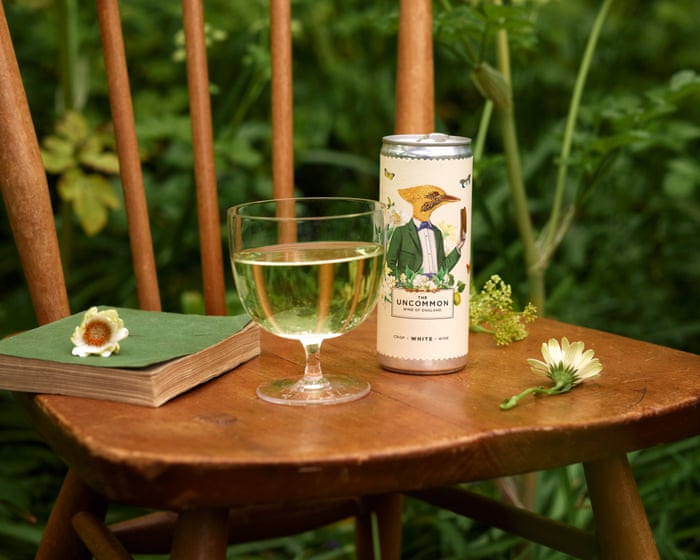
Cans are the answer to many of the problems posed by wine. On picnics, at festivals and generally on the trot, what are more practical than bottles? Cans! For the carbon-conscious, what have a significantly lower environmental impact than glass? Aluminium cans! And what if, for whatever reason, you don’t want to commit to a full 750ml bottle of wine? Try a can! This small, light and sustainable format is a secret weapon to keep, quite literally, in your back pocket; with cans – wherever you are and whatever you’re doing – drinking wine is always possible. Not to get too Barack Obama about it, but “yes, we can”.
Gen Z are largely behind the recent boom in canned wines, which stands to reason: fewer of them are drinkers and those who are do so only moderately, so a smaller format suits. According to a 2025 survey by Ocado, 53% of them “have been directly influenced by social media to try boxed or canned wine”. This shows in the way those formats are marketed: the peachy-pink can of Nice’s Pale Rosé, for instance, reads, “Won’t shatter on the dancefloor”, while Vinca’s catarratto “pairs well with great company”. A and almost all of them make a point of their recyclable packaging, appealing to the most environmentally-conscious generation to date. (Glass bottles are, after all, consistently found to be one of the largest contributors to wine’s carbon footprint.)
Use the whole pod – husks, beans and all – for a rustic, nutritious version of a seasonal favourite
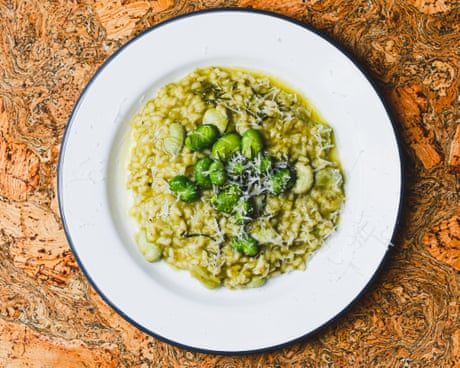
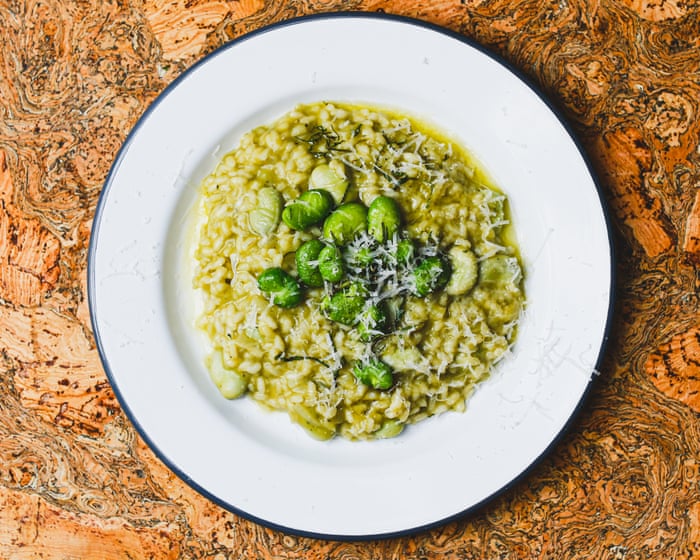
Tom Norrington Davies is a friend, fellow chef and one of the best yoga teachers I know, so you can probably imagine my pleasure on recently coming across his recipe for broad bean and mint risotto, which he wrote for The Eagle Cookbook in 2009. Like many restaurants, this legendary gastropub pods their broad beans to reveal the beautiful green bean inside; this is my zero-waste interpretation.
Jerk aubergines, lentil-stuffed courgette, griddled pineapple with maple syrup … Meat-free doesn’t need to mean treat-free when it comes to barbecue season
I’ve recently turned vegan. How do I have a great barbecue? Nia, by email
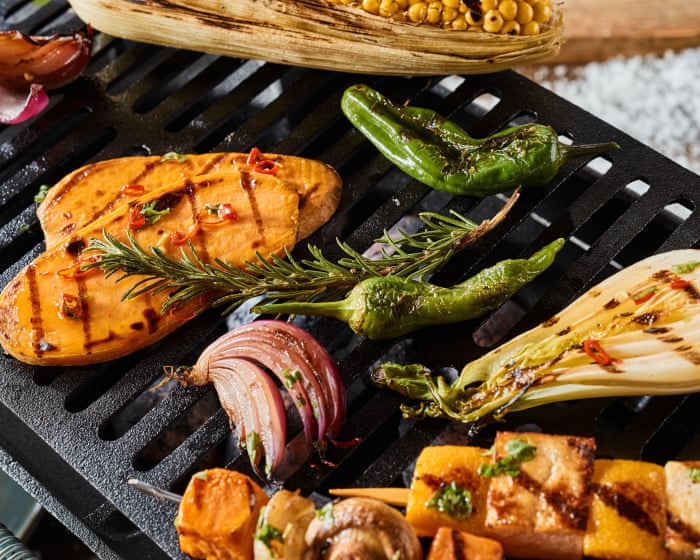
Happily, most vegetables benefit from a bit of barbecue action, but the key is not to get too carried away, says Genevieve Taylor, author of How to BBQ: “There’s a real leaning for people to overdo barbecues, but you should approach it just as you would any meal, with one central star and a few sides. After all, there’s no other meal where you’d be expected to eat a chop, a sausage, a kebab and a chicken wing.” Not a meal you’d find Nia devouring, sure, but you get the general idea.
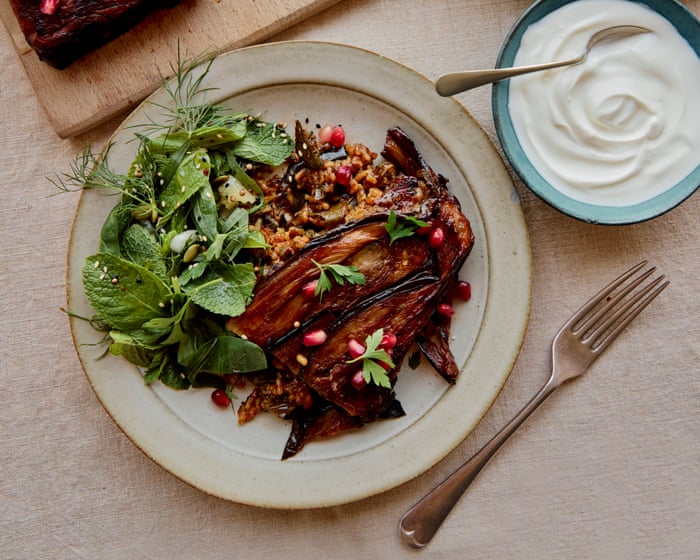
Shaun McAnuff, author of Original Flava: Easy Caribbean, would be inclined kick things off with tostones. “They’re a bit like crisps,” he says. “Boil green plantain, which are more dense and not as sweet as yellow ones, then peel and cut into thick circles.” Smash those flat with the bottom of a mug, then barbecue until nice and crisp and serve with guacamole or salsa. Alternatively, grab some aubergines, Taylor says: “They’re such a sponge for smoky flavours.” Slice lengthways, brush with oil, season and grill until soft. “Spread a filling, such as walnut paté with spices, herbs and pomegranate molasses, over the slices and roll up.” Those would be nice at room temperature, which also helps with getting ahead.
When is it OK to go shirtless? What time can you start drinking on holiday? And can you ask a stranger to apply your sunscreen? Experts explain the behaviour that’s hot this summer – and what’s really, really not
Summer means a loosening of rules and norms. Eating with your fingers is suddenly encouraged, near-nakedness is everywhere and a 6am airport pint is unremarkable. It’s a hot, sticky recipe for social chaos and – if you share my view on showing off ungroomed feet – possibly the end times of human civilisation. Here, then, is everything you need to know about summer etiquette.
This often underrated but hugely versatile vegetable can be cooked in copious delicious ways. Here are two of them
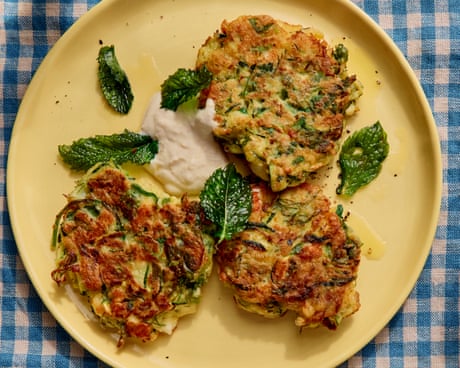
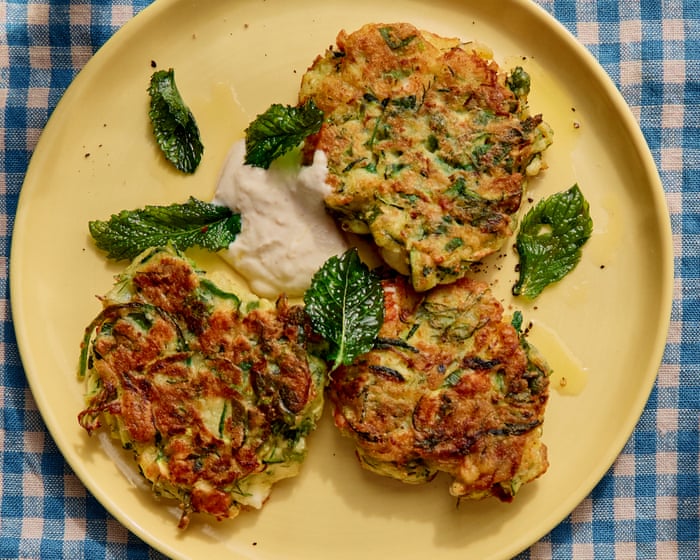
Courgettes are an early summer delight, when, such is their appeal and versatility, you often can’t move for them in my kitchen. Even so, I am not entirely sure they get the full recognition they deserve in the UK, not least because we grow some marvellous varieties here. I use courgettes in everything from raw salads (very thinly sliced courgettes tossed in salt and lemon) to slow-cooked, crisp-fried (the flowers are especially good stuffed with cheese or meat, then deep-fried) or lightly charred on a barbecue, which brings out a wonderful sweetness; you can even bake them into a deliciously moist cake. Can you show me a more versatile vegetable?
This colourful platter makes a simple shared meal feel like a special occasion
There’s something festive about bringing a whole roast feta to the table, and even more so when it’s thickly covered in toasted pine nuts. Tenderstem broccoli is a real treat in this dish, and my top tip is to blanch the spears in boiling water before you roast them – it really improves their texture. Crunchy, lemon-dressed radishes and spring onions add freshness, making this a lovely dish for a meze with friends.
These cool, cheap bars in old abandoned buildings became popular in the 2000s – and then tourists moved in. I went hunting for the bohemian spirit of the originals
‘Many ruin bars seem to be just tourist traps now,” says artist István, standing outside Instant-Fogas complex, which calls itself Europe’s biggest ruin pub, but looks more like a mammoth nightclub with several dancefloors.
“These bars were a hot topic 20 years ago, but many have become really commercial now,’ says István. “Ruin bars being expensive actually ruins their purpose. I’m a student, I like beers that are under 1,000 forints [about £2.50], and the big commercial ruin bars are typically much more expensive.”
Vibrant, big-flavoured chakalaka and sweet but fiery mango chicken are always a smash at family summer barbecues
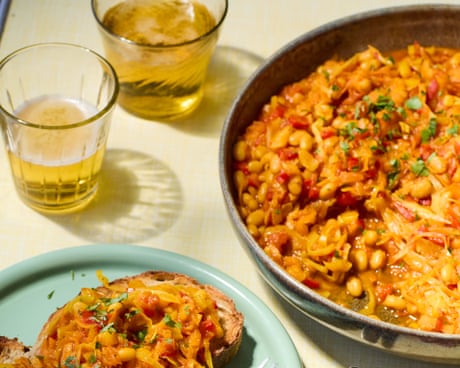
For me, chakalaka is the ultimate South African classic. It’s one of those dishes that reminds me of summer braais (barbecues) and big family get-togethers, and the combination of peppers, onions, tomatoes and spices is so vibrant and full of flavour that it enhances any meal you add it to. The mango chicken wings, meanwhile, are among my all-time favourites, and I often make them whenever I want something a little different for a braai. They’re always a hit at gatherings, and I never seem to make enough!
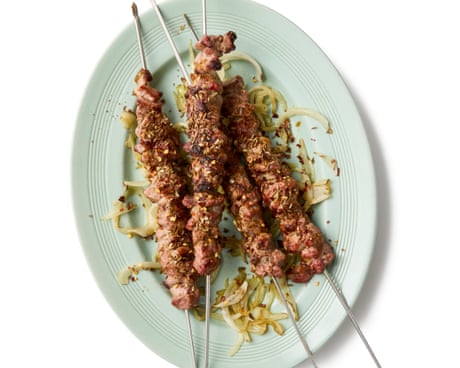
Wildly popular across China, these addictively fiery street food snacks spiced with cumin and chilli are yours for the making
One of the most welcome developments in the mind-bogglingly, gloriously diverse world of London dining options in recent years has been the proliferation of restaurants serving the food of the vast, automonous north-western Chinese region of Xinjiang, known by many of the predominantly Turkic-speaking Muslim Uyghur population as East Turkestan. As this fact suggests,Uyghur cooking has many similarities with other Turkic cuisines, including a love of lamb and mutton, and an aptitude for generously spiced kebabs so good that they’re now an “iconic street snack” in the Chinese capital, albeit some 3,000 miles east, in the time-honoured colonial fashion, and renamed as “old Beijing skewers”, according to that city’s own Maggie Zhu. (In Uyghur, they are, I believe, kawap, though I’d be glad to have that transliteration confirmed.)
Happily, however, you don’t need to go to Beitun or Beijing to enjoy them – or even to Golders Green – because they’re incredibly easy to recreate wherever you are, as long as you have access to a smoking hot grill. I declare this the summer of the skewer!
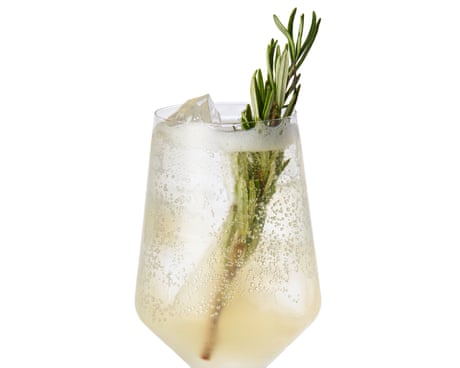
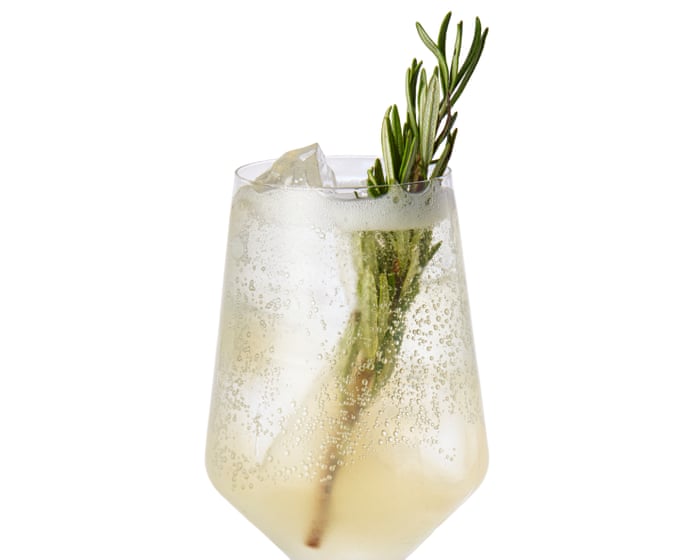
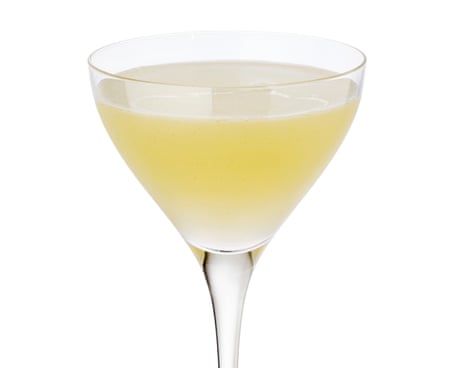
This spicy gin and citrus combo has a kick that belies its modest size
Gimlets may be on the small side, but they tend to make up for that by packing a pretty decent punch. This gently spiced, citrus-forward example is no exception, and makes for a gloriously summery aperitif.
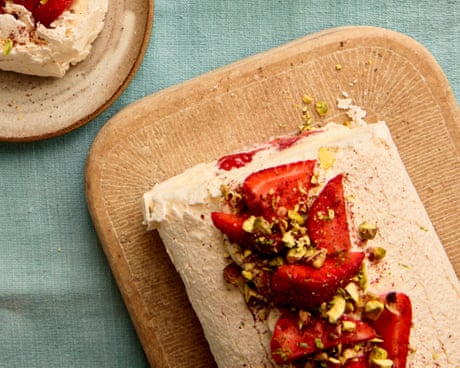
A touch of spice balances the sweet meringue and draws out the flavour of this fragrant and fruity dessert
British strawberry season barely needs embellishment, so I haven’t done anything wild here. This is essentially a classic rolled pavlova: crisp at the edges, marshmallow-soft within and filled with clouds of cream and strawberries. The small flourish here is sumac, which has a gentle tartness that somehow amplifies the berry flavour while balancing the sweetness of the meringue. Add a little lime zest, too, and the whole thing tastes bright, fragrant and unmistakably of summer.
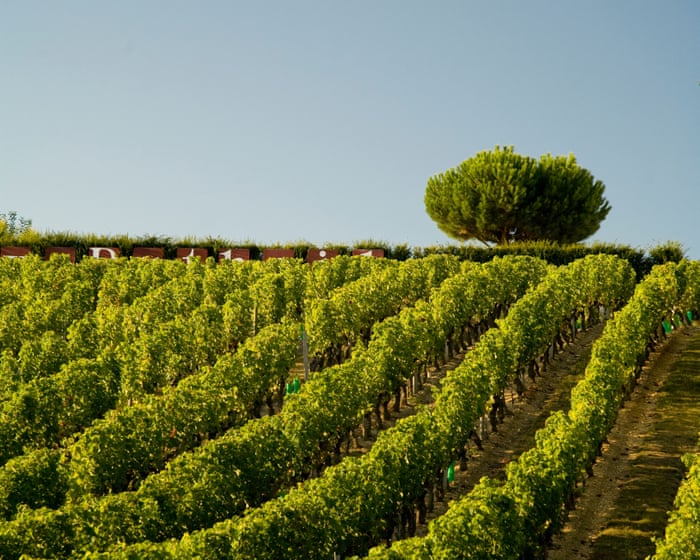
As sales of sparkling wine continue to soar, one aromatic French fizz is worthy of particular appreciation
It was in the middle of the pandemic that I ceased stashing sparkling wine. There were no special occasions, or occasions at all, really, save for daily episodes of the BBC’s Baby Club with two cabin-fevered infants and the weekly thrill of a veg box. I might have been stockpiling chickpeas, but I was cracking bubbles open willy-nilly because, well, why not?
And I never stopped. The unrelentingly grim news agenda seems as good a reason as any to pop a cork these days, because sparkling wine invariably lifts my spirits. And I’m not alone in drinking more of it: according to a study by the International Organisation of Vine and Wine, sparkling wine sales have grown faster than any other style in recent years, rising in value from €2.3bn to €8.5bn over the past quarter-century. (That said, I might be an outlier on the timing front, because 2020 figures also point to a dip in sales)
This Napoleonic classic is all too often overcomplicated, but this ode to the French-British author’s version is both simple and stunning
A few weeks ago, as part of the British Library’s food season, the novelist Michèle Roberts, biographer Francesca Wade, writer Eli Davies and food writer Rebecca May Johnson were brought together for a discussion on women’s culinary lives, and on the kitchen as a space of creativity, resistance and intellectual life. I couldn’t be there, but by all accounts it was a brilliant discussion, which I hope was recorded.
I have, though, read all four authors’ recent books. Davies’ perceptive and funny The Spinster Cookbook, which explores what it means to shop, cook (or not) for one in a society designed for couples and families; Wade’s tremendous and deeply researched exploration of the making and remaking of Gertrude Stein in Gertrude Stein: An Afterlife (was Stein a genius or the high priestess of the cult of unintelligibility? We are left to decide); May Johnson’s welcoming, challenging and tomato sauce-filled Small Fires; and Roberts’ slim, second cookbook, French Cooking for Two.
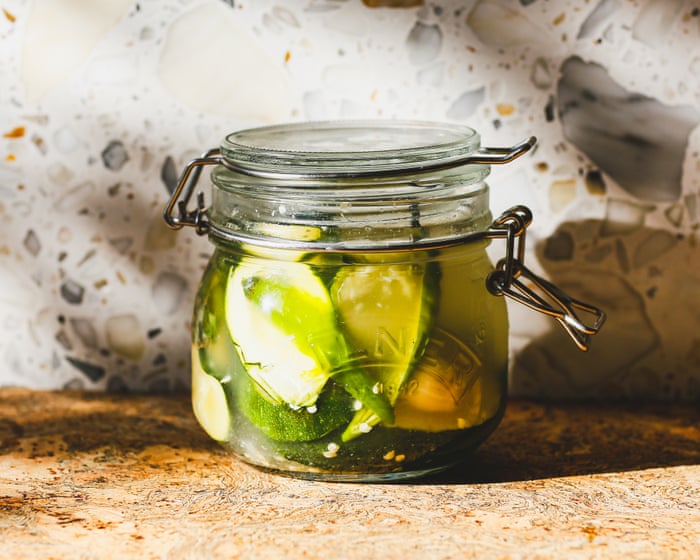
Reboot your surplus zucchini as a condiment to complement just about any savoury plate
Mountain Feed is a super-cute garden nursery and store in Ben Lomond, California, with a blog I’ve followed for years (it teaches everything from bee-keeping to cheese-making) and which answers that age-old question, “What should I do with all this zucchini?!” in my favourite way – namely, through lacto-fermentation. Lacto-fermented courgettes are a great alternative to fermented or pickled gherkins, and perfect as a condiment alongside just about any plate of savoury food, especially when they’re spiced with lots of chilli.
This comforting dish gives all the pleasure of stuffed vine leaves without the hours of labour. Serve alongside a lemony salad that’s rich with toasted seeds
I wanted the comfort of dolma without spending hours coring, stuffing and rolling. Traditionally, for this Iraqi dish of vine leaves, various vegetables are filled with fragrant rice and often with meat, too, making it a true labour of love. This pie captures all those familiar flavours but, by layering everything instead, the vine leaves become silky and tender. A bright, lemony spinach salad adds freshness and contrast.
Electronic scales are a non-negotiable, say connoisseurs. Add a pinch of patience, some trial and error, and you, too, can master the French press
What’s the best way to make coffee using a French press? Mine always ends up too watery or too strong. Yoanna, St Andrews, Scotland “Coffee is one of those rabbit holes where it really depends how much money and time you want to spend,” says Ben Kovar, head of coffee at Campbell & Syme Coffee Roasters in north London and Hertfordshire, but a little investment goes a long way. “A grinder will make a big improvement. If you’re just brewing for you and, say, your partner, I’d recommend a hand grinder, because you’re not then paying for the electronics – you’re just paying for a good set of burrs.” (Comandante is Kovar’s go-to.) Of course, adjusting the grind size allows you to make coffee in a host of ways, but if Yoanna plans to stick with a cafetiere and has a good local cafe, Kovar would be inclined to head there instead. “Obviously it’s nicer to grind fresh at home, but they’ll most likely be using a top-end grinder, so that’s probably going to taste better so long as you use up a bag every two weeks. Plus, it’s nice to have a dialogue with your local barista.”
The water you use will dramatically impact the taste of your coffee, too, Kovar says: “Filter coffee is 98% water, after all. You might have spent a lot on a grinder, but if you’re using London tap water, say, it’s going to be too hard and not very nice.” A filter jug is a good starting point, but the main thing is to soften the water slightly. And don’t use the kettle straight off the boil: “Wait 30 seconds, then use the very hot water.”
The other bit of kit you’ll want is a set of scales. “You need to know what the main variables are, so how much coffee you put in, how much water, and use a timer for the brew – if you buy bespoke coffee scales, they usually have one built in,” Kovar says. (If you don’t want to fork out, though, standard kitchen scales will work just fine.) Kovar uses 60g coffee for each litre of boiled water: “So, if you’re brewing 250ml, which is typically one cup, use 15g coffee.”
James Hoffmann, barista and author of The World Atlas of Coffee, then lets the coffee brew for four minutes. “Now grab a tablespoon and stir the crust that forms on top of the coffee. A lot of it will start to fall away, and you’ll be left with a few bits on top – some foam, some floating bits. Scoop those off and discard.” Then he does nothing at all for at least another five minutes. “When you do eventually push in the plunger, don’t plunge all the way to the bottom, otherwise you’ll stir up the sediment all over again.” You want the plunger to sit just on the surface of the coffee, then pour it gently. Ideally, decant the entire cafetiere in one go, Kovar adds, because, that way, you’ll get a consistent brew.
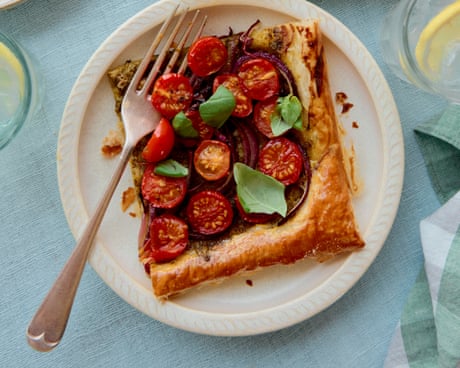
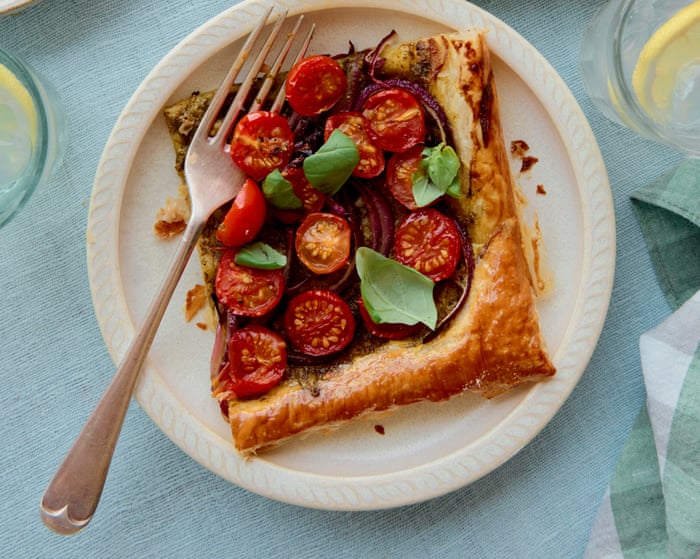
Sweet, herby tomatoes on crisp puff pastry, followed by a dessert that’s both fruity and floral – this is seasonal eating at its most delectable
Summer has to be the favourite season of any chef. I am so spoiled for choice right now with the bounty of beautiful British produce over the warmer months that I change the menu almost daily, so I don’t miss out on the chance to use all of it. If only the weather would keep up.
The island has a culinary tradition as old as its ancient olive trees. Our writer savours its family-run tavernas, village bakeries and local produce
As someone with Cypriot roots and distant Greek heritage, I’m often asked the question: which is the best island? People lean in, expecting a secret – some tiny, untouched haven, known only to locals. My answer is always the same: Crete. With its fiercely proud identity, warm communities and exceptional food, it feels both deeply Greek and entirely itself.
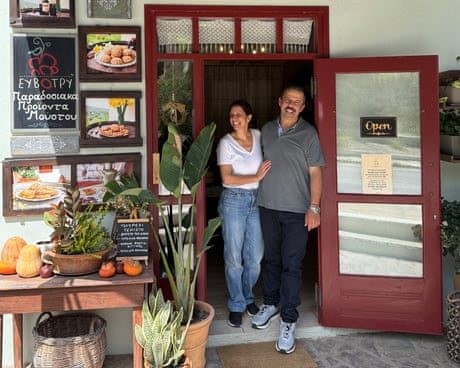
For our anniversary weekend, my husband and I head to Lassithi, in the island’s far eastern corner. As a chef and food writer, I’m drawn to the area’s reputation for exceptional produce: Sitia extra virgin olive oil, creamy xigalo cheese, mountain honey and an abundance of excellent tavernas.

 Anmelden