Gold fell as escalating conflict in the Middle East continued to push up energy prices, fueling bets the Federal Reserve will tighten monetary policy to contain inflation.
Gold extended gains, supported by dip-buyers who scooped up the metal after prices have drifted lower in recent weeks on concerns that US inflationary pressure will prompt the Federal Reserve to raise interest rates.
Gold and silver advanced on dip-buying as traders monitored Middle East tensions for signs that higher energy costs could stoke inflation, putting pressure on the Federal Reserve to tighten policy.
Gold steadied after escalating US-Iran clashes over the weekend were followed by reports of mediation efforts, with traders assessing the likelihood of the Federal Reserve raising interest rates to contain inflation.
China’s rare earth export curbs could put $6.5 trillion of downstream production outside the country at risk each year if fully implemented, the International Energy Agency warned in a report on rare earths and critical minerals.
Gold wavered as traders weighed the Federal Reserve’s interest-rate path after weaker-than-expected US producer price data eased concerns about an imminent rate hike.
Gold pared losses after dropping below $4,000 an ounce on Monday, as rising tensions in the Middle East and remarks by a US monetary policymaker raised expectations of interest-rate hikes to curb inflation.
Gold found some support following three days of losses as traders weighed a resumption of fighting in the Middle East and the US Federal Reserve’s interest-rate path.
Gold sheets at the Polish mint, also known as Mennica Polska SA, in Warsaw, Poland. Photographer: Damian Lemanski/Bloomberg
Gold dropped as US President Donald Trump said the ceasefire with Iran has ended, stoking concerns that a renewal of fighting could again drive inflation and push up interest rates.
Trays of newly cast gold bars at the Polish mint, also known as Mennica Polska SA, in Warsaw, Poland. Photographer: Damian Lemanski/Bloomberg
A wave of profit taking in the gold market has brought a three-year bull run to an end, but there’s little evidence yet that investors are putting on large-scale short positions in anticipation of further declines.
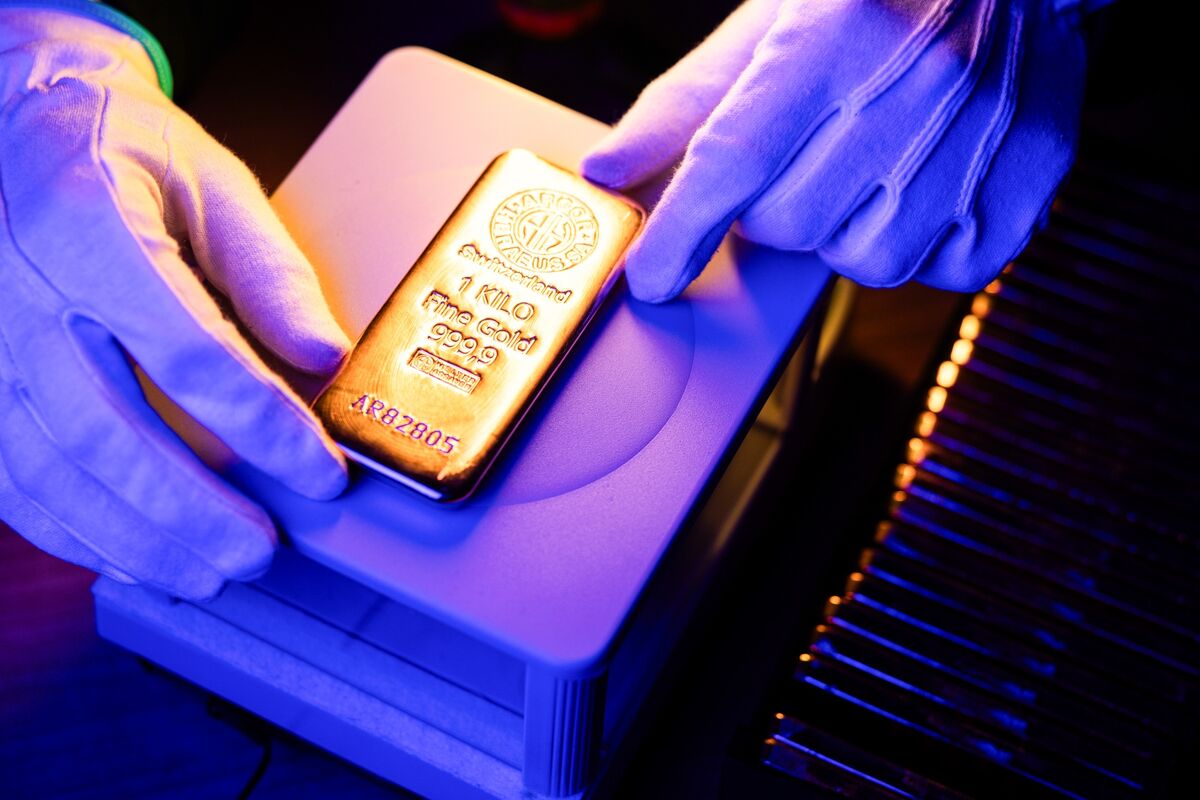
An attendant weighs a one kilogram gold bar. Photographer: Akos Stiller/Bloomberg
Gold fell as the US and Iran agreed to stop attacking each other, following tit-for-tat strikes that tested a fragile truce in a war that has fueled global inflationary pressures.
Gold extended gains above $4,000 an ounce on Friday after the latest US inflation print tempered expectations for an interest-rate hike, capping a tumultuous week that saw bullion slump to the lowest price since November.
Gold rebounded as traders tempered expectations for interest-rate hikes, following a US inflation print that rose less than forecast.
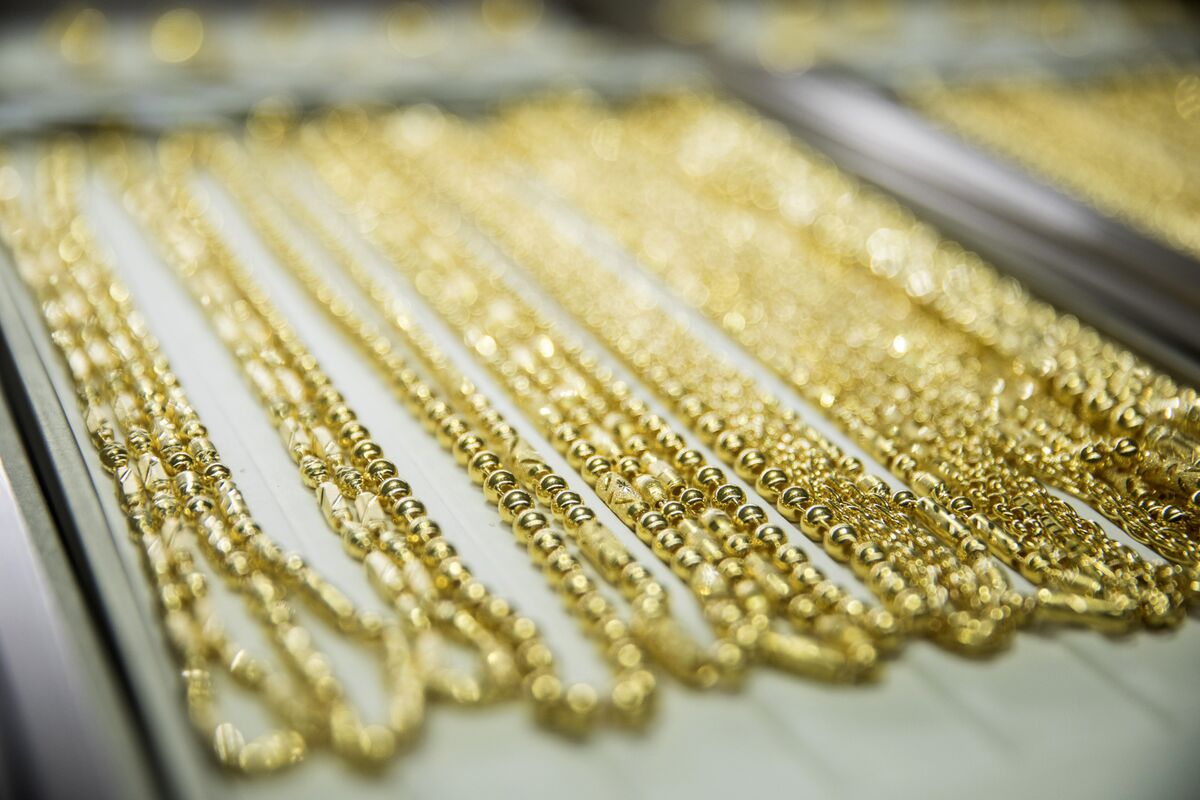
Gold necklaces sit in a display cabinet at a Chow Tai Fook Jewellery Group Ltd. store in Shanghai, China, on Thursday, Feb. 1, 2018. China's growing throng of affluent consumers is driving a rebound in demand for gold rings, bracelets and necklaces as a property boom and high stock market valuations boost wealth in the largest bullion market. Photographer: Qilai Shen/Bloomberg
Jasna Fritzi Bauer schwärmt von der Bretagne, Schauspielkollegin Karoline Schuch vom Flussbad in Slowenien. Und wo aß Sternekoch Vincent Klink Italiens beste Ravioli?