The common property rite of passage for graduates and career-focused first jobbers has changed over the past decade. Many careers used to start in London, and an early house-share would be followed by a first flat purchase, then a move to somewhere bigger.
However, the heavy burden of housing costs in the capital is making would-be first-time buyers stop and evaluate whether – even with London weighting on some wages – it is possible to get on the ladder there.
He was a telecoms engineer by day – and documented the Scottish city’s leather scene by night. Now the 79-year-old has opened his erotic archives and received his first ever solo exhibition
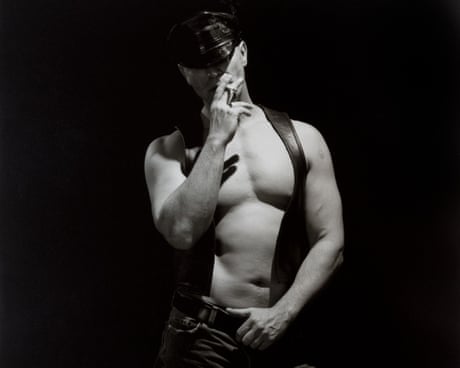
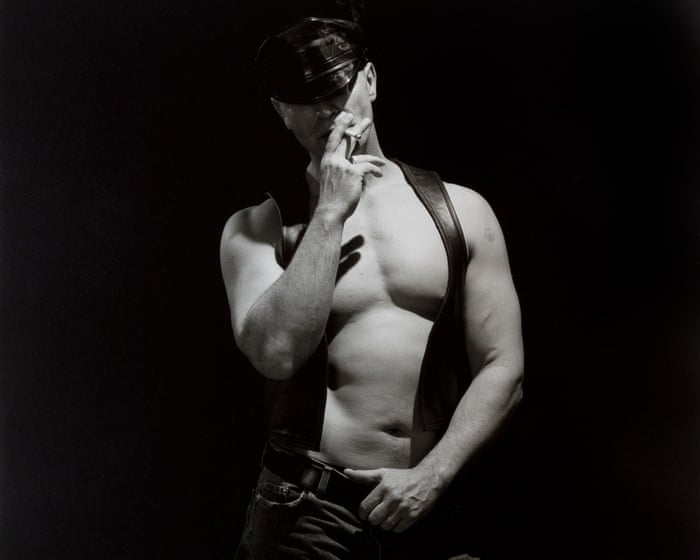
What is the story behind John Wood’s photographs? Some might guess that his portraits, which capture male subjects in various states of undress, very often wearing black leather jackets, gloves and boots, were taken in New York in the era of BDSM photographer Robert Mapplethorpe and Studio 54. Or maybe they were created in a very different kind of darkroom – the type of spaces that inspired the homoerotic imagery of the artist Tom of Finland? If you were given a hundred tries, you’d probably never guess that these erotic, intimate, kinky portraits were taken in a converted attic in the West End of Glasgow, unbeknown to the world (and the neighbours) for decades.
The story of Wood himself is equally unusual. At 79, he is showcasing his first ever solo show at Celine gallery in Glasgow. To say it has been a long time coming would be an understatement: Wood has been making photographs since his teens, when he began teaching himself by studying the images in magazines. The portraits in the show span a 20-year period, from ‘Cal’, a small Polaroid of a man standing nude next to a white doorway, taken in 1982, to ‘June 2002’, a gelatin silver print of an unnamed man clad in a leather waistcoat, while a black leather military-style cap and a cigarette obscure most of his face.
Take off your shirt on a Narbonne street and it will cost you €150. Could it happen in the UK? I sincerely hope not
Watch out if you’re heading to France this summer: dozens of towns have started fining men for walking around with their tops off. Actually, it’s not specific to men; I just assume they’re more likely to strip off. Narbonne, near the Mediterranean coast, has joined at least 30 other municipalities in banning anyone from wandering around town bare-chested, in swimwear or even barefoot, with a €150 (£130) fine for those flashing excess flesh (according to France Télévision, about 15 people were fined when Narbonne started enforcing its “please stay dressed” code last summer).
Could it happen in Britain? Quite apart from the police resourcing crisis, I’m struggling to imagine officers getting people to cover up in Glasgow, where stripping down at the first glimpse of the weakest rays of sunshine is a venerable civic tradition, and a public-spirited website tracks whether it’s “taps-aff” or “taps-oan” weather (a windless, clear, 17C is the threshold for taps-aff according to site creator Colin Waddell, if you’re wondering).
Upgrade to Buchanan Galleries part of £50m spend this year and £800m by 2029 to revive appeal of department stores
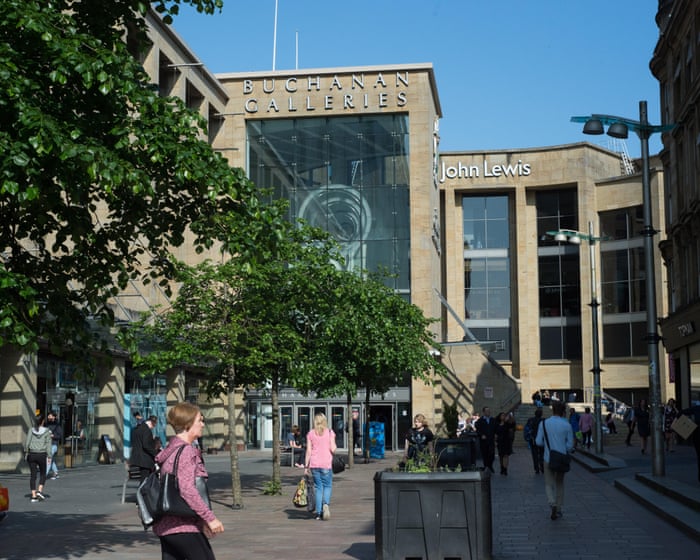
John Lewis is to spend £20m on a revamp of its Glasgow store in the city centre’s Buchanan Galleries in a vote of confidence in the shopping mall not long ago scheduled for demolition.
It is the largest cash injection within a wider plan to spend £50m this financial year on refreshing its shops, with department stores in Reading, Cambridge, Leicester and Liverpool all earmarked for an upgrade.
Lee Milne sentenced to eight years in landmark case after being found guilty of culpable homicide of Kimberly Milne
A man convicted of killing his wife, who took her own life after repeated domestic abuse, has been jailed for eight years in a case seen as a significant legal milestone.
Kimberly Milne, 28, died when she jumped from a bridge in July 2023. Her estranged husband, Lee Milne, was found guilty of culpable homicide last month after a trial at the high court in Glasgow.
„Hawk“ war der schnellste Rechner Europas, jetzt wurde er ausgemustert. Doch statt auf dem Schrottplatz zu landen, bekommt er ein zweites Leben. Wie das funktioniert.
Scotland’s busiest station to run reduced trains timetable after estimated 953,000 passenger journeys affected so far
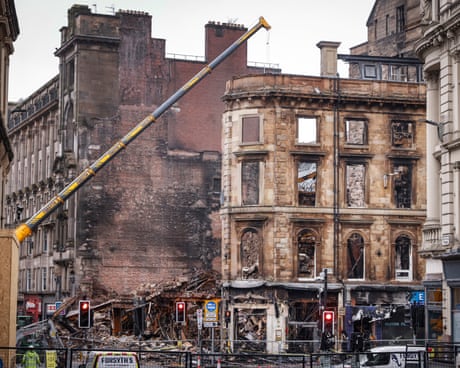
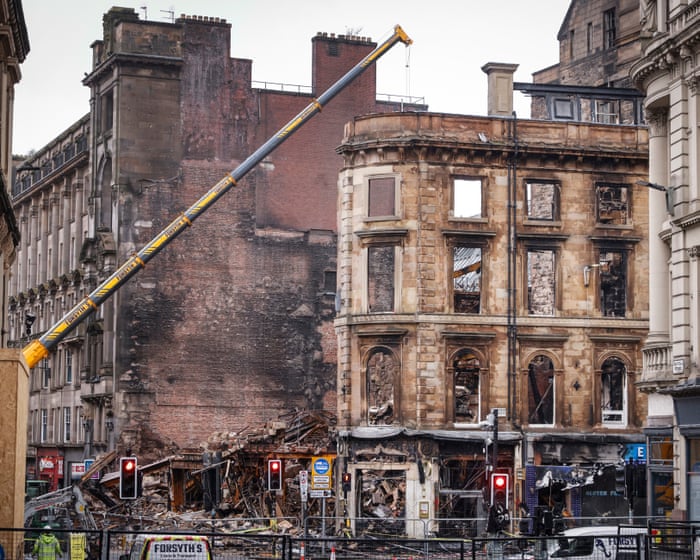
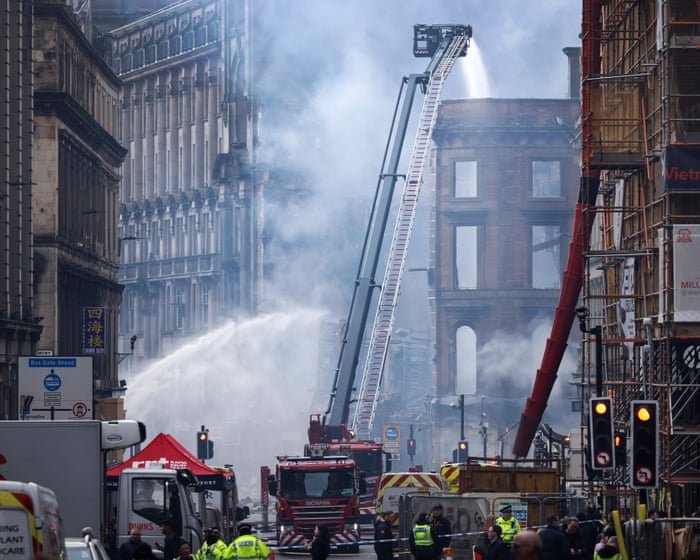
Scotland’s busiest station, Glasgow Central, will partially reopen its main concourse on Wednesday, including for cross-border services, after a fire gutted the Victorian building next to it.
There will be a reduced timetable, including a scaled-down service to London Euston, and passengers are asked to check journeys before travelling.
John Swinney expresses ‘huge relief’ that no one was hurt in blaze believed to have started in vape shop
Scotland’s first minister has pledged to help deal with the costs of the “horrific” fire that has closed Glasgow Central station for at least two days and gutted a Victorian office block.
John Swinney said it was a huge relief there had been no injuries, but that there would be significant financial costs from the fire, which caused chaos for the city’s commuters and the cancellation of west coast main line services to Glasgow.
Network Rail said Scotland’s busiest station would remain closed ‘until further notice’
Travel disruption is expected to last throughout Monday after a large fire broke out near Glasgow Central station on Sunday.
National Rail said that the station would remain closed with “no estimate on when the station will reopen” after the blaze at a vape shop in Union Street.
The closing of a cluster of leading creative venues has led to dismay and intensified fears the hubs that fostered Glasgow’s celebrated arts scene are disappearing
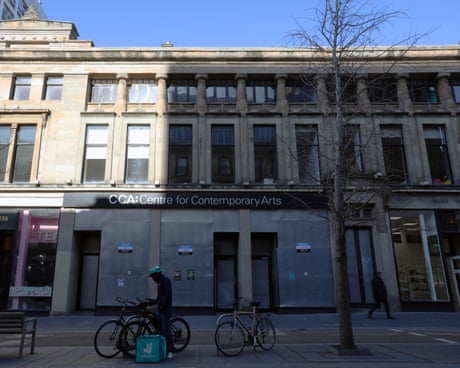
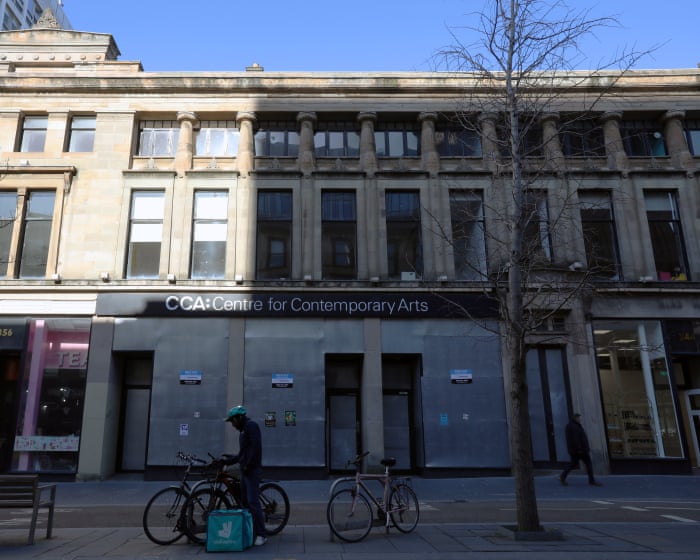
By the time Daisy Mulholland arrived, the locks had already been changed. The Glaswegian artist, had been organising the launch event for her new art shop at the Centre for Contemporary Arts (CCA) when she got an email telling her the Sauchiehall Street venue – and cornerstone of the city’s art scene since it was founded as the Third Eye Centre in 1974 – was closing with immediate effect.
“The event was the following day: we had 250 tickets sold, we’d done so many rehearsals, and inside there were lighting rigs, performers’ equipment, shop stock. It was truly heartbreaking,” she says.
Dr Ghassan Abu-Sittah accuses regulator of seeking ‘politically acceptable’ outcome after allegations dismissed
A surgeon who was cleared by a tribunal of alleged antisemitism and support for terrorism has accused his regulator of seeking a “politically acceptable” outcome after it announced it would appeal against the decision to the high court.
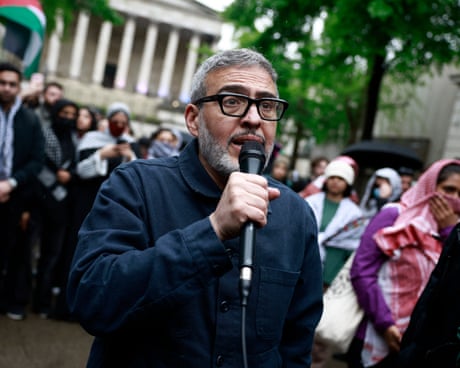
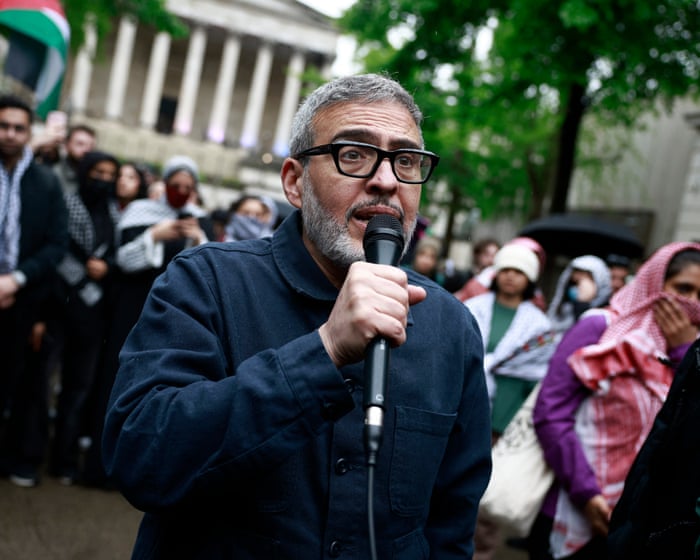
Dr Ghassan Abu-Sittah, who gave testimony to the international criminal court on Israel’s assault on Gaza and is the rector of the University of Glasgow, was cleared of misconduct by the Medical Practitioners Tribunal Service (MPTS) in January.
Emma Thompson voices the anonymous ‘Van Man’ in a documentary about local people standing their ground against heavy-handed immigration enforcement
The extraordinary story of Glasgow’s Kenmure Street uprising in 2021 is retold in this absorbing documentary from film-maker Felipe Bustos Sierra. Kenmure Street is now a location to resonate with London’s Cable Street. An immigration detention van had been sent in to this diverse community on 13 May, the morning of the Muslim festival of Eid, to arrest two men of Indian Sikh background. Maybe that date was pure chance, which protesters could exploit to rally their own side, or maybe it was chosen because the Home Office calculated that the community would be largely at home on this holiday and more vulnerable.
Either way, it was a crucial strategic error, consolidating the community view that this was heavy-handed policing against a proud, close-knit Scottish community by the Westminster authorities. Moreover, as the day progressed, the fact that the men would have no legal representation underscored the impression of unfair play.
Young Glasgow artist Trackie McLeod talks us through Utopia, the boozer he built from scratch where punters can sink a beer, throw darts at Thatcher or Trump – and win chocolate coins from one-armed bandits
‘The art world has a real issue with making things overly conceptual, too complicated and using wanky jargon,” says Trackie McLeod. “It alienates people.” So, for his latest show, Utopia, the 32-year-old Glaswegian has decided to create something more welcoming and familiar: a pub.
Custom-built from scratch, the exhibition is a fully functioning boozer. McLeod will pull pints for punters, there’s a dartboard where you can take aim at images of Thatcher or Trump, and visitors can explore his mixed-media artworks, spanning print, sculpture and sound, and swing by to catch drag acts, DJs and panel discussions.
A high street is punctuated by burned-out buildings like rotten teeth in an otherwise perfect smile – what’s going on?
On the banks of the River Clyde, half an hour to the south-east of Glasgow, Bothwell is one of the city’s prettiest and most prosperous commuter towns, famous for its medieval castle and annual scarecrow festival. Bothwell’s Victorian villas and secluded enclaves of luxury modern mansions sell into the millions to the TV personalities, professional footballers and entrepreneurs who favour its environs.
Bothwell Main Street, a designated conservation area, showcases glorious floral displays in summertime and year round an array of independent boutiques, jewellers and beauticians buck the trend for high street degeneration.
Researchers say waste dumping and climate breakdown have contributed to rise in brick, concrete and glass on beaches
As much as half of some British beaches’ coarse sediments may consist of human-made materials such as brick, concrete, glass and industrial waste, a study has suggested.
Climate breakdown, which has caused more frequent and destructive coastal storms, has led to an increase in these substances on beaches. Six sites on the Firth of Forth, an estuary on Scotland’s east coast joining the River Forth to the North Sea, were surveyed to better understand the makeup of “urban beaches”.
Prosecutors say seven deaths now being looked at in connection with Queen Elizabeth university hospital
The deaths of seven patients at Glasgow’s landmark super-hospital are now being investigated, prosecutors have confirmed.
The revelation that another two deaths are being examined after cancer patients, many of them children, contracted infections linked to Queen Elizabeth university hospital’s (QEUH) contaminated water supply and ventilation system, comes after Scottish Labour made public further evidence of political pressure being applied to open the campus in April 2015, just before the general election.
Families accuse health board of ‘deceit and cowardice’ after years-long battle to prove contaminated water was linked
All Molly Cuddihy wanted was recognition of what she had gone through. That was what she told the Scottish hospitals inquiry in 2021, where she described the “frightening” fits and rigors she had suffered after contracting a bacterial infection at Glasgow’s Queen Elizabeth university hospital while undergoing chemotherapy. “I was made sicker by the environment,” the 19-year-old said in her evidence.
Molly had been 15 and revising for her National 5 exams when she was diagnosed with a rare bone cancer. She was treated at the Royal hospital for children and the adjacent QEUH, which are both part of a six-year public inquiry that reached its final stages and heard devastating new admissions this week.
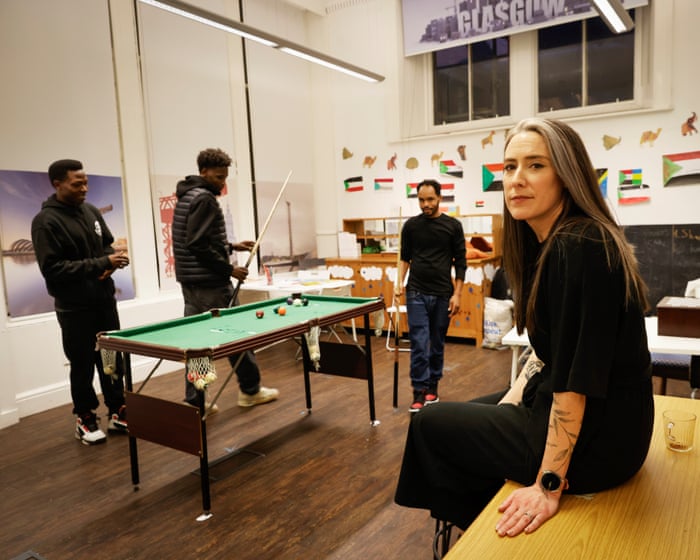
In the face of Nigel Farage, flag-waving and a longstanding housing crisis, some Glaswegians are taking on anti-immigration rhetoric
Selina Hales has a thing about pineapples. She is talking in a quiet office, set aside from the bustle of Refuweegee, the charity she founded 10 years ago, and the walls are festooned with tissue paper cutouts of the fruit, which is an international symbol of hospitality.
Refuweegee – its name a combination of the words “refugee” and “Weegee”, local slang for Glaswegian – has expanded exponentially over the decade into an operation that supports hundreds of asylum seekers and refugees in the city every day. Back then, she had a simple idea about making welcome packs, each one including a handwritten letter from a Glasgow resident. “One of our very favourite early letters said: “Welcome to Glasgow. I like pineapples. What do you like?”
Palestine activist and doctor Ghassan Abu-Sittah also cleared over alleged support for Hamas in case brought by GMC
The rector of the University of Glasgow has been cleared of misconduct by a medical watchdog over alleged antisemitism and support for Hamas.
Dr Ghassan Abu-Sittah, a plastic surgeon and prominent Palestinian activist, appeared via video link on Friday before a fitness-to-practise panel of the Medical Practitioners Tribunal Service in Manchester, where a case of misconduct against him was rejected.

 Anmelden