❌

Lese-Ansicht

Pioneer of ‘extreme male brain’ theory of autism now says phrase unhelpful

Exclusive: Prof Simon Baron-Cohen says his language was misunderstood and it is a myth that autistic people lack empathy

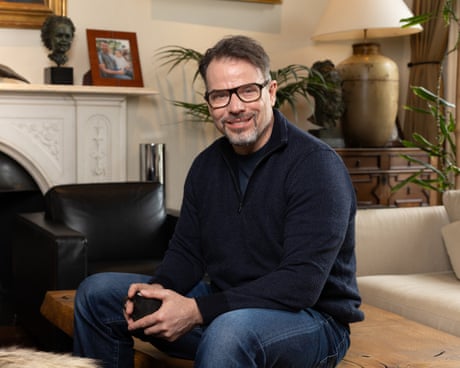
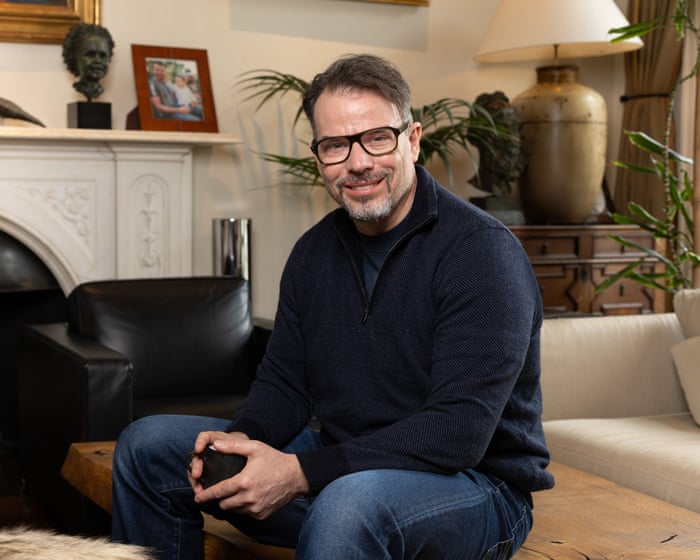
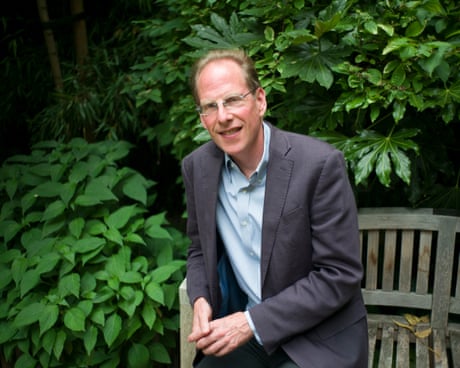
The scientist who pioneered the “extreme male brain” theory of autism has said he regrets characterising the condition in this way because the phrase lends itself to misunderstandings.

Prof Simon Baron-Cohen’s theory that autistic people tend strongly towards systemising over empathising has been hugely influential in shaping the popular perception of autism over the past two decades. The underlying science had stood the test of time, he said, but he now views the “extreme male brain” label as unhelpful.

Continue reading...
© Photograph: Graeme Robertson/The Guardian
© Photograph: Graeme Robertson/The Guardian

© Photograph: Graeme Robertson/The Guardian


  •  

Wowcher apologises for email referencing toddler crocodile attack

Company ‘extremely sorry’ for ‘unacceptable’ email urging customers to ‘Snap up these deals quicker than a croc can catch a kid!’

The discount voucher website Wowcher has apologised after appearing to make reference to a crocodile attack on a toddler at a zoo in an email promoting its offers.

A spokesperson for Wowcher said it was urgently reviewing its marketing content after the subject line of an email on Saturday urged customers to “Snap up these deals quicker than a croc can catch a kid!”

Continue reading...

© Photograph: Dorota "Dee" Trajdos/Reuters

© Photograph: Dorota "Dee" Trajdos/Reuters

© Photograph: Dorota "Dee" Trajdos/Reuters

  •  

Cambridge experts recreate 336-year-old garden to commemorate ‘father of natural history’

John Ray, 17th-century botanist who coined words petal and pollen, was a tutor at Cambridge when he created his first garden

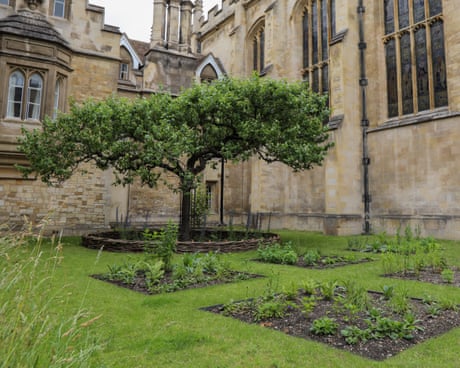
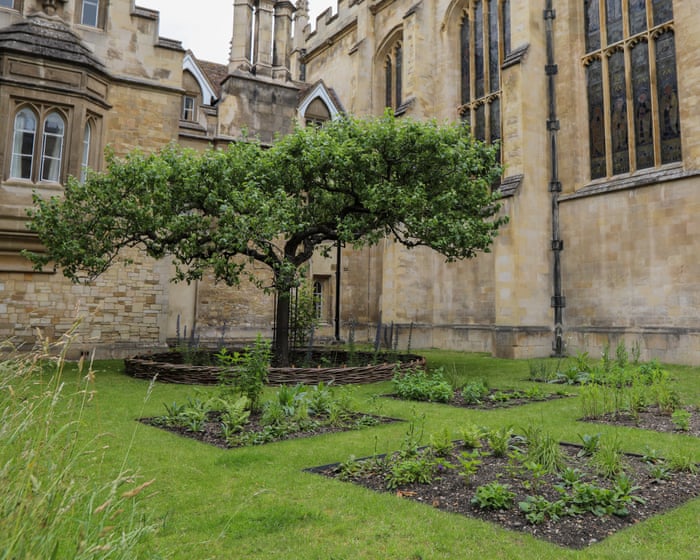
He coined the terms petal and pollen, helped to lay the foundations of modern biology and is widely regarded as the greatest English naturalist of the 17th century.

But it was while he was a young college tutor at Cambridge in the 1650s that the botanist John Ray – also known as “the father of natural history” – created his first known garden and began to systematically study plants for the first time.

Continue reading...

© Photograph: Trinity College Cambridge.

© Photograph: Trinity College Cambridge.

© Photograph: Trinity College Cambridge.

  •  

Getting children to eat their vegetables starts in the womb, researchers suggest

Rather than bribery, or hiding carrots under ketchup, the key may be to expose foetuses to healthy flavours

It is an age-old battle with small children that most parents will recognise: please, please, eat your vegetables.

Some will read them books with titles such as The Boy Who Loved Broccoli. Others have been known to smother veg in tomato ketchup, or mix avocado and fruit with Greek yoghurt and call it icecream. Or resort to plain bribery.

Continue reading...

© Composite: Durham University

© Composite: Durham University

© Composite: Durham University

  •  

Maracas in hand, my toddler wanders freely through a gallery of priceless ceramics

Visiting galleries was fine when my son was asleep in the sling – now he’s a boisterous explorer. It’s made me wonder: should we be sticking to exhibitions aimed at children?

Oh, for the days of the sleeping babe in the sling. It must have driven more seasoned parents mad when I waxed lyrical about how easy, how special, it was to bring my son with me to a gallery or museum. Now he’s a toddler who can change direction like a squirrel and is rather taken with the word “no”. And I’m beginning to wonder: should we be sticking to exhibitions and events targeted at children?

I’m not a joiner, and the thought of stay-and-plays and singalongs is enough to send me running. And yet, here I am, parking the buggy, unbuckling my son and walking with him, with some trepidation, towards a “family-friendly drop-in” at the Fitzwilliam Museum in Cambridge.

Continue reading...

© Photograph: Lewis Ronald

© Photograph: Lewis Ronald

© Photograph: Lewis Ronald

  •  

Cambridge University seeks deal with Saudi defence ministry despite rights concerns

Senior academics describe the Judge business school’s proposal to provide services and training as ‘horrifying’

Cambridge University’s business school is seeking to provide “leadership development” and “innovation management” to Saudi Arabia’s defence ministry despite concerns over its government’s record on human rights and climate change, the Guardian has learned.

Cambridge’s leadership has approved a proposal by the university’s Judge business school to form a “memorandum of understanding” with the ministry for services and training, after an initial introduction by the UK’s Ministry of Defence.

Continue reading...

© Photograph: burcintuncer/Getty Images

© Photograph: burcintuncer/Getty Images

© Photograph: burcintuncer/Getty Images

  •  

‘People can see it – but can’t use it’: mystery of completed East-West Rail line that has no passenger trains

The East West Rail project linking Oxford to Milton Keynes was finished in 2024. There’s just one hitch: no services

The rumbling noise in the night, still enough to waken the unhabituated, is what really goads some people living in Winslow, Buckinghamshire. Freight trains running through the new station since late 2024 prove this stretch of railway is operational. But the long-promised passenger services have yet to appear – and there is no sign of any arriving soon.

Welcome to East West Rail, open or not. For well over a decade, ministers have talked up a new railway linking Oxford to Cambridge via Milton Keynes to accelerate the drive for housing, jobs and growth – an arc of tech industry hailed as the UK’s answer to Silicon Valley.

Continue reading...

© Photograph: Jill Mead/The Guardian
© Photograph: Jill Mead/The Guardian

© Photograph: Jill Mead/The Guardian
  •  

The Guardian view on Cambridge’s £190m gift: billionaires won’t fix universities’ problems | Editorial
Philanthropy increases the gap dividing highly selective, elite higher education from the rest. Ministers need a plan for the sector overall

About 2% of UK universities’ income came from donations and endowments in 2024-25 – slightly less than the previous year. At a time when charitable giving overall is down, the announcement last week of a record £190m donation to the University of Cambridge deserves to be welcomed. Higher education funding should not depend on the choices of rich individuals. But education is a social good and philanthropy has a role to play.

The donor is Chris Rokos, a British billionaire hedge fund manager who describes himself as a socially liberal centrist and has previously given money to the Conservative party. The money will fund a postgraduate school of government that is intended to rival the one at Oxford, which was controversially funded by, and named after, the Ukrainian-born billionaire Sir Leonard Blavatnik.

Do you have an opinion on the issues raised in this article? If you would like to submit a response of up to 300 words by email to be considered for publication in our letters section, please click here.

Continue reading...

© Photograph: Chris Harris/Alamy

© Photograph: Chris Harris/Alamy

© Photograph: Chris Harris/Alamy

  •  

Chris Rokos: the camera-shy billionaire behind the biggest UK university donation in modern times

The 55-year-old is one of the most successful hedge fund managers of his generation

When Chris Rokos decided to donate a record £190m to the University of Cambridge to set up a “school of government” this week, it became the latest mega project carried out in the hedge fund billionaire’s name.

The publicity-shy tycoon has spent much of the last decade presiding over one of England’s most expensive home renovations ever, of the 200-room Tottenham House mansion near Marlborough in Wiltshire, adding a tennis pavilion and private cinema in the £175m revamp.

Continue reading...

© Photograph: Nick Saffell/University of Cambridge/PA

© Photograph: Nick Saffell/University of Cambridge/PA

© Photograph: Nick Saffell/University of Cambridge/PA

  •  

Cambridge offers botany course that inspired Darwin after rare archive uncovered

University’s botanic garden will use study materials created by John Stevens Henslow, the naturalist’s mentor, 200 years ago

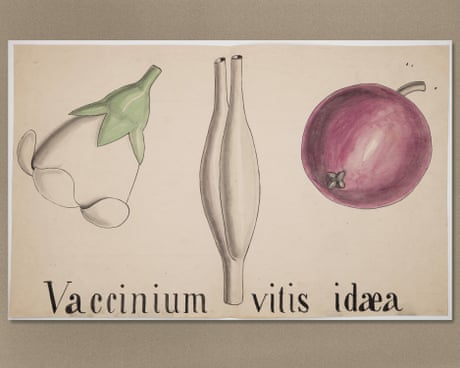
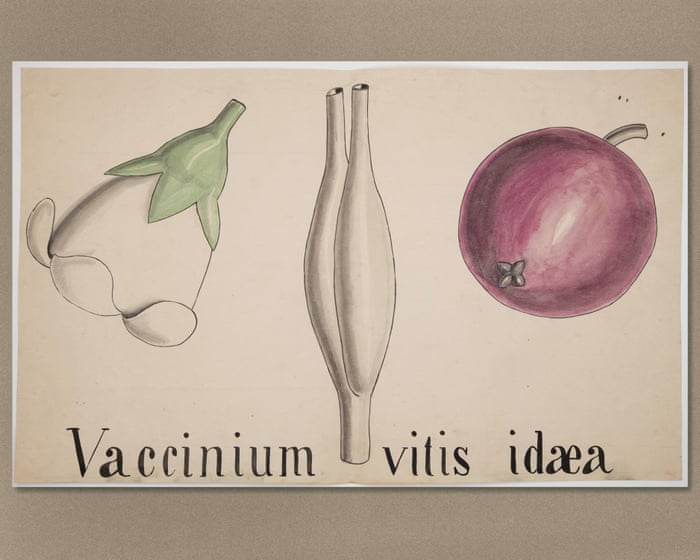
Plant specimens and teaching materials that inspired Charles Darwin and qualified him to work as a naturalist on HMS Beagle have been unearthed from an archive in Cambridge and will be used for the first time to teach contemporary students about botany.

The fragile specimens, ink drawings and watercolour illustrations of plants belonged to Darwin’s teacher and mentor, Prof John Stevens Henslow, and have been stored in Cambridge University’s herbarium for nearly 200 years.

Continue reading...

© Photograph: Cambridge University Herbarium (CGE)

© Photograph: Cambridge University Herbarium (CGE)

© Photograph: Cambridge University Herbarium (CGE)

  •  

Recreational drugs can more than double risk of stroke, study suggests

Medical data from 100m people shows risk 122% higher for amphetamine users, 96% higher for cocaine and 37% higher for cannabis

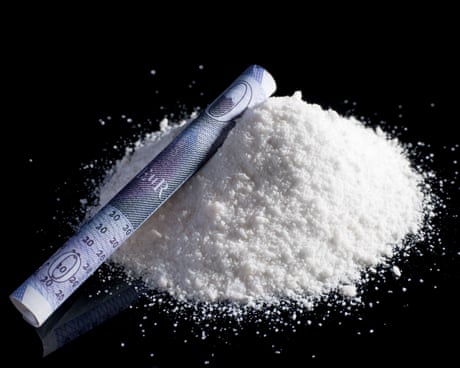
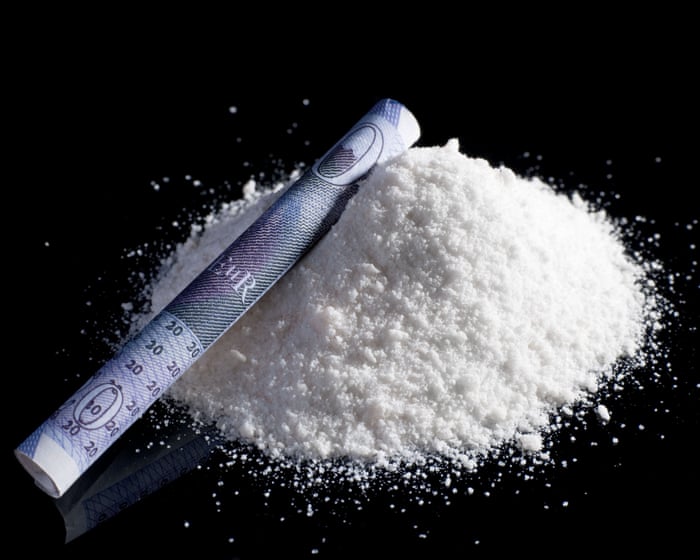
Recreational drugs can more than double the risk of stroke, with some of the most concerning impacts seen among younger people, a major review suggests.

Scientists analysed medical data from more than 100 million people and found that the risk of stroke was 122% higher for amphetamine users and 96% higher for cocaine users compared with those who did not take the drugs.

Continue reading...

© Photograph: Foodography/Alamy

© Photograph: Foodography/Alamy

© Photograph: Foodography/Alamy

  •  

Cambridge university accused of ‘obfuscation’ over arms investment

Academics say £4bn investment fund is ‘designed to prevent any troublesome democratic interference’

Cambridge academics have accused the university of “maximal obfuscation” in a row over its £4bn investment fund and how it profits from investing in arms manufacturers.

The university’s governing body is expected to meet on Monday to consider a report on its financial ties to the defence sector, but some senior staff have said investments cannot be properly scrutinised because the institution has not been transparent about the companies involved.

Continue reading...

© Photograph: Joe Giddens/PA

© Photograph: Joe Giddens/PA

© Photograph: Joe Giddens/PA

  •  

Revolutionary imaging of black hole aims to prove they are not ‘evil vacuum cleaners’

Newly appointed Cambridge professor says feat would accelerate scientific knowledge by an order of magnitude

Dark, hungry and inescapable: black holes are often portrayed as the ultimate cosmic villains.

But now astronomers are preparing to capture a movie of a supermassive black hole in action for the first time, in observations that could help reveal another side to these elusive – and perhaps misunderstood – space objects.

Continue reading...

© Photograph: Getty Images

© Photograph: Getty Images

© Photograph: Getty Images

  •  

No, private schools aren’t victims of ‘reverse discrimination’ – and Cambridge should know better | Lee Elliot Major

Trinity Hall’s plan to target elite schools sends the message that privilege equals talent, when the reality is that poorer students are already on the back foot

A Cambridge college’s plan to target students from some of the country’s most elite private schools has struck a nerve. As reported by the Guardian, Trinity Hall justified the move by claiming that a focus only on “greater fairness in admissions” could “unintentionally result in reverse discrimination”. Alumni LinkedIn feeds and social media threads quickly filled with outrage, as many Cambridge graduates interpreted the move as class prejudice rearing its ugly head once again. One angry fellow at the college said it amounted to a “slap in the face” for their state-educated undergraduates.

It brought back memories of the sneering snobbery at Oxford when the former Guardian editor Alan Rusbridger, then principal of Lady Margaret Hall, introduced a new foundation year. “We don’t do hard luck stories,” sniffed one academic. “Oxford doesn’t do remedial education,” complained another. The foundation year at Oxford and also at Cambridge has since enjoyed huge success, proving that students who have faced great adversity or academic disadvantage can flourish when given the chance.

Lee Elliot Major is a professor of social mobility at the University of Exeter. His forthcoming book Cracking the Class Codes is published in 2026.

Continue reading...

© Photograph: Nathaniel Noir/Alamy

© Photograph: Nathaniel Noir/Alamy

© Photograph: Nathaniel Noir/Alamy

  •  

Cambridge college to target elite private schools for student recruitment

Exclusive: Trinity Hall’s new policy described as a ‘slap in the face’ for state-educated students

A Cambridge college is to target the recruitment of students from elite private schools, interrupting decades of efforts to boost access for state-educated and disadvantaged pupils, the Guardian has learned.

Fellows at Trinity Hall college last month approved a policy to approach a small group of private schools, including St Paul’s Girls, Eton and Winchester, to improve the “quality” of students applying, claiming that “reverse discrimination” was a concern.

Continue reading...

© Photograph: robertharding/Alamy

© Photograph: robertharding/Alamy

© Photograph: robertharding/Alamy

  •  

The Guardian view on the festive season: a suffering world needs messages of peace, hope and goodwill | Editorial

The fracturing multilateral order has led to a new age of insecurity. But acts of courage and solidarity can point the way to a better future

In one of his last sermons, the great Christian theologian and philosopher Paul Tillich asked: “Do we have a right to hope?” As an army chaplain to German forces during the first world war and a refugee from Nazi Germany, Tillich had witnessed first-hand some of the horrors of the 20th century. But his answer to the question he posed in 1965 was yes. Nobody could live without hope, Tillich told his Harvard audience, even if it led “through the narrows of a painful and courageous ‘in-spite-of’”.
Sixty years on, a similar spirit of defiant optimism is needed to navigate our own era of conflict and anxiety. The fourth anniversary of Vladimir Putin’s invasion of Ukraine is approaching, and dark political forces menace the social fabric of western liberal democracies. More widely, a fracturing multilateral order is delivering a more unstable and threatening world.

Do you have an opinion on the issues raised in this article? If you would like to submit a response of up to 300 words by email to be considered for publication in our letters section, please click here.

Continue reading...

© Photograph: PA Images/Alamy

© Photograph: PA Images/Alamy

© Photograph: PA Images/Alamy

  •  
❌